
Tabelog 100 #62
Our verdict
Itoman Gyomin Shokudo makes sense of Okinawa’s southern coast through fish rather than ceremony. The draw is a cafeteria format with Tabelog 100 Diner recognition in 2024 and 2026, a 40-seat room, and cooking that treats local seafood as the central argument rather than decoration.

Pearl is the En Primeur Club membership app, where members save venues, book tables and use the concierge.
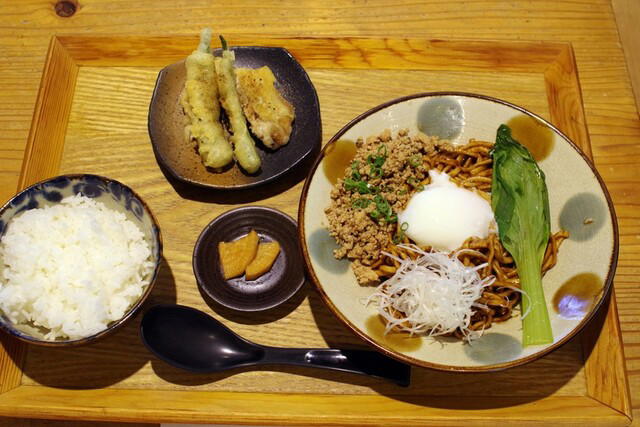
The menu
What to order
- Imaiyu butter-yaki teishoku (fresh fish butter-grill set)
- Garlic butter grilled fish
- Sashimi plate
- Miso Okinawa soba
- Sanpin tea (jasmine) pudding
Approaching Itoman, the city context feels different from a resort-first reading of Okinawa: practical, local, and better understood through everyday routines than through staged leisure. That context matters. In Okinawa, dining can be either tourist shorthand or daily infrastructure; here the appeal lands closer to the second category, with a cafeteria format that keeps the meal grounded in accessibility rather than performance.
Itoman Gyomin Shokudo belongs to a useful category for serious eaters: the regional shokudo that draws attention without becoming formal dining. Its Tabelog Hyakumeiten recognition in 2026 puts it on a national list built around everyday Japanese dining rather than luxury tasting menus, which is the right frame for reading the room. The point is not white-tablecloth precision. The point is how an Itoman cafeteria translates local appetite, practical service, and a casual dining format into a meal that remains accessible.
Island dining as the main argument
Okinawan dining is often reduced to a few familiar images and leisure shorthand. Itoman complicates that easy reading. The city context gives casual restaurants a different weight, and this venue’s public category is clear: it is a cafeteria, not a formal room. That matters because eating well in Okinawa does not always mean chasing the familiar premium hierarchy of big-city counters. It can also mean paying attention to local expectations, accessible formats, and restaurants that are valued for consistency rather than ceremony.
The restaurant’s category is cafeteria, but that label undersells the editorial point. Japan’s shokudo tradition has always been about practical intelligence: what can feed mixed groups, what feels direct, what can be served without turning the meal into theatre. In Itoman, that format becomes a way to keep the experience close to the city’s everyday rhythm. The better comparison is not a high-price counter; it is the small group of regional dining rooms where local character carries more authority than imported luxury signals.
There is also a clear local thread in the way the restaurant should be read. Rather than treating the venue as a stage for spectacle, the useful lens is its place in a dining culture that values straightforward meals and repeatable satisfaction. That distinction is the reason to pay attention. For travellers trying to understand Okinawa beyond resort menus, Itoman Gyomin Shokudo offers a grounded point of entry: casual, locally legible, and recognised without becoming a ceremonial destination.
A shokudo format with national recognition
The 2026 Tabelog Hyakumeiten recognition gives the place a different kind of credibility from a Michelin-style accolade. It signals visibility and quality within Japan’s everyday dining culture, where cafeterias, set-meal rooms, and regional specialists can compete on consistency rather than luxury. A Tabelog score of 3.66 in this category also reads differently than it would for a high-concept Tokyo counter; for a casual regional restaurant, it indicates sustained interest from diners who are not simply chasing ceremony.
That position is useful when setting expectations. This is not the Okinawan equivalent of a destination tasting menu. It is a cafeteria in Itoman, best understood as a casual house for an accessible meal rather than a private, choreographed evening. The listed budget reinforces that reading: dinner is JPY 2,000 - JPY 2,999, while lunch is JPY 1,000 - JPY 1,999. In a city where everyday dining matters, that value-led openness feels appropriate.
Compared with Itoman peer Tecchan, the draw here is the cafeteria identity and national diner-list recognition rather than a broader casual stop. Against higher-priced Okinawan comparison points such as O's House or Heki Kokusai dori matsuo ten, the appeal is value and locality: this is a lower-spend meal where the setting and format carry the weight. That makes it a sharper choice for lunch or dinner tied to Itoman rather than a formal night built around service choreography.
How to place it in an Itoman day
Itoman sits outside the densest dining circuits, which changes the calculus. A meal here works especially well when the day is already oriented around Itoman, rather than as an improvised detour. The venue is in Itoman, and that city context is part of the appeal: the setting reinforces the restaurant’s relationship to everyday Okinawa rather than resort performance.
Because the restaurant has public recognition and an accessible budget, timing becomes the main planning tool. The casual format can attract a wider audience than travelling food obsessives alone, especially around standard meal periods. The smarter approach is to treat it as a structured stop, not a loose backup, and to confirm current operating details directly before making the trip.
For a broader city plan, use Our full Itoman restaurants guide to build the food route, then pair it with Our full Itoman hotels guide, Our full Itoman bars guide, Our full Itoman wineries guide, and Our full Itoman experiences guide if the stay extends beyond a single meal. Readers comparing Japanese casual formats across regions can also look beyond named destination rooms and think in terms of other regional cafeterias, set-meal counters, compact casual kitchens, and everyday dining rooms where value, consistency, and local context matter more than luxury signalling.
Frequently asked questions
Is Itoman Gyomin Shokudo good for families?
Itoman Gyomin Shokudo is a casual cafeteria in Itoman, so it suits diners looking for an accessible lunch or dinner rather than a formal tasting-menu setting. Its Tabelog Hyakumeiten 2026 recognition adds a clear quality signal without changing the everyday format. Check the venue's official channels for the latest details.
Is Itoman Gyomin Shokudo better for a quiet night or a lively one?
It leans more toward a straightforward casual meal than a hushed special-occasion room. The public category is cafeteria, and the venue is in Itoman, so expectations should be set around an everyday dining format. For a calmer experience, choose a less pressured meal period and confirm current details before visiting.
What does dinner at Itoman Gyomin Shokudo typically cost?
Dinner at Itoman Gyomin Shokudo is listed at JPY 2,000 - JPY 2,999, while lunch is listed at JPY 1,000 - JPY 1,999.
What are the opening hours for Itoman Gyomin Shokudo?
Check Itoman Gyomin Shokudo's official channels or call +81-98-992-7277 before visiting.
Fast Comparison
Comparable venues by cuisine and price in the same metro.
| Venue | Cuisine | Price | Awards | Notes |
|---|---|---|---|---|
| Itoman Gyomin ShokudoThis venue (the venue you are viewing) | Okinawan seafood diner | $20–30 | Tabelog 100 #62 | Not listed |
| Tecchan | Okinawan Seafood Izakaya | $20–30 | Not listed | Itoman |
| 田中鮮魚店 漁師小屋 | Fresh Seafood at Fisherman's Hut | Not listed | Not listed | 久礼大正町市場 |
| Aotsuka Shokudo | Traditional Hokkaido Seafood Cafeteria | $20–30 | Not listed | Shukutsu |
| Omicho Market | Fresh Seafood Market & Casual Dining | $10–20 | Not listed | Omicho |
| EZO Seafood | Hokkaido Seafood Oyster Bar | Not listed | Not listed | Niseko Hirafu |
Recognition history
Dated appearances from independent guides and award organizations, with the underlying list record or original source where available.
Tabelog 100 #62 · No. 62
Tabelog · Tabelog 100 - Diner - 2026
Continue exploring
More in Itoman
Restaurants in Itoman
All restaurants in Itoman →
Details
- Lively
- Rustic
- Cozy
- Family
- Casual Hangout
- Group Dining
- Solo
- After Work
- Standalone
- Design Destination
- Local Sourcing
- A La Carte
- Set Menu
- Beer
- Sake
- Soft Drinks
- Pescatarian Friendly
Current opening hours
- Monday
- 11:30 AM–2:30 PM, 6–9 PM
- Tuesday
- Closed
- Wednesday
- 11:30 AM–2:30 PM, 6–9 PM
- Thursday
- 11:30 AM–2:30 PM, 6–9 PM
- Friday
- 11:30 AM–2:30 PM, 6–9 PM
- Saturday
- 11:30 AM–2:30 PM, 6–9 PM
- Sunday
- 11:30 AM–2:30 PM, 6–9 PM
Hours can change for holidays and private events. Hours as of .
Bright and relaxed canteen-style space built from Ryukyu limestone with simple wooden furnishings; the atmosphere is casual and bustling at meal times, with the feel of a modern fisherman’s cafeteria rather than a formal restaurant.