
Tabelog 100 #91
Our verdict
Naha’s serious yakiniku conversation is increasingly about sourcing, not spectacle, and this Kumoji address sits in that lane with Ishigaki beef, horumon and steak as its core grammar. Selection for Tabelog 100 Yakiniku WEST 2025 gives it a clear external signal, while the format remains compact, meat-focused and better suited to diners who care about cuts, grill work and Okinawan beef identity than ceremony.

Pearl is the En Primeur Club membership app, where members save venues, book tables and use the concierge.
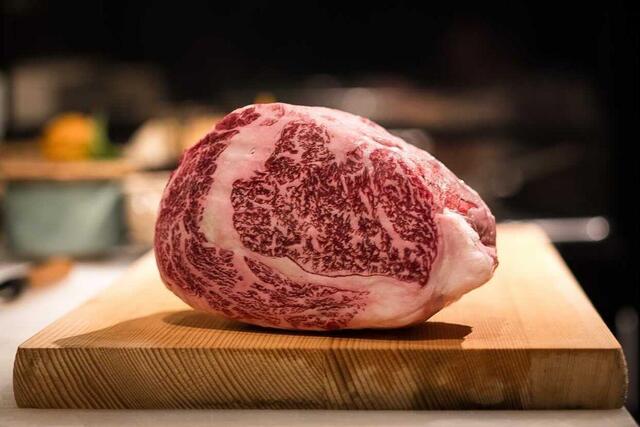
The menu
What to order
- Purebred Ishigaki beef cutlet
- Platinum Tongue (beef tongue)
- Assorted horumon offal platter
- Wagyu yakiniku set meal
The approach is Naha, not resort Okinawa: office blocks, practical dining rooms, late trains and the city’s everyday rhythm. In that urban setting, yakiniku compresses meat culture into a table ritual of heat, timing, fat, tripe, smoke control and confidence in the grill. Niku no Hentai Shudan Shippu Horumon Kumoji honten sits in the city’s meat-focused tier, where the question is not spectacle, but how directly the kitchen treats yakiniku, tripe and steak.
Okinawa’s dining identity is often reduced to pork, awamori and beach-trip casualness. That misses much of the local table. Naha grill restaurants give the city a regional anchor distinct from the shorthand familiar elsewhere in Japan. Yakiniku here reads as local dining through a Japanese BBQ format: cuts arrive for direct cooking, the meal is built around the grill, and tripe carries as much weight as more familiar steak cuts. For a wider scan of the city’s dining range, Our full Naha restaurants guide places this address alongside seafood, shabu-shabu, Italian-leaning rooms and late-night counters.
Naha yakiniku has its own local argument
The useful way to read this restaurant is through focus. Its public categories center on yakiniku, tripe and steak, pointing to a meat-first address rather than a broad, all-purpose dining room. In yakiniku, tripe is not a side category for diners who missed premium cuts; it tests trimming, freshness, seasoning and grill instruction. A restaurant that foregrounds that part of the meal makes a stronger claim than one built only around easy marbling.
That matters in Naha because premium meat dining has several lanes. Other Naha dining rooms frame Okinawan animal culture through different formats, from broth-centered meals to branded beef specialists. BACAR OKINAWA speaks to a different kind of ingredient-driven occasion. Against that spread, this Naha yakiniku room makes sense as a focused beef address, not a general celebration restaurant.
The Tabelog 100 Yakiniku WEST 2025 selection is the trust signal. Tabelog’s Hyakumeiten lists are not Michelin stars and should not be read that way, but they map restaurants with sustained attention inside a genre. For yakiniku, where chains, neighborhood grills and specialist counters can look similar to outsiders, that sorting has value. A 2025 WEST selection places the restaurant in a regional conversation beyond Okinawa, with a listed Tabelog score of 3.68.
A focused room changes the way the grill is judged
Yakiniku is often treated as casual because the guest cooks at the table. Too simple. The restaurant’s work sits upstream: procurement, cutting, portioning, seasoning, smoke management and the order in which cuts appear. In a focused meat room, the experience is different from a broad grill hall. The format favors diners who want attention to pacing, grill timing and cut selection without turning the meal into a formal chef-led performance.
The meal also reaches beyond beer-and-beef shorthand. Fat, char and tripe require different decisions than lean steak or sweeter preparations. Some diners will want a dry, sharp pairing; others will stay with a straightforward drink and let the grill carry the evening. The important point is balance: yakiniku can become heavy quickly if the order is all richness and no contrast, so pacing matters as much as appetite. For drink-led planning elsewhere in the city, Our full Naha bars guide shows how Naha’s after-dinner circuit can be built around small specialist rooms rather than hotel lounges.
Travelers often misread central Naha as transit before or after the city’s more obvious visitor circuits. Its better use is as an adult-dining base: practical, dense with dining addresses and close to the business rhythm. Other Naha dining rooms show different sides of the contemporary restaurant map, while Aso occupies another occasion entirely. The point is not ranking them; it is understanding how the city divides occasions. Some nights call for Okinawan pork, some for pizza or pasta, some for a bar seat, and some for a grill where the format tells the story.
How to place it in a Naha itinerary
This is stronger for diners who know they want meat, not a broad Okinawan sampler. The format rewards a group ordering across categories, especially if tripe and steak share the table. It is less useful for travelers seeking a long chef-led narrative or scenic dining room. Naha’s strength is not only restaurants: Our full Naha hotels guide, Our full Naha experiences guide and Our full Naha wineries guide help separate a food-focused stay from a resort commute.
For readers comparing Japanese dining across cities, this Naha address clarifies why regional context matters. Beef, grill cooking and casual specialist rooms can all speak different dialects of heat depending on the city and the format. The useful lesson is not that one destination owns the category, but that Japan’s restaurant culture is category-specific, city-specific and often more revealing at specialist scale than in grand dining rooms.
Viewed from outside Japan, Naha need not imitate Tokyo. The better meals here are rooted in local products, practical city dining and formats locals understand without explanation. Niku no Hentai Shudan Shippu Horumon Kumoji honten fits: a focused yakiniku specialist with tripe and steak in the frame, and enough external recognition to justify attention from careful meal planners. For a different frame, other dining cities show how specific formats travel; in Naha, the argument remains local, grilled and direct.
Frequently asked questions
What part of town is Niku no Hentai Shudan Shippu Horumon Kumoji honten in?
Niku no Hentai Shudan Shippu Horumon Kumoji honten is located in Naha.
How much does it cost to eat at Niku no Hentai Shudan Shippu Horumon Kumoji honten?
Pricing at Niku no Hentai Shudan Shippu Horumon Kumoji honten is listed as Dinner: JPY 10,000 - JPY 14,999; Lunch: JPY 4,000 - JPY 4,999.
How hard is it to get a table at Niku no Hentai Shudan Shippu Horumon Kumoji honten?
Tabelog’s 2025 Yakiniku WEST "100" selection signals meaningful attention, so planning ahead is sensible, especially for dinner.
What do critics highlight about Niku no Hentai Shudan Shippu Horumon Kumoji honten?
The main signal is its Tabelog Hyakumeiten 2025 recognition, with a listed score of 3.68. The restaurant’s public categories are yakiniku, tripe and steak in Naha.
Side-by-Side Snapshot
Nearby venues at a similar price tier for orientation.
| Venue | Cuisine | Price | Awards | Notes |
|---|---|---|---|---|
| Niku no Hentai Shudan Shippu Horumon Kumoji hontenThis venue (the venue you are viewing) | Ishigaki Beef Yakiniku & Horumon | $50–100 | Tabelog 100 #91 | Not listed |
| Shabushabu Kin Honten | Okinawan Agu Pork Shabu-shabu | $50–100 | Tabelog 100 #96 | Makishi |
| Miyazaki Beef Specialty Restaurant Naha Miyachiku | Miyazaki Wagyu Teppanyaki | $150–200 | Not listed | Miebashi |
| Teppanyaki Sawafuji | Teppanyaki & Ishigaki Beef Steak | $50–100 | Tabelog 100 #49 | Kumoji |
| Aso | Traditional Japanese fish-focused teishoku cafeteria | $30–50 | Tabelog 100 #64 | Matsuyama |
| YOROKOBI | Okinawan Shabu-Shabu | $50–100 | Not listed | Makishi |
Recognition history
Dated appearances from independent guides and award organizations, with the underlying list record or original source where available.
Tabelog 100 #91 · No. 91
Tabelog · Tabelog 100 - Yakiniku - WEST - 2025
Continue exploring
More in Naha
Restaurants in Naha
All restaurants in Naha →
Details
- Lively
- Energetic
- Cozy
- Group Dining
- Casual Hangout
- Late Night
- After Work
- Family
- Celebration
- Standalone
- Beer Program
- Sake Program
- Local Sourcing
- Farm To Table
- A La Carte
- Family Style
- Beer
- Sake
- Shochu