
Yokohama Iekei Ramen Kachidoki Ya belongs to the city’s native ramen tradition: soy-seasoned pork-and-chicken richness, counter service, and quick solo dining rather than ceremony. Its Tabelog Ramen KANAGAWA “Tabelog 100” selections in 2024 and 2025 place it within Kanagawa’s serious ramen conversation, while the sub-¥1,000 listing keeps the experience in everyday Yokohama territory.
Pearl is the En Primeur Club membership app — saves, bookings, and concierge access live there. Same editors, same standards.
- Address
- 神奈川県横浜市中区長者町2-5-4
- Phone
- +81452287401
- Website
- tabelog.com
 Saves & bookings on Pearl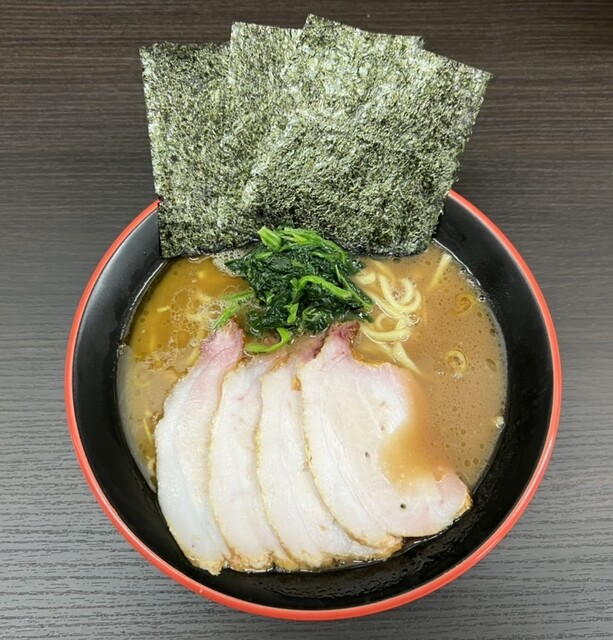
The approach to a serious Yokohama ramen counter is not theatrical. The signal is usually scale: a compact room, steam from the kitchen, a short counter rhythm, and diners who know the order of operations before sitting down. In a city that gave Japan one of its defining regional ramen styles, that restraint matters. Iekei ramen was born in Yokohama as a working-city bowl, built around a soy-sauce tare, pork-and-chicken richness, thick noodles, and the custom of calibrating firmness, seasoning, and fat to the diner’s preference. The format rewards repetition rather than novelty.
Yokohama Iekei Ramen Kachidoki Ya sits inside that culture rather than above it. The address in Chojamachi, Naka-ku, puts it away from the postcard waterfront and closer to the everyday Yokohama that actually sustains ramen shops: commuters, solo diners, late lunches, and small counters where turnover is part of the craft. Its selection for Tabelog Ramen KANAGAWA “Tabelog 100” in both 2024 and 2025 gives the shop a useful external marker, but the more telling detail is the format itself: eight counter seats, no private rooms, and a ramen category price band listed under JPY 999. This is recognition attached to a low-cost, high-frequency meal, not a luxury tasting-menu frame.
Iekei ramen belongs to Yokohama's everyday canon
Regional ramen in Japan often gets flattened into a checklist of toppings, but Iekei is more specific than that. It reflects Yokohama’s position as a port city and commuter hub: dense, direct, fast to eat, and designed for personal adjustment. The classic grammar is soy sauce, animal fat, thick noodles, spinach, nori, and rice on the side, though individual shops vary. The point is not delicacy. The point is controlled intensity.
That is why Yokohama’s ramen scene should not be read only through destination dining logic. A bowl under JPY 999 can carry as much local meaning as a higher-priced dinner elsewhere in the city. Kachidoki Ya’s recognition within Kanagawa’s ramen category puts it in a sharper peer group than general casual restaurants, where the comparison is not service polish but broth identity, noodle handling, counter discipline, and consistency across service. In the immediate Yokohama field, Chuka Soba Shigure Isezaki choujamachi honten occupies a similarly accessible price bracket, while Ramen Jiro Yokohama kannai ten represents a different, volume-driven ramen subculture at the same low-price end. Those comparisons matter because Yokohama ramen is plural: clear chuka soba, Jiro-style excess, and Iekei richness each answer a different appetite.
The Tabelog score of 3.72 adds another signal without needing to overstate it. Japanese user-review platforms are dense with local benchmarking, and ramen ratings tend to be hard fought because diners compare shops within narrow style categories. A 2025 Kanagawa ramen selection indicates that the shop is not merely convenient; it has been sorted into a competitive regional list where specialization counts.
The counter format keeps the meal disciplined
An eight-seat counter changes the way a ramen shop functions. It narrows the room’s margin for delay, makes solo dining natural, and keeps the focus on the bowl rather than table service. For travelers used to restaurant pacing, this is a different social contract: order, sit, eat while the noodles hold their texture, then clear space for the next diner. The compactness is not a design flourish; it is part of ramen’s urban efficiency.
That efficiency also explains why Iekei is a strong entry point into Yokohama dining. It carries local identity without requiring a long meal or a high spend. The same city can move from yakitori counters such as 1000 (Yakitori (Grilled chicken skewers)) to neighborhood Chinese cooking at Aichun, curry at Ajowan, and old-school plates at Alpenjiro Honten. Ramen sits beside those formats as a civic staple, not a lesser category. For a wider city read, Our full Yokohama restaurants guide maps the broader dining spread, while Our full Yokohama hotels guide, Our full Yokohama bars guide, Our full Yokohama wineries guide, and Our full Yokohama experiences guide place the meal in a fuller itinerary.
There is also a broader Japan context. Low-price specialist counters often carry more cultural precision than mid-market restaurants built for breadth. A diner moving through the country might compare this kind of narrow-format excellence with an old-school Fukuoka stop such as Anzen Shokudo, or with non-ramen specialists across Japan including -Grilled beef Sukiyaki- KAMAKURA TANUKIAN 鎌倉 たぬき庵 in Kamakura. 鮪と炭火焼き うお炭 秋葉原店 in Tokyo.cafe in Osaka.know in Kumamoto, (Shoku) Vietnam in Kawasaki, and [Curry Senmon Ten] Maruyama Kyoju. in Sapporo. Abroad, Japanese comfort formats take different shapes at Jōdo Saké Bar in Los Angeles and Onigiri Time in Pasadena, but the Yokohama counter remains the source code for this particular bowl.
Why this shop matters in a ramen-heavy city
The argument for Kachidoki Ya is not scarcity theatre. It is a Yokohama-specific claim: eat Iekei ramen in its home city, at a counter recognized within Kanagawa’s ramen category, at a price point that preserves the form’s everyday purpose. That combination is harder to replicate outside Japan, where ramen often becomes either an export brand or a premiumized bowl detached from its original tempo.
The sharper editorial choice is to treat this as a focused cultural stop rather than a full evening plan. Pair it with walking time in central Yokohama, or use it as a lunch that leaves room for the city’s other dining registers later in the day. The meal’s value lies in compression: local history, regional technique, and counter discipline delivered in the time it takes many restaurants to present a menu.
Price Lens
Comparable venues in the metro at similar price points.
| Venue | Cuisine | Price | Notes |
|---|---|---|---|
| Yokohama Iekei Ramen Kachidoki YaThis venue — the venue you are viewing | Naka, Yokohama Iekei Ramen Shop | $ | Not listed |
| Susurimase nka | Kōnan, Ramen & Tsukemen Shop | $ | Not listed |
| Ramen Moriya. | Sakae, Ramen shop in Yokohama | $ | Not listed |
| Yokohama Chuka Soba Ishin Shoten Honten | Not listed | $ | Nishi, Classic ginger shoyu ramen (chuka soba) |
| Rishiri Ramen Miraku (利尻らーめん 味楽) | Not listed | $ | Kohoku-Ku, Rishiri-Style Yaki Shoyu Ramen |
| Shinachiku Tei | Kanagawa, Ramen | $ | Not listed |
Recognition history
Dated appearances from independent guides and award organizations, with the underlying list record or original source where available.
Tabelog 100 #12 · No. 12
Tabelog · Tabelog 100 - Ramen - KANAGAWA - 2025







At a Glance
- Lively
- Cozy
- Solo
- Casual Hangout
- After Work
- Family
- Late Night
- Standalone
A small, non-smoking counter ramen shop with direct, no-frills decor and compact but described-as-spacious counter seating, focused on quick solo meals rather than lingering, with the energetic feel of a popular neighborhood ramen stop.