
Yokohama Chuka Soba Ishin Shoten Honten sits in the city’s serious ramen conversation through a lean format: ramen and tsukemen, counter seating, no reservations, and a sub-¥1,000 listed price band. Its repeated Tabelog 100 selections, including Ramen KANAGAWA 2025, place it among Kanagawa shops where local noodle culture is judged with the same discipline usually reserved for far pricier dining.
Pearl is the En Primeur Club membership app — saves, bookings, and concierge access live there. Same editors, same standards.
- Address
- Japan, 〒220-0004 Kanagawa, Yokohama, Nishi Ward, Kitasaiwai, 2 Chome−10−21 横浜太陽ビル 1f
- Phone
- +81453240767
- Website
- ishin-ramen.co.jp
 Saves & bookings on Pearl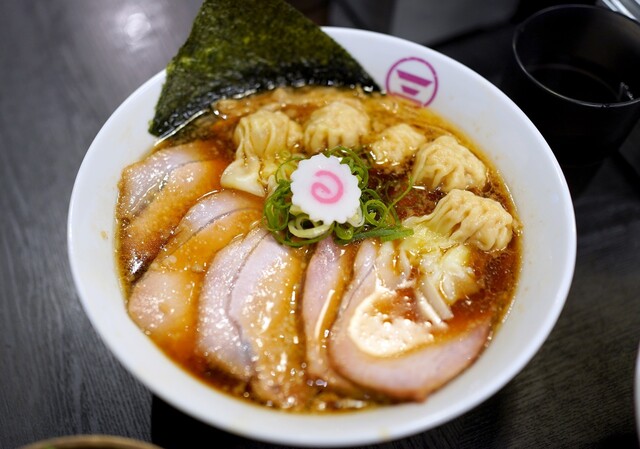
The first signal is the room’s discipline: counter seating, tight turnover, and bowls over ceremony. In Yokohama, ramen is central to dining identity: port history matters, but so does the commuter rhythm around Yokohama Station, where a serious bowl must survive lunch pressure, after-work traffic, and repeat local judgment. Yokohama Chuka Soba Ishin Shoten Honten belongs to that practical, exacting tier: ramen and tsukemen served without tasting-counter theatre, yet scrutinised with comparable intensity by regulars.
Kanagawa ramen culture is often measured by density rather than luxury. The competitive field runs from Iekei-style richness to lighter chuka soba idioms, with shops separated by broth structure, noodle choice, seasoning balance, and how well the bowl holds at speed. Recognition here matters. The restaurant was selected for Tabelog 100 - Ramen - KANAGAWA - 2025 and carries a Tabelog score of 3.76, with earlier Tabelog 100 ramen selections across the EAST lists from 2019 to 2023 and Kanagawa selections in 2024 and 2025. For counter-service ramen, that continuity matters more than one burst of attention.
Chuka soba discipline in a Yokohama commuter zone
Chuka soba is deceptively plain. The phrase can imply old-school simplicity, but in modern Japanese ramen it tests restraint: broth, tare, oil, noodle texture, and garnish have little room to hide behind heaviness. Tsukemen adds another demand, separating noodles and dipping broth so temperature, concentration, and pacing shape the meal. Here global technique and local expectation meet. Ramen’s roots pass through Chinese noodle culture, but Yokohama’s version has been absorbed into a Japanese grammar of precision, queue discipline, and regional preference.
That intersection lets a small shop sit in the same dining itinerary as formal Yokohama addresses without pretending to be formal. Compared with Iekei Sohonzan Yoshimura Ya, another Yokohama ramen reference point, Ishin Shoten Honten reads less as pilgrimage into one dominant style and more as an argument for chuka soba’s quieter register. Against wider city dining, the price contrast is clear: Chinese Sairyu at Yokohama Bay Sheraton Hotel & Towers works in a hotel-restaurant bracket, while TRATTORIA FRANCO occupies mid-priced Italian territory. Ramen here is judged on compression: how much technique fits into a short meal, a counter seat, and a narrow spend.
The shop’s link to Menya Ishin adds context without a personality narrative. It opened in 2013 on the former site of Menya Ishin after that shop moved to Meguro, and is identified as a sister shop of Menya Ishin. In ramen, lineage shapes expectations around broth style, noodle handling, and seasoning philosophy. The point is continuity. Yokohama diners are not short of choices, so a decade-plus run with repeated Hyakumeiten selection shows the format has held its ground.
Why the counter format changes the stakes
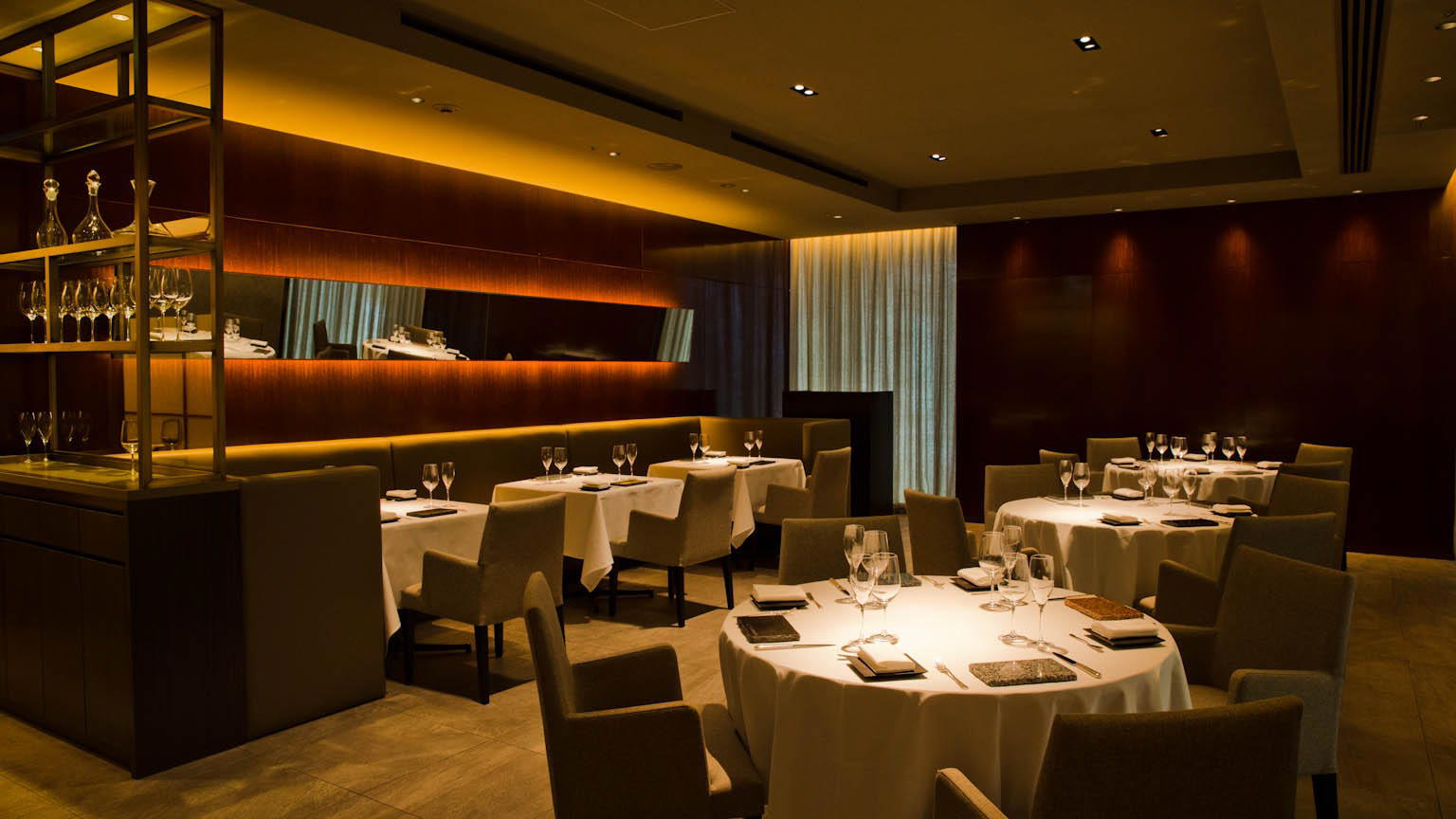
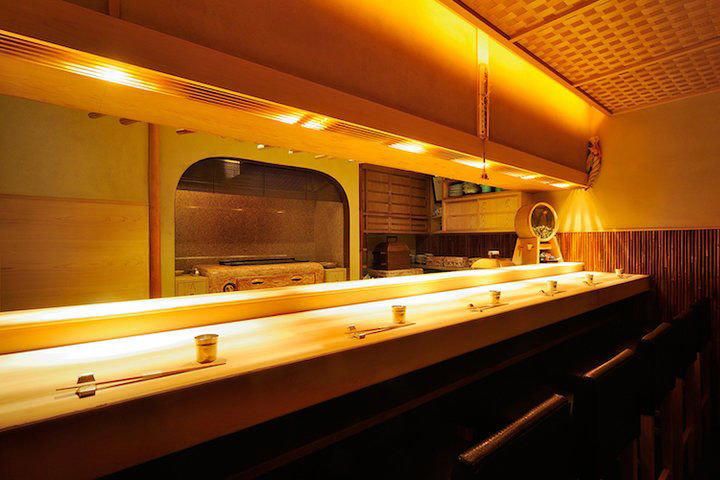
Fifteen counter seats create a different contract from a restaurant with private rooms, reservations, and a long wine list. The diner sees the workflow, pace is visible, and hesitation costs the room. Reservations, private rooms, and private use are unavailable, placing the experience firmly in the everyday Japanese ramen model rather than the premium booking economy. That suits the food. Ramen is immediate, but not careless; the craft is exposed because the meal is short.
The listed price band, below ¥1,000 for lunch and dinner, also changes the critical frame. In Tokyo or Yokohama, low spend does not mean a low bar. It tightens the value judgment. A bowl must deliver clarity, consistency, and identity to justify a detour when competing meals sit on every block around major stations. Baron Noodle and DORER occupy nearby low-price territory in Yokohama’s casual dining field, but ramen has a sharper repeat-visit culture. A shop can be assessed on frequency as much as novelty.
Practical details reinforce the no-friction character. The address is in Kitasaiwai, Nishi Ward, with Hiranuma Bashi listed as the nearest station and Yokohama Station within walking reach. The room is non-smoking, children are welcome, and parking is unavailable: a city-centre meal, not a car-trip destination. Payment tells the same story: credit cards are not accepted, transportation IC cards such as Suica are accepted, and QR code payments are not accepted. Approach it like a local, not like a hotel concierge booking.
How to place it in a Yokohama eating day
Yokohama rewards diners who mix registers. A serious ramen counter can fit before a bar crawl, after a museum visit, or between more expensive meals without compromise. Treat Ishin Shoten Honten as part of the city’s working food culture, not a prelude to the “real” dinner. Its appeal is the opposite of overproduction: a narrow category, compact room, and enough recognition to separate it from generic station-area ramen.
For a wider Yokohama plan, place it beside focused local entries rather than only ramen addresses. Compare the counter logic with 1000 (Yakitori (Grilled chicken skewers)), the older local texture around Aichun, curry specificity at Ajowan, and the comfort-food pull of Alpenjiro Honten. For a broader casual-Japan comparison outside Yokohama, Anzen Shokudo in Fukuoka shows how regional noodle culture can become a city marker.
Use the wider EP Club city pages to build the day: Our full Yokohama restaurants guide, Our full Yokohama hotels guide, Our full Yokohama bars guide, Our full Yokohama wineries guide, and Our full Yokohama experiences guide. Nearby regional detours can widen the frame, from -Grilled beef Sukiyaki- KAMAKURA TANUKIAN 鎌倉 たぬき庵 in Kamakura and (Shoku) Vietnam in Kawasaki to farther reference points such as. 鮪と炭火焼き うお炭 秋葉原店 in Tokyo.cafe in Osaka.know in Kumamoto, [Curry Senmon Ten] Maruyama Kyoju. in Sapporo, Jōdo Saké Bar in Los Angeles, and Onigiri Time in Pasadena.
The editorial case is simple: Yokohama ramen is serious because everyday meals are judged repeatedly, publicly, and by diners who know the category. Yokohama Chuka Soba Ishin Shoten Honten is worth seeking out for its chuka soba and tsukemen focus, counter-only discipline, and recognition trail inside Kanagawa’s demanding ramen conversation rather than merely near Yokohama Station.
Cost and Credentials
Side-by-side context: comparable cuisine and price.
| Venue | Cuisine | Price |
|---|---|---|
| Yokohama Chuka Soba Ishin Shoten HontenThis venue — the venue you are viewing | Not listed | $ |
| Mendokoro Niboshi Kaoru Asobiru ten | Nishi, Niboshi Ramen | $ |
| Mendokoro Tatsunoki | Hodogaya, Japanese Ramen | $ |
| Ramen Moriya. | Sakae, Ramen shop in Yokohama | $ |
| Ramen Jiro Yokohama kannai ten | Naka, Jiro-style Ramen | $ |
| Menba Hamatora | Kanagawa, Ramen | $ |
Recognition history
Dated appearances from independent guides and award organizations, with the underlying list record or original source where available.
Tabelog 100 #74 · No. 74
Tabelog · Tabelog 100 - Ramen - KANAGAWA - 2025









At a Glance
- Cozy
- Classic
- Solo
- After Work
- Casual Hangout
- Late Night
- Standalone
Current opening hours
- Monday
- 11 AM–3 PM, 6–9 PM
- Tuesday
- 11 AM–3 PM, 6–9 PM
- Wednesday
- 11 AM–3 PM, 6–9 PM
- Thursday
- 11 AM–3 PM, 6–9 PM
- Friday
- 11 AM–3 PM, 6–9 PM
- Saturday
- 11 AM–8:30 PM
- Sunday
- Closed
Hours can change for holidays and private events. Last verified .
Small, no-frills ramen shop with counter seating and simple décor, focused on quick solo dining; atmosphere is casual and can get lively and a bit crowded during peak lunch and dinner hours with a short wait expected.