

1 Michelin Star · Tabelog 100 #33
Our verdict
In Nihonbashi, Yakitori Takahashi operates at the precise, disciplined end of Tokyo's yakitori spectrum. The chef works with game fowl, valued for its texture and depth, seasoning skewers with salt and modulating them with chicken fat or vinegar before finishing over charcoal. Interspersed snacks such as cold chicken breast and mincemeat potato salad add breadth to a menu that Michelin inspectors have described as showing lively originality.

Pearl is the En Primeur Club membership app, where members save venues, book tables and use the concierge.
The menu
What to order
- Yakitori skewers
- Chicken soup
- Rice dish
Game Fowl, Charcoal, and the Discipline Behind Tokyo's Serious Yakitori
Most yakitori counters in Tokyo work with commercial broiler chicken, the consistency of supply traded against the flatter flavour profile that comes with industrial rearing. A smaller group of specialists insist on game fowl, jidori or similar free-range breeds, whose musculature, diet, and slower growth produce a density of flavour that responds differently to high heat and smoke. Yakitori Takahashi, on the second floor of a building in Nihonbashi's Chuo Ward, sits firmly in that second group. The choice of bird is not a selling point here so much as a foundational technical decision: game fowl's supple texture and pronounced flavour demand a different approach to seasoning and heat management, and the menu is built around that reality.
Nihonbashi is a district with a long history of serious craft dining, its address book weighted toward counter formats where precision and repetition over years are the standard. It sits outside the more internationally trafficked restaurant neighbourhoods of Ginza or Shinjuku, which means the clientele at counters like this one tends to be Tokyo-resident and return-visit heavy rather than tourist-driven. That context matters for yakitori at this tier: the chef's attention is calibrated for a room that already understands the cuisine, not one that needs orienting.
Salt, Fat, Acid, Smoke: The Technical Logic of the Menu
Yakitori's apparent simplicity is precisely what makes its high-end expression so demanding. There are no sauces to correct a poorly rested skewer, no garnishes to redirect attention, and no secondary proteins to carry the meal when the main ingredient falls short. At Yakitori Takahashi, the seasoning framework is built on a salt base, with chicken fat added to extend richness and vinegar introduced to cut through it. That three-point calibration, salinity, fat, acidity, is then overlaid with smoke from the charcoal, which functions as both a flavouring agent and a heat-delivery system. Charcoal management at this level is a study in itself: the type of charcoal, its moisture content, the distance of the grill surface, and the rotation timing of each skewer all affect the final result in ways that only become legible through sustained repetition.
The intersection of imported grilling logic and native ingredient sourcing is where Yakitori Takahashi's approach becomes editorially interesting. Japan's serious yakitori tradition draws on techniques refined over decades at a handful of Tokyo counters, but the preference for game fowl here connects to a broader pattern in Japanese fine dining: the sourcing of single-origin, slow-raised proteins whose characteristics can withstand, and reward, highly controlled preparation. The same instinct drives the choice of fish at leading sushi counters like Harutaka and the ingredient philosophy at kaiseki rooms like RyuGin. The method may be concentrated heat over charcoal rather than knife work or dashi, but the underlying logic is consistent: start with an ingredient that can carry the weight of a focused technique.
The Structure of the Meal
Michelin's description of the menu notes that skewers are interspersed with chicken-based snacks, specifically citing cold chicken breast and mincemeat potato salad. This pacing device is common in serious yakitori menus and serves a structural purpose: it gives the palate a break from the intensity of grilled protein while keeping the thematic focus on a single main ingredient. The cold chicken breast, served between hot skewers, functions as a temperature and textural contrast. The mincemeat potato salad reads as a register shift rather than a detour, extending the range of what a single bird can produce across a full menu format.
Michelin inspectors characterised the procession of dishes as showing lively originality, notable language for a cuisine where the vocabulary is deliberately narrow. Originality in yakitori does not mean reinvention of form; it means finding points of differentiation within a strict set of constraints. That aligns Takahashi with the more intellectually engaged end of the Tokyo yakitori scene, distinct from counters that execute a reliable standard format without pushing against its limits.
For comparison, the French-trained kitchens at L'Effervescence and Sézanne work through an entirely different technical inheritance, and innovative formats like Crony import French structure into more fluid seasonal frameworks. Yakitori Takahashi represents the opposite axis: a deeply Japanese format executed with enough technical rigour and creative range to draw Michelin recognition without borrowing from any external tradition.
Yakitori at the ¥¥¥ Tier in Tokyo's Broader Restaurant Scene
Tokyo's fine dining ecosystem is unusually stratified. At the ¥¥¥¥ level, you find multi-course kaiseki, high-end omakase sushi, and destination French tables. Yakitori Takahashi prices at ¥¥¥, a tier that positions it as a serious but more accessible entry point into recognised Tokyo dining, more expensive than a neighbourhood izakaya yakitori counter, less than the full-commitment tasting menus that dominate the city's leading awards lists. That positioning reflects where the category sits more broadly: yakitori, even at its most refined, does not carry the occasion-dining premium of kaiseki or kappo, but at the counter level it commands respect and advance planning in equal measure.
Across Japan, the same dynamic plays out in different formats. Gion Sasaki in Kyoto and HAJIME in Osaka represent the kaiseki and creative ends of the Kansai fine dining spectrum, while more experimental formats appear at venues like akordu in Nara and Goh in Fukuoka. Yakitori at Takahashi's level is a specifically Tokyo phenomenon: the density of the city's food culture, its demanding local clientele, and the concentration of specialist suppliers all make the sustained pursuit of single-cuisine mastery economically and creatively viable here in a way that is harder to replicate elsewhere.
For travellers building a Tokyo itinerary around serious eating, it is worth noting that yakitori at this level offers a different temporal rhythm from omakase sushi or kaiseki. The meal is assembled incrementally, skewer by skewer, with the pace set by the grill rather than a predetermined tasting sequence. That format rewards patience and attention in roughly equal measure. More on how to structure a full visit around Tokyo's dining categories is available in our full Tokyo restaurants guide, along with coverage of hotels, bars, wineries, and experiences across the city.
Planning a Visit
| Venue | Cuisine | Price Tier | Format |
|---|---|---|---|
| Yakitori Takahashi | Yakitori | ¥¥¥ | Counter, charcoal grill |
| Harutaka | Sushi | ¥¥¥¥ | Omakase counter |
| RyuGin | Kaiseki | ¥¥¥¥ | Multi-course tasting |
| L'Effervescence | French | ¥¥¥¥ | Multi-course tasting |
| Crony | Innovative French | ¥¥¥¥ | Multi-course tasting |
Yakitori Takahashi is located at 2 Chome-10-11 Ordin Nihonbashi Building, 2F, Nihonbashi, Chuo City, Tokyo. No phone number or website is listed in public records; reservations are leading pursued through a hotel concierge or a specialist Tokyo dining reservation service. Nihonbashi is well served by the Tokyo Metro Ginza and Tozai lines, with Nihonbashi Station a short walk from the address. For comparable counter dining at international scale, the discipline-first ethos here finds a loose parallel in the technical rigour of Le Bernardin in New York or the focused Korean tasting format at Atomix, though the cuisines and traditions are entirely distinct. Regional travellers with time outside Tokyo should also consider 1000 in Yokohama or 6 in Okinawa for further reference points across the Japanese dining spectrum.
Frequently asked questions
What's the best way to book Yakitori Takahashi?
No direct booking contact is publicly listed for the counter. For a Michelin-recognised venue at the ¥¥¥ tier in Nihonbashi, the most reliable route is through a concierge service or a specialist Tokyo dining reservation platform, both of which typically have standing relationships with counters that do not maintain public-facing booking systems. The address is 2 Chome-10-11 Nihonbashi, Chuo City, Tokyo, second floor of the Ordin Nihonbashi Building.
Standing Among Peers
| Venue | Cuisine | Price | Awards | Notes |
|---|---|---|---|---|
| Yakitori TakahashiThis venue (the venue you are viewing) | Michelin-Starred Yakitori Omakase | $50–100 | 1 Michelin Star · Tabelog 100 #33 | Not listed |
| Harutaka | Edo-Style Omakase Sushi | $200–300 | 3 Michelin Stars · World's 50 Best #76 | Sushi |
| RyuGin | Modern Kaiseki | $500+ | 3 Michelin Stars · World's 50 Best #41 | Kaiseki, Japanese |
| L'Effervescence | Modern French with Japanese Influences | $200–300 | 3 Michelin Stars · World's 50 Best #69 | French |
| HOMMAGE | Modern French with Japanese Influences | $150–200 | 2 Michelin Stars · World's 50 Best #78 | Innovtive French, French |
| MAZ | Innovative Peruvian-Japanese Fusion | $150–200 | 2 Michelin Stars · World's 50 Best #28 | Innovative |
Recognition history
Dated appearances from independent guides and award organizations, with the underlying list record or original source where available.
Michelin 1 Star
Michelin
Tabelog 100 #33 · No. 33
Tabelog · Tabelog 100 - Yakitori - EAST - 2025
Continue exploring
More in Tokyo
Restaurants in Tokyo
All restaurants in Tokyo →

Bars in Tokyo
All bars in Tokyo →




Details
- Quiet
- Elegant
- Intimate
- Sophisticated
- Minimalist
- Date Night
- Business Dinner
- Solo
- Special Occasion
- Chefs Counter
- Open Kitchen
- Standalone
- Byob
- Omakase
- Counter Dining
- Set Menu
- BYOB
- Allergy Accommodating
Current opening hours
- Monday
- 5–10:30 PM
- Tuesday
- 5–10:30 PM
- Wednesday
- 5–10:30 PM
- Thursday
- Closed
- Friday
- 5–10:30 PM
- Saturday
- 5–10:30 PM
- Sunday
- Closed
Hours can change for holidays and private events. Hours as of .
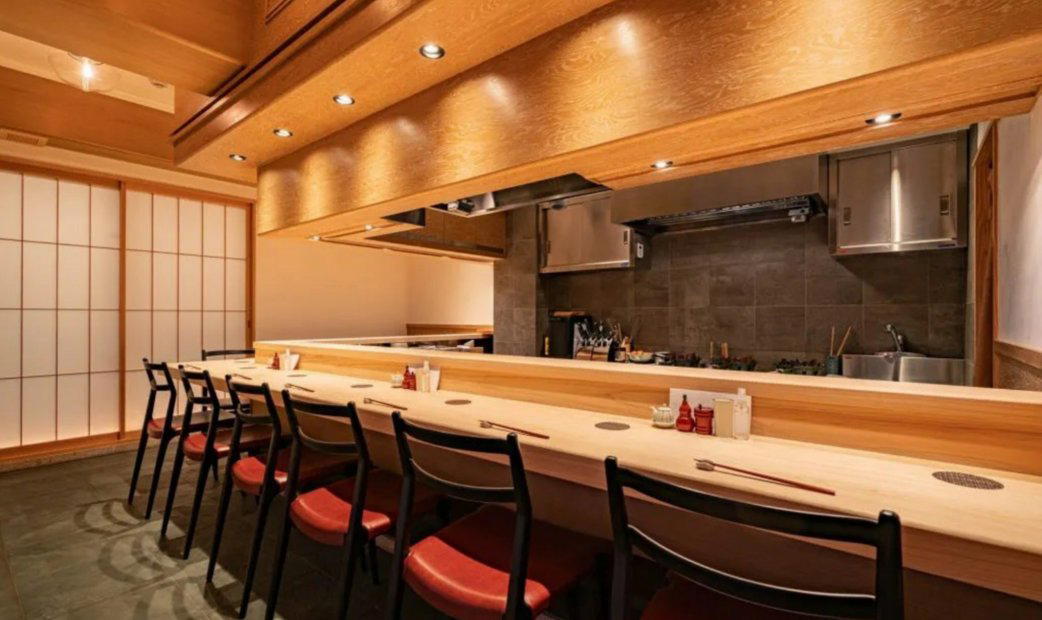
Calm, bright, clean, and composed, with a quiet white-wood counter and restrained elegance around the charcoal grill.