


Michelin Bib Gourmand · Tabelog Bronze #149
Our verdict
Open since November 2005, Teuchi Soba Jiyu San occupies a quiet stretch of Nakano that most visitors to Tokyo never reach. A Tabelog Bronze winner every year from 2017 through 2026 and a consistent entry in the Tabelog Soba EAST Top 100, it serves hand-milled buckwheat noodles in a 15-seat room where the sake list receives as much attention as the bowl.

Pearl is the En Primeur Club membership app, where members save venues, book tables and use the concierge.
The menu
What to order
- Seiro Soba
- Soba with Mackerel in Soup
- Red Bean Jelly
Nakano's Soba Counter and What It Says About Tokyo's Neighbourhood Dining Circuit
Tokyo's most decorated dining addresses tend to cluster in Ginza, Minami-Aoyama, or Nishi-Azabu, where three-Michelin-star kaiseki counters like RyuGin and French houses like L'Effervescence occupy the upper tier of an internationally legible prestige hierarchy. But the city's more durable soba tradition operates on a different axis entirely. The craftsmen running Tokyo's serious buckwheat counters rarely seek Michelin recognition; their credibility runs through Tabelog scores, specialist category lists, and the kind of word-of-mouth that travels slowly between regular customers. Teuchi Soba Jiyu San, open since 3 November 2005 on Mejiro Street in Nakano's Eharacho district, is one of the clearest examples of how that parallel system works at its highest level.
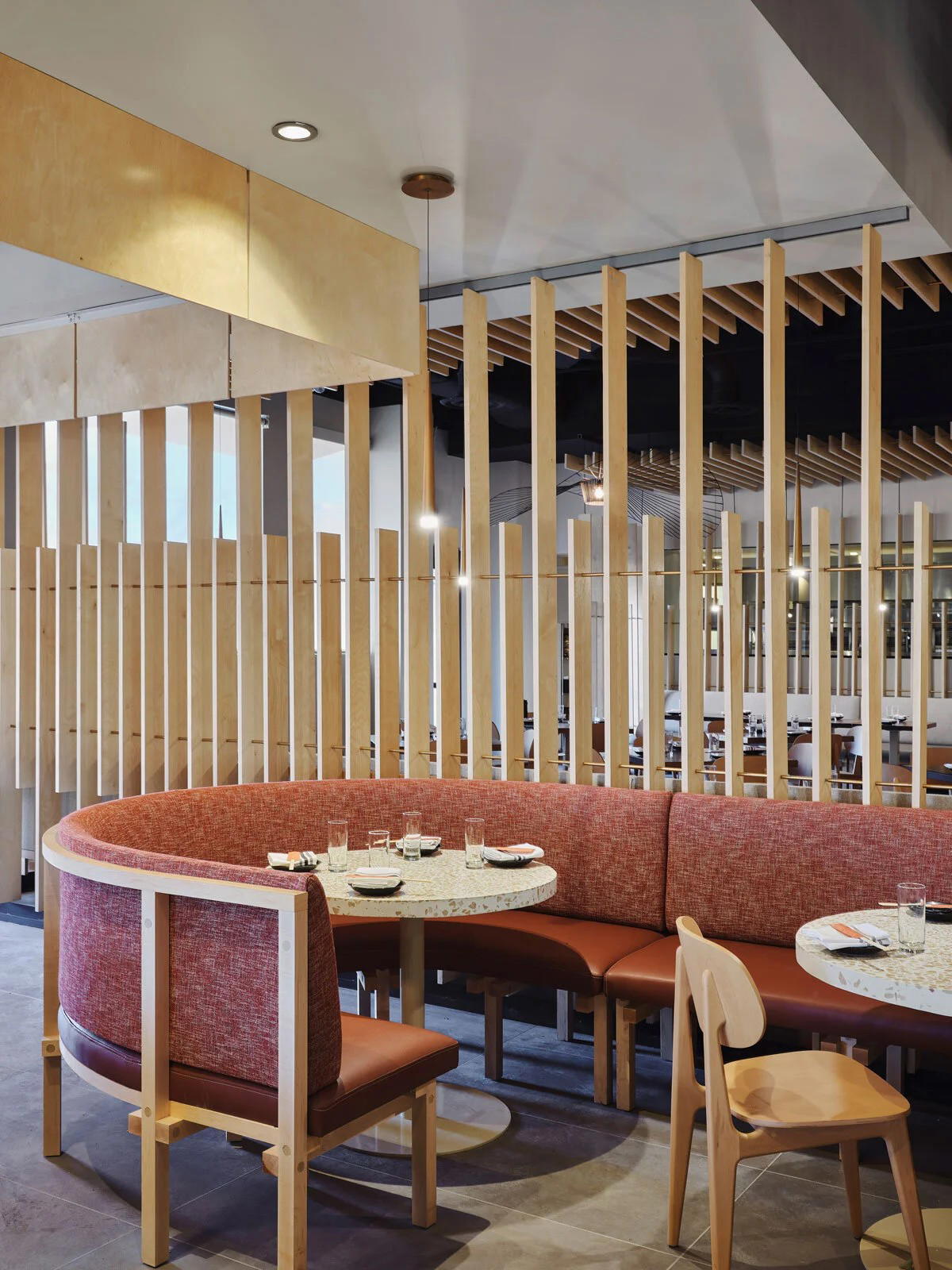
The restaurant's name is itself a local reference. "Jiyusan" plays on the old name for Mejiro Street, known historically as Jusanken-dori, which places it immediately within neighbourhood geography rather than the cosmopolitan dining circuit that draws food tourists to central Tokyo. That positioning is consistent with everything else about how the place operates: 15 seats across three counter seats and three tables, dinner by reservation only, lunch on a first-come-first-served basis until the soba runs out for the day.
Consistent Recognition Across Nearly a Decade of Awards
The recognition record here is sustained rather than spectacular, and that distinction matters. Jiyu San has held Tabelog Bronze status in 2017, 2018, 2019, 2025, and 2026, with a current score of 4.01 out of 5. It has appeared consecutively in the Tabelog Soba EAST Top 100 from 2017 through 2025, a list compiled from user-generated scores weighted by review volume and recency. That consistency across nine award cycles is harder to achieve than a single high-profile debut: it requires that the kitchen's output remain within a tight quality band as ingredient costs fluctuate, staff turns over, and the seasonal buckwheat harvest varies year to year.
Among Tabelog Bronze soba specialists in Tokyo, Jiyu San ranks 149th in the current 2026 standings, which positions it inside a competitive cohort rather than at its summit. The relevant comparison set is not multi-course kaiseki at venues like Sézanne or omakase sushi at Harutaka, both of which occupy the Michelin-starred western and Japanese fine dining brackets. Jiyu San operates in a separate category where the craft benchmark is the noodle itself: grain provenance, milling technique, water ratio, and the cut of the seiro. That craft orientation also explains the Michelin Plate recognition the restaurant carries alongside its Tabelog awards, a signal that inspectors have noticed the kitchen without placing it into the starred tier.
The Kitchen's Division of Labour
The editorial angle that makes sense for Jiyu San is less about a single chef biography and more about how a small establishment distributes its attention across distinct disciplines. The Tabelog description references two separate noodle styles: a delicately thin seiro made purely from buckwheat flour, served on a wicker tray, and an inaka soba stone-ground by hand one grain at a time using a pestle and mortar. Those are not interchangeable products; they require different milling approaches, different water temperatures during kneading, and produce a different texture on the palate. Running both alongside each other in a 15-seat room with limited service hours points toward a kitchen where different hands handle different tasks, and where the craft segmentation is deliberate.
The front-of-house dimension of that collaboration shows up most clearly in the drink programme. The Tabelog listing flags that Jiyu San is "particular about sake (Nihonshu)," and the seating fee of ¥1,900 per person includes a starter and one drink. That pricing architecture is unusual in Japanese soba restaurants, which more commonly charge per dish without a cover. The seating fee functions as a soft onboarding mechanism: it pairs the first drink with an appetiser, and sets an expectation that the meal will unfold at a pace determined by the kitchen rather than by individual ordering. The appetiser examples referenced in the venue's own description include shrimp prepared in miso and grilled, and herring simmered slowly over several days, preparations that require advance work and cannot be improvised service to service. This places Jiyu San in the category of soba restaurants that treat the full meal format seriously, where the noodle course arrives in the context of food and sake that have already oriented the guest's palate.
That approach rhymes with what higher-bracket Japanese restaurants do at scale. At Crony or at innovative Japanese houses in other cities like HAJIME in Osaka or Gion Sasaki in Kyoto, the sommelier or sake specialist is structurally central to the experience. At Jiyu San, that role is scaled down to a single-seat room reality, but the intentionality is comparable: the drink is not an afterthought, and neither is the appetiser.
Access, Occasion, and the Logic of the Neighbourhood Location
Soba's role in Tokyo's dining geography is worth noting for readers approaching the city from the outside. In international food media, the city's prestige tier is dominated by omakase counters and kaiseki rooms. That framing crowds out a large middle category of specialist craft restaurants, particularly noodle shops, where the quality ceiling is genuinely high but the price point and setting read as casual. Jiyu San's dinner price band of ¥6,000 to ¥7,999 per person places it at a level where serious Tokyo diners go to eat well without the formal register of a tasting menu. For context, that is considerably below the spend at Atomix in New York City or Le Bernardin, restaurants that occupy a similar critical credibility tier in their own markets but at a different price structure. Lunch at Jiyu San, priced at ¥2,000 to ¥2,999, sits within reach of any visitor with moderate planning, provided they arrive before the soba sells out.
The Nakano location itself is worth addressing directly. Eharacho is a residential neighbourhood, not a dining destination in the way that Shinjuku or Roppongi functions for visitors. Access via the Toei Oedo Line from Shin-Egota Station (seven minutes on foot from Exit A1) or from Higashi-Nagasaki Station on the Seibu Ikebukuro Line (eight minutes from the south exit) means the visit requires a deliberate journey rather than a spontaneous stop. That is consistent with how the venue's own regulars approach it, and it filters the lunch crowd toward people who have sought it out rather than discovered it by proximity. Readers planning a broader Tokyo itinerary might pair a visit to Jiyu San with exploration of the Nakano and Nerima areas, which hold several neighbourhood specialists that do not appear on the standard tourist circuit. For the wider context of where Jiyu San fits in Tokyo's restaurant hierarchy, the full Tokyo restaurants guide maps the city's dining tiers. Related regional comparisons worth drawing include akordu in Nara, Goh in Fukuoka, 1000 in Yokohama, and 6 in Okinawa, each of which sits in a different segment of Japan's specialist restaurant circuit beyond Tokyo. For accommodation context, the Tokyo hotels guide, bars guide, wineries guide, and experiences guide offer broader planning context.
Know Before You Go
- Address: 3 Chome-1-4 Eharacho, Nakano City, Tokyo 165-0023
- Hours: Tue & Thu: 11:30–14:30 (L.O. 14:00). Wed, Fri & Sat: 11:30–14:30 (L.O. 14:00) and 17:30–20:30 (L.O. 20:00). Mon, Sun & public holidays: closed. Closes when soba sells out.
- Reservations: Dinner is reservation only, via the official website. Phone reservations are not accepted. A Japanese phone number is required for same-day contact. Lunch is walk-in only.
- Seating fee: ¥1,900 per person (includes a starter and one drink; applies from middle school age onward)
- Lunch price range: ¥2,000–¥2,999 per person
- Dinner price range: ¥6,000–¥7,999 per person
- Seats: 15 total (3 counter, 3 tables)
- Getting there: Toei Oedo Line to Shin-Egota Station, Exit A1 (7 min walk); or Seibu Ikebukuro Line to Higashi-Nagasaki Station, south exit (8 min walk)
- Parking: No on-site parking; paid lot immediately adjacent
- Payment: Major credit cards accepted (Visa, Mastercard, JCB, Amex, Diners, UnionPay); IC cards (Suica etc.); QR payments (PayPay, Rakuten Pay, au PAY, Alipay, WeChat Pay)
- Languages: English-language menu available
- Smoking: Non-smoking throughout
- Accessibility: Wheelchair accessible
- Private hire: Available for up to 20 people
- Website: jiyusan.tokyo
Frequently asked questions
What time does Jiyu San open and close?
Hours at Jiyu San: Tue, Thu 11:30 - 14:30 L.O. 14:00.
Where is Jiyu San in Tokyo?
Jiyu San is located at 3 Chome-1-4 Eharacho, Nakano City, Tokyo 165-0023, Japan, Tokyo.
What distinctions does Jiyu San have?
Jiyu San has received recognition including:
What's the must-try dish at Jiyu San?
The two soba styles represent distinct craft approaches. The thin seiro is made purely from buckwheat and served on a wicker tray, while the inaka soba is stone-ground by hand using a pestle and mortar, producing a denser, more pronounced flavour profile. Both are teuchi, hand-made on the premises, which is the reason the restaurant closes once the day's soba is sold out. Jiyu San has held a place on the Tabelog Soba EAST 100 list every year from 2017 through 2025, which reflects how consistently those two bowls land.
Cuisine-First Comparison
Comparable venues nearby, for context on price, style, and recognition.
| Venue | Cuisine | Price | Awards | Notes |
|---|---|---|---|---|
| Jiyu SanThis venue (the venue you are viewing) | Handmade Buckwheat Soba | $20–30 | Michelin Bib Gourmand · Tabelog Bronze #149 | Not listed |
| Tenoshima | Modern Japanese Kaiseki | $150–200 | 1 Michelin Star | Minato |
| Yaesu Unagi Hashimoto | Edomae Unagi (Grilled Eel) | $50–100 | Michelin Bib Gourmand | Chūō |
| Japanese Ramen Gokan | Japanese Ramen | $20–30 | Michelin Bib Gourmand · Tabelog 100 #70 | Toshima |
| Ten Yokota | Michelin-Starred Edomae Tempura | $100–150 | 1 Michelin Star · Tabelog 100 #65 | Minato |
| Shiosoba Jiku | Traditional Shio Ramen | $10–20 | Michelin Bib Gourmand · Tabelog 100 #45 | Suginami |
Recognition history
Dated appearances from independent guides and award organizations, with the underlying list record or original source where available.
Michelin Bib Gourmand
Michelin
Opinionated About Dining Casual in Japan Ranked #141
Opinionated About Dining
Tabelog Bronze #149
Tabelog
Full recognition history (7 entries)
Michelin Plate
Michelin
Opinionated About Dining Casual in Japan
Opinionated About Dining
Tabelog 100 #9 · No. 9
Tabelog · Tabelog 100 - Soba - EAST - 2025
Tabelog Bronze
Tabelog
Continue exploring
More in Tokyo
Restaurants in Tokyo
All restaurants in Tokyo →


Bars in Tokyo
All bars in Tokyo →




Details
- Quiet
- Cozy
- Classic
- Intimate
- Solo
- Casual Hangout
- Family
- Open Kitchen
- Sake Program
- Local Sourcing
- Organic
- Counter Dining
- A La Carte
- Set Menu
- Sake
- Vegetarian Friendly
Current opening hours
- Monday
- Closed
- Tuesday
- 11:30 AM–2:30 PM
- Wednesday
- 11:30 AM–2:30 PM
- Thursday
- 11:30 AM–2:30 PM
- Friday
- 11:30 AM–2:30 PM
- Saturday
- 11:30 AM–2:30 PM
- Sunday
- Closed
Hours can change for holidays and private events. Hours as of .
Soft, calm, and quiet atmosphere with tableware and plating that elevates the dining experience; warm welcome from owners in a small, comfy counter-seating environment.