
Yakitori Sensho places Nagoya’s charcoal-grill culture in a sharper, more specialised register: counter-led, chicken-focused, and supported by sake, shochu, and wine rather than a casual beer-only format. Its 2025 selection for Tabelog 100 Yakitori EAST gives it a clear quality signal within Japan’s competitive yakitori field, while the Izumi location keeps it tied to a quieter dining pocket near Hisaya Odori.
Pearl is the En Primeur Club membership app — saves, bookings, and concierge access live there. Same editors, same standards.
- Address
- 愛知県名古屋市東区泉1-22-9
- Phone
- +81529715188
- Website
- tabelog.com
 Saves & bookings on Pearl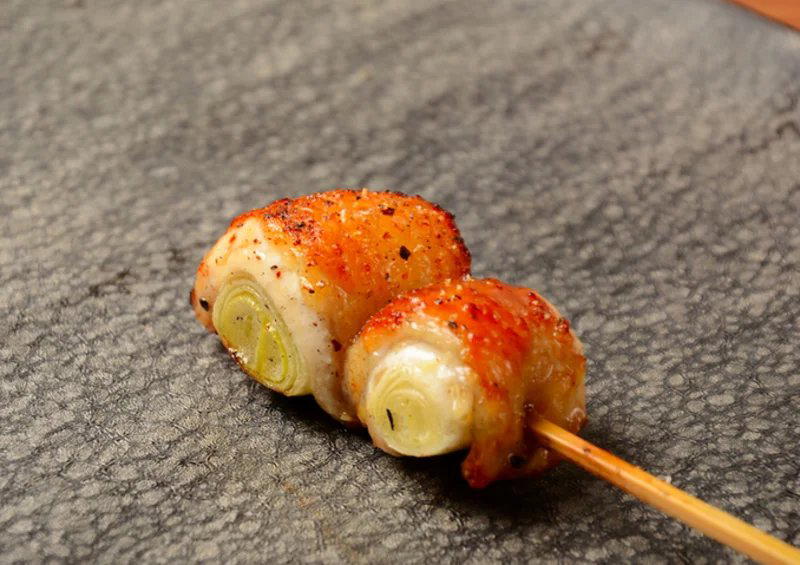
In Izumi, the approach to dinner changes register quickly: office blocks and central Nagoya traffic give way to a more residential rhythm, the kind of setting where a small charcoal counter can feel more serious than showy. Yakitori in Japan has always carried that dual identity, part everyday drinking food, part obsessive craft. The current premium tier pushes the second side harder, with closer attention to sourcing, heat control, pacing, and drink pairing. Yakitori Sensho belongs to that bracket, not because it turns chicken into luxury theatre, but because it treats the grill as a disciplined format rather than a casual add-on.
Nagoya is often read through miso katsu, hitsumabushi, tebasaki, and kishimen, but its stronger dining rooms are not limited to local comfort food. The city’s better contemporary restaurants tend to be compact, technically focused, and less internationalised in tone than comparable addresses in Tokyo or Kyoto. That makes yakitori an instructive category here: it rewards precision without needing imported spectacle. A place selected for Tabelog 100 Yakitori EAST in 2025 enters a national conversation while remaining grounded in Aichi’s appetite for direct, ingredient-led cooking.
Charcoal, local chicken, and a global dining grammar
The defining idea is not a single named skewer. It is the meeting point between Japanese binchotan-style grill discipline, local chicken and ingredients, and a drinks program broad enough to support a full evening. Premium yakitori depends on sequencing: lean cuts, fattier portions, vegetables, offal when offered, and palate resets all need to move with the fire rather than against it. In that sense, the format has more in common with a tasting counter than with a snack bar, even when the vocabulary remains skewers, smoke, salt, tare, and sake.
That tension between local product and broader technique explains why Nagoya’s serious yakitori rooms matter. The city does not need to imitate Tokyo’s reservation culture to produce compelling counters; it can work from regional supply chains, neighbourhood density, and a clientele that understands grilled chicken as dinner rather than novelty. Yakitori Sensho’s listed focus on carefully selected local chicken and ingredients places it inside that conversation. The drinks side also signals ambition: sake, shochu, and wine are all part of the offer, with a sommelier listed, which shifts the meal away from a single-note izakaya pattern.
Compared with Nagoya peers in the same spending universe, the category position is clear. Lito and Cucina Italiana Selvaggio sit in Italian-led dining at overlapping or higher dinner ranges, while L’atelier Izumi moves through a French-leaning price tier. Ono Michi occupies a more expensive bracket. Yakitori Sensho’s role is narrower and more elemental: fire, poultry, counter pacing, and drinks. That focus is the appeal. It asks less of the diner in terms of ceremony, but more in attention to timing and texture.
The room favours counter literacy over spectacle
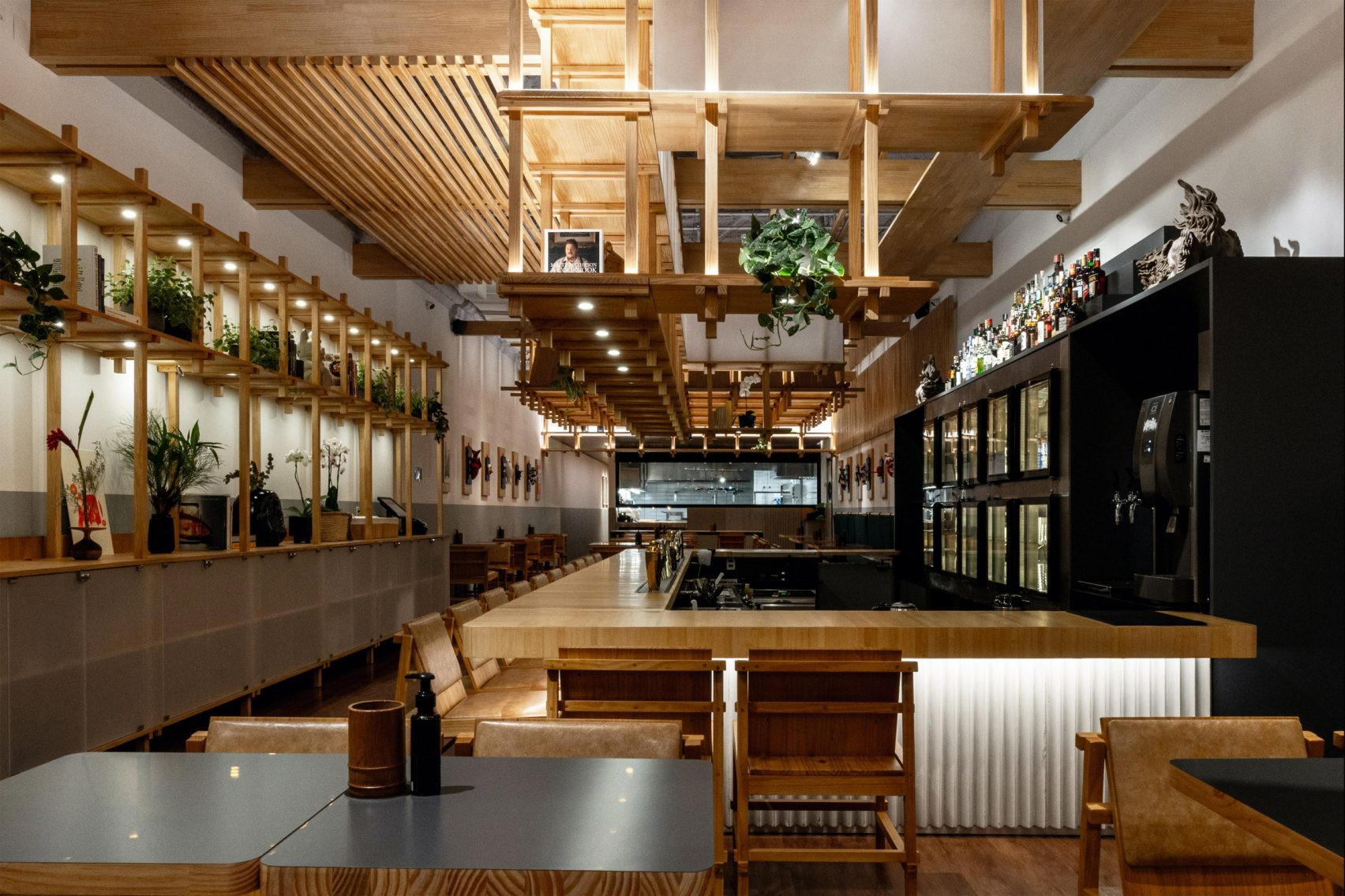
The format is small enough to make the counter the natural centre of gravity. With 16 seats, including 10 at the counter and 6 at tables, this is the scale at which yakitori works properly: the grill is close, the cadence is visible, and the meal depends on the kitchen’s control of heat rather than on decorative plating. Private rooms are listed, but the counter is the stronger way to read the restaurant’s argument. Yakitori is a cuisine of seconds, not minutes; watching the sequence matters.
The 2021 opening date also matters. Nagoya’s post-2020 dining scene has been less about grand dining rooms and more about compact formats that can run with discipline and limited seats. A 2025 Tabelog 100 Yakitori EAST selection places the restaurant among a curated group in eastern Japan, and the listed Tabelog score of 3.70 gives a secondary signal in a rating culture where scores above the mid-threes are meaningful. Those markers do not replace judgment, but they clarify the competitive tier.
For travellers building a Nagoya itinerary, this is a sharper choice than another broad regional-specialty meal. It pairs well with a day around Sakae, Hisaya Odori, and the eastern side of central Nagoya, then leaves room to explore the city’s bar and hotel scene separately. For wider planning, see Our full Nagoya restaurants guide, Our full Nagoya hotels guide, Our full Nagoya bars guide, Our full Nagoya wineries guide, and Our full Nagoya experiences guide.
How to place it within a Nagoya food trip
The decision point is simple: choose this for a focused charcoal dinner rather than for breadth. Nagoya has stronger claim to local identity than many travellers give it credit for, but not every meal needs to repeat the city’s famous dishes. A yakitori counter gives another reading of Aichi: precise, product-led, and comfortable with restraint. The better comparison is not a late-night chain skewer shop, but a compact tasting format where each course is small and cumulative.
Readers comparing options across Japan may also find useful context in other EP Club restaurant pages, from Nagoya addresses such as 1022, 451, Aaron, Alan., and All Day Dining Montmartre, to broader Japan listings including -Grilled beef Sukiyaki- KAMAKURA TANUKIAN 鎌倉 たぬき庵 in Kamakura. 鮪と炭火焼き うお炭 秋葉原店 in Tokyo.cafe in Osaka.know in Kumamoto, (Shoku) Vietnam in Kawasaki, and [Curry Senmon Ten] Maruyama Kyoju. in Sapporo. For Japanese drinking culture abroad, Jōdo Saké Bar in Los Angeles and Onigiri Time in Pasadena offer a different lens.
The editorial read: the restaurant is strongest for diners who already understand that yakitori’s seriousness lies in repetition, cut selection, and control of fire. It is less suited to travellers seeking a broad survey of Nagoya specialties in one sitting. As a focused dinner, it gives the city a useful counterpoint: local ingredients handled through a grill language that now travels globally, but remains at its sharpest when the room is small and the fire is close.
A Pricing-First Comparison
Comparable venues to calibrate price, style, and recognition.
| Venue | Cuisine | Price |
|---|---|---|
| Yakitori SenshoThis venue — the venue you are viewing | Higashi, Nagoya Cochin Yakitori | $$$ |
| Yanagiyanishiki | Naka, Gifu Regional Cuisine | $$$ |
| Gyutei | Higashi, High-end Wagyu Yakiniku | $$$ |
| Yakiniku Asahi | Higashi, Private-room Wagyu Yakiniku | $$$ |
| Teppan Izumi ~Sankai~ | Higashi, Teppanyaki Steakhouse | $$$ |
| Mikan Kotohogi | Higashi, Seasonal Japanese Kaiseki | $$$ |
Recognition history
Dated appearances from independent guides and award organizations, with the underlying list record or original source where available.
Tabelog 100 #72 · No. 72
Tabelog · Tabelog 100 - Yakitori - EAST - 2025
Continue exploring
More in Nagoya
Restaurants in Nagoya
Browse all →
At a Glance
- Elegant
- Cozy
- Modern
- Intimate
- Sophisticated
- Date Night
- Business Dinner
- Celebration
- Special Occasion
- Group Dining
- Private Event
- Chefs Counter
- Open Kitchen
- Private Dining
- Standalone
- Design Destination
- Sake Program
- Extensive Wine List
- Sommelier Led
- Local Sourcing
An elegant, low-key hideaway with a stylish, relaxing interior, centered on a lively charcoal grill counter and a few private rooms; lighting and spacing are designed to feel calm and refined rather than noisy or crowded.