
Tabelog 100 #92
Our verdict
Alan. brings Peruvian, steak, and tacos into Nagoya’s Sakae dining circuit, where late-evening restaurants compete on mood as much as category. Its Tabelog 100 selection for Asian and ethnic cuisine in East Japan in 2024 gives it a clear trust signal, while the 70-seat format and terrace component place it closer to a sociable urban room than a hushed tasting-counter address.

Pearl is the En Primeur Club membership app, where members save venues, book tables and use the concierge.
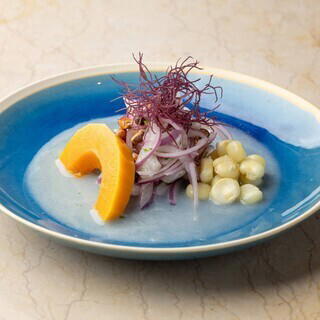
The menu
What to order
- Fresh oysters with Peruvian-style salsa
- Charcoal-grilled meats from the wood-fired grill
- Colorful modern Peruvian small plates
Sakae changes character after office hours: department-store polish gives way to vertical dining buildings, neon, terraces, and rooms designed for groups that want dinner to carry into drinks. Alan. belongs to that after-dark Nagoya, not the temple-like counter tradition associated with sushi or kappo. The point here is Latin-leaning, wood-fired, shareable dining in a district where the table often matters as much as the plate.
That matters in Nagoya because the city’s serious dining reputation is often filtered through local staples, high-end wagyu, and compact chef-led rooms. Peruvian, steak, and tacos make a different proposition: bolder social pacing, wine and cocktail relevance, and a menu structure built for sharing rather than individual progression. For readers mapping the city beyond the usual Japanese categories, Our full Nagoya restaurants guide gives the wider frame, while Alan. marks the Latin-American edge of Sakae’s evening economy.
Sakae's vertical dining culture suits Latin grilling and shared plates
Nagoya’s central nightlife zones reward restaurants that can operate between dinner, bar, and group occasion. In that setting, a Peruvian-steak-taco combination is less random than it first appears. It gives the room multiple speeds: grilled protein for a full dinner, tacos for a looser table, and drinks that can carry the evening later. Tabelog’s 2024 Asian and ethnic cuisine EAST 100 selection places Alan. inside a curated regional field rather than among generic international restaurants.
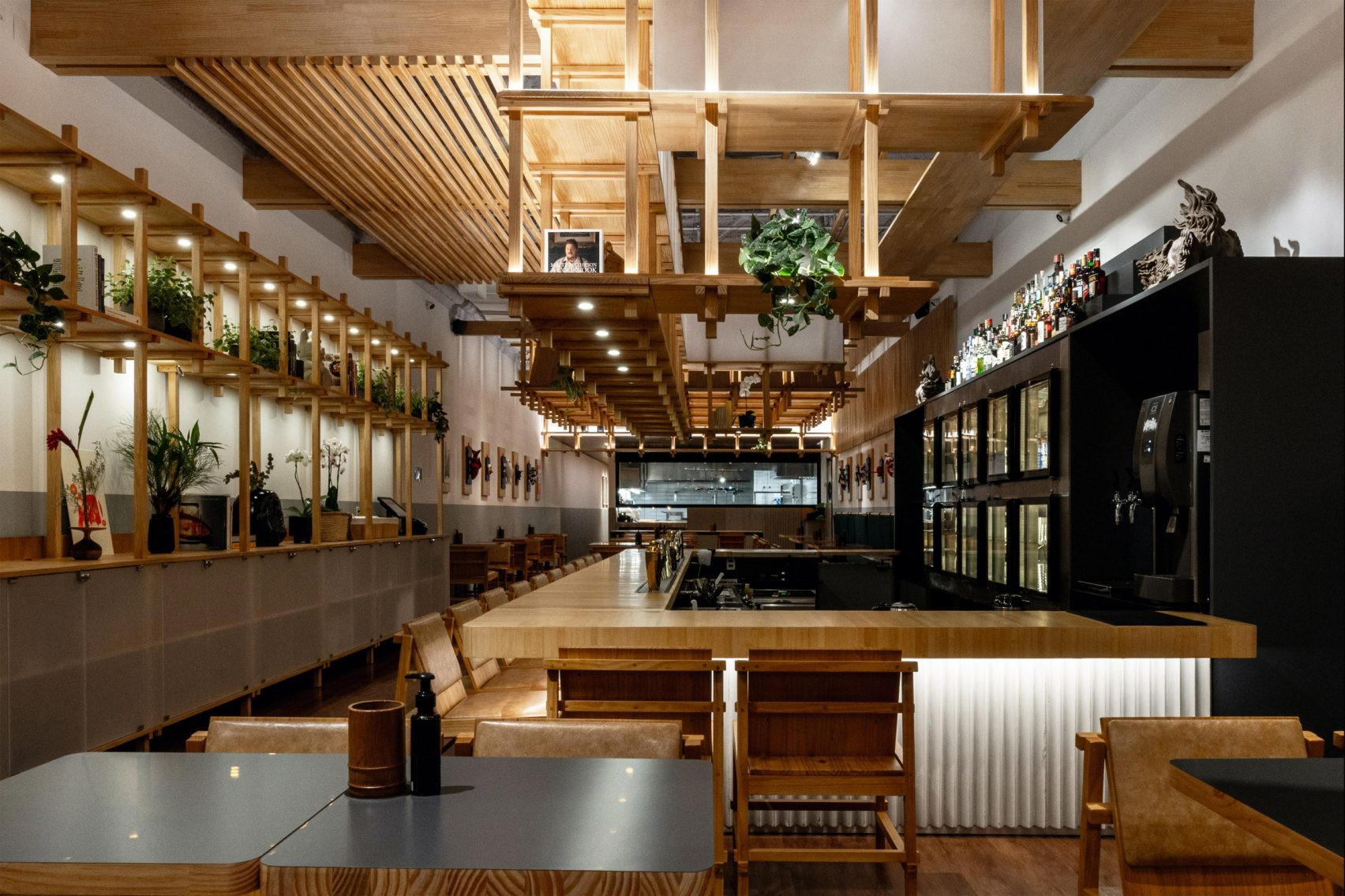
The restaurant’s scale also changes the reading. A 70-seat room, split between indoor seating and terrace seating, is a different urban tool from an eight-seat omakase counter. It can absorb families, dates, and larger parties without pretending to be a private salon. The terrace detail is particularly Sakae: Nagoya’s central districts are dense, commercial, and often interior-facing, so outdoor seats in a dining building add a visible social layer to the meal.
Within Nagoya, the comparison is less about identical cuisine than about spend tier and occasion. takumi sits slightly below this bracket, while Sen Kame and Sakana To Nihonshu Atarayo occupy a comparable dinner range in a more Japanese-leaning idiom. Those references clarify the choice: Alan. is for a night when the group wants heat, smoke, fish emphasis, steak, tacos, wine, and cocktails rather than the quieter grammar of sake-led small plates.
The case for Alan. is category contrast, not chef mythology
There is no need to turn the restaurant into a founder narrative. Its stronger editorial value is what it says about Nagoya’s broadening dining appetite. Peruvian food in Japan often enters through nikkei associations, ceviche culture, charcoal, and a high-acid counterpoint to heavier grilled dishes. Here, the public category markers point to Peruvian, steak, and tacos, with fish called out as a point of attention and wine and cocktails given equal beverage weight.
That combination is useful in a city where many premium meals ask diners to commit to a single format. A shared-plate structure lowers the pressure: a table can assemble dinner around seafood, meat, and handheld dishes without entering a formal tasting sequence. It also suits Sakae’s mixed crowd, where business dinners, friends, and families overlap more visibly than in Nagoya’s stricter counter restaurants.
The recognition signal is specific rather than inflated. Tabelog’s Asian and ethnic cuisine EAST 100 list is not a Michelin star, and it should not be read as one. It does, however, indicate that the restaurant has reached a level of attention within a regional category where Tokyo dominates much of the national conversation. For Nagoya, that matters: restaurants outside the capital need clearer proof points to travel beyond local word of mouth.
Readers building a broader itinerary can use this as a contrast point against Nagoya’s Italian, French, and Japanese dining rooms. Nearby city choices such as Aroma-fresca Nagoya, Aaron, 1022, 451, and All Day Dining Montmartre show how varied the city’s non-washoku circuit has become. Alan. makes sense when the evening calls for a louder table and a broader drinking rhythm.
How to place it in a Nagoya itinerary
The strongest use case is an evening in Sakae, especially when the plan includes drinks before or after dinner. This is not the restaurant to choose for a silent, chef-facing ritual; it is better understood as a polished social room with Latin direction and enough breadth for mixed preferences. The family-friendly notes and stroller acceptance also separate it from restaurants that quietly discourage children through format alone.
For travellers, the neighbourhood does much of the work. Sakae is central, transit-linked, and built for moving between dinner, bars, shopping, and hotels. That makes the restaurant easier to fold into a city stay than destination restaurants on the edge of town. Pair it with Our full Nagoya hotels guide for base planning, then use Our full Nagoya bars guide, Our full Nagoya experiences guide, and Our full Nagoya wineries guide to shape the rest of the night or weekend.
Nationally, it also belongs to a wider Japanese pattern: regional cities are no longer defined only by local specialties and Tokyo-derived fine dining. Latin, Vietnamese, curry, sake-bar, and casual Japanese formats now travel across the country and beyond it with sharper identities. For that broader map, compare the category spread with (Shoku) Vietnam in Kawasaki, [Curry Senmon Ten] Maruyama Kyoju. in Sapporo. 鮪と炭火焼き うお炭 秋葉原店 in Tokyo.cafe in Osaka.know in Kumamoto, -Grilled beef Sukiyaki- KAMAKURA TANUKIAN 鎌倉 たぬき庵 in Kamakura, Jōdo Saké Bar in Los Angeles, and Onigiri Time in Pasadena. The through-line is not sameness; it is the way Japanese dining culture now accommodates stronger category identities without losing its concern for setting and occasion.
Frequently asked questions
When can I go to Alan.?
Hours at Alan.: Mon: 5 PM–12 AM; Tue: 5 PM–12 AM; Wed: 5 PM–12 AM; Thu: 5 PM–12 AM; Fri: 5 PM–12 AM; Sat: 5 PM–12 AM; Sun: 5 PM–12 AM.
Where is Alan. in Nagoya?
Alan. is located in Nagoya.
Is Alan. more mid-range or high-end?
Pricing at Alan. is listed as JPY 6,000 - JPY 7,999.
What is Alan. known for?
Alan. is primarily known for its core concept and execution in Nagoya.
A Lean Comparison
Comparable venues in the metro at similar price points.
| Venue | Cuisine | Price | Awards | Notes |
|---|---|---|---|---|
| Alan.This venue (the venue you are viewing) | Modern Latin wood‑fire Peruvian & Mexican | $30–50 | Tabelog 100 #92 | Not listed |
| Setsugekka Tanaka Satoru | Modern Japanese Yakiniku | $200–300 | Tabelog Bronze #398 | Not listed |
| takumi | Charcoal-grilled Yakiniku & Izakaya | $30–50 | Tabelog 100 #14 | JPY 5,000 - JPY 5,999 |
| Sen Kame | Traditional Yakitori & Izakaya | $30–50 | Tabelog 100 #5 | JPY 6,000 - JPY 7,999 |
| Sakana To Nihonshu Atarayo | Creative Seafood Izakaya with Sake | $50–100 | Tabelog 100 #39 | JPY 6,000 - JPY 7,999 |
Recognition history
Dated appearances from independent guides and award organizations, with the underlying list record or original source where available.
Tabelog 100 #92 · No. 92
Tabelog · Tabelog 100 - Asian cuisine / Ethnic cuisine - EAST - 2024
Continue exploring
More in Nagoya
Details
- Trendy
- Modern
- Romantic
- Lively
- Elegant
- Date Night
- Group Dining
- Celebration
- Casual Hangout
- After Work
- Late Night
- Terrace
- Design Destination
- Standalone
- Open Kitchen
- Craft Cocktails
- Local Sourcing
- A La Carte
- Small Plates
- Cocktails
- Beer
- Wine
Current opening hours
- Monday
- 5 PM–12 AM
- Tuesday
- 5 PM–12 AM
- Wednesday
- 5 PM–12 AM
- Thursday
- 5 PM–12 AM
- Friday
- 5 PM–12 AM
- Saturday
- 5 PM–12 AM
- Sunday
- 5 PM–12 AM
Hours can change for holidays and private events. Hours as of .
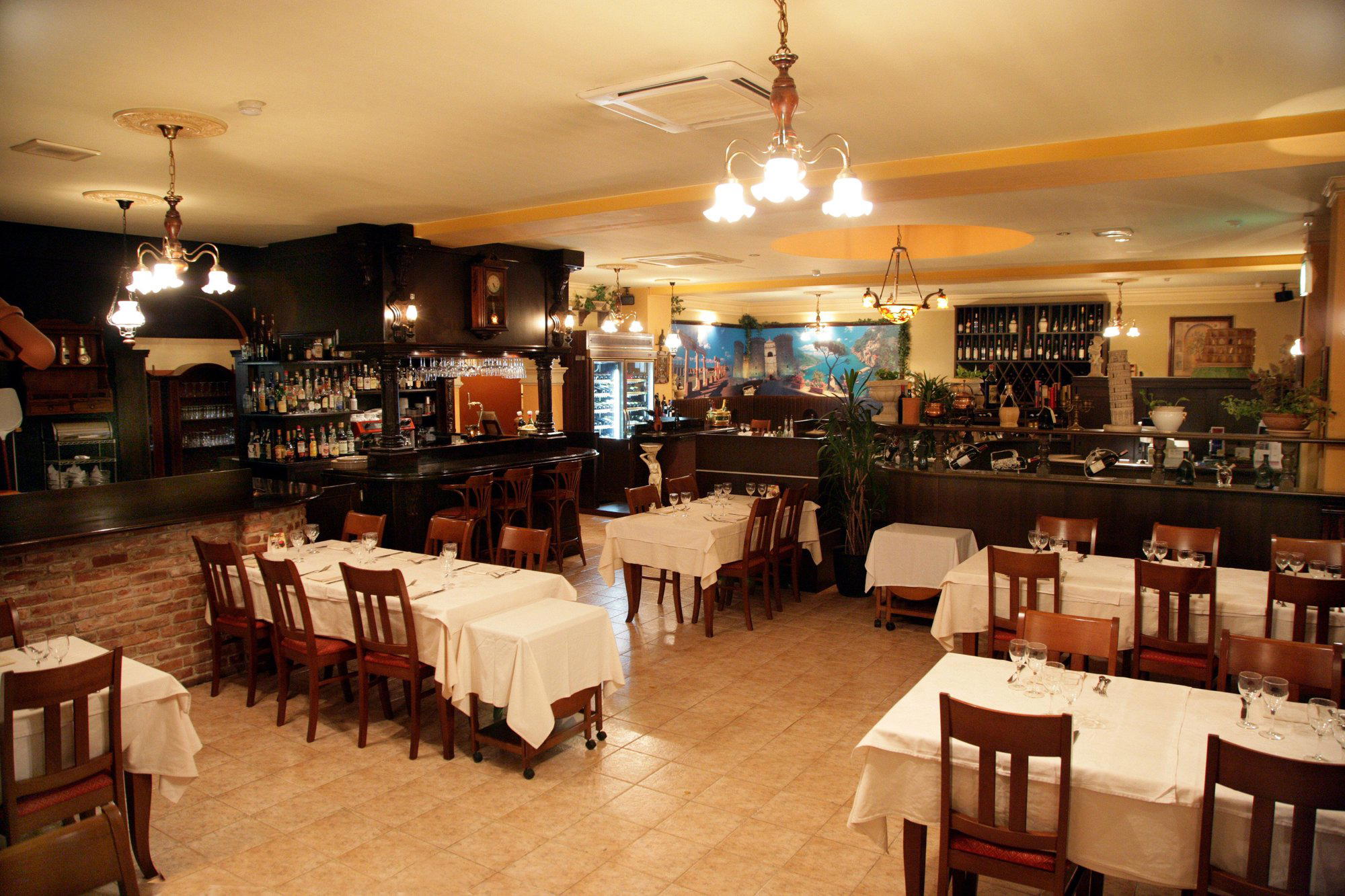
Inside a third‑floor hideaway near Sakae Station, the dining room uses lots of stone and wood, South American decor, and a terrace to evoke a relaxed resort‑hotel feel; it is open, stylish, and energetic rather than quiet or formal.