

Tabelog Silver #63
Our verdict
A Tabelog Award 2026 Silver winner with a 4.36 score, Yakiniku Kosen operates from a 10-seat counter in Tateishi, Katsushika, placing serious yakiniku craft far outside Tokyo's central dining corridors. Listed in the Tabelog Yakiniku Tokyo 100 for three consecutive years, it books by phone or Instagram DM, accepts cash only, and opens Tuesday through Saturday from 17:00.

Pearl is the En Primeur Club membership app, where members save venues, book tables and use the concierge.
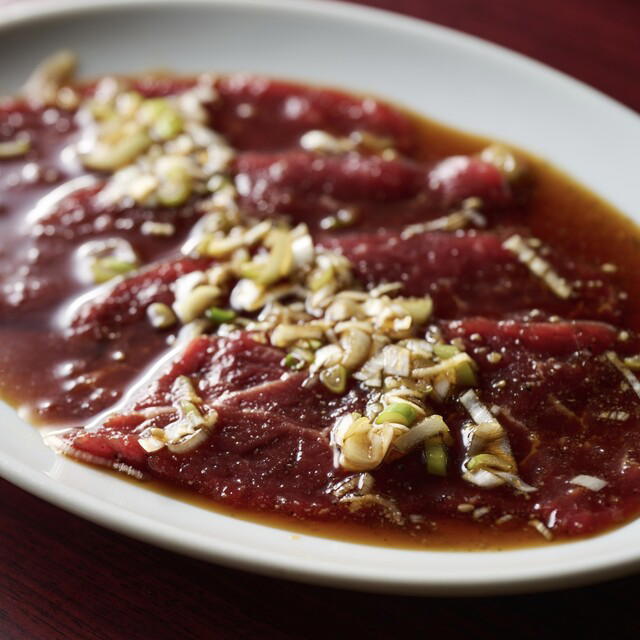
Ten counter seats. Cash only. A Katsushika address that requires a deliberate commitment to get to. Yakiniku Kosen has accumulated the kind of award record that Tokyo's central yakiniku circuit might envy, yet it operates entirely outside that circuit, from a neighbourhood that most restaurant tourists never reach.
Yakiniku in Tokyo's Outer Wards
Tokyo's yakiniku scene splits, broadly, into two registers. The first is the premium Minami-Aoyama and Ginza tier, where high-grade wagyu is served in polished dining rooms at prices that can exceed JPY 30,000 per head. The second is the neighbourhood-rooted counter, where the craft is just as serious but the room is plainer, the geography less convenient, and the prices correspondingly lower. Yakiniku Kosen belongs firmly to the second register, operating from Tateishi in Katsushika City, a working-class district on the Keisei Line that sits a world away from the design-conscious interiors of central Tokyo grilling counters.
What separates Kosen from the ordinary neighbourhood grill is the award consistency. A Tabelog score of 4.36 is a meaningful threshold on a platform where the average for a well-regarded Tokyo restaurant sits closer to 3.5. More telling still is the sustained recognition: selected for the Tabelog Yakiniku Tokyo 100 in 2023, 2024, and 2025, and then the Tabelog Award 2026 Silver, which ranks it 63rd among Silver-tier winners nationally. That is three consecutive years of peer-reviewed recognition across a platform with several million Japanese-language reviews. It does not happen by accident at a 10-seat counter in Katsushika.
For broader context on Tokyo's dining scene across all categories, our full Tokyo restaurants guide maps the city's range from neighbourhood counters to multi-starred destination rooms. For the kaiseki end of Tokyo's tradition, RyuGin (Kaiseki, Japanese) represents the formal seasonal multi-course format, while Harutaka (Sushi) shows how the counter format achieves different heights in the sushi category. Kosen is operating in a distinct mode from both, but the counter discipline it shares with those rooms is part of the same Tokyo instinct for small-format, high-attention cooking.
The Counter Format and What It Signals
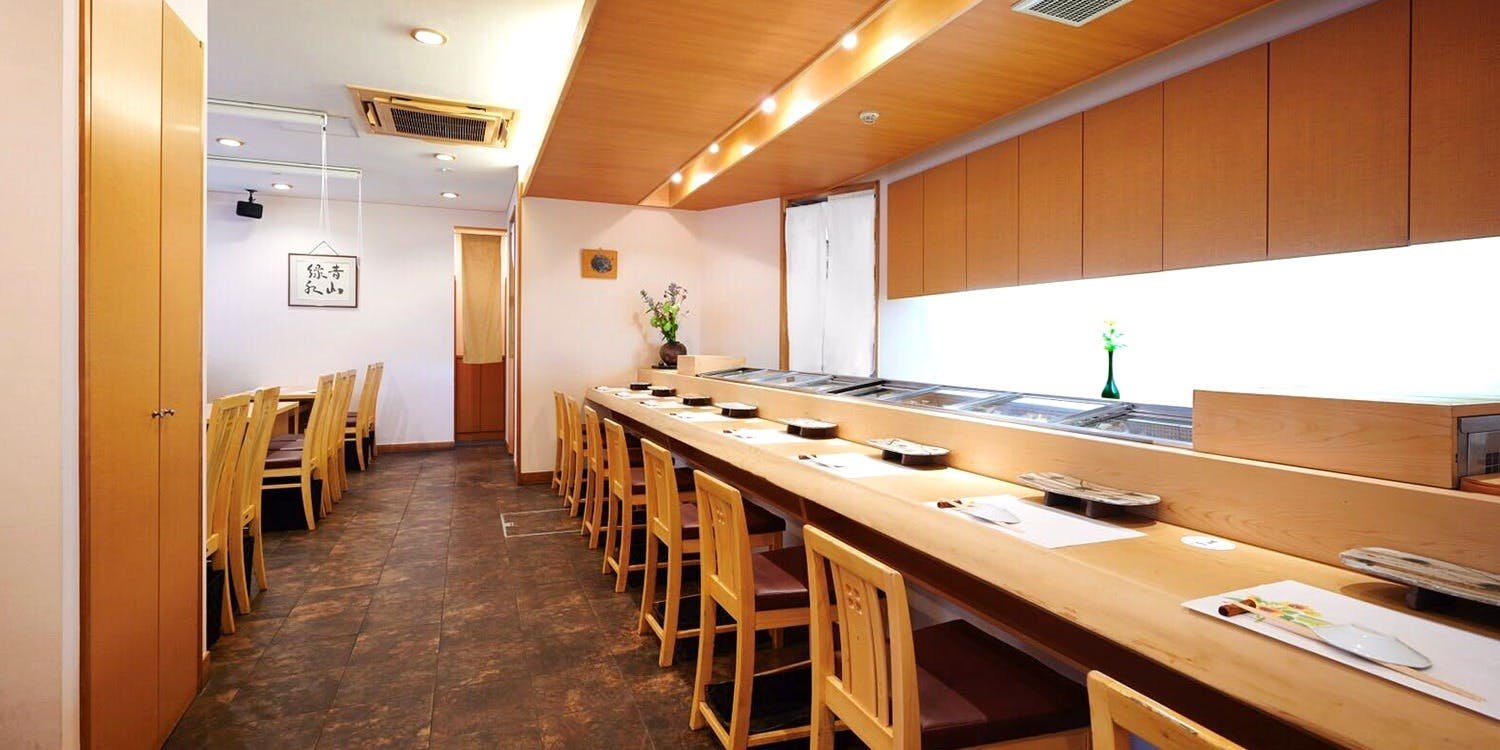
The 10-seat counter configuration is not incidental. In Tokyo's serious eating culture, the counter is a deliberate choice that prioritises the relationship between the person grilling and the person eating. At yakiniku in this format, the grill becomes the focus, and the progression of cuts, timing, and heat management is as considered as coursework in a kaiseki room. The kaiseki tradition's foundational principle, that each element should express the season and arrive in a sequence that builds and resolves, maps onto serious yakiniku practice more directly than the format might suggest. Both traditions are concerned with the organisation of experience across time, not just the quality of any single moment.
Kosen's described location as a “house restaurant” and “hideout” reinforces the counter's intimacy. This is not a venue designed for first-time visitors who have wandered in. The booking process itself, by phone during evening hours or by DM to an Instagram account, is a mild filter. Visitors who make the effort to locate the address, contact the restaurant in advance, and arrive with cash are self-selecting for the kind of engagement the format rewards.
The private room configuration adds a second mode. The second floor can accommodate groups of four, six, or eight, and the entire venue can be taken for private use by up to 20 people. That flexibility shifts Kosen between an intimate counter experience and a group setting without the venue changing its essential character.
Pricing and Its Context
The listed average price of JPY 6,000 to JPY 7,999 per dinner positions Kosen below the premium central-Tokyo yakiniku tier, but the review-derived average tells a different story: JPY 10,000 to JPY 14,999 per person. The gap between listed and actual spend is common at serious yakiniku counters, where the graded selection of cuts and the natural tendency to add one more round push totals above the headline figure. That revised range still lands well below what a comparable evening at a Ginza grilling counter would cost, which is part of the proposition. At Kosen, the value argument is not that the price is low in absolute terms; it is that the award-level quality is being delivered at a price point the central-Tokyo equivalents cannot match.
For international visitors calibrating Tokyo price points, JPY 10,000 to JPY 14,999 sits comfortably below what a comparable evening at L'Effervescence (French) or Sézanne (French) would cost, and is considerably below the high-end kaiseki tier. The cash-only payment policy is a firm operational constraint and worth planning for specifically, as the nearest ATMs may not accept all international cards.
Tateishi as Context
Tateishi is one of the few Tokyo neighbourhoods that has retained a pre-bubble commercial character. The Tateishi Nakamise shotengai, a covered shopping street running close to the station, is one of the few examples of that shopping-arcade format that still operates primarily for local residents rather than tourists. Kosen sits about 55 metres from Keisei Tateishi station, one minute on foot, which makes the logistics direct despite the distance from central Tokyo. The neighbourhood's character, working-class, unpolished, emphatically not curated for visitors, is part of what gives the counter its credibility. A 4.36 Tabelog score in this context is earned differently than the same score in Azabu-Juban.
For visitors exploring Japan beyond Tokyo, Gion Sasaki in Kyoto and HAJIME in Osaka represent the Kansai equivalents of destination counter dining, while Goh in Fukuoka, akordu in Nara, 1000 in Yokohama, and 6 in Okinawa extend the map further. For comparison outside Japan, Le Bernardin in New York City and Atomix in New York City show how the counter-and-sequence format operates in a transatlantic context.
Within the Tokyo frame, ura matsu is another address that rewards the effort of leaving the tourist corridor. Explore our full Tokyo hotels guide, our full Tokyo bars guide, our full Tokyo wineries guide, and our full Tokyo experiences guide for the broader picture.
Know Before You Go
- Address: 1 Chome-18-5 Tateishi, Katsushika City, Tokyo 124-0012
- Getting there: 1-minute walk from Keisei Tateishi Station (Keisei Line), approximately 55 metres from the station
- Hours: Monday to Saturday, 17:00 to 23:30. Closed Sundays.
- Reservations: By phone (+81-3-3694-7316) during 17:00 to 24:00, or by DM on Instagram (@yakiniku.kousen)
- Payment: Cash only. No credit cards, electronic money, or QR code payments accepted. Plan accordingly.
- Seats: 10-seat counter on the ground floor. Private rooms on the second floor for 4, 6, or 8 guests. Full venue private hire available for up to 20 people.
- Price range: JPY 6,000 to JPY 7,999 (listed average); review-based average JPY 10,000 to JPY 14,999
- Awards: Tabelog Award 2026 Silver (Score: 4.36, ranked 63rd Silver nationally); Tabelog Yakiniku Tokyo 100 in 2023, 2024, and 2025
- Smoking: Designated smoking area on the second floor
- Parking: Not available
What to Order at Yakiniku Kosen
At Tabelog-recognised yakiniku counters in Tokyo, the standard approach is to follow the counter's own pacing rather than ordering everything at once. The review-derived spend of JPY 10,000 to JPY 14,999 suggests that a full evening at the counter runs longer and deeper than a quick grill. Shochu is the listed drink category, which is the conventional pairing at this type of counter. Given the award consistency and the 4.36 score, the logical approach is to defer to the house order of service rather than importing preferences from a different style of yakiniku room. The counter format, 10 seats, no walk-ins, cash only, is itself an instruction about how to engage with the venue.
Booking and Cost Snapshot
Comparable venues nearby, for context on price, style, and recognition.
| Venue | Cuisine | Price | Awards | Notes |
|---|---|---|---|---|
| Yakiniku KosenThis venue (the venue you are viewing) | Japanese Yakiniku | $30–50 | Tabelog Silver #63 | Not listed |
| Vino della Pace | Classic Regional Italian with Extensive Wine Pairings | $100–150 | Star Wine List | Nishiazabu, Classic Regional Italian with Extensive Wine Pairings |
| Otona | French-Italian Bistro | $50–100 | Not listed | Kinshicho, French-Italian Bistro |
| Naturam | Seasonal French with Japanese Ingredients | $50–100 | We're Smart World 3 Radishes | Setagaya, Seasonal French with Japanese Ingredients |
| Shōtai-en | Japanese Yakiniku | $50–100 | Tabelog 100 #17 | Arakawa, Japanese Yakiniku |
| Pizzeria Bella Napoli | Neapolitan Pizza | $30–50 | Tabelog 100 #32 | Kōtō, Neapolitan Pizza |
Recognition history
Dated appearances from independent guides and award organizations, with the underlying list record or original source where available.
Opinionated About Dining Top Restaurants in Japan Recommended
Opinionated About Dining
Tabelog Silver #63
Tabelog
Full recognition history (3 entries)
Tabelog 100 #68 · No. 68
Tabelog · Tabelog 100 - Yakiniku - TOKYO - 2025
Continue exploring
More in Tokyo
Restaurants in Tokyo
All restaurants in Tokyo →





Details
- Cozy
- Classic
- Intimate
- Date Night
- Business Dinner
- Group Dining
- Special Occasion
- Standalone
- Open Kitchen
- Counter Dining
- A La Carte
- Halal
Current opening hours
- Monday
- 5 PM–12 AM
- Tuesday
- 5 PM–12 AM
- Wednesday
- 5 PM–12 AM
- Thursday
- 5 PM–12 AM
- Friday
- 5 PM–12 AM
- Saturday
- 5 PM–12 AM
- Sunday
- Closed
Hours can change for holidays and private events. Hours as of .
Warm, cozy, and intimate, with a Showa-era feel and a personalized, locally loved atmosphere.