Our verdict
Yakatabune Okita sits on the Toba waterfront in Mie Prefecture, one of Japan's most productive fishing regions, where the logic of serving what the sea provides that morning shapes the entire operation. A traditional yakatabune floating dining vessel connects the meal directly to its source in a way that few restaurant formats can replicate. For visitors prepared to engage with that premise, it is a meal defined by place rather than by spectacle.

Pearl is the En Primeur Club membership app, where members save venues, book tables and use the concierge.
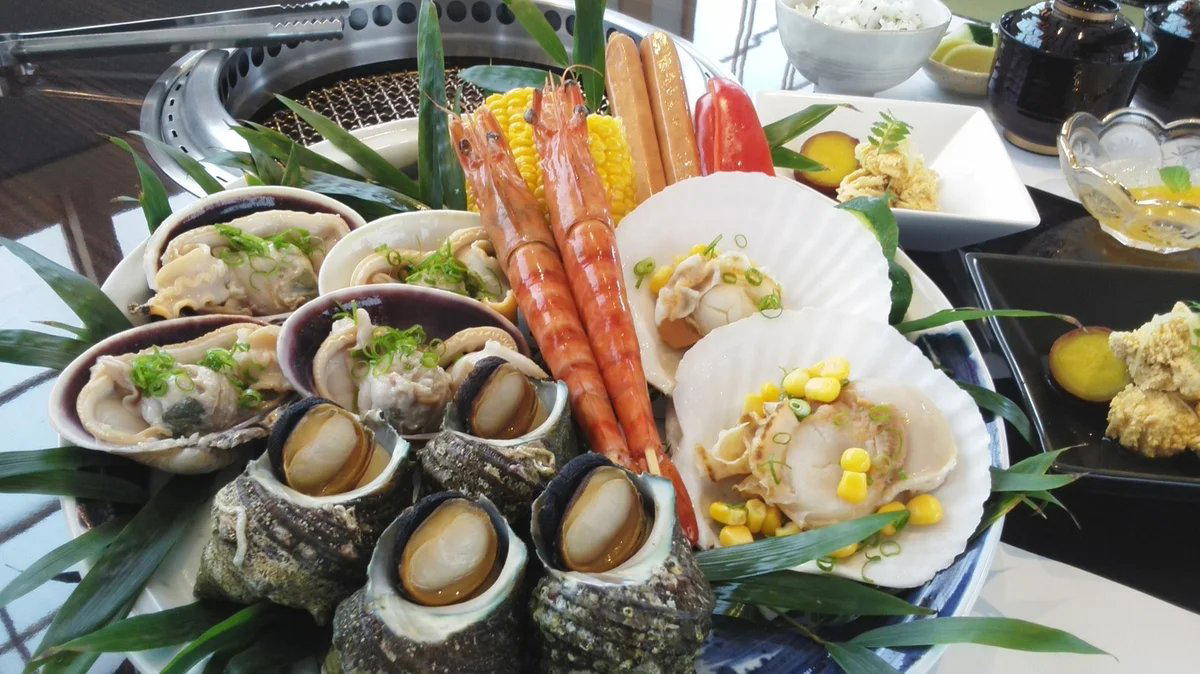
Dining on the Water in One of Japan's Defining Seafood Regions
Toba sits at the intersection of Ise Bay and the Kumano Sea on the eastern rim of the Kii Peninsula, and its position has shaped what people eat here for centuries. The waters around Mie Prefecture are cold, nutrient-rich, and among the most carefully managed fisheries in Japan. The prefecture accounts for a significant share of the country's cultivated pearl production, and its diving tradition, particularly the ama free-diving women who harvest abalone, turban shells, and sea urchin along this coast, has been recognized by UNESCO as an Intangible Cultural Heritage. Seafood sourced from these waters arrives at the table with a provenance that is geographically and culturally specific in a way that restaurant menus in larger cities rarely match.
Yakatabune Okita operates as a yakatabune, a style of floating dining vessel with deep roots in Japanese culture. In historical terms, yakatabune were pleasure boats used for moon-viewing parties, river banquets, and seasonal celebrations along the rivers of Edo and Osaka. The format has survived precisely because the premise is elemental: you eat on the water, from the water, surrounded by the water. In a fishing port like Toba, that logic is not decorative. It is the actual supply chain made visible.
The Sourcing Premise Behind This Format
The editorial angle on yakatabune dining in Mie is not atmosphere for its own sake. The format only works as a serious food proposition when the sourcing is genuinely local and genuinely fresh. Toba's position on Ise Bay places it within reach of some of the most carefully tracked seafood in Japan. Ise lobster (ise-ebi) is the region's signature crustacean, harvested from the rocky coastal shelf between September and April, and its presence on any Toba-based menu is a marker of seasonal alignment rather than a year-round concession to tourism.
The broader pattern across Japan's premium seafood dining, from the high-end counters of places like Harutaka in Tokyo to multi-course kaiseki formats like Gion Sasaki in Kyoto, is that proximity to source is treated as a credential. Chefs at those venues use procurement relationships to signal quality. At a waterfront operation in Toba, geography performs the same function. The fish market, the fishing boats, and the dining vessel occupy the same postal address, more or less. That compression of supply chain is what defines the yakatabune proposition at its strongest.
Compare this to the highly mediated sourcing models at restaurants like HAJIME in Osaka or akordu in Nara, where ingredient provenance is curated across a wide geography and communicated through written menus and chef's notes. The yakatabune model inverts that: the sourcing story is self-evident from where the vessel is moored.
Approaching Toba and the Waterfront Context
Toba is accessible by the Kintetsu Toba Line, with direct services connecting to Nagoya and Osaka via Ise-Shi. The city's waterfront is compact, and Yakatabune Okita's address at 1 Chome-2383-51 Toba places it within the main port area where fishing activity is visible throughout the morning. Arriving early enough to see the harbour before a late-morning or midday departure gives the meal a different register than simply boarding. The physical environment, salt air, working boats, the industrial honesty of a real fishing port, frames what arrives on the table before any food is served.
For visitors building a broader Mie itinerary, メインダイニング シーホース offers another entry point into Toba's dining scene, and the full Toba restaurants guide covers the range of options across price points and formats. Toba sits close enough to the Ise Grand Shrine to anchor a longer regional journey through Mie, and the combination of cultural and culinary weight in this corner of Honshu is denser than the city's size would suggest.
The Yakatabune Format in Context
Japan's floating dining tradition sits apart from the country's more scrutinized fine dining formats. While Michelin's Japan guide has mapped restaurants across Tokyo, Osaka, and Kyoto with considerable precision, yakatabune operations occupy a different evaluation register entirely. They are not primarily competing with kaiseki counters or high-end sushi rooms.
That framing matters for how to approach Yakatabune Okita. This is not where you go to benchmark a regional cuisine against the technical standards of Goh in Fukuoka or the sourcing discipline of places like 一本杉川嶋 in Nanao, another coastal town where local seafood provenance carries significant weight. You go because the argument for eating in Toba is geographic and historical, and the yakatabune format makes that argument most directly.
Across Japan's regional coastal dining, the most interesting operations tend to be the ones that resist the pressure to aestheticize or over-narrate their sourcing. The leading seafood meals in port towns often look plain on paper: the catch, the vessel, the season. Yakatabune Okita sits within that tradition.
Planning a Visit
Contact details and booking policies for Yakatabune Okita are not available through standard online channels at the time of writing. Visitors planning a trip to Toba should build in additional time for local inquiry, whether through the Toba tourist office or accommodation concierge services, as yakatabune operations in smaller ports are often managed through direct or phone-based reservations rather than online booking platforms. Arriving in Toba with flexible scheduling is advisable, particularly if the visit is timed around a specific seafood season such as the ise-ebi harvest window from September through April. For travelers with dietary restrictions or allergy concerns, advance communication in Japanese is strongly recommended, as smaller vessel operations may have limited capacity to adjust menus once underway.
Regional Seafood Dining Worth Comparing
Mie's seafood tradition does not exist in isolation from the broader coastal dining culture of central and western Honshu. Travelers who engage seriously with sourcing-led seafood meals in the region often extend their itineraries to include venues along Japan's Sea of Japan coast, where operations like 湖竜庵 in Takashima engage with local lake and river sourcing in ways that parallel the coastal logic of Toba. For seafood dining further afield, the comparison set expands quickly: Le Bernardin in New York City represents one end of the spectrum, where seafood is refined through classical French technique, while Atomix in New York City demonstrates how Korean fine dining applies rigorous sourcing discipline across a tasting menu format. The yakatabune model in Toba is the counterpoint to all of that: sourcing as geography, not as curation.
Frequently asked questions
Where is Yakatabune Okita located?
Yakatabune Okita is located at 1 Chome-2383-51 Toba, Mie 517-0011, Japan, Toba.
How does the yakatabune format at Okita differ from a standard waterfront restaurant in Toba?
A yakatabune is a working floating vessel that moves on the water rather than a static restaurant positioned beside it, meaning the dining context in Toba is the bay itself rather than a view of it. This puts Yakatabune Okita inside a category of Japanese dining, boat-based, fixed-course, tied to departure times, that operates on different terms from shore-side seafood houses in Mie. The format has historical roots in Edo-period Japan and remains more common in Tokyo Bay and Osaka, making its presence in Toba's Ise Bay context geographically specific.
What dish is Yakatabune Okita famous for?
Yakatabune Okita operates within Toba's seafood tradition, where Ise Bay and the Kumano Sea supply the defining ingredients. The yakatabune format in this region centers on local coastal seafood served aboard the vessel, a practice shaped by Mie's position as one of Japan's most productive fishing prefectures.
Is Yakatabune Okita reservation-only?
Yakatabune dining in Japan, including operators along Toba's waterfront, typically requires advance booking given the fixed-capacity nature of the boat format. Yakatabune Okita's booking process is not available through standard online channels at time of writing. Visitors should plan to make contact locally or through a hotel concierge in Toba, Mie.
What makes Yakatabune Okita worth seeking out?
The case for Yakatabune Okita sits in the format itself: Toba is among the few Japanese cities where floating boat dining aligns directly with a serious regional seafood tradition rather than operating as a novelty. Mie Prefecture supplies Ise lobster and a range of coastal catch that rarely reaches comparable freshness in landlocked settings. The venue's address on the Toba waterfront at 1 Chome-2383-51 places it at the operational centre of that supply chain.
How does Yakatabune Okita handle allergies?
No allergy or dietary accommodation policy is documented for Yakatabune Okita. Yakatabune menus in Japan are generally structured around a fixed coastal seafood format, which means shellfish and fish are central to the offering. Guests with allergies should communicate requirements directly when making their reservation, ideally in advance through a Japanese-speaking contact.
Comparable Spots, Quickly
Comparable venues nearby, for context on price, style, and recognition.
| Venue | Cuisine | Price | Awards | Notes |
|---|---|---|---|---|
| Yakatabune OkitaThis venue (the venue you are viewing) | Traditional Japanese Seafood Yakatabune | $30–50 | Not listed | Not listed |
| Nishimura Shokudo | Japanese Seafood Cafeteria | Not listed | Tabelog 100 #57 | Ijikacho |
| メインダイニング シーホース | Resort French with Local Seafood | $100–150 | Not listed | Toba |
| Teppanyaki Toba Bettei Hanagoyomi | Upscale Teppanyaki in Toba | $150–200 | Tabelog 100 #80 | Toba |
| 海女小屋 はちまんかまど | Ama Diver Seafood Grill | $30–50 | Not listed | 相差町 |
| すし築地日本海 長野駅前店 | Authentic Edomae Sushi & Izakaya | $30–50 | Not listed | Nagano Station (Zenkokuji-guchi) |
Continue exploring
More in Toba
Restaurants in Toba
All restaurants in Toba →
Details
- Scenic
- Romantic
- Classic
- Date Night
- Group Dining
- Special Occasion
- Waterfront
- Private Dining
- Panoramic View
- Local Sourcing
- Sustainable Seafood
- Waterfront
- Family Style
- Set Menu
- Pescatarian Friendly
Current opening hours
- Monday
- 12–9:30 PM
- Tuesday
- 12–9:30 PM
- Wednesday
- 12–9:30 PM
- Thursday
- 12–9:30 PM
- Friday
- 12–9:30 PM
- Saturday
- 12–9:30 PM
- Sunday
- 12–9:30 PM
Hours can change for holidays and private events. Hours as of .
Atmospheric traditional boat setting with beautiful bay views, creating an intimate and memorable dining experience on the water.