
Our verdict
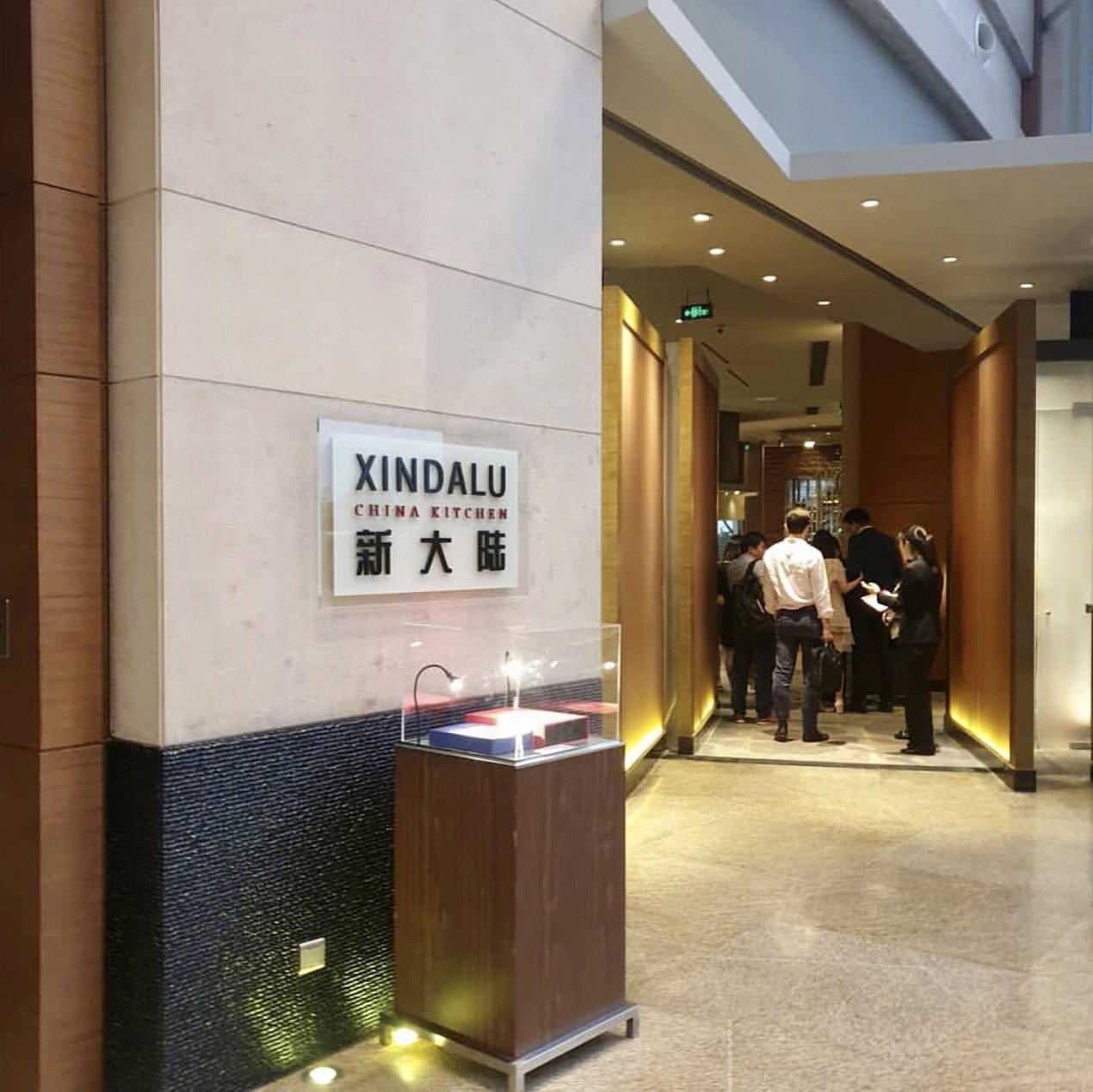
Xindalu brings tempura to Shanghai's Hongkou District with three consecutive years of recognition from Opinionated About Dining, moving from Recommended in 2023 to a ranked position of #384 in Asia in 2024 and #407 in 2025. The format sits within a broader regional shift toward Japanese precision cooking in Chinese cities, and the OAD rankings place it in a defined peer tier among Asia's specialist restaurant circuit.

Pearl is the En Primeur Club membership app, where members save venues, book tables and use the concierge.
The menu
What to order
- Peking Duck cooked in a wood-fired oven
- Beggar's Chicken
- Pyramid Braised Pork
Tempura in Shanghai: A Format Finding Its Footing
Walk into the kind of room where tempura is taken seriously and the air carries a specific register: clean frying oil, the low hiss of batter hitting hot fat, and a counter arrangement that pulls the kitchen into full view. That physical dynamic, cook and diner sharing the same compressed space, is precisely what separates a dedicated tempura-ya from a Japanese restaurant that happens to fry. In Shanghai, that specialist format has been slower to arrive than omakase sushi or kaiseki, which have both established mature footholds across the city.
The broader context matters here. Across East Asia's major cities, Tokyo, Osaka, Taipei, the tempura counter has long operated as its own category, distinct from multi-format Japanese dining. Cities like Osaka carry dedicated houses with multi-decade track records; see, for example, Numata in Osaka, a benchmark for understanding what the specialist counter format looks like at full maturity. Mudan Tempura in Taipei represents a parallel development in a Chinese-speaking city context. Shanghai's version of this tradition is younger, but the appetite for precision Japanese cooking in the city is not in doubt.
Three Years of OAD Recognition and What It Signals
Opinionated About Dining runs on crowd-sourced scores from a tightly curated network of serious eaters, weighted toward repeat visitors and people with demonstrated track records across multiple dining markets. Its Asia list is not a Michelin guide, it does not reward service theatre or room investment in the same way, but it is a meaningful signal for formats where technique is the primary subject. Xindalu has appeared on the OAD Asia rankings three consecutive years: Recommended in 2023, ranked #384 in 2024, and #407 in 2025.
The trajectory requires a careful read. A drop from #384 to #407 between 2024 and 2025 is not a crisis, the list expands year over year, and movement of 20-odd positions in a field of several hundred reflects ordinary variance rather than a meaningful decline. More significant is the consistent presence across three cycles, which confirms the restaurant is not a single-year discovery but a stable fixture in the considered-dining circuit for Shanghai. For context, the OAD Top 500 Asia designation places Xindalu in a peer tier that includes restaurants with Michelin stars and James Beard-level credentials elsewhere, it is a calibrated ranking among specialists, not a broad popularity index.
Within Shanghai specifically, that tier includes operations across several formats and price points. Fu He Hui, which operates at the ¥¥¥¥ tier in the vegetarian space, and 102 House in the Cantonese format both hold comparable recognition-circuit positioning. Taian Table, working in Modern European and Innovative, occupies the more premium bracket. Xindalu's position is in a distinct lane: Japanese technique applied to a single cooking discipline, in a city where that discipline has fewer dedicated practitioners than its demand would warrant.
The Social Architecture of a Tempura Counter
Where the izakaya is expansive (many dishes, much drinking, long evenings), the tempura counter is narrower and more sequential. Courses arrive in a considered order: lighter ingredients early, richer cuts and vegetables toward the middle, something starchy to close. The social dimension is compressed to the counter itself, where conversation flows between whatever neighbors chance has placed beside you.
That format has strong precedents in Shanghai's Japanese dining scene. Numata Sou in Shanghai operates in a related register, demonstrating that the city has appetite for counter-format Japanese cooking that puts technique on display. The counter disciplines, sushi, tempura, yakitori, share a structural logic: a single cook (or small brigade) working in full view, producing courses that arrive on their own timing rather than to order. The diner's role is closer to audience than customer, which is either the draw or the deterrent depending on what you want from an evening out.
For Shanghai diners considering the format for the first time, the comparison with broader Chinese-rooted fine dining is instructive. Xin Rong Ji on West Nanjing Road and Fu He Hui both deliver considered multicourse formats, but the logic is additive, more dishes, more variety. The tempura counter offers the opposite: reduction to a single technique, watched and tasted in real time.
Hongkou and the Geography of Japanese Dining in Shanghai
Hongkou District carries historical weight in Shanghai's Japanese community, it was the center of the pre-war Japanese settlement in the city and retains a density of Japanese-facing businesses that has outlasted that era. That geography is not incidental to a restaurant like Xindalu. Specialist Japanese formats, particularly counter operations, tend to cluster in neighborhoods with both Japanese resident populations and a local customer base familiar enough with the format to fill seats on a regular basis. Hongkou provides both.
The district sits north of the Suzhou Creek, away from the Bund-adjacent concentration of high-profile international dining. That positioning affects the competitive set: Xindalu is not competing directly with the hotel restaurant circuit or the showcase addresses around Xintiandi. It is operating in a neighborhood register, which for a counter format is often the right fit, counter dining rewards repeat visits and familiarity more than destination pilgrimages.
For visitors building an itinerary across Chinese cities, the tempura format appears in different configurations: Xin Rong Ji on Xinyuan South Road in Beijing, Xin Rong Ji in Chengdu, and Ru Yuan in Hangzhou each map Japanese-influenced precision cooking onto different city contexts. Further afield, Chef Tam's Seasons in Macau, Imperial Treasure Fine Chinese Cuisine in Guangzhou, and Dai Yuet Heen in Nanjing represent the Chinese fine dining tier that shares the same discerning-diner circuit without the Japanese technique frame.
Planning Your Visit
Xindalu is located in Hongkou District, Shanghai 200120. For broader Shanghai dining planning, see our full Shanghai restaurants guide, and for adjacent decisions around accommodation and nightlife, consult our full Shanghai hotels guide, our full Shanghai bars guide, our full Shanghai wineries guide, and our full Shanghai experiences guide.
| Venue | Format | Price Tier | Recognition |
|---|---|---|---|
| Xindalu | Tempura counter | Not confirmed | OAD Asia Top 500 (2023–2025) |
| Fu He Hui | Vegetarian fine dining | ¥¥¥¥ | OAD-recognized, Shanghai |
| Taian Table | Modern European / Innovative | Premium | OAD-recognized, Shanghai |
| Numata Sou | Japanese counter | Not confirmed | OAD-recognized, Shanghai |
Frequently asked questions
Who runs the kitchen at Xindalu?
The chef associated with Xindalu is Various.
What's the signature dish at Xindalu?
Xindalu's kitchen centres on tempura, a format demanding precision in oil temperature, batter consistency, and ingredient sequencing. What three consecutive years of OAD Asia recognition does confirm is that the kitchen is executing at a level that repeat visitors with serious regional eating credentials keep returning to score.
Where is Xindalu in Shanghai?
Xindalu is located at Hongkou District, China, 200120, Shanghai.
What kind of recognition has Xindalu received?
Xindalu has received recognition including: Opinionated About Dining Top Restaurants in Asia Ranked #407 (2025); Opinionated About Dining Top Restaurants in Asia Ranked #384 (2024); Opinionated About Dining Top Restaurants in Asia Recommended (2023).
Do they take walk-ins at Xindalu?
Tempura counters of this calibre across Asia typically operate on reservations, with walk-in availability depending on day and time. Given Xindalu's consecutive OAD Asia rankings in 2023, 2024, and 2025, advance planning is the safer approach, check the venue's official channels to confirm current availability.
What's the standout thing about Xindalu?
Consistency across three OAD Asia cycles is the clearest signal here: ranked #384 in 2024, rising to #407 in 2025 on a scoring system weighted toward repeat visitors and people with documented eating track records across the region. That kind of sustained recognition for a tempura counter in Hongkou, a district with real historical depth in Shanghai's Japanese dining community, points to a kitchen that has found its footing and held it.
Pricing, Compared
A quick peer check to anchor this venue’s price and recognition.
| Venue | Cuisine | Price | Awards | Notes |
|---|---|---|---|---|
| XindaluThis venue (the venue you are viewing) | Regional Chinese and Shanghainese Cuisine | Not listed | Not listed | Not listed |
| Fu He Hui | Modern Seasonal Vegetarian Fine Dining | $200–300 | 2 Michelin Stars · World's 50 Best #11 | Vegetarian |
| Ming Court | Cantonese with Shanghainese Influences | $30–50 | 1 Michelin Star · Black Pearl 1 Diamond | Cantonese |
| Polux | French Bistro | $30–50 | Michelin Bib Gourmand | French |
| Royal China Club | Cantonese Dim Sum | $100–150 | Michelin Plate · The Good Food Guide GFG Good | Chinese, Cantonese |
| Scarpetta | Refined Italian Pasta & Pizza | $50–100 | Michelin Plate · Wine Spectator Best of Award of Excellence | Italian |
Recognition history
Dated appearances from independent guides and award organizations, with the underlying list record or original source where available.
Opinionated About Dining Top Restaurants in Asia Recommended
Opinionated About Dining
Full recognition history (4 entries)
Opinionated About Dining Top Restaurants in Asia Ranked #407
Opinionated About Dining
Opinionated About Dining Top Restaurants in Asia Ranked #384
Opinionated About Dining
Opinionated About Dining Top Restaurants in Asia Recommended
Opinionated About Dining
Continue exploring
More in Shanghai
More from Chef Various
Browse all →
Restaurants in Shanghai
All restaurants in Shanghai →
Bars in Shanghai
All bars in Shanghai →

Details
- Modern
- Elegant
- Sophisticated
- Business Dinner
- Special Occasion
- Date Night
- Hotel Restaurant
- Open Kitchen
- Waterfront
- Extensive Wine List
- Waterfront
- A La Carte
- Chinese And International Wines
- Chinese Teas
Current opening hours
- Monday
- 11 AM–2:30 PM, 5–10 PM
- Tuesday
- 11 AM–2:30 PM, 5–10 PM
- Wednesday
- 11 AM–2:30 PM, 5–10 PM
- Thursday
- 11 AM–2:30 PM, 5–10 PM
- Friday
- 11 AM–2:30 PM, 5–10 PM
- Saturday
- 11 AM–2:30 PM, 5–10 PM
- Sunday
- 11 AM–2:30 PM, 5–10 PM
Hours can change for holidays and private events. Hours as of .
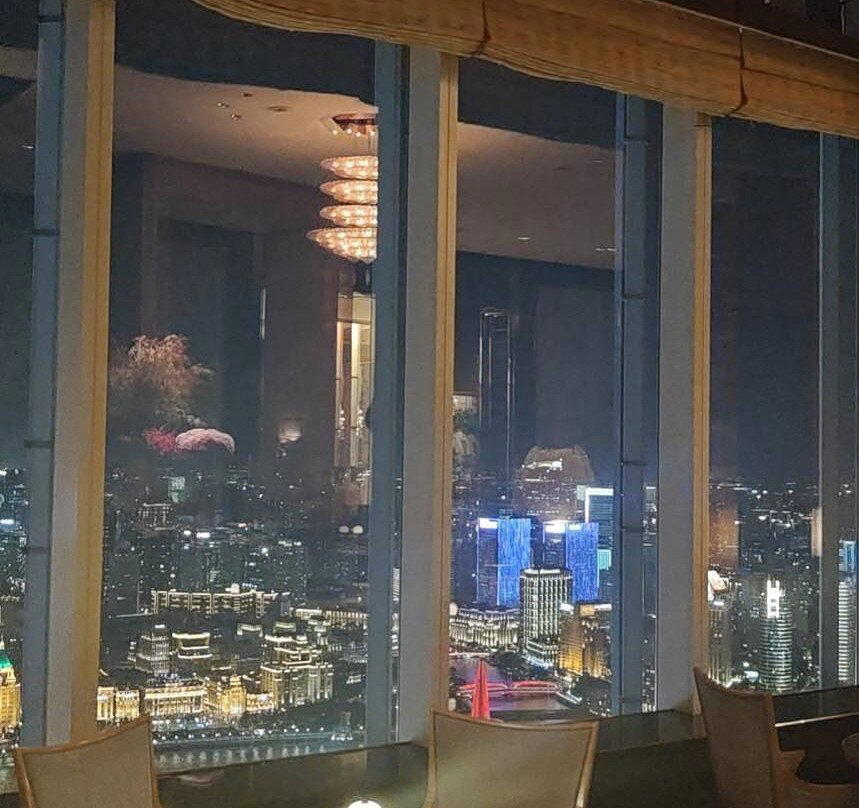
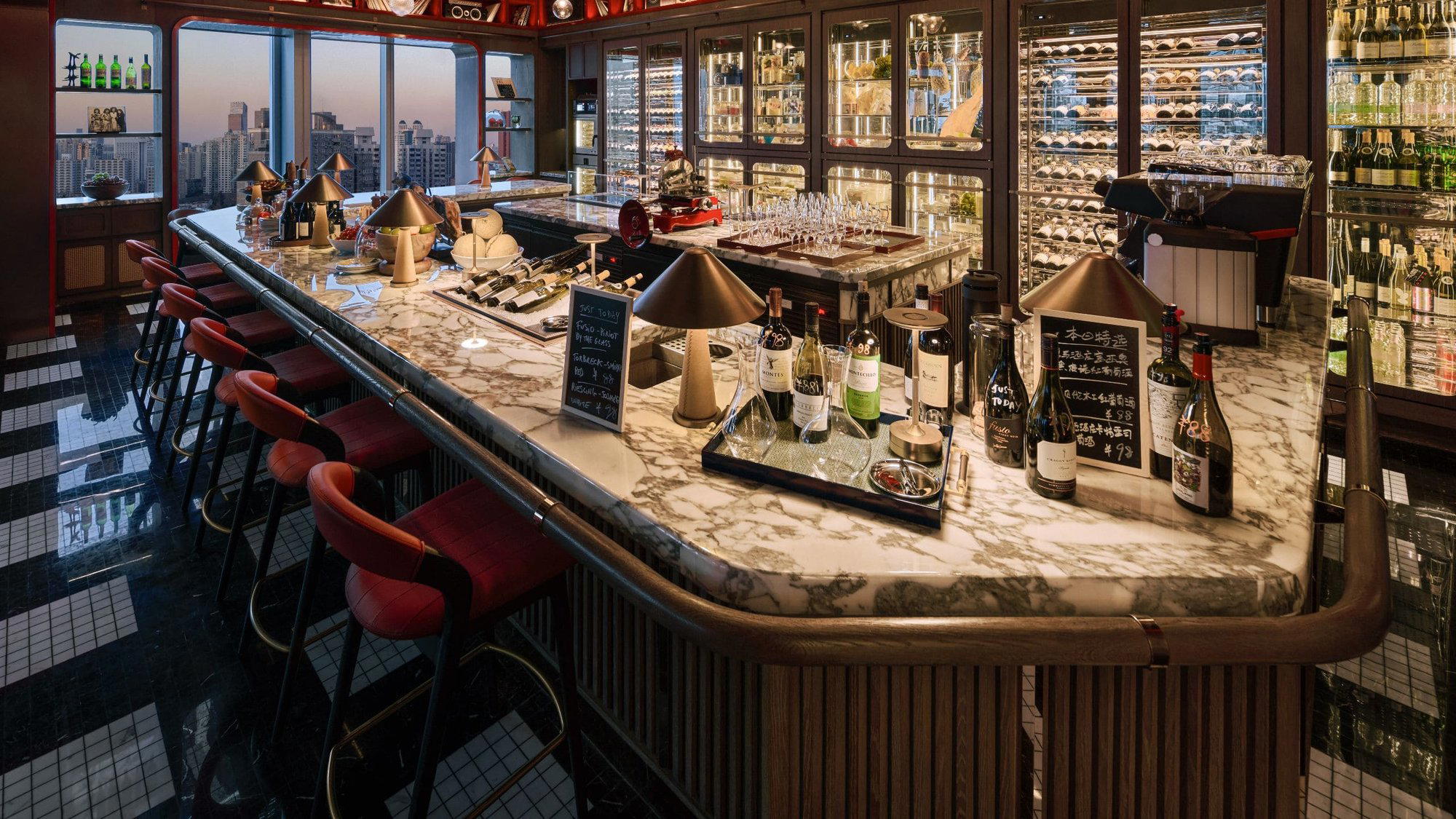
Chic and modern, with visible culinary action from the open kitchen adding entertainment and flair.