
Our verdict
Xin Guang is a Huangpu seafood address that climbed from #120 to #62 on the Opinionated About Dining Casual Asia list between 2024 and 2025, a trajectory that marks it as one of the faster-rising casual seafood tables in Shanghai. Under chef Fang Liang, the kitchen applies considered technique to the kind of live seafood that defines the city's most serious casual dining tier.

Pearl is the En Primeur Club membership app, where members save venues, book tables and use the concierge.
The menu
What to order
- Steamed Crab Claws
- Crab Roe with Mung Bean Noodles
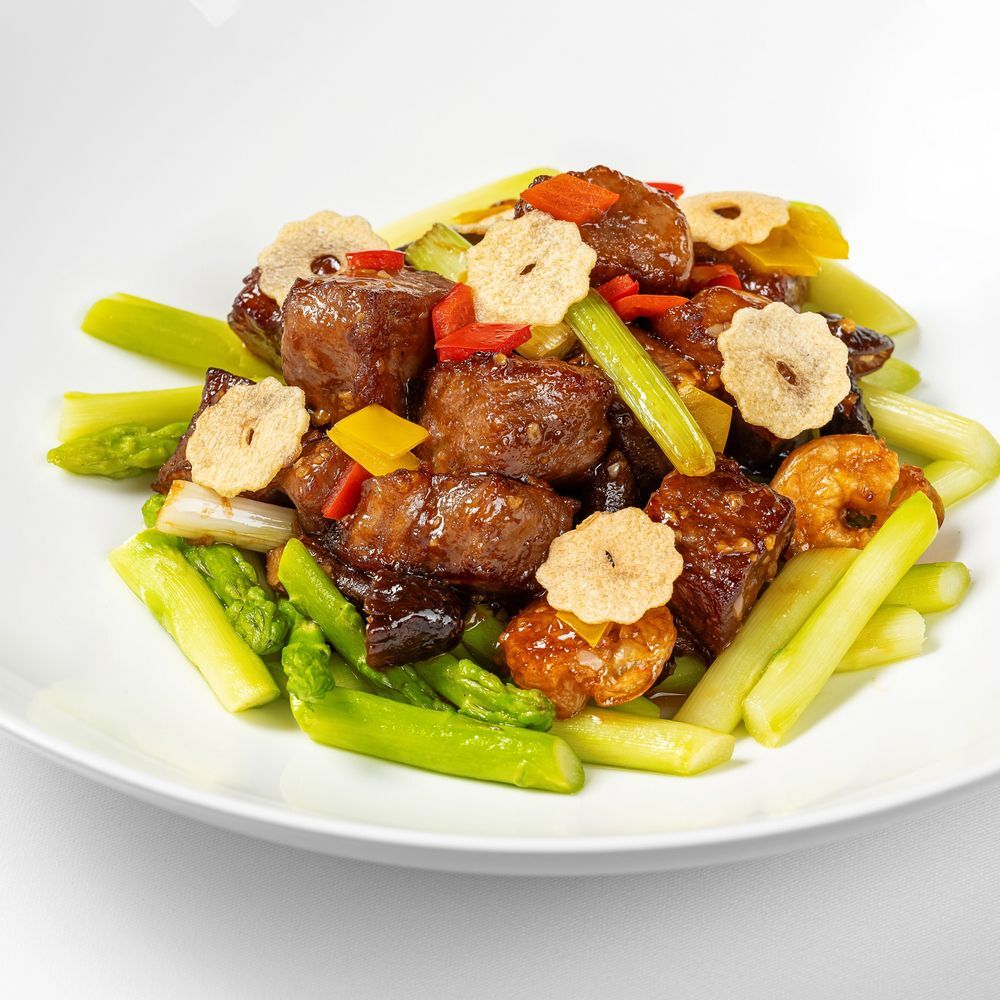
- Crab Legs with Asparagus
Tianjin Road and the Casual Seafood Tier
Shanghai's casual dining scene has always maintained a category that sits between street-level seafood stalls and the formal banquet rooms of the city's grand Cantonese houses. It is a tier defined by directness: live tanks, seasonal catch, and kitchens that treat their ingredients as the argument rather than the backdrop. Tianjin Road, in Huangpu, has long attracted exactly this kind of operation. The street sits inside a commercial district with enough foot traffic to sustain daily turnover, but far enough from the tourist circuit of the Bund to retain a local orientation.
A Ranking That Tells a Story
The most concrete signal of where Xin Guang sits in the Shanghai seafood conversation comes from its Opinionated About Dining trajectory. OAD's Casual Asia list is compiled through a survey methodology weighted toward frequent diners and food professionals, making movement on it meaningful. Xin Guang entered the list at #120 in 2024 and moved to #62 in 2025, a 58-place gain in a single cycle. That kind of shift rarely reflects a venue that has simply maintained its standards. It reflects either a meaningful change in the kitchen's output, a broadening of the dining public who know about it, or both. Within Shanghai specifically, this places Xin Guang among a small group of casual-tier addresses earning sustained professional attention alongside formal operations like Taian Table and the vegetarian program at Fu He Hui.
Peer context matters here. The casual seafood category in Shanghai runs from neighbourhood crab houses to tightly curated tables where the sourcing decisions carry most of the editorial weight. Xin Guang's position at #62 on a list that covers the entirety of casual dining across Asia places it in the upper third of that category continent-wide, not merely within the city. For comparison, other regional seafood-forward tables with similar positioning include Cheng Long Xing Xie WangFu and Xuji Seafood in Xuhui, each operating in distinct sub-niches of the Shanghai seafood market.
Local Ingredients, Considered Technique
The editorial angle at Xin Guang is the intersection of locally-sourced seafood and kitchen method. Shanghai's proximity to the East China Sea and the Yangtze delta gives its seafood tables access to produce that kitchens elsewhere on the continent must import: hairy crabs from Yangcheng Lake in autumn, yellow croaker from the coastal shelf, river shrimp from the delta system, and seasonal bivalves that move through the tanks in rhythm with the fishing calendar. The question that separates the better casual seafood tables from the ordinary ones is not whether they can source this produce, but what they do once it arrives.
In this context, chef Fang Liang's role is one of restraint and precision rather than transformation. Chinese seafood cooking at this tier generally does not seek to reimagine its ingredients through imported frameworks; it seeks to apply heat, timing, and seasoning with enough exactness that the produce is presented at maximum integrity. The technique is local in logic even when the kitchen draws on a broader range of cooking references. This is not the fusion approach that characterised Shanghai fine dining in the early 2000s, and it is not the nostalgic preservation of a single regional tradition either. It is something more practical: the application of the leading available method to the leading available fish, prawn, or shellfish on a given day.
This approach connects Xin Guang to a broader pattern visible across China's most serious casual seafood operations. In Hangzhou, tables like Ru Yuan apply a similar logic to freshwater and lacustrine produce from the region's lakes. In Chengdu, Xin Rong Ji anchors its seafood offer within a broader Cantonese-inflected Chinese framework, demonstrating that the category has national reach and regional variation. Further afield, formal Chinese seafood programs at venues like Chef Tam's Seasons in Macau and Imperial Treasure Fine Chinese Cuisine in Guangzhou show how the same emphasis on ingredient quality can be expressed across very different price tiers and service formats.
Where It Sits in the Shanghai Dining Map
Huangpu is among the most densely contested dining districts in Shanghai. It contains the Bund corridor, the Xintiandi area, and stretches inland through a grid of older commercial streets that includes Tianjin Road. For diners approaching from the central hotel belt, the address at 512 Tianjin Road sits within the broader downtown framework, accessible without significant travel from major city landmarks. The neighbourhood character here is more workaday than the Bund's tourist-facing concentration, which tends to push the room's composition toward local regulars and professional lunchers rather than international visitors.
Within the city's wider dining architecture, Xin Guang occupies a different register from the Cantonese formality of 102 House and the price ceiling of banquet-format Chinese dining. It also operates at a different scale of ambition from the fine dining tier, where venues like Taian Table are oriented toward tasting-menu formats and international press attention. The casual tier that Xin Guang inhabits is, arguably, where the city's most fluent seafood cooking actually happens: unconstrained by ceremony, responsive to daily market availability, and priced at a point that allows for frequent return visits rather than occasion-only attendance.
For readers building a broader picture of Chinese coastal seafood, the category has meaningful international parallels. The same emphasis on live product and minimal intervention that defines the best of Shanghai's casual seafood tables is visible in venues like Gambero Rosso in Marina di Gioiosa Ionica and Alici on the Amalfi Coast, where the argument is always the fish, and the kitchen's job is to get out of the way at precisely the right moment. The logic is consistent across traditions even when the techniques and flavour profiles diverge sharply. In Nanjing, a comparable regional sensibility surfaces at Dai Yuet Heen, which applies Cantonese discipline to Jiangnan produce in a format that echoes Xin Guang's general positioning without duplicating it.
Know Before You Go
- Address: 512 Tianjin Rd, Huangpu, Shanghai 200001
- Cuisine: Seafood (casual tier)
- Chef: Fang Liang
- Recognition: Opinionated About Dining Casual Asia #62 (2025), #120 (2024)
- Booking: Contact details not publicly listed; walk-in or local reservation platforms advisable
- District: Huangpu, central Shanghai, Tianjin Road corridor
For a fuller picture of where Xin Guang sits within the city's dining options, see our full Shanghai restaurants guide. Those planning a broader trip can also consult our Shanghai hotels guide, our Shanghai bars guide, our Shanghai wineries guide, and our Shanghai experiences guide.
Frequently asked questions
What dish is Xin Guang famous for?
No specific signature dish is documented in the public record for Xin Guang. What the OAD ranking and the restaurant's positioning within Shanghai's casual seafood tier consistently suggest is a kitchen oriented around live and seasonal seafood sourced from the East China Sea and Yangtze delta region. In this category, the repertoire typically includes preparations centred on yellow croaker, river prawn, crab, and bivalves, with the selection varying according to what the market offers at any given time. Chef Fang Liang's approach, as far as can be assessed from the restaurant's recognition trajectory, prioritises the quality of the produce over fixed signature formats. The #62 placement on OAD Casual Asia 2025, up from #120 the previous year, implies a kitchen delivering consistent output across its menu rather than trading on a single marquee dish.
Side-by-Side Snapshot
| Venue | Cuisine | Price | Awards | Notes |
|---|---|---|---|---|
| Xin GuangThis venue (the venue you are viewing) | Shanghai Hairy Crab Specialist | $50–100 | Not listed | Not listed |
| Fu He Hui | Modern Seasonal Vegetarian Fine Dining | $200–300 | 2 Michelin Stars · World's 50 Best #11 | Vegetarian |
| Ming Court | Cantonese with Shanghainese Influences | $30–50 | 1 Michelin Star · Black Pearl 1 Diamond | Cantonese |
| Polux | French Bistro | $30–50 | Michelin Bib Gourmand | Not listed |
| Royal China Club | Cantonese Dim Sum | $100–150 | Michelin Plate · The Good Food Guide GFG Good | Not listed |
| Scarpetta | Refined Italian Pasta & Pizza | $50–100 | Michelin Plate · Wine Spectator Best of Award of Excellence | Not listed |
Recognition history
Dated appearances from independent guides and award organizations, with the underlying list record or original source where available.
Opinionated About Dining Casual in Asia Ranked #149
Opinionated About Dining
Full recognition history (3 entries)
Opinionated About Dining Casual in Asia Ranked #120
Opinionated About Dining
Opinionated About Dining Casual in Asia Ranked #62
Opinionated About Dining
Continue exploring
More in Shanghai
Restaurants in Shanghai
All restaurants in Shanghai →
Bars in Shanghai
All bars in Shanghai →


Details
- Classic
- Intimate
- Special Occasion
- Private Dining
- Set Menu
Current opening hours
- Monday
- 11 AM–2 PM, 5–9:30 PM
- Tuesday
- 11 AM–2 PM, 5–9:30 PM
- Wednesday
- 11 AM–2 PM, 5–9:30 PM
- Thursday
- 11 AM–2 PM, 5–9:30 PM
- Friday
- 11 AM–2 PM, 5–9:30 PM
- Saturday
- 11 AM–2 PM, 5–9:30 PM
- Sunday
- 11 AM–2 PM, 5–9:30 PM
Hours can change for holidays and private events. Hours as of .
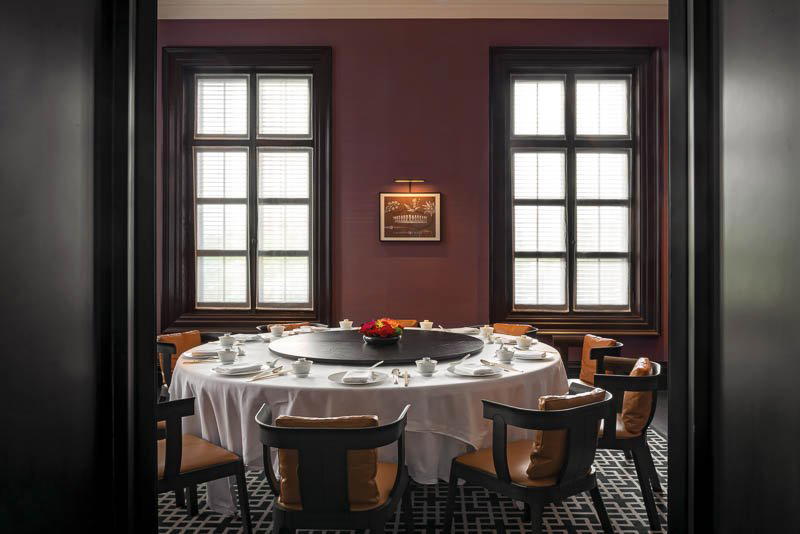
Basic hole-in-the-wall setting with cramped seating but clean private rooms providing an intimate dining experience focused on the food.