
Our verdict
Ranked 53rd on the 2025 Opinionated About Dining Casual Asia list, Cheng Long Xing Xie WangFu is a seafood-focused restaurant in Shanghai's Jing'An district that has climbed steadily through the OAD rankings.

Pearl is the En Primeur Club membership app, where members save venues, book tables and use the concierge.
The menu
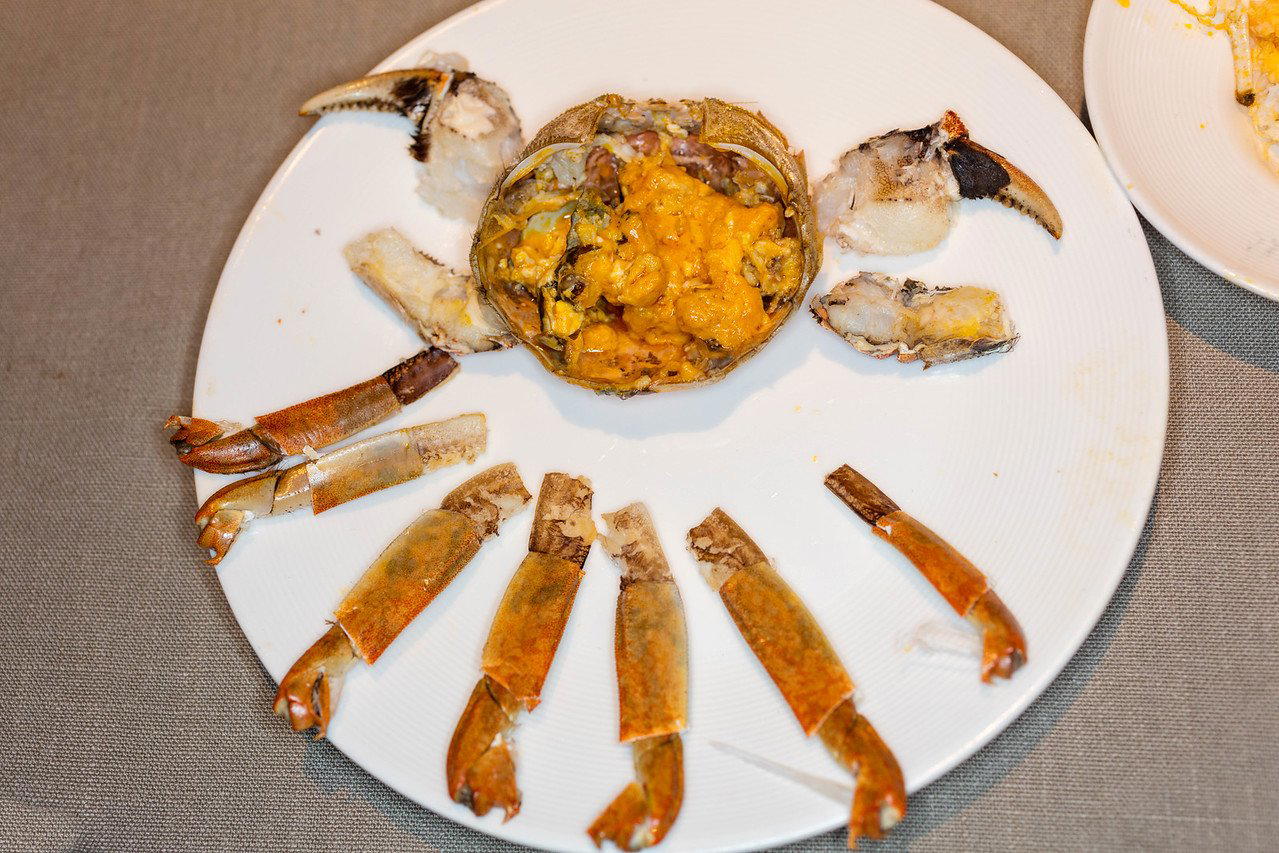
What to order
- Drunken Crab
- Steamed Meringue on Crab Shell
- Mapo Tofu with Crab Roe
- Crab Meat Xiaolongbao
- Stir-fried Chives with Crab Meat
Seafood Without Ceremony: How Jing'An Does It
The approach to seafood in Shanghai's northern districts has always differed from the white-tablecloth presentations of the Bund corridor. In neighbourhoods like Jing'An, the model that earns loyalty is not theatre but precision: the right species, the right preparation, and nothing extra added to justify a higher ticket. Cheng Long Xing Xie WangFu, tucked inside Daning Music Plaza on Wanrong Road, operates squarely within that tradition. The third-floor setting in a commercial entertainment complex is deliberately unpretentious, the kind of address that filters out diners seeking spectacle and keeps those who came specifically for the crab.
That self-selection matters when reading the restaurant's numbers. The OAD Casual list draws its rankings from a network of experienced diners rather than a single critic's assessment, which makes a 18-place climb in twelve months a meaningful signal rather than a fluke.
How the Menu Is Organised, and What That Tells You
Casual seafood menus in China's major cities tend to fall into one of two structural logics. The first is market-style: you select live product from tanks, agree on a preparation method, and the kitchen executes to order. The second is a tighter edited format where the kitchen imposes more discipline on what arrives and how. Cheng Long Xing Xie WangFu's name references crab directly (xie translates to crab), and the menu architecture follows the first logic while concentrating its depth in the crab and crustacean categories. This is not a pan-seafood restaurant that happens to serve crab; the identity is built around seasonal crab species and the range of preparations applied to them.
That structural decision has real implications for how to visit. A menu centred on seasonal crustacean species rewards repeat visits at different points in the year, the hairy crab season running roughly October through December in the Yangtze Delta region occupies a different culinary register than the summer blue crab and sea crab window. Coming once and checking a box misses the point; the menu is designed to reflect what the season has available, and the kitchen's value proposition shifts accordingly. For context on how crab-forward menus operate at different price tiers across Shanghai, Xuji Seafood (Xuhui) and Xin Guang offer useful reference points within the city's broader seafood scene.
Where It Sits in Shanghai's Casual Dining Tier
Shanghai's mid-market dining has stratified considerably over the past decade. A restaurant can hold OAD Casual Asia recognition without the Michelin infrastructure that venues like Fu He Hui (Vegetarian) or Taian Table (Modern European, Innovative) carry, yet still occupy a position that serious local diners track. The OAD Casual list specifically recognises restaurants where the experience is defined by the food rather than formal service structure, which is why a third-floor mall location in Jing'An can rank alongside more conventionally prestigious addresses.
Within the city's Chinese dining options, the comparison is informative. 102 House (Cantonese) represents a more refined Cantonese register, while Cheng Long Xing Xie WangFu operates in a register where the experience is more direct and the value calculation is different. Both earn critical recognition, but through entirely different mechanisms. This is the distinction that makes reading OAD Casual rankings alongside Michelin tables productive: the criteria diverge, and the venues that perform on one list do not automatically feature on the other.
For a broader picture of where seafood dining sits across the region, Chef Tam's Seasons in Macau and Xin Rong Ji (Xinyuan South Road) in Beijing illustrate how Cantonese and eastern Chinese seafood traditions develop differently depending on market and clientele. Further afield, Xin Rong Ji in Chengdu, Imperial Treasure Fine Chinese Cuisine in Guangzhou, Ru Yuan in Hangzhou, and Dai Yuet Heen in Nanjing each demonstrate regional variations in how Chinese seafood restaurants build their identities around produce, seasonality, and service format. Even outside Asia, the structural parallels are worth noting: Gambero Rosso in Marina di Gioiosa Ionica and Alici Restaurant on the Amalfi Coast show how seafood-specialist restaurants achieve recognition by concentrating on a narrow, seasonal, produce-led proposition rather than breadth.
Getting There and Planning the Visit
Daning Music Plaza sits in the northern reaches of Jing'An, on Wanrong Road, a stretch that functions as a commercial and entertainment hub rather than a dining destination in the way that Xintiandi or the Former French Concession does. The restaurant occupies the third floor of Building G, which means arriving with a clear address rather than relying on the complex's signage to guide you. Peak crab season (October to December) predictably generates the most demand; arriving outside that window, particularly in summer, gives a different reading of the kitchen's range. Phone and online booking details are not publicly consolidated so a walk-in reconnaissance or a local contact familiar with the restaurant is a practical starting point.
For broader planning around a Shanghai visit, EP Club covers the full range of options: our full Shanghai restaurants guide, our full Shanghai hotels guide, our full Shanghai bars guide, our full Shanghai wineries guide, and our full Shanghai experiences guide cover the city across categories.
Frequently asked questions
What distinctions does Cheng Long Xing Xie WangFu have?
Cheng Long Xing Xie WangFu has received recognition including: Opinionated About Dining Casual in Asia Ranked #53 (2025); Opinionated About Dining Casual in Asia Ranked #71 (2024).
What's the best thing to order at Cheng Long Xing Xie WangFu?
The restaurant's name references crab directly, 'xie' (蟹), and the OAD Casual Asia committee's decision to rank it 53rd in Asia for 2025 reflects the consistency of its shellfish-led cooking. Crab preparations are the central reason most diners make the trip to Wanrong Road. Ordering around the crab is the straightest line to understanding what the kitchen does at its most focused.
How do I find Cheng Long Xing Xie WangFu?
Cheng Long Xing Xie WangFu is located at Daning Music Plaza Building G, 3楼777 Wanrong Rd, 777, Jing'An, Shanghai, China, 200442, Shanghai.
Who is the chef at Cheng Long Xing Xie WangFu?
The chef associated with Cheng Long Xing Xie WangFu is Various.
What's the best way to book Cheng Long Xing Xie WangFu?
No website or public booking platform is listed. A restaurant ranked 53rd on OAD Casual Asia in 2025, up from 71st in 2024, will see meaningful demand, so arriving without a reservation carries risk, particularly at peak dining hours or during hairy crab season. Calling ahead via a hotel concierge familiar with Shanghai's northern Jing'An dining scene is the most reliable approach.
What do critics highlight about Cheng Long Xing Xie WangFu?
The OAD Casual Asia list, which draws assessments from a community of seasoned frequent diners across the region, ranked Cheng Long Xing Xie WangFu 71st in 2024 and moved it to 53rd in 2025, an 18-place rise that signals sustained consistency rather than a one-season spike. The recognition sits in the casual tier, which on OAD terms means evaluated against execution and value rather than ceremony or setting.
A Tight Comparison
| Venue | Cuisine | Price | Awards | Notes |
|---|---|---|---|---|
| Cheng Long Xing Xie WangFuThis venue (the venue you are viewing) | Shanghainese Hairy Crab Specialist | $150–200 | Not listed | Not listed |
| Fu He Hui | Modern Seasonal Vegetarian Fine Dining | $200–300 | 2 Michelin Stars · World's 50 Best #11 | Vegetarian |
| Ming Court | Cantonese with Shanghainese Influences | $30–50 | 1 Michelin Star · Black Pearl 1 Diamond | Cantonese |
| Polux | French Bistro | $30–50 | Michelin Bib Gourmand | French |
| Royal China Club | Cantonese Dim Sum | $100–150 | Michelin Plate · The Good Food Guide GFG Good | Chinese, Cantonese |
| Scarpetta | Refined Italian Pasta & Pizza | $50–100 | Michelin Plate · Wine Spectator Best of Award of Excellence | Italian |
Recognition history
Dated appearances from independent guides and award organizations, with the underlying list record or original source where available.
Opinionated About Dining Casual in Asia Ranked #62
Opinionated About Dining
Full recognition history (3 entries)
Opinionated About Dining Casual in Asia Ranked #53
Opinionated About Dining
Opinionated About Dining Casual in Asia Ranked #71
Opinionated About Dining
Continue exploring
More in Shanghai
More from Chef Various
Browse all →
Restaurants in Shanghai
All restaurants in Shanghai →
Bars in Shanghai
All bars in Shanghai →



Details
- Elegant
- Classic
- Sophisticated
- Intimate
- Business Dinner
- Celebration
- Group Dining
- Special Occasion
- Private Dining
- Live Music
- Courtyard
- Beer Program
- Local Sourcing
- Sustainable Seafood
- Set Menu
- A La Carte
- Family Style
- Shaoxing Wine
- Tea
- Allergy Accommodating
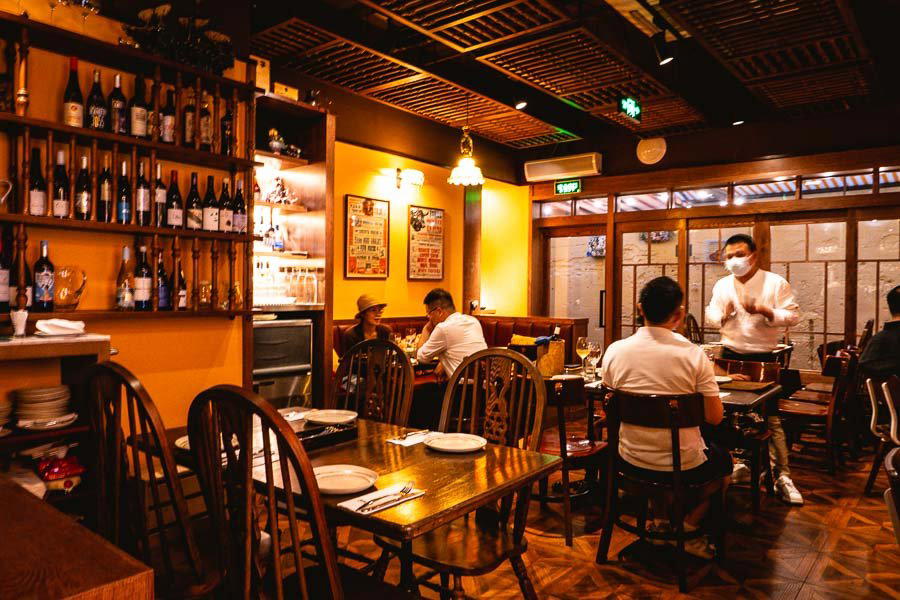
Warm, practical lighting in traditional Chinese wooden décor with private dining rooms overlooking a central atrium; measured, attentive service atmosphere supporting conversation and careful tasting rather than nightlife energy.