Vigneto

Michelin Plate
Our verdict
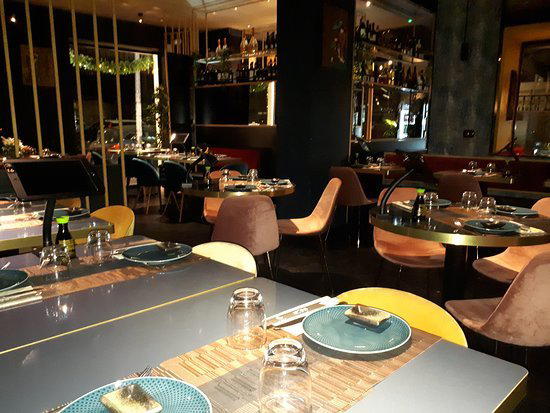
Vigneto is a Michelin Plate-recognised Italian restaurant in Busan's Suyeong-gu district, holding consecutive Plate distinctions in 2024 and 2025. Sitting at the accessible end of Busan's dining price tier, it occupies a specific position in South Korea's small but growing scene of European kitchens operating outside Seoul.

Pearl is the En Primeur Club membership app, where members save venues, book tables and use the concierge.
Italian Dining at the Edge of the Korean Culinary Map
South Korea's serious restaurant scene has historically concentrated in Seoul, where European kitchens with genuine ambition have found the critical mass and cosmopolitan diner base they need. Busan's dining identity runs on different logic: the port city built its reputation on raw seafood, pork bone broth, and market-stall eating, not on imported cuisine. That context matters when placing Vigneto, a Michelin Plate-recognised Italian address in Suyeong-gu, inside any meaningful framework.
The Suyeong district sits between the beach strip of Gwangalli and the residential density of Millak, an area where neighbourhood restaurants draw regulars rather than tourists. Arriving at the address on Suyeong-ro 522 beon-gil, you are not in a dining corridor designed for foot traffic. The surrounding streets carry the ordinary rhythm of Korean urban life, which makes the Italian focus inside all the more deliberate. For the kind of Italian dining that pursues Michelin recognition in an Asian city far from its natural base, compare the approach at 8 1/2 Otto e Mezzo Bombana in Hong Kong or cenci in Kyoto, both of which have found ways to translate Italian culinary thinking into East Asian dining contexts with critical credibility.
What the Michelin Plate Signal Means Here
The Michelin Plate, awarded consecutively in 2024 and 2025, indicates a kitchen that the Michelin inspectorate considers to be serving food worth noting, without yet reaching the star threshold. In a city where starred restaurants are rare, a Plate distinction carries a different weight than it would in Seoul or Tokyo, where the competition for inspector attention is far denser.
The sample size is limited, but the consistency of that score alongside the Michelin Plate suggests the kitchen is performing at a level that satisfies both inspector standards and returning local guests. For comparison across Busan's broader dining scene, Mori (Japanese, at the ₩₩₩ tier) and Palate (Contemporary, ₩₩) represent adjacent price and recognition tiers in the city's more formal dining segment. Vigneto, priced at the entry ₩ level, operates as the accessible point of the recognised Italian category here.
Planning Your Visit: What to Know Before You Go
The editorial angle that matters most for Vigneto is the booking experience, particularly because the restaurant's public digital footprint is thin. Korean restaurant booking apps, particularly Naver and Kakao Maps, are the standard infrastructure for independent restaurant reservations in Busan. Searching the restaurant name in Korean on either platform will generally surface available reservation slots if the venue participates, which is the working assumption for a Michelin-listed address. Travellers arriving without advance research should treat the absence of an English-language web presence as a prompt to plan earlier, not later.
Given the price point, the restaurant is unlikely to operate on a strict tasting-menu reservation model of the kind that requires months of advance booking. The ₩ price tier in South Korea corresponds to an accessible neighbourhood restaurant format, where the meal cost per head sits below the threshold that would typically demand structured reservation windows. That does not mean securing a table is guaranteed, particularly on weekends or around public holidays when Suyeong-gu draws local diners. Visiting on a weekday, particularly earlier in the service window, will give the leading chance of a direct arrival without prior booking. For contrast in how other Korean culinary destinations handle booking, see the Seoul-based institutions Mingles and Gaon, both of which operate considerably more structured reservation systems at higher price tiers.
The Italian Kitchen in a Korean Context
Italian cooking has taken root across East Asia in ways that reflect both local adaptation and fidelity to source traditions, sometimes in tension. In Seoul, the higher-end Italian addresses tend to locate themselves inside a conversation about provenance, regional Italian specificity, and premium imported product. In a city like Busan, the operating logic shifts. Here, Italian cooking more often draws from the city's own ingredient strengths, including fresh seafood from the port markets, while maintaining enough structural familiarity with Italian technique to hold recognition.
For readers interested in comparable explorations of European cuisine adapted into Asian dining contexts, cenci in Kyoto offers a useful reference point for how Italian sensibility can integrate with local ingredient cultures without losing critical credibility. Outside Asia, Frasca Food and Wine in Boulder demonstrates how regional Italian focus can sustain a long-form reputation in a city not naturally associated with the cuisine.
Busan's Wider Dining Picture
Vigneto does not sit in isolation. Busan's restaurant scene has diversified over the past decade, and the city's coastal identity now coexists with a layer of more considered, format-driven dining. Born and Bred, at the ₩₩₩₩ level, represents the premium steakhouse segment. Elsewhere in the Korean dining orbit, Baegyangsa Temple in Jangseong-gun and Kwon Sook Soo in Gangnam-gu represent entirely different traditions, while The Flying Hog in Seogwipo illustrates how international cooking formats are appearing across multiple Korean cities. Vigneto fits inside that broader pattern of European cuisine finding serious, recognised footholds in Korean cities beyond the capital.
For a complete picture of where to eat, drink, and stay in the city, EP Club's guides to Busan restaurants, Busan hotels, Busan bars, Busan wineries, and Busan experiences cover the full range of what the city offers at each tier.
Frequently asked questions
What cuisine category does Vigneto fall under?
What does dinner at Vigneto typically cost?
Pricing at Vigneto is listed as ₩.
What kind of recognition has Vigneto received?
Vigneto has received recognition including: Michelin Plate (2025); Michelin Plate (2024).
What should I eat at Vigneto?
Vigneto's menu is not published through a verified public channel, so specific dish recommendations can change. The kitchen holds consecutive Michelin Plates for 2024 and 2025, signalling that inspectors found the cooking consistently worth noting across multiple visits. Italian cuisine in this tier typically anchors around pasta and protein courses built on imported and local product. check the venue's official channels for current offerings.
Where is Vigneto in Busan?
Vigneto is located at 55 Suyeong-ro 522 beon-gil, Suyeong-gu, Busan, 48299, South Korea, Busan.
Is Vigneto reservation-only?
Given the restaurant's thin digital footprint and its Michelin Plate status in a city where serious Italian kitchens are scarce, walk-in availability is unlikely to be reliable. Reaching the venue directly via the Suyeong-gu address or through local concierge channels is the practical approach.
What makes Vigneto worth seeking out?
Vigneto has held the Michelin Plate in both 2024 and 2025, placing it among a short list of European-format restaurants that the Michelin inspectorate has flagged outside of Seoul. Busan's Italian dining options at this level are sparse, which gives Vigneto a position that would be unremarkable in Tokyo or Milan but carries real weight on the Korean coastal circuit. The price range sits at the accessible end of the scale, making the Michelin recognition proportionally more interesting.
Price and Positioning
A compact comparison to help you place this venue among nearby peers.
| Venue | Cuisine | Price | Awards | Notes |
|---|---|---|---|---|
| VignetoThis venue (the venue you are viewing) | Authentic Italian with Natural Wines | Not listed | Michelin Plate | Not listed |
| Palate | Contemporary French with Korean Fusion | $150–200 | 1 Michelin Star · La Liste Top Restaurants | Contemporary |
| Mori | Japanese Kaiseki | $200–300 | 1 Michelin Star | Japanese |
| Born and Bred | Modern Hanwoo Beef Omakase Steakhouse | $100–150 | Michelin Plate · World's 50 Best #51 | Steakhouse |
| 100.1. Pyeongnaeng | Pyongyang-style Naengmyeon | $10–20 | Michelin Bib Gourmand | Naengmyeon |
| Anmok | Modern Korean Dwaeji-Gukbap | $10–20 | Michelin Bib Gourmand | Dwaeji-gukbap |
Recognition history
Dated appearances from independent guides and award organizations, with the underlying list record or original source where available.
Michelin Plate
Michelin
Full recognition history (3 entries)
Michelin Plate
Michelin
Michelin Plate
Michelin