Osteria Aboo

Michelin Plate
Our verdict
Operating from Jeonpo-dong since 2017, Osteria Aboo holds a 2025 Michelin Plate for its Southern Italian cooking in Busan's Busanjin-gu district. The kitchen leans heavily on seafood, with bisque pasta and a dedicated Mare course drawing repeat visitors. At the ₩₩ price tier, it occupies an accessible but credentialed position in the city's growing Western dining scene.

Pearl is the En Primeur Club membership app, where members save venues, book tables and use the concierge.
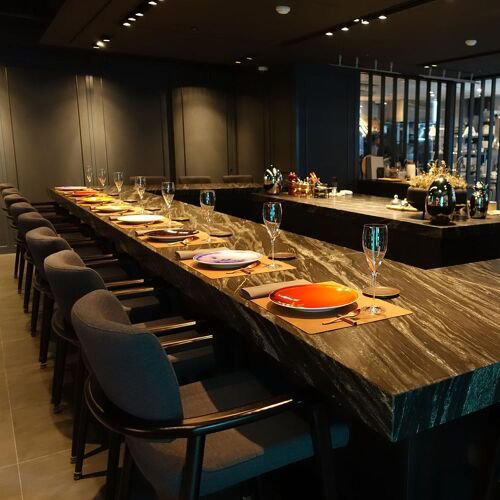
The menu
What to order
- Bisque pasta
- Paccheri al Pomodoro
- Tiramisu
- Grilled scallops
Southern Italy in a Busan Side Street
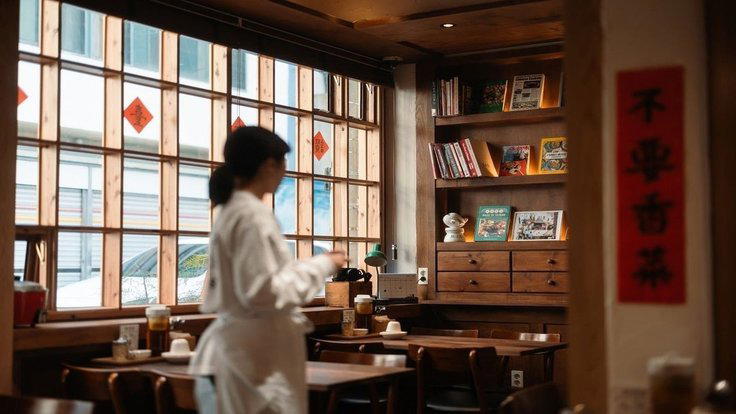
Korean cities have developed a particular kind of Italian restaurant over the past decade: not the white-tablecloth formality of earlier fine-dining imports, but something closer to the trattoria model, neighbourhood-scaled, ingredient-focused, and priced for regular return visits rather than special occasions. Jeonpo-dong, a district in Busanjin-gu known more for its independent cafés and record shops than for European cooking, has become one of Busan's more credible addresses for this quieter, less performative style of dining. Osteria Aboo has occupied a spot on Dongcheon-ro in that neighbourhood since 2017, long enough to have established itself before the current wave of Italian openings reached the city.
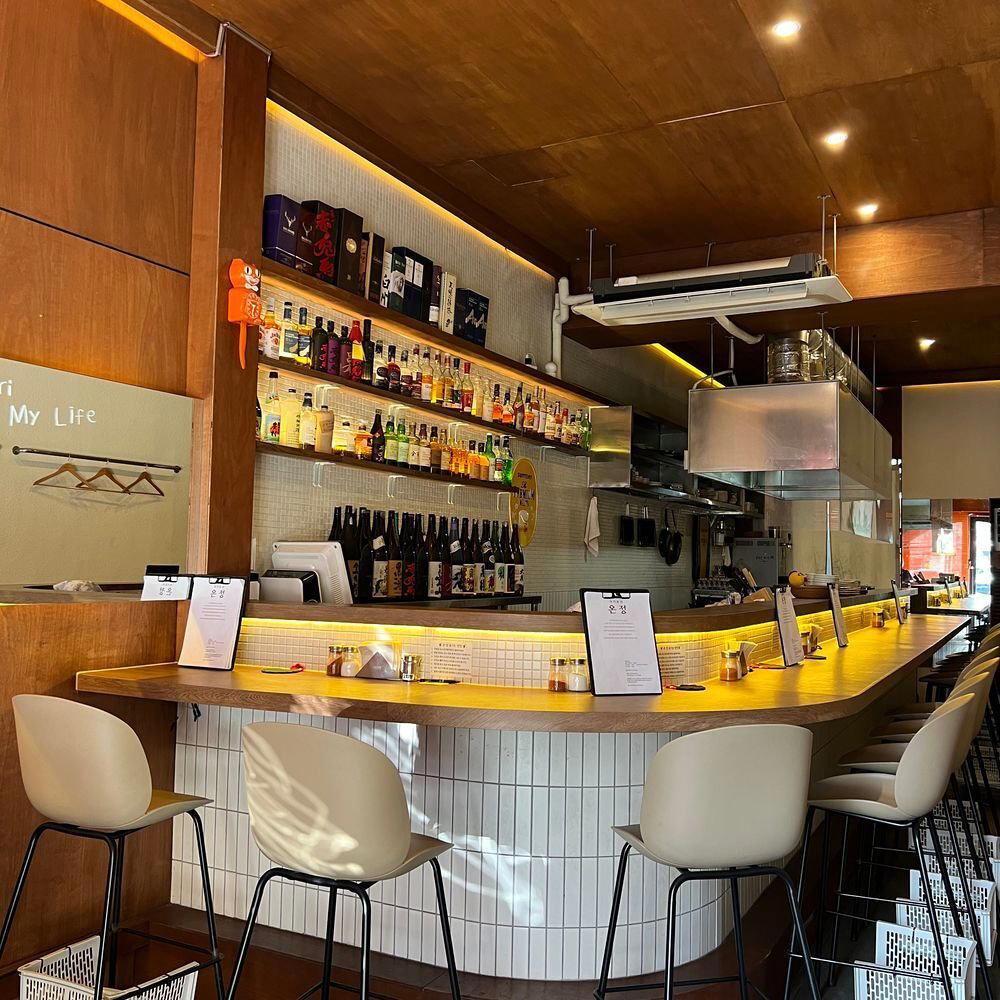
The restaurant's own signage describes it as a Western gastropub, an odd self-classification that reflects a certain Korean hospitality habit of reaching for the most accessible English descriptor rather than the most precise one. The cooking itself is more specifically rooted than that label implies. The menu draws from Southern Italy, a regional tradition that relies on simpler preparations, coastal ingredients, and a willingness to let quality seafood carry dishes without elaborate technique getting in the way. In a city that sits on the water and has its own deep seafood culture, that alignment is less coincidental than it might seem elsewhere.
The Seafood Axis
Southern Italian cooking is not a monolith. The cuisine of Campania, Calabria, Puglia, and Sicily share broad principles, a preference for olive oil over butter, a reliance on dried pasta and preserved ingredients, and an emphasis on the sea, but differ considerably in their specific vocabularies. What unites the tradition is an approach to seafood that prioritises freshness and directness: a lobster bisque in Naples reads differently from the cream-heavy versions common in French-influenced kitchens, and the leading Southern Italian pasta dishes achieve richness through reduction and patience rather than addition.
Osteria Aboo works within that framework. The bisque pasta, featuring red-banded lobster and al dente noodles, operates as the kitchen's clearest statement of intent: the crustacean's flavour absorbed into the sauce rather than sitting on top of it. The Mare course, added more recently to the menu, develops the seafood focus into a structured tasting format. Wine pairings are available on recommendation, which at the ₩₩ price tier makes this format accessible in a way that the Italian coastal tradition tends to favour. For comparison, Busan's more formal Western restaurants like Born and Bred operate at the ₩₩₩₩ level, while Mori sits at ₩₩₩. Aboo's pricing places the experience firmly in the accessible-but-serious tier that neighbourhood Italian cooking has historically occupied.
The Trattoria Principle
The trattoria, as a format, is not about price point alone. It represents a particular contract between kitchen and guest: the assumption that the diner returns, that the staff recognise regulars, and that the restaurant's identity is bound to a specific neighbourhood rather than to a broader destination-dining circuit. Italian cities have always maintained this structure alongside their grander restaurants, and it is precisely this model that travels most reliably, from Rome to São Paulo to Tokyo, the neighbourhood Italian that knows what it is tends to outlast the more ambitious projects around it.
That durability shows up in Aboo's track record. The 2025 Michelin Plate recognition formalises what regular visitors have known for some time: this kitchen maintains standards without the instability that often accompanies more ambitious formats.
The trattoria principle also explains why informality here is a feature rather than a default. A meal at Osteria Aboo does not require the same preparation as a reservation at one of Seoul's starred Korean restaurants like Mingles or Gaon, nor the advance planning that Busan's contemporary dining room Palate sometimes demands. The format rewards spontaneity while delivering cooking that sits clearly above the casual end of the market.
Italian Cooking in the Korean Context
Italian restaurants with serious culinary intentions have proliferated across East Asian cities over the past decade. In Hong Kong, 8½ Otto e Mezzo Bombana occupies the fine-dining end of that spectrum with three Michelin stars. In Kyoto, cenci operates a more intimate format with its own Michelin recognition. What distinguishes Aboo from those higher-register addresses is precisely its insistence on the osteria model: regional specificity, seafood-led cooking, and accessibility. This is not Italian cuisine performed for a tasting-menu audience; it is Southern Italian cooking anchored in its own tradition and adapted for a Busan neighbourhood.
Busan's Italian scene is not large. Cor Pasta bar and Vigneto represent adjacent options in the city, but the category remains thin compared to Seoul's more developed Western dining offer. That relative scarcity gives Aboo a clearer position than it might hold in a more saturated market. For those looking beyond Italian, Busan's broader dining scene includes options across Japanese, contemporary Korean, and steakhouse formats, all covered in our full Busan restaurants guide.
Planning Your Visit
Osteria Aboo is located at 58 Dongcheon-ro in Busanjin-gu, within the Jeonpo-dong neighbourhood. At the ₩₩ price tier, a full meal with wine pairing remains within the range that makes repeat visits practical. The Michelin Plate designation for 2025 means the restaurant now draws attention beyond its immediate neighbourhood, so booking ahead is worth considering rather than assuming walk-in availability on busier evenings. No formal dress code information is published, and the osteria format itself suggests casual clothing is appropriate. For visitors building a wider trip around Busan's food and drink scene, our Busan bars guide, hotels guide, and experiences guide provide context for the rest of the city. Our Busan wineries guide covers the local wine scene for those interested in extending the Italian-wine pairing angle beyond the restaurant itself.
Frequently asked questions
Is Osteria Aboo formal or casual?
Osteria Aboo operates as an osteria rather than a fine-dining room, the name itself signals that register. It self-describes as a Western gastropub, which in practice means the atmosphere sits closer to a neighbourhood trattoria than a white-tablecloth Italian restaurant. The ₩₩ price tier confirms this positioning: substantial enough for a considered meal with wine, but not a high-ceremony occasion.
How would you describe the cuisine at Osteria Aboo?
What kind of recognition has Osteria Aboo received?
Osteria Aboo has received recognition including: Michelin Plate (2025); As its sign suggests, Osteria Aboo in Jeonpo-dong oddly labels itself a Western gastropub. Since 2017, this establishment has strived to offer authentic Southern Italian cuisine, a cuisine characterized by ample use o….
What's the best thing to order at Osteria Aboo?
The bisque pasta has drawn consistent attention since the restaurant opened in 2017, al dente noodles in a lobster bisque base built around red-banded lobster. The Mare course, added more recently, extends that seafood focus into a multi-element format. Michelin's 2025 Plate recognition cited the kitchen's commitment to authentic Southern Italian cooking, which runs heavily on seafood-based ingredients throughout the menu.
A Credentials Check
A short peer table to compare basics side-by-side.
| Venue | Cuisine | Price | Awards | Notes |
|---|---|---|---|---|
| Osteria AbooThis venue (the venue you are viewing) | Authentic Southern Italian with Busan Seafood | $50–100 | Michelin Plate | Not listed |
| Palate | Contemporary French with Korean Fusion | $150–200 | 1 Michelin Star · La Liste Top Restaurants | Contemporary |
| Mori | Japanese Kaiseki | $200–300 | 1 Michelin Star | Japanese |
| Born and Bred | Modern Hanwoo Beef Omakase Steakhouse | $100–150 | Michelin Plate · World's 50 Best #51 | Steakhouse |
| 100.1. Pyeongnaeng | Pyongyang-style Naengmyeon | $10–20 | Michelin Bib Gourmand | Naengmyeon |
| Anmok | Modern Korean Dwaeji-Gukbap | $10–20 | Michelin Bib Gourmand | Dwaeji-gukbap |
Recognition history
Dated appearances from independent guides and award organizations, with the underlying list record or original source where available.
Michelin Plate
Michelin
Full recognition history (2 entries)
Michelin Plate
Michelin