
Boushu En puts Chiba’s yakiniku culture in a serious but unfussy frame: charcoal, offal, shared tables, and the social rhythm of grilling meat in stages rather than surrendering to a chef-led tasting format. Its 2025 Tabelog 100 Yakiniku EAST selection gives it a clear quality signal within eastern Japan’s crowded barbecue field.
Pearl is the En Primeur Club membership app — saves, bookings, and concierge access live there. Same editors, same standards.
- Address
- 2 Chome-26-1 Miyakocho, Chuo Ward, Chiba, 260-0001, Japan
- Phone
- +81 43-231-5791
- Website
- tabelog.com
- Directions
- Get directions
 Saves & bookings on Pearl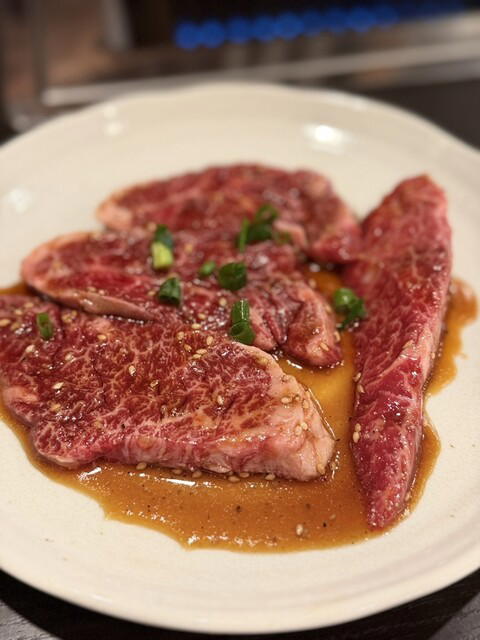
Yakiniku has its own acoustics: tabletop heat, tongs on grate, conversation shortening as the next cut needs attention. In Chiba, the format often works well away from station-front gloss, where dinner can stretch across grilled beef, tripe, rice, and drinks without tasting-counter choreography. Boushu En belongs to that older social grammar. The point is not spectacle, but the discipline of a shared grill, where timing is pleasure and cooking is partly returned to the diner.
That matters in a city often overshadowed by Tokyo, despite a deep commuter-belt appetite for specialist restaurants. Chiba’s stronger addresses tend to be practical rather than theatrical: ramen counters with queues, curry shops with regulars, Chinese noodle specialists, French rooms for local occasions, and yakiniku rooms built around repeat custom. For that spread, Our full Chiba restaurants guide gives context, while nearby listings such as BAMBOU, Bengal Tiger, Chinese Komugiko Ryori Senmonten Keisen, Cinq au Pied, and Curry Restaurant Shiba show how varied the city’s serious eating can be without capital-city polish.
Yakiniku here is a table ritual, not a chef's monologue
Japanese yakiniku is too often reduced to barbecue. Its modern form carries Korean influence, Japanese beef grading culture, a strong drinking component, and a social structure that rewards pacing. The meal moves in rounds: leaner cuts, richer cuts, offal, rice, soup, pickles, and drinks. Tripe is not a side note; it marks a room that understands the full yakiniku vocabulary.
Boushu En is listed for yakiniku and tripe, and that pairing is the editorial signal. At the stronger end of the category, beef alone is not enough. Texture becomes the measure: chew, fat, char, snap, and the difference between cuts that reward fast searing and those needing a slower hand. This is why yakiniku works for groups of friends. The table decides collectively, but each person controls the doneness of what crosses the grill. It is casual on the surface and exacting underneath.
The 2025 Tabelog 100 Yakiniku EAST selection places Boushu En in a regional field, not a local popularity contest. Tabelog’s Hyakumeiten lists identify category strength across broad geography; in yakiniku, the restaurant is read against other eastern Japan specialists, not only Chiba neighborhood options. Its Tabelog score of 3.64 is another signal, though the award matters more for travelers because it filters by genre. Where lavish beef branding can drown out judgment, selection within a dedicated yakiniku list is the cleaner trust marker.
Chiba's serious dining rewards specialists over spectacle
Chiba is not short on high-intensity eating, but it expresses itself through formats rather than grand rooms. Comparison helps. Ramen Sugita Ya Chiba yuukou ten and Ramen Jiro Chiba ten sit in the low-price, high-turnover ramen lane, where the decision is speed, appetite, and tolerance for lines. PANTRY COYOTE occupies a different casual bracket, more everyday than ceremonial. Against those peers, yakiniku at this level asks for a longer evening and a different budget. It is not the quick meal before a train; it is the main event.
That makes the house-restaurant setting significant. In Japan, a house restaurant often suggests domestic-scale hospitality rather than hotel-restaurant formality. Tatami seating and private-room availability reinforce the point: lingering conversation, family-style ordering, and groups wanting some separation from the main room. The non-smoking policy also matters in yakiniku, where grill smoke and drink service already shape the air. The category can feel rowdy; this version reads as controlled, social, and local in the right ways.
Drinks follow the expected Japanese yakiniku pattern: sake, shochu, and wine. That trio says more than a long label list. Sake sits with saltier preparations and rice; shochu fits grilled fat and offal; wine shows how yakiniku has absorbed a broader beef-house sensibility without abandoning Japanese table habits. Nothing requires ceremony, but better yakiniku rewards attention. Order too quickly and the table crowds itself. Order in waves and the grill becomes the center of the room.
How to place it in a Chiba itinerary
For travelers, the restaurant argues for staying in Chiba for dinner rather than defaulting back to Tokyo. The city’s appeal is not limited to restaurants: Our full Chiba hotels guide, Our full Chiba bars guide, Our full Chiba wineries guide, and Our full Chiba experiences guide map the broader stay. The restaurant works well after a day built around the prefecture, not as a rushed detour from central Tokyo, because yakiniku loses rhythm when treated as a pit stop.
It also fits a larger Japan itinerary for diners tracking grill culture, beef formats, and casual-specialist rooms. A traveler comparing regional expressions might pair it conceptually with -Grilled beef Sukiyaki- KAMAKURA TANUKIAN 鎌倉 たぬき庵 in Kamakura, a different beef tradition built around sukiyaki rather than direct grilling, or with Tokyo charcoal cooking such as. 鮪と炭火焼き うお炭 秋葉原店 in Tokyo. The point is not ranking. It is seeing how Japanese dining turns heat into distinct social formats: counter, grill, hotpot, izakaya, and private-room meal.
For a broader food map, the route can stretch beyond beef..cafe in Osaka.know in Kumamoto, (Shoku) Vietnam in Kawasaki, and [Curry Senmon Ten] Maruyama Kyoju. in Sapporo point to everyday-specialist Japanese dining, while Jōdo Saké Bar in Los Angeles and Onigiri Time in Pasadena show how Japanese formats translate abroad. In that context, the restaurant’s value is clear: it gives Chiba a yakiniku address with a category-specific award signal, a group-friendly format, and enough local texture to justify building the evening around the grill.
Cost Snapshot
Comparable venues by cuisine and price in the same metro.
| Venue | Cuisine | Price | Notes |
|---|---|---|---|
| Boushu En | Not listed | $$$ | Chuo Ward, Yakiniku (Japanese BBQ) & Horumon |
| Tonkatsu Okura | Mihama-ku, Tonkatsu specialty restaurant | $$ | Not listed |
| Private room Yakiniku GYU CHIBA | Chuo Ward, Private-room premium Yakiniku | $$$ | Not listed |
| Epice | Chuo-ku, French | $$$ | Not listed |
| Vv.lab | Makuhari, Seasonal Italian Fine Dining | $$$ | Not listed |
| Hanamigawa Ootomi | Not listed | $$$ | Makuharihongo, Yakitori using Hinai-jidori chicken |
Recognition history
Dated appearances from independent guides and award organizations, with the underlying list record or original source where available.
Tabelog 100 #19 · No. 19
Tabelog · Tabelog 100 - Yakiniku - EAST - 2025





At a Glance
- Lively
- Cozy
- Classic
- Group Dining
- Casual Hangout
- Family
- Celebration
- After Work
- Private Event
- Private Dining
- Standalone
- Sake Program
Current opening hours
- Monday
- Closed
- Tuesday
- 4–10 PM
- Wednesday
- 4–10 PM
- Thursday
- 4–10 PM
- Friday
- 4–10 PM
- Saturday
- 1–10 PM
- Sunday
- 1–10 PM
Hours can change for holidays and private events. Last verified .
Casual neighborhood yakiniku in a converted house with a relaxed, cozy feel; non-smoking interior, tatami seating, and a lively atmosphere that suits friends and group gatherings more than quiet dates.