
Tabelog 100 #40
Our verdict
USHIGORO S. GINZA occupies a specific tier in Tokyo's yakiniku scene: the kind of address where the provenance of the beef is as carefully considered as the cut itself. Located in Ginza's 7-chome, it operates within a district where premium wagyu specialists compete on sourcing discipline and counter experience rather than volume or spectacle.

Pearl is the En Primeur Club membership app, where members save venues, book tables and use the concierge.
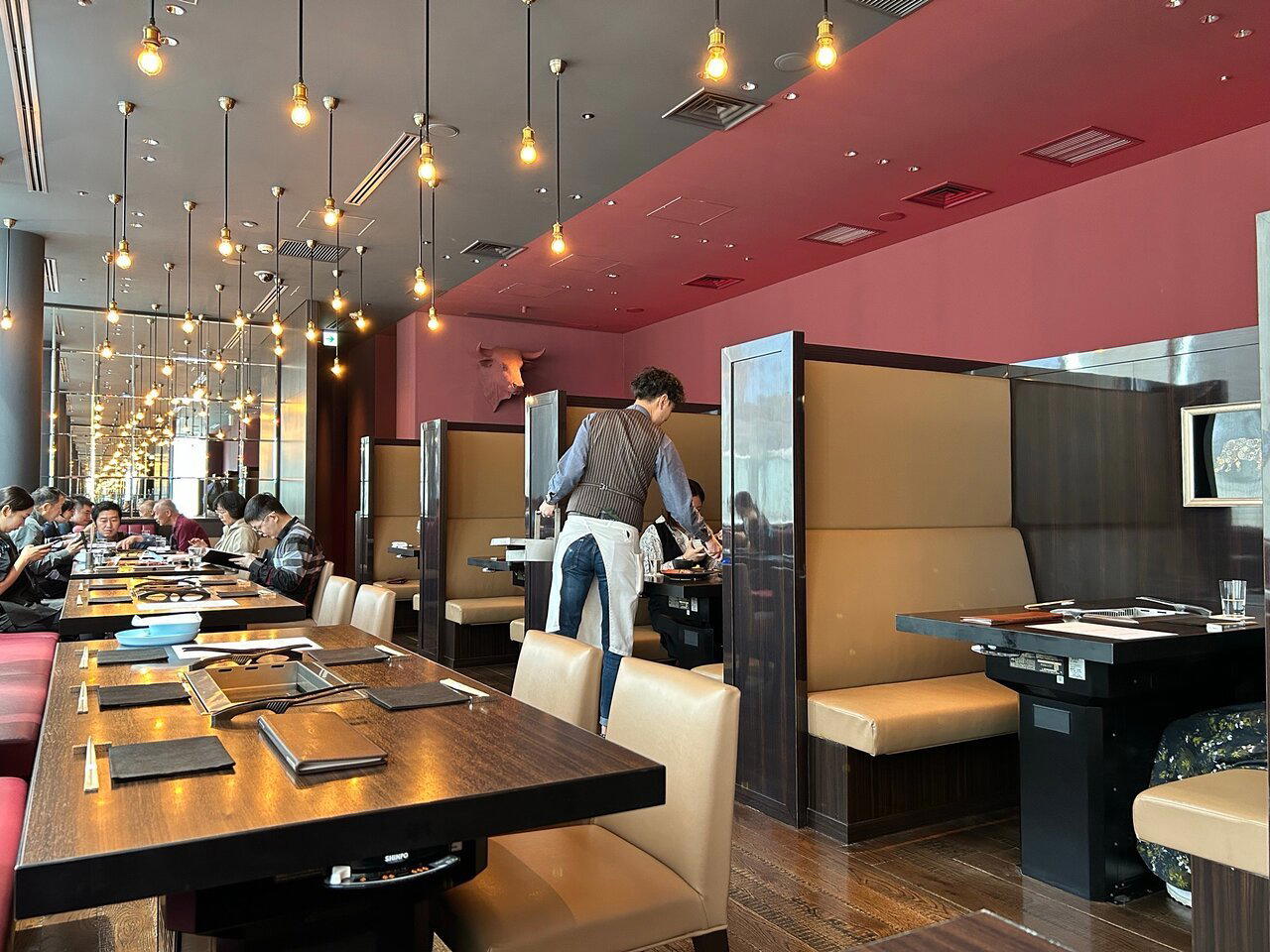
Ginza's dining floors have a particular quality of stillness in the early evening. Before the lacquer counters fill and the charcoal begins to glow, there is a moment in which the architecture of the meal becomes visible: the precise arrangement of service, the heat management, the logic of a menu built around cattle with documented lineage. USHIGORO S. GINZA, on the sixth floor of the Ginza 777 ADC Building in 7-chome, belongs to this tradition of deliberate restraint, where the room's quietness is not absence but preparation.
Yakiniku at the Provenance End of the Spectrum
Tokyo's yakiniku category has widened considerably over the past decade, splitting between high-volume, approachable formats and a smaller tier of counter-style addresses where the sourcing argument does most of the work. USHIGORO S. GINZA sits at that provenance-led end. The name itself carries the USHIGORO group's identity, a Tokyo operation with multiple expressions across the city, of which the Ginza S format represents the most formal iteration.
The ingredient sourcing angle is where this category earns its price premium. Japan's premium wagyu market operates on a regional certification system: Kuroge Washu (Japanese Black) cattle, graded on a 15-point meat quality scale, with A5 representing the ceiling. What separates one yakiniku counter from the next at this level is not simply grade but traceability: which prefecture, which farm, which feeding regimen. The leading addresses in this tier can specify the individual rancher. This is the competitive logic that addresses like USHIGORO S. GINZA, Harutaka in the sushi tier, and RyuGin in kaiseki all operate within: precision of origin as a trust signal.
Ginza's Position in Tokyo's Premium Dining Grid
Ginza functions as Tokyo's most legible luxury dining address for international visitors, though Shinjuku, Roppongi, and Azabu-Juban carry comparable density of serious restaurants. What Ginza offers that those neighborhoods do not is a particular concentration of the formal counter format: sushi, kaiseki, teppanyaki, and yakiniku operations where the counter is the room and the room is the experience. Sézanne and L'Effervescence operate in adjacent neighborhoods but connect to the same dining culture: small rooms, long menus, sourcing-led arguments.
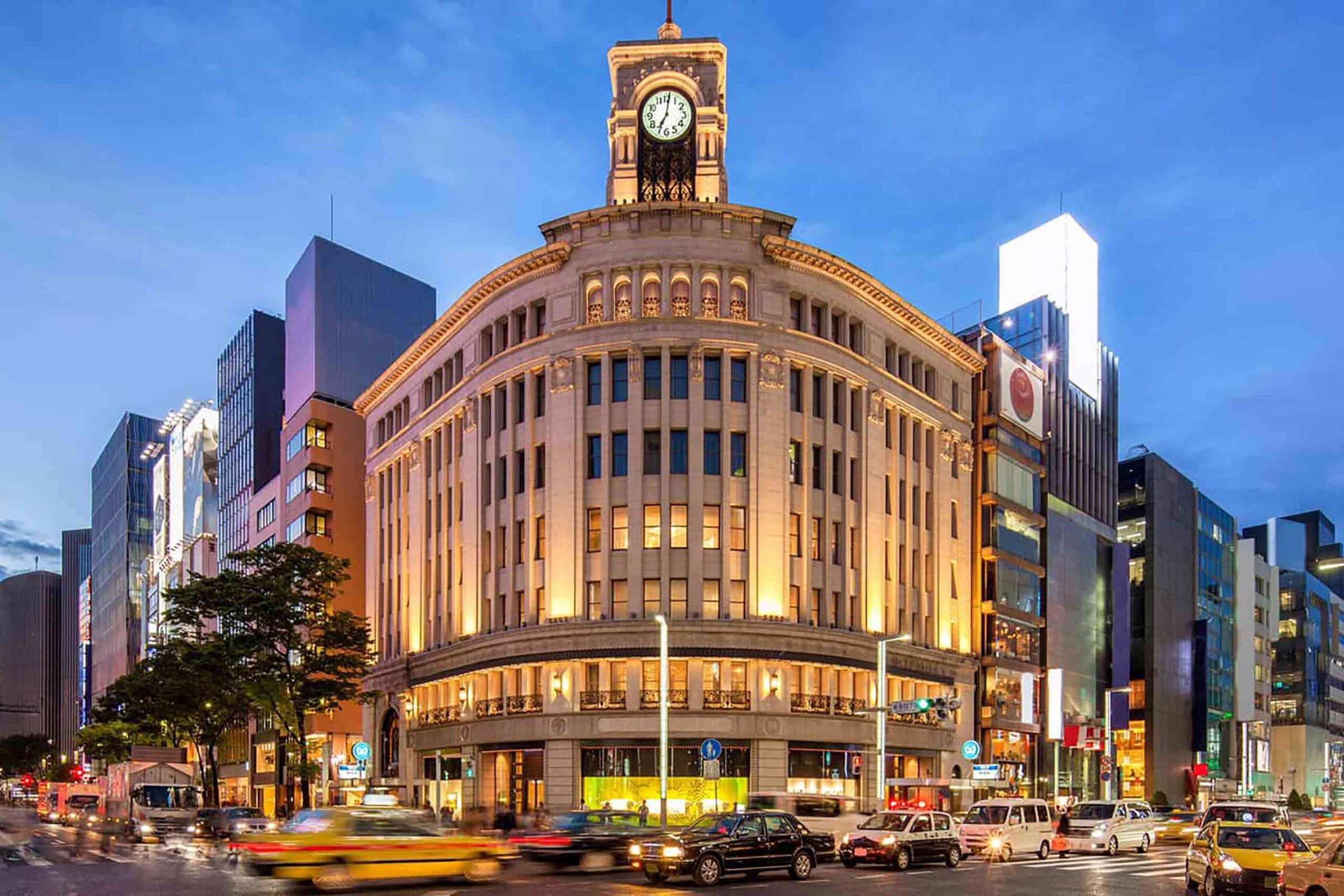
USHIGORO S. GINZA's 7-chome address places it at the quieter eastern end of Ginza's main corridor, a few minutes' walk from Higashi-Ginza Station. The ADC Building's sixth-floor location is typical of how Tokyo's premium restaurant category handles its spatial logic: the address is a building, not a street-level shopfront, and finding the elevator bank is part of the entry sequence.
What Sourcing Discipline Looks Like in Practice
At the level of yakiniku where sourcing is the proposition, the menu becomes a document of supply chain decisions. Cuts are presented in a sequence calibrated to fat content and cooking time: leaner, more textured cuts early; the richer, fattier sections at mid-meal when the palate is ready for them. The charcoal management matters as much as the cattle: Japanese binchotan, the dense white charcoal that burns hot and clean without smoke taint, is standard at counter-format yakiniku. The smoke profile of the cooking surface affects the final flavor of wagyu in ways that distinguish a serious address from a functional one.
Japan's regional wagyu system gives addresses in this tier their differentiation vocabulary. Kobe, Matsusaka, Omi, Yonezawa, Miyazaki: each region's cattle carries a distinct flavor profile shaped by genetics, feed, and climate. A counter built on sourcing credibility will typically rotate its featured cattle by season and availability rather than fixing to a single regional identity year-round. This creates a menu that changes meaningfully across visits, which in turn supports the kind of repeat customer who anchors the business model of premium counter restaurants in Tokyo. For broader regional context, operations like HAJIME in Osaka and Gion Sasaki in Kyoto demonstrate how provenance-led cooking structures menus across different Japanese culinary traditions.
Positioning Within the USHIGORO Group
The USHIGORO brand operates across multiple Tokyo addresses, with the S designation in the Ginza location functioning as a signal of format elevation within the group's own hierarchy. This is a common pattern in Tokyo's premium restaurant sector: a group operates a flagship or specialist format under a modified name, with the variation indicating counter style, sourcing tier, or service formality rather than a fundamentally different concept. The group model allows sourcing relationships to be maintained at scale while the S-format address delivers them in a more concentrated context.
For comparison within Tokyo's broader innovative dining scene, Crony takes a French-informed approach to ingredient sourcing, demonstrating how the provenance argument crosses culinary categories in Tokyo's premium tier. Beyond the capital, operations in cities including Goh in Fukuoka, akordu in Nara, and regional addresses like 一本杉川嶋 in Nanao, 湖畔庵 in Takashima, and 庭羽屋 in Nishikawa Machi illustrate how Japan's ingredient-sourcing ethic extends well outside the major urban centers. The 古往今来 in Sapporo, Birdland in Sakai, and Bistro Ange in Toyohashi further demonstrate the geographic range of serious dining across Japan. Internationally, the sourcing-led counter model finds close parallels at Le Bernardin in New York City and Atomix in New York City, where ingredient provenance structures tasting menus in comparable ways. See the full Tokyo restaurants guide for a broader map of the city's premium dining addresses.
Planning Your Visit
Location: Ginza 777 ADC Building, 6F, 7-7-7 Ginza, Chuo City, Tokyo. Nearest station: Higashi-Ginza (Asakusa/Toei Oedo lines), approximately a 3-minute walk. Reservations: Budget: Premium wagyu counter format in Ginza typically operates in the ¥30,000-¥60,000 per person range for a full course; confirm current pricing at booking. Dress: Smart casual is standard for Ginza counter dining; formal attire is not required but trainers and casual sportswear read as underdressed in this tier. Timing: Counter seats are finite and Ginza's premium addresses typically book several weeks ahead; for weekend or holiday sittings, longer lead time is advisable.
Frequently asked questions
Is USHIGORO S. GINZA suitable for children?
This is not a practical choice for dining with children. The Ginza 777 ADC Building location operates as a counter-format restaurant pitched at adult dining, where quiet, focused service and premium price points define the experience. Families with young children would be better served by Tokyo's mid-range yakiniku chains.
What's the vibe at USHIGORO S. GINZA?
The format is closer to an omakase counter than a casual grill, measured, quiet, and attentive rather than convivial. Ginza's premium dining grid sets the tone here: the address sits on the sixth floor of the Ginza 777 ADC Building, which filters for guests already committed to a deliberate dining occasion. Do not expect the open-kitchen noise of a mid-range yakiniku house.
How does USHIGORO S. GINZA differ from other USHIGORO group locations in Tokyo?
The 'S' designation in the Ginza address signals a formal counter format that sits above the group's other Tokyo locations in terms of both sourcing selectivity and service structure. Where the broader USHIGORO portfolio covers approachable yakiniku formats across the city, the Ginza 777 ADC Building location is positioned as the group's highest-specification expression of cattle provenance and counter dining.
What's the signature dish at USHIGORO S. GINZA?
No single dish functions as a fixed signature. At provenance-led yakiniku counters of this format, the menu shifts with cattle availability and seasonal supply decisions, so the cuts presented on any given visit reflect current sourcing rather than a permanent house dish. The menu itself is essentially a document of procurement choices made ahead of service.
What part of town is USHIGORO S. GINZA in?
USHIGORO S. GINZA is located at Japan, 〒104-0061 Tokyo, Chuo City, Ginza, 7 Chome−7−7 Ginza 777 Adc Building, 6階, Tokyo.
Should I book USHIGORO S. GINZA in advance?
Yes, particularly if Tokyo is on a fixed itinerary. Counter-format yakiniku restaurants at Ginza's price tier carry limited covers by design, and walk-in availability is not something to rely on. Booking ahead is the standard approach for this category of address in Tokyo.
A Tight Comparison
Comparable venues nearby, for context on price, style, and recognition.
| Venue | Cuisine | Price | Awards | Notes |
|---|---|---|---|---|
| USHIGORO S. GINZAThis venue (the venue you are viewing) | Luxury Yakiniku (Japanese BBQ) | $300–500 | Tabelog 100 #40 | Not listed |
| Motoyoshi (天ぷら 元吉) | Michelin-Starred Modern Tempura Omakase | $200–300 | Not listed | Ebisu, Michelin-Starred Modern Tempura Omakase |
| Sushi Mitani (鮨 三谷) | Edomae Omakase | $200–300 | La Liste Top Restaurants · Tabelog Gold #16 | Yotsuya, Edomae-style Omakase |
| Yoshizawa | Seasonal Kaiseki in Roppongi Hills | $150–200 | Tabelog 100 #54 | Minato, Seasonal Kaiseki in Roppongi Hills |
| Morimoto | Modern Japanese Sushi and Teppanyaki | $200–300 | Not listed | Minato, Modern Japanese Sushi and Teppanyaki |
| Watanabe | Seasonal Japanese Omakase Counter | $200–300 | Tabelog 100 #31 | Minato, Seasonal Japanese Omakase Counter |
Recognition history
Dated appearances from independent guides and award organizations, with the underlying list record or original source where available.
Tabelog 100 #40 · No. 40
Tabelog · Tabelog 100 - Yakiniku - TOKYO - 2025
Continue exploring
More in Tokyo
Restaurants in Tokyo
All restaurants in Tokyo →

Bars in Tokyo
All bars in Tokyo →
Details
- Elegant
- Sophisticated
- Intimate
- Special Occasion
- Business Dinner
- Date Night
- Private Dining
- Chefs Counter
- Sake Program
- Prix Fixe
Current opening hours
- Monday
- 5–11:30 PM
- Tuesday
- 5–11:30 PM
- Wednesday
- 5–11:30 PM
- Thursday
- 5–11:30 PM
- Friday
- 5–11:30 PM
- Saturday
- 12–3 PM, 5–11:30 PM
- Sunday
- 12–3 PM, 5–11:30 PM
Hours can change for holidays and private events. Hours as of .
Chic and sophisticated with private room intimacy and skilled chef grilling.