
Tabelog 100 #82
Our verdict
Hakodate Fusaya Daimon ten gives Hakodate’s seafood culture a teppan format rather than another bowl of ramen or market donburi. Its Tabelog 100 Okonomiyaki 2025 selection, 52-seat room, English menu, and seafood-led cooking make it a useful dinner address near Hakodate Station for travelers who want Hokkaido ingredients in a more social, grill-side register.

Pearl is the En Primeur Club membership app — saves, bookings, and concierge access live there. Same editors, same standards.
- Address
- 18-22 Wakamatsucho, Hakodate, Hokkaido 040-0063, Japan
- Phone
- +81 138-26-0064
- Hours
- Daily 4:30–10 PM
- Website
- tabelog.com
- Directions
- Get directions
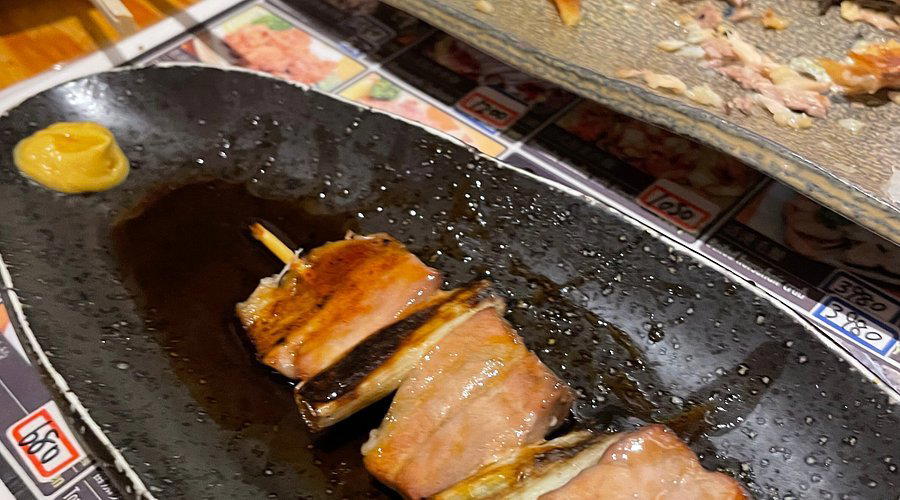
The menu
What to order
- Tonton-yaki
- Creative okonomiyaki
- Teppanyaki
- Fresh seafood
In Hakodate, the city’s evening appetite moves from well-known specialties to heat, smoke, and shared plates. Hakodate Fusaya Daimon ten belongs to that after-dark register: okonomiyaki, teppanyaki, and izakaya cooking, not the counter-only severity often associated with Japanese destination meals. The point is not formality, but how griddle culture and group dining can meet in a port city where ingredient quality often gets the attention.
Hakodate’s dining identity is usually introduced through familiar local staples and casual counters. Useful, but incomplete: the city keeps finding approachable formats for serious meals. Other Hakodate dining rooms make the ramen case, other long-running local addresses show different traditions, and specialists such as Uni Murakami and Uni Senmon Ten Yoichiya Hakodate asaichi ten sit in a higher-spend bracket. Fusaya occupies a different lane: a grill-table dinner where the appeal needs neither formal ceremony nor luxury pricing to feel anchored in place.
Okonomiyaki and teppanyaki in a port city built around appetite
Okonomiyaki is often treated as comfort food, but in Hakodate the format can carry more than convenience. A griddle gives structure to a meal that is cooked, shared, and paced at the table. The restaurant is listed for okonomiyaki, teppanyaki, and izakaya cooking. In Hakodate that matters: dining context is not decorative; the city’s reputation rests on direct, memorable food, and diners often expect local character plainly expressed, not dressed as luxury theater.
The Tabelog 100 Okonomiyaki 2025 selection places Hakodate Fusaya Daimon ten in a national conversation for the category. That recognition signals category credibility without turning the room into a tasting-menu address. The Tabelog score of 3.56 and dinner price range of JPY 3,000 - JPY 3,999 point to a restaurant built for regular use as much as travel planning. In Hakodate, that balance can be more persuasive than a rarefied counter: food culture is strongest when cooking format and social setting move together.
There is a practical cultural distinction. Destination dining in port cities can become transactional: choose the famous local dish, order quickly, leave. Teppanyaki and okonomiyaki slow that rhythm. The cooking surface turns the meal into shared decisions, especially for groups comparing griddle dishes and drinks in an izakaya setting. For travelers mapping the city, Our full Hakodate restaurants guide gives the broader restaurant frame, while Our full Hakodate bars guide helps extend the evening after dinner.
Where it sits beside ramen counters, European-leaning rooms, and specialists
Hakodate is not a city where one meal explains the whole table. Ramen remains the easy first move, with low-cost counters such as Jiyoken and Hakodate Shio Ramen Shinano in a separate price and pacing category. At the other end, Colz represents a more European vocabulary, filtering Hokkaido produce through a longer meal structure. Fusaya avoids both poles. It is neither quick bowl nor destination-course dinner; it is Hakodate dining folded into a democratic hot-plate format.
That middle position helps travelers already planning a short stay in Hakodate. The Hakodate location is useful without making convenience the whole argument. The listed categories—okonomiyaki, teppanyaki, and izakaya—lower the formality for visitors who want a local meal without a fully translated tasting-menu environment. Its appeal is the way a familiar casual format can still feel specific to the city.
The comparison with casual dining clarifies its role. Other Hakodate comfort-food addresses show how the city has absorbed everyday routines into local dining, while Fusaya keeps the comfort-food structure and ties it to the griddle. That is the stronger reason to place it on a short itinerary: not because it replaces specialists, but because it shows another way the city uses an informal table. A hot-plate dinner tells a different story from a quick bowl or a higher-spend reservation.
A useful dinner address when the group wants Hakodate without ceremony
The format sets expectations. Okonomiyaki, teppanyaki, and izakaya cooking suggest friends and groups, not hushed counter choreography. The better fit is a social dinner where sharing matters more than ceremony. With a dinner budget listed at JPY 3,000 - JPY 3,999, it sits in a practical range for travelers who want a Hakodate meal with local relevance rather than a luxury signal. For a city where travelers often split time between hotels, walks, and short taxi rides, that simplicity keeps the evening efficient.
Hakodate Fusaya Daimon ten should be read as a category specialist, not a luxury marker. The Tabelog 100 Okonomiyaki 2025 recognition gives confidence, the Hakodate setting gives local relevance, and the okonomiyaki-teppanyaki format gives the meal a reason to exist beyond another standard stop. Travelers building a broader Japan food route can place it beside other unnamed casual specialists across Japan. The contrast underlines Fusaya’s specific appeal: Hakodate dining handled through casual griddle grammar.
For planning beyond the table, Our full Hakodate hotels guide helps pair dinner with the right base, while Our full Hakodate wineries guide and Our full Hakodate experiences guide broaden the itinerary. Readers following Japanese food culture abroad may also find useful contrasts in unnamed overseas examples, where Japanese formats are translated through different city habits. In Hakodate, the logic is simpler: gather around the iron plate, keep the meal informal, and let the group dinner do the rest.
Frequently asked questions
Is Hakodate Fusaya Daimon ten child-friendly?
The available listing identifies Hakodate Fusaya Daimon ten as an okonomiyaki, teppanyaki, and izakaya restaurant in Hakodate. Check the venue's official channels for the latest details on children and group dining.
What's the overall feel of Hakodate Fusaya Daimon ten?
It reads as a casual dinner choice rather than a formal counter, built around okonomiyaki, teppanyaki, and izakaya cooking. The Tabelog 100 Okonomiyaki 2025 selection gives it clear category credibility in Hakodate.
What should I budget for a meal at Hakodate Fusaya Daimon ten?
Pricing at Hakodate Fusaya Daimon ten is listed as JPY 3,000 - JPY 3,999.
What days is Hakodate Fusaya Daimon ten closed?
Public details provided here do not specify closed days for Hakodate Fusaya Daimon ten. Check the venue's official channels for the latest opening schedule.
Quick Comparison
Comparable venues by cuisine and price in the same metro.
| Venue | Cuisine | Price | Awards | Notes |
|---|---|---|---|---|
| Hakodate Fusaya Daimon tenThis venue — the venue you are viewing | Japanese Izakaya with Okonomiyaki & Teppanyaki | Not listed | Tabelog 100 #82 | Not listed |
| Ajisai Honten | Hakodate shio ramen | $10–20 | Tabelog 100 #11 | Goryokaku |
| Jiyoken | Traditional Hakodate shio ramen | $1–10 | Tabelog 100 #32 | Matsukaze-cho / Daimon area |
| 函館麺厨房あじさい 本店 | Hakodate shio ramen | $10–20 | Tabelog 100 #11 | 五稜郭 |
| Ganso Indian Curry Koike | Traditional Japanese curry (Indian-style) | $10–20 | Tabelog 100 #54 | Horaicho |
| Yakidango Gingetsu | Traditional Japanese dango & sweets shop | $1–10 | Tabelog 100 #21 | Yunokawa Onsen |
Recognition history
Dated appearances from independent guides and award organizations, with the underlying list record or original source where available.
Tabelog 100 #82 · No. 82
Tabelog · Tabelog 100 - Okonomiyaki - 2025
Details
- Cozy
- Classic
- Lively
- Family
- Group Dining
- Casual Hangout
- After Work
- Solo
- Standalone
- Open Kitchen
- Sake Program
- Craft Cocktails
- Beer Program
- Sustainable Seafood
- Local Sourcing
- A La Carte
- Sake
- Shochu
- Wine
- Cocktails
- Pescatarian Friendly
Current opening hours
- Monday
- 4:30–10 PM
- Tuesday
- 4:30–10 PM
- Wednesday
- 4:30–10 PM
- Thursday
- 4:30–10 PM
- Friday
- 4:30–10 PM
- Saturday
- 4:30–10 PM
- Sunday
- 4:30–10 PM
Hours can change for holidays and private events. Last verified .
Relaxed and lively izakaya atmosphere with tatami and sunken seating, suited to casual meals, friends, and family dining.