
Our verdict
One of Meguro's most enduring tonkatsu counters, Tonki has held a place on Opinionated About Dining's Casual Japan list for three consecutive years, ranking as high as #66 in 2023. Operating on a tight evening schedule from a residential address in Shimomeguro, it represents the older, unfussy tier of Tokyo's pork cutlet tradition, queue-based, unadorned, and technically precise.

Pearl is the En Primeur Club membership app, where members save venues, book tables and use the concierge.
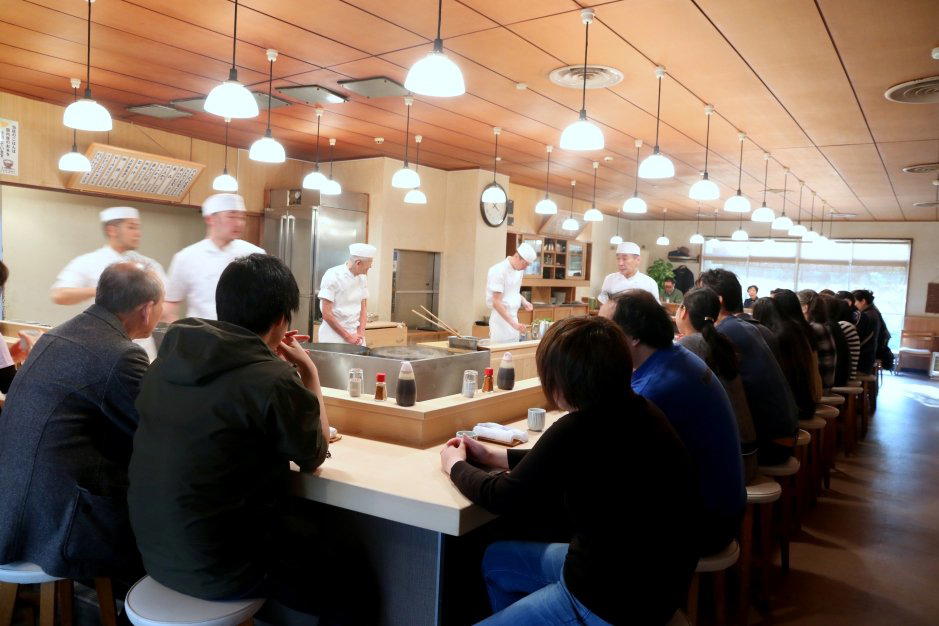
The Queue Before the Cutlet
Tokyo's tonkatsu tradition divides cleanly into two tiers. The newer cohort, represented by counter-format specialists like Butagumi, Ginza Katsukami, and Katsuyoshi, emphasizes breed provenance, aged lard frying, and reservation systems that treat the format with kaiseki-level seriousness. The older cohort operates on a different logic entirely: walk in, join the line, sit at a communal counter, and eat a cutlet that has been refined by repetition over decades rather than by concept or narrative. Tonki, at 1 Chome-1-2 Shimomeguro in Meguro City, belongs firmly to that second tradition.
The Shimomeguro address places it in a residential pocket of Meguro, a ward better known among Tokyo's dining cognoscenti for the density of serious restaurants along its main arteries than for any single category destination. Tonki is not on a main artery. It sits in the quieter grain of the neighbourhood, which means first-time visitors arrive by intention rather than by chance. That filtering effect matters: the room fills with people who know exactly what they came for.
An Evening Format Built Around One Thing
Tonki opens at 4 pm and closes at 9 pm, Tuesday excepted. The compressed hours, five evenings and Saturday, nothing else, are an accurate signal of how this kitchen operates. There is no lunch service to manage, no midday prep split, no extended brigade. The focus is tonkatsu, executed through a routine that has remained largely unchanged across the restaurant's decades of operation. For a city that has absorbed every global cooking trend, that kind of operational narrowness is its own editorial statement.
The meal at Tonki follows the logic of classic Tokyo tonkatsu rather than the progressive sequencing of a contemporary tasting menu. Shredded cabbage arrives first, dressed with a light hand, providing a sharp contrast before the main event. The pork cutlet itself, whether loin (rosu) or fillet (hire), comes to the table with miso soup, rice, and pickles. The rhythm is deliberate and spare. Nothing is withheld for dramatic reveal; everything arrives at the pace the kitchen sets. Regulars at venues like this know to order hire for the leaner, cleaner cut, or rosu for the fat cap's contribution to the crust. Both remain the anchors of what the kitchen does. That choice, between the two cuts, is where most of the meal's decision-making lives.
What the Rankings Actually Signal
Opinionated About Dining, which tracks casual dining in Japan with the same methodological rigour it applies to fine dining elsewhere, has listed Tonki on its Casual Japan ranking for three consecutive years: #66 in 2023, #90 in 2024, and #105 in 2025. The trajectory shows slight movement down the list as the competitive field around Tokyo tonkatsu has intensified, with newer specialists like Fry-ya and Katsusen drawing recognition in their own right. But sustained presence across three annual cycles is a different kind of signal than a single-year appearance. It means the kitchen's output remains consistent enough to satisfy a critical electorate year after year, with no dramatic drop that would suggest decline.
At that volume, a 4.2 average is not sentiment noise; it represents a settled consensus. Tonki does not generate the polarising reactions that come with ambition and experimentation. It generates the quiet, repeated approval that comes from doing one thing correctly, for a long time, in front of a lot of people.
For comparison, the fine dining registers in Tokyo at venues like RyuGin, L'Effervescence, or Harutaka operate in an entirely separate critical register, Michelin stars, ¥¥¥¥ price points, reservation lead times measured in months. Tonki competes in none of those lanes.
Tonkatsu Beyond Tokyo
Tonkatsu as a category extends well beyond Tokyo, and Japan's other major cities carry their own distinct takes on the format. Jukuseibuta Kawamura in Kyoto works with aged pork in a format that reflects Kyoto's general preference for restraint and ingredient legibility. Kyomachibori Nakamura in Osaka situates the cutlet within Osaka's broader frying culture, where kushikatsu and the deep-fry tradition carry their own civic pride. Tokyo's version, typified by places like Tonki, tends toward the direct and unapologetic: good pork, clean oil, consistent heat, and a counter where the transaction between kitchen and diner is as unmediated as possible.
For those moving between Japan's cities and building a more complete picture of the country's dining culture, HAJIME in Osaka, Gion Sasaki in Kyoto, akordu in Nara, Goh in Fukuoka, 1000 in Yokohama, and 6 in Okinawa each represent very different registers of Japanese cooking, a useful frame for understanding where Tonki sits within the full range.
Planning a Visit
Tonki is at 1 Chome-1-2 Shimomeguro, Meguro City, Tokyo 153-0064. The kitchen operates Tuesday through Sunday, opening at 4 pm and closing at 9 pm, with Tuesday dark. No phone or booking URL appears in public records, which aligns with the walk-in model standard for this category. Arriving when the doors open gives the leading chance of a shorter wait; later in the evening, particularly on weekends, queues can extend significantly. There is no dress code of note, and the format requires no particular preparation beyond knowing whether you prefer rosu or hire before you sit down.
For broader Tokyo planning, EP Club's guides cover the full range: our full Tokyo restaurants guide, our full Tokyo hotels guide, our full Tokyo bars guide, our full Tokyo wineries guide, and our full Tokyo experiences guide.
Frequently asked questions
What do regulars order at Tonki?
The menu at Tonki is anchored in the two standard tonkatsu cuts: rosu (pork loin, with fat cap) and hire (pork fillet, leaner and more tender). Regulars who favour a richer, more textured result tend toward the rosu; those who want a cleaner finish go hire. Both arrive with the standard accompaniments, shredded cabbage, miso soup, rice, and pickles, and neither is a wrong call. The restaurant has appeared on Opinionated About Dining's Casual Japan list in 2023, 2024, and 2025, which suggests both cuts are executed at a level that holds up under sustained critical attention.
Cuisine and Credentials
| Venue | Cuisine | Price | Awards | Notes |
|---|---|---|---|---|
| TonkiThis venue (the venue you are viewing) | Classic Tonkatsu | $20–30 | Not listed | Not listed |
| Harutaka | Edo-Style Omakase Sushi | $200–300 | 3 Michelin Stars · World's 50 Best #76 | Sushi |
| RyuGin | Modern Kaiseki | $500+ | 3 Michelin Stars · World's 50 Best #41 | Kaiseki, Japanese |
| L'Effervescence | Modern French with Japanese Influences | $200–300 | 3 Michelin Stars · World's 50 Best #69 | French |
| HOMMAGE | Modern French with Japanese Influences | $150–200 | 2 Michelin Stars · World's 50 Best #78 | Innovtive French, French |
| MAZ | Innovative Peruvian-Japanese Fusion | $150–200 | 2 Michelin Stars · World's 50 Best #28 | Innovative |
Recognition history
Dated appearances from independent guides and award organizations, with the underlying list record or original source where available.
Opinionated About Dining Casual in Japan Ranked #126
Opinionated About Dining
Full recognition history (4 entries)
Opinionated About Dining Casual in Japan Ranked #105
Opinionated About Dining
Opinionated About Dining Casual in Japan Ranked #90
Opinionated About Dining
Opinionated About Dining Casual in Japan Ranked #66
Opinionated About Dining
Continue exploring
More in Tokyo
More from Chef Various
Browse all →
Restaurants in Tokyo
All restaurants in Tokyo →
Bars in Tokyo
All bars in Tokyo →





Details
- Classic
- Rustic
- Cozy
- Casual Hangout
- Solo
- Open Kitchen
- Sake Program
- A La Carte
- Counter Dining
Current opening hours
- Monday
- 4–9 PM
- Tuesday
- Closed
- Wednesday
- 4–9 PM
- Thursday
- 4–9 PM
- Friday
- 4–9 PM
- Saturday
- 4–9 PM
- Sunday
- 4–9 PM
Hours can change for holidays and private events. Hours as of .
Old-school rustic charm with mid-century modern blond wood interior, spacious U-shaped counter facing the bustling kitchen, and a lively local diner atmosphere.