Tom's Diner occupies a quiet address at West-Gistelhof 23 in Bruges, placing it within a city whose restaurant scene has shifted considerably over the past decade. With Bruges producing more Michelin-recognised tables per capita than most Belgian cities its size, a neighbourhood address like this one sits in a dining environment defined by ambition and ongoing reinvention.
Pearl is the En Primeur Club membership app — saves, bookings, and concierge access live there. Same editors, same standards.
- Address
- West-Gistelhof 23, 8000 Brugge, Belgium
- Phone
- +3250333382
- Website
- tomsdiner.be
- Directions
- Get directions
 Saves & bookings on Pearl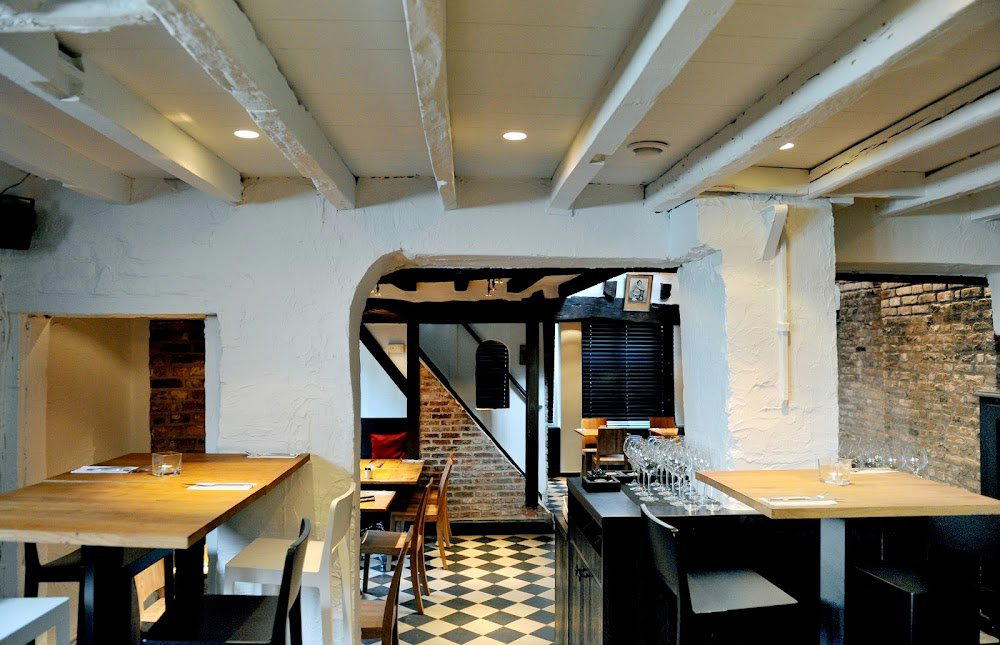
Bruges and the Reinvention of the Neighbourhood Table
Bruges has spent the better part of two decades shedding its postcard identity at the dinner table. The city's fine dining tier, anchored by references like De Karmeliet (Belgian Fine) and the modern French work coming out of Mémoire, pulled the broader scene upward. What followed, as in Ghent and Antwerp before it, was a secondary wave: smaller rooms, fewer covers, formats that trade the full ceremony of a tasting menu for something closer to a working dinner. Tom's Diner, at West-Gistelhof 23 in the western quarter of the old city, sits somewhere inside that shift.
The address is worth noting on its own terms. West-Gistelhof is not one of the canal-front stretches that collects tourists in the early evening. It is a residential side of Bruges that has, over time, become a quiet incubator for the kind of room that fills on reputation rather than foot traffic. That geographic fact tells you something about how the place positions itself relative to the city's more declarative dining addresses.
The Evolution of Format in a City Rewriting Its Dining Register
Belgium's restaurant culture has undergone a pronounced structural change over the past fifteen years. The country that once defined itself almost entirely through formal Michelin-chasing has developed a parallel track: venues that carry serious technique without the full apparatus of starred service. Sans Cravate (Creative French) in Bruges exemplifies one reading of this shift, sitting at the creative-French end of the spectrum with a format that keeps the kitchen ambition high while loosening the room's formality. Zet'Joe by Geert Van Hecke (Modern European, Creative French) represents another: a chef with a long established reputation choosing a register that emphasises craft over performance.
Tom's Diner, by name alone, signals a deliberate positioning. The American diner reference in a Flemish medieval city is not accidental graphic design. It places the room in the tradition of European restaurants that have borrowed an egalitarian American hospitality vocabulary, the counter culture, the unfussy room, the focus on repetition and consistency over spectacle, and grafted it onto local produce and technique. Whether that positioning has evolved since the room opened, or how far it has been pushed in recent years, is not documented in the public record with enough specificity to state definitively.
Reading Tom's Diner Against the Wider West Flanders Scene
To understand any Bruges restaurant in 2024, it helps to map the broader West Flanders dining axis. The region produces a disproportionate share of Belgium's serious cooking. Boury in Roeselare and Hof van Cleve - Floris Van Der Veken in Kruishoutem operate at the summit of the regional hierarchy. Closer to the coast, Bartholomeus in Heist and Willem Hiele in Oudenburg have built serious reputations around North Sea produce and restrained technique. Within Bruges itself, 't Apertje represents the more rooted, traditional Flemish end of the spectrum.
That absence is not a dismissal. Many of the rooms that have shaped Bruges's current dining character built their followings quietly, through a local customer base, through consistency over years, rather than through the Michelin inspection circuit. The comparison venues worth holding in mind are the city's neo-bistro entries, rooms that price and format at a level below the four-euro-sign tier represented by Mémoire and Sans Cravate, while still operating with genuine kitchen intent.
For broader Belgian context, the trajectory of rooms like Zilte in Antwerp and Castor in Beveren shows how the country's mid-tier has been pulled upward by proximity to serious fine dining. That pressure exists in Bruges too, and it shapes expectations even in rooms that are not explicitly competing for stars.
What the Address Tells You About the Room
West-Gistelhof 23 sits in the part of Bruges that rewards a deliberate visit. You are not going to walk past and decide on a whim. The western quarter of the historic centre, away from the Markt and the main canal circuit, attracts a different kind of diner: one who has made a choice rather than defaulted to proximity. That self-selection matters. Rooms in this part of the city tend to draw a local and returning clientele in proportions that canal-adjacent addresses do not.
For visitors mapping a Bruges itinerary, the practical reality is that West-Gistelhof is walkable from the historic core in under fifteen minutes. The city's compact geography means that no restaurant address in the old town requires transport planning. Reservations are recommended.
Tom's Diner in the Context of Belgian Dining Beyond Bruges
Belgium's dining scene has become one of Europe's most interesting precisely because it supports a range of registers simultaneously. At the formal end, rooms like Bozar Restaurant in Brussels and L'air du temps in Liernu operate with the full weight of critical recognition behind them. At the other end, neighbourhood rooms across Flanders have developed loyal followings that sustain them independently of the awards circuit. The interesting question for any Bruges diner is which tier a given room actually occupies, and whether that tier matches what the room's name and address suggest.
What it offers instead, based on its positioning, its address, and its name's implicit register, is a Bruges room that has defined itself against the city's grander dining tradition rather than in direct competition with it. For anyone building a Bruges itinerary that spans more than a single register, our full Bruges restaurants guide maps the full spread, from the city's Michelin tier down through the neighbourhood rooms that have earned their place in the local conversation. Further afield in the region, De Jonkman in Sint-Kruis and d'Eugénie à Emilie in Baudour extend the picture into what the broader Flemish and Walloon scenes are doing at comparable points in their own evolution.
A Credentials Check
Comparable venues nearby, for context on price, style, and recognition.
| Venue | Cuisine | Price | Notes |
|---|---|---|---|
| Tom's DinerThis venue — the venue you are viewing | Belgian Fusion Tapas | $$ | Not listed |
| Ober | Modern Belgian-French Bistro | $$$ | Sint-Michiels |
| 't Apertje | Classic Belgian Bistro | $$ | Sint-Kruis |
| The Blue Lobster | Belgian Seafood | $$ | Zeebrugge |
| Brasserie Raymond | French & Belgian Brasserie | $$$ | City Center |
| Depla Chocolatier | Belgian Chocolatier | $$ | Historic Centre |
Continue exploring
More in Bruges
Restaurants in Bruges
Browse all →
Bars in Bruges
Browse all →
Hotels in Bruges
Browse all →
Wineries in Bruges
Browse all →
At a Glance
- Cozy
- Casual
- Casual Hangout
- Date Night
- Open Kitchen
Current opening hours
- Monday
- Closed
- Tuesday
- 6–10 PM
- Wednesday
- 6–10 PM
- Thursday
- 6–10 PM
- Friday
- 6–10 PM
- Saturday
- 6–10 PM
- Sunday
- Closed
Hours can change for holidays and private events. Last verified .
Cozy and unpretentious atmosphere with an open kitchen, friendly informal service, and a casual jovial vibe.