One of Bruges's few remaining active family breweries, De Halve Maan has been producing beer on Walplein since the mid-nineteenth century. The brewery sits inside the old city's canal belt, and its brewing programme spans traditional Belgian ales alongside more recent additions. Tours run daily, and the rooftop terrace offers one of the more grounded views across the Bruges roofline.
Pearl is the En Primeur Club membership app — saves, bookings, and concierge access live there. Same editors, same standards.
- Address
- Walplein 26, 8000 Brugge, Belgium
- Phone
- +32 50 44 42 25
- Website
- halvemaan.be
- Directions
- Get directions
 Saves & bookings on Pearl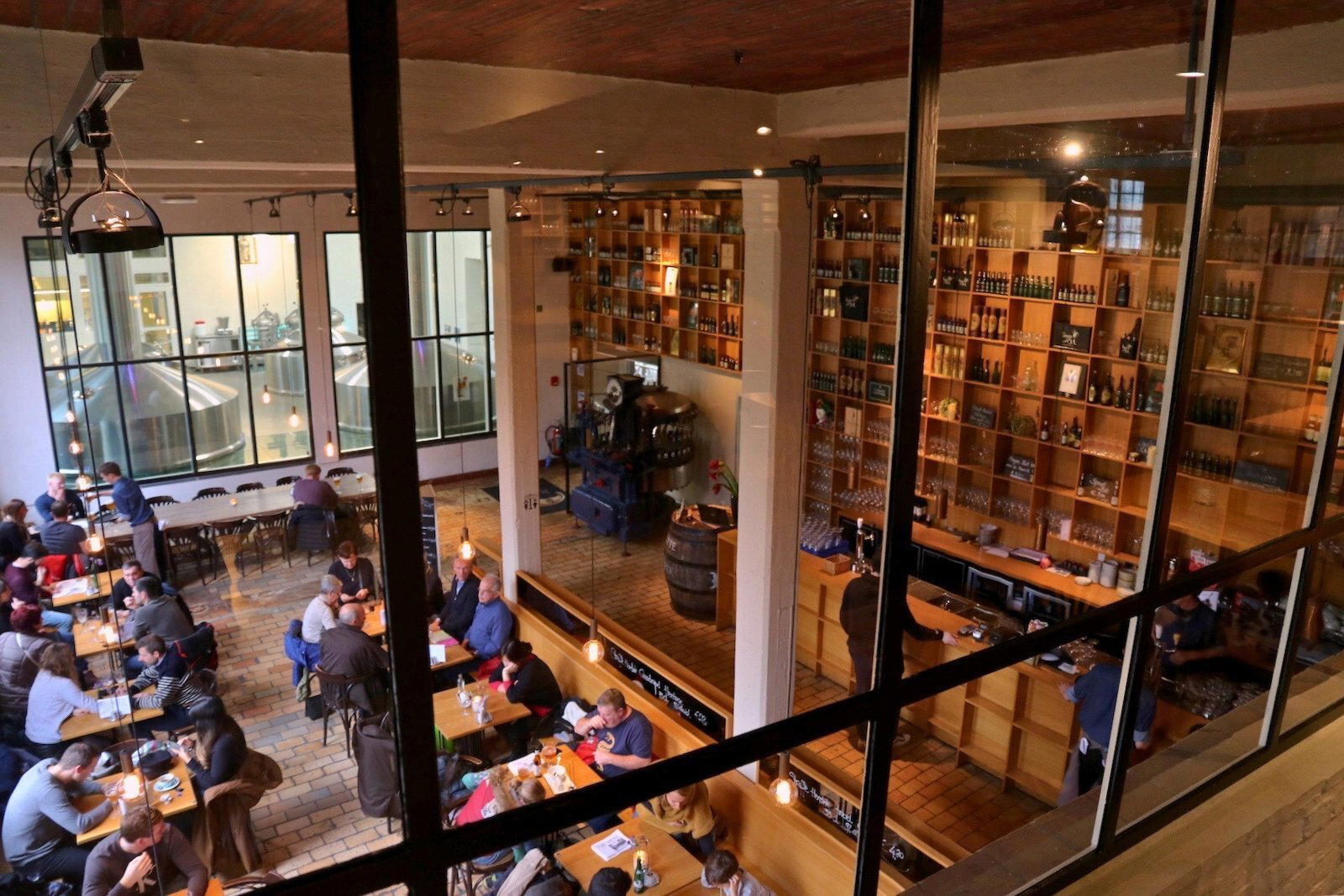
Where Bruges Pours Its Identity
Walplein 26 sits at the edge of one of Bruges's quieter squares, a short walk south from the Beguinage and the Minnewater lake. The building carrying the De Halve Maan name is one of those structures that has absorbed so much of a city's industrial memory that separating the brewery from the neighbourhood becomes almost impossible. Copper vessels visible through ground-floor windows, the faint grain-and-yeast scent that clings to the surrounding cobblestones on a warm afternoon, the rooftop terrace framing a skyline of Gothic towers and canal bends: these details place De Halve Maan inside a specific and increasingly rare category of European urban breweries that never relocated to industrial estates when real estate pressure intensified. It stayed, and that decision defines almost everything about what visiting it means.
The Brewing Tradition Behind the Glass
Belgian beer culture divides cleanly between industrial production and artisan regional brewing, and Bruges has historically sat closer to the latter tradition. De Halve Maan operates as a working brewery in the historical centre, producing beer on the same site where brewing records date back to the sixteenth century. That continuity is not sentiment: it is a logistical and commercial statement about what the venue considers central to its identity. In 2016, the brewery completed a three-kilometre underground pipeline running from the Walplein site to a bottling facility outside the city walls, a piece of infrastructure that solved the problem of moving beer through medieval streets without using trucks. The pipeline carries roughly six thousand litres of beer per hour and has been cited in engineering and hospitality trade coverage as an unusual example of solving a heritage-city operational problem with purpose-built infrastructure rather than relocation.
The house beer most closely associated with De Halve Maan is Brugse Zot, a blond ale brewed on site. Belgian blond ales occupy a particular position in the country's beer taxonomy: less austere than a saison, less sweet than a tripel, with carbonation and a clean bitterness that make them function well both as standalone drinking and alongside food. Brugse Zot holds Protected Geographical Indication status in its category, a formal designation that places it in the same regulatory framework used for wine appellations and regional food products across the EU. A darker version, Brugse Zot Dubbel, extends the range into the maltier, fuller-bodied register that Belgian dubbel tradition requires. For visitors accustomed to thinking about beer purely through the lens of international lager or craft IPA, drinking either version on the Walplein terrace against a Bruges skyline recalibrates what the category can deliver at its most place-specific.
Drinking in Context: Belgium's Bar Culture and Where Bruges Fits
Belgium's drinking culture is frequently misread by visitors who arrive expecting either the cathedral-scale selection of a Brussels café or the industrial-heritage atmosphere of a Trappist brewery. Bruges occupies a different register: a city small enough that a single working brewery can function as a genuine anchor for the local drinking scene rather than one node among hundreds. In Brussels, the range runs from the time-sealed café atmosphere of À La Mort Subite in Pl De Brouckere to the wine-focused precision of Fermento Wine Bar in Brussels. In Antwerp, Bar Burbure in Antwerp represents the design-led cocktail tier. Bruges does not try to compete in those registers. Its contribution to Belgian drinking culture is a more concentrated proposition: beer, made here, drunk here, in a building that has been doing this since before most European cocktail bars existed as a concept.
Along the Belgian coast, VINES by maQUINZE in Ostend takes a wine-forward approach, while Wijnbar Dito in Hasselt and Vino Vino in Namur anchor their respective cities in a similar wine-bar idiom. In Ghent, 't Dreupelkot in Ghent specialises in genever to a depth that approaches obsessive. De Halve Maan's argument is different from all of these: it is about the specificity of place-made beer and the infrastructure, literal and cultural, built to sustain it.
The Rooftop and the Tour: Two Ways to Visit
Visitors to De Halve Maan arrive through two distinct formats. The first is the brewery tour, a guided walk through the production floors, fermentation tanks, and historical brewing records that ends, conventionally, with a tasting. Belgian brewery tours vary considerably in depth: some are perfunctory venue walkthroughs, others are substantive introductions to process and regional tradition. De Halve Maan's tour sits closer to the latter, with the active brewing equipment providing a working context rather than a museum backdrop. The second format is simply drinking on the rooftop terrace, which operates independently of the tour and offers one of the more considered vantage points over central Bruges available without paying a museum entrance fee. The combination of Brugse Zot on tap and a rooftop view of the belfry and canal system is the kind of circumstance that makes explaining Belgian beer culture to a first-time visitor considerably easier than any written account.
For dining in the vicinity, Restaurant Sans Cravate represents Bruges's more formal French-influenced end of the table. The two experiences do not overlap in register, which makes sequencing them on the same evening direct.
The format of a working urban brewery with a public-facing tasting room and viewing access to production equipment appears in cities from Brussels to Honolulu, where Bar Leather Apron in Honolulu represents a different, cocktail-program-led approach to the premium drinks experience. De Halve Maan's pitch is the opposite of cocktail-program complexity: it is about reduction, about one building, one beer tradition, one city, made as legible as possible to anyone willing to climb to the roof. In Brussels, L'Archiduc in Grand Place and Le Louise Hotel Brussels in Elsene offer routes into Brussels's own drinking culture, but neither attempts what De Halve Maan does: the argument that a city's beer is inseparable from the physical place where it is made.
Planning Your Visit
De Halve Maan sits at Walplein 26 in the southern section of Bruges's historic centre, within walking distance of the Beguinage and the Minnewater.
Quick Comparison
Comparable venues nearby, for context on price, style, and recognition.
| Venue | Cuisine | Price | Notes |
|---|---|---|---|
| Huisbrouwerij De Halve MaanThis venue — the venue you are viewing | beer_bar | $$ | Not listed |
| Restaurant Sans Cravate | wine_bar | $$$$ | St-anna |
Continue exploring
More in Bruges
Bars in Bruges
Browse all →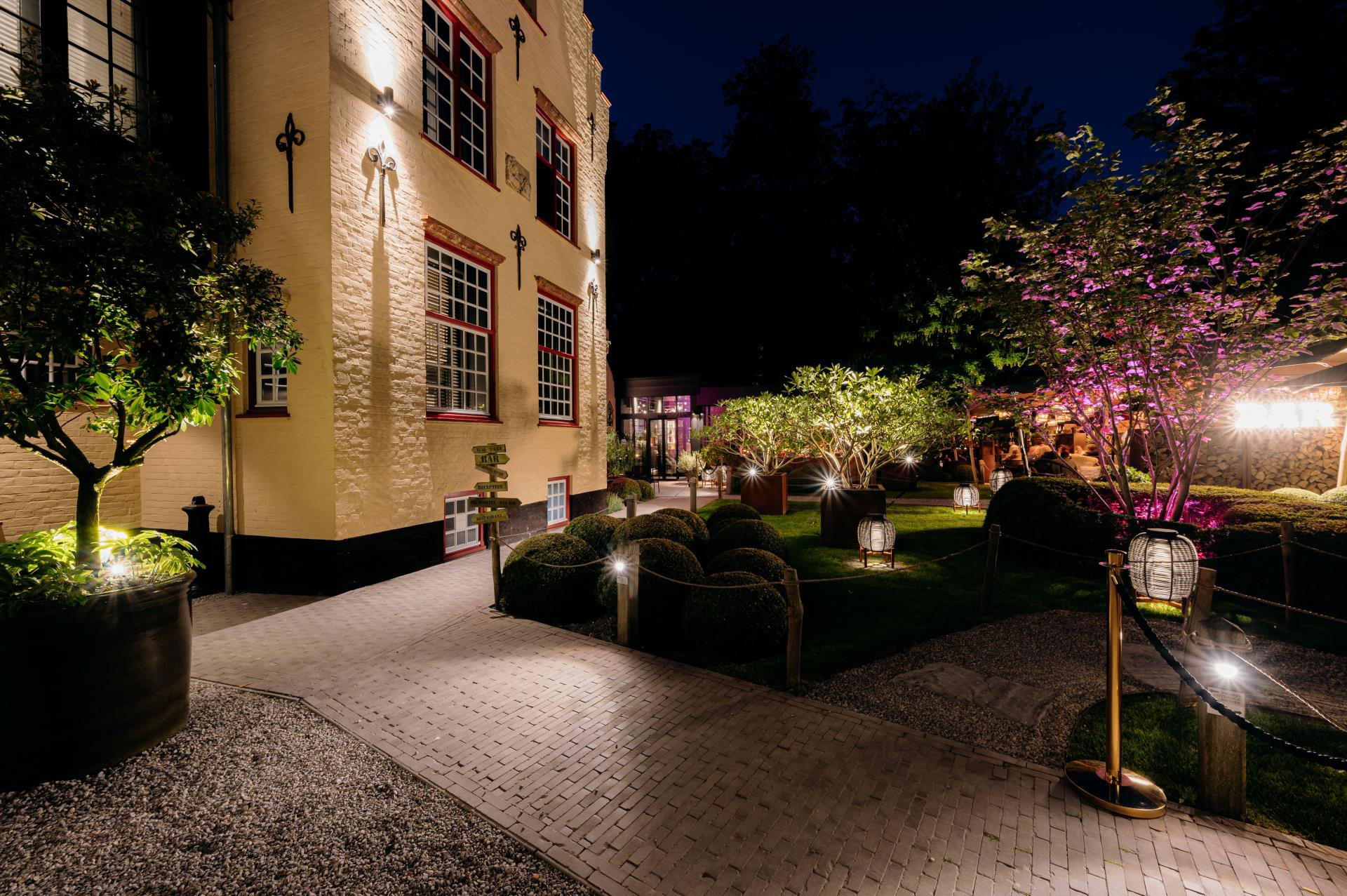
Restaurants in Bruges
Browse all →
Hotels in Bruges
Browse all →
Wineries in Bruges
Browse all →
At a Glance
- Classic
- Rustic
- Well Known
- Cozy
- Casual Hangout
- Group Outing
- Historic Building
- Lounge Seating
- Outdoor Terrace
- Communal Tables
- Craft Beer
- Low Abv
- Street Scene
Current opening hours
- Monday
- 11 AM–6 PM
- Tuesday
- 11 AM–6 PM
- Wednesday
- 11 AM–9 PM
- Thursday
- 11 AM–9 PM
- Friday
- 11 AM–9 PM
- Saturday
- 11 AM–9 PM
- Sunday
- 11 AM–6 PM
Hours can change for holidays and private events. Last verified .
Historic and authentic atmosphere in a lively family brewery with a nice inner courtyard and canal lounge.