Tomatina
Our verdict
On Park Street in Alameda, Tomatina occupies a stretch of the island city's main commercial corridor where Italian-American casual dining holds its own against a diverse roster of neighborhood spots. The restaurant draws a steady local crowd, positioning itself in the accessible, everyday dining tier that anchors Park Street's eating scene rather than its destination-dining end.

Pearl is the En Primeur Club membership app, where members save venues, book tables and use the concierge.

The menu
What to order
- Signature Garlic Rolls
- Piadine
- Margherita Pizza
Park Street and the Casual Italian Question
Alameda's Park Street runs long enough to hold genuine contradictions: weekend farmers markets at one end, workaday lunch spots at the other, and a middle stretch where the city's dining character is most legible. It is here, at 1338 Park St, that Tomatina sits, part of a block-level mix that includes everything from Cantonese dim sum at East Ocean Seafood Restaurant to the smoky, low-and-slow register of Fikscue. That diversity matters as context, because Tomatina's appeal is not built on standing apart from the street's range, it is built on serving a consistent, approachable Italian-American format to a neighborhood that needs exactly that.
Italian-American casual dining in American cities occupies a structural position that is easy to underestimate. It absorbs family dinners, first-date anxieties, post-work fatigue, and the particular need for something warm and carbohydrate-rich without ceremony. On a street like Park, where the competition includes the Burmese comfort of Burma Superstar, the Sichuan directness of Chong Qing Noodles House, and the Latin-inflected precision of Ceron Kitchen, a casual Italian restaurant earns its place by doing what it does reliably, not by doing something nobody else does.
The Arc of an Everyday Italian Meal
There is a logic to how a meal at this kind of restaurant moves, and it is worth tracing, because the tasting progression at a casual Italian-American spot is its own minor art form, one that fine-dining culture often forgets to credit. It does not unfold in the slow revelation of a tasting menu at Lazy Bear in San Francisco or the agricultural sequencing of Blue Hill at Stone Barns in Tarrytown, but it has its own internal rhythm.
A meal at a place like Tomatina typically opens with bread and something to dip or spread, the gesture that signals hospitality before the menu has been properly read. Antipasti or salads follow, lighter and acidic, calibrating appetite before the main event. Then pasta, the organizational center of any Italian-American menu, where the kitchen's real commitments show: sauce-to-pasta ratios, the texture of the noodle, the coherence of the dish across its components. After that, secondi if the table is serious, or a pivot straight to dessert if the evening has been long. It is a structure that the industry has run for over a century in the United States, and its durability is earned.
What distinguishes one restaurant operating within this structure from another is execution consistency and the degree to which the kitchen resists the drift toward generic. The Bay Area's Italian-American scene has its share of venues that cut corners on pasta or over-rely on sweetened sauces to compensate for under-seasoned bases. The better rooms hold the line on fundamentals: acidity in tomato preparations, proper salt in pasta water, the right weight of cheese at the finish.
Where Tomatina Sits in Alameda's Dining Tier
Alameda's restaurant scene is not structurally organized around destination dining. The island's geographic separation from Oakland and San Francisco, accessible by tube, bridge, or ferry, but still a deliberate trip, means that most of its dining volume comes from residents rather than visitors making a specific journey. That shapes the type of restaurant that succeeds here: places with high repeat-visit tolerance, consistent execution, and a format that works on a Tuesday as well as a Saturday.
Tomatina fits that template. Its position on Park Street places it in the everyday-accessible tier rather than the special-occasion upper bracket. For context on what the upper bracket looks like in the broader Bay Area, properties like Single Thread Farm in Healdsburg or The French Laundry in Napa define one end of the California fine-dining spectrum; Tomatina operates at the opposite end, where accessibility and frequency of use are the primary metrics of success. Neither end of that spectrum is more valuable to a city's food culture, a neighborhood needs its Park Street Italian as much as it benefits from proximity to Michelin-starred destination rooms.
That said, within Alameda's casual tier, Tomatina competes against genuine variety. The island's diverse dining options, from the Southeast Asian register at Burma Superstar to the Japanese precision at venues like Chong Qing Noodles House, mean that Italian-American comfort food is one choice among many, not a default. A restaurant in that position earns repeat visits through the specific satisfactions of its cuisine: the warmth of a properly built tomato sauce, the way pasta holds heat, the uncomplicated pleasure of a familiar menu executed without pretension.
The Broader Italian-American Context
Italian-American cuisine in California carries a longer history than many diners register. The Bay Area's Italian immigrant communities shaped the region's food culture well before California cuisine, in its Chez Panisse or Zuni Café form, became the dominant narrative. Tomato-based pasta traditions, focaccia, and the particular American interpretation of antipasti platters all have deep roots in the Bay Area's working-class Italian-American neighborhoods. A restaurant named Tomatina gestures, at minimum, toward that tradition's most fundamental ingredient: the tomato, in all its sauce-ready, slow-cooked utility.
At the fine-dining end of that tradition, places like Le Bernardin in New York City or Atomix in New York City represent what happens when European culinary tradition intersects with American ambition and formal technique. At the casual end, the Italian-American tradition survives through volume restaurants, family-run trattorias, and neighborhood spots that measure success not in Michelin stars but in the number of tables that come back within the month. For reference on what the formal Italian dining tradition looks like at its most technically ambitious, 8 1/2 Otto e Mezzo Bombana in Hong Kong and Alinea in Chicago represent the experimental outer edge of how European culinary traditions are being reinterpreted globally, a useful calibration point for understanding just how wide the spectrum runs.
Planning a Visit
Tomatina is located at 1338 Park St in Alameda, on the commercial stretch that concentrates most of the island's dining options. Park Street is walkable from the Alameda ferry terminal and accessible from the Park Street Bridge connecting to Oakland. The Park Street corridor tends to see higher foot traffic on weekend evenings, when the full range of the street's restaurants, from dim sum to barbecue to Italian, competes for the same dining window, so midweek visits typically offer a lower-friction experience.
For a fuller picture of what Alameda's dining scene currently offers, the our full Alameda restaurants guide maps the island's options across cuisines and price tiers. Travelers arriving from San Francisco with a broader California dining itinerary in mind might also reference Providence in Los Angeles, Addison in San Diego, or Emeril's in New Orleans for the range of what serious dining looks like across the country, though Tomatina operates in a different register entirely, one defined by neighborhood utility rather than destination ambition. And for Washington D.C.-adjacent travelers curious about American fine dining's formal end, The Inn at Little Washington in Washington provides a useful comparison point at the opposite end of the formality scale.
Frequently asked questions
Where is Tomatina located?
Tomatina is located at 1338 Park St, Alameda, CA 94501, Alameda.
Is Tomatina a good option for a casual weeknight dinner in Alameda when you want to avoid the Bay Bridge?
That's exactly the position Tomatina occupies in Alameda's dining scene. Located at 1338 Park St, it sits on the island's main commercial strip, which is walkable from several residential neighborhoods and avoids the cross-bay commute entirely. For residents looking for an Italian-American dinner without leaving Alameda, it represents a practical and locally grounded choice.
What's the signature dish at Tomatina?
Given the Park Street context and casual format, expect pasta and red-sauce preparations to anchor the menu. For the current lineup, checking directly with the restaurant at 1338 Park St is the most reliable approach.
Is Tomatina reservation-only?
Casual Italian-American spots on Park Street in Alameda generally operate on a walk-in basis, particularly at lunch. Contacting the restaurant directly before a weekend dinner visit is advisable.
What's Tomatina best at?
Tomatina occupies the neighborhood Italian-American tier on Park Street, the kind of reliable, everyday cooking that Alameda's dining scene depends on precisely because the island isn't structured around destination restaurants. It functions as a consistent local option rather than a special-occasion draw.
How does Tomatina handle allergies?
No allergy policy is documented for Tomatina. Standard practice at casual Italian-American restaurants is to flag dietary needs when ordering, and staff can typically advise on dish composition. Anyone with a serious allergy should call ahead to 1338 Park St, Alameda, before visiting.
Is Tomatina overpriced or worth every penny?
Casual Italian-American restaurants in Alameda's Park Street corridor generally sit in the accessible mid-range, in line with the neighborhood's everyday dining expectations rather than the higher price points of Oakland or San Francisco destinations.
Accolades, Compared
Comparable venues nearby, for context on price, style, and recognition.
| Venue | Cuisine | Price | Notes |
|---|---|---|---|
| TomatinaThis venue (the venue you are viewing) | Modern Italian Pizza and Pasta | $20–30 | Not listed |
| The Star on Park | Chicago-Style Deep Dish Pizza | $20–30 | Downtown Alameda |
| Burma Superstar | Burmese | $20–30 | Alameda |
| Pizzeria Pappo | Italian Pizzeria | $20–30 | Not listed |
| Hayashi Japanese Cuisine | Authentic Japanese Sushi | $20–30 | Alameda |
| Shirasoni | Japanese Teppanyaki and Sushi | Not listed | Not listed |
Continue exploring
More in Alameda
Restaurants in Alameda
All restaurants in Alameda →
Bars in Alameda
All bars in Alameda →




Details
- Casual
- Cozy
- Family
- Casual Hangout
- Group Dining
- Terrace
- A La Carte
- Vegetarian Friendly
- Gluten Free Options
Current opening hours
- Monday
- 11 AM–9 PM
- Tuesday
- 11 AM–9 PM
- Wednesday
- 11 AM–9 PM
- Thursday
- 11 AM–9 PM
- Friday
- 11 AM–10 PM
- Saturday
- 11 AM–10 PM
- Sunday
- 11 AM–9 PM
Hours can change for holidays and private events. Hours as of .
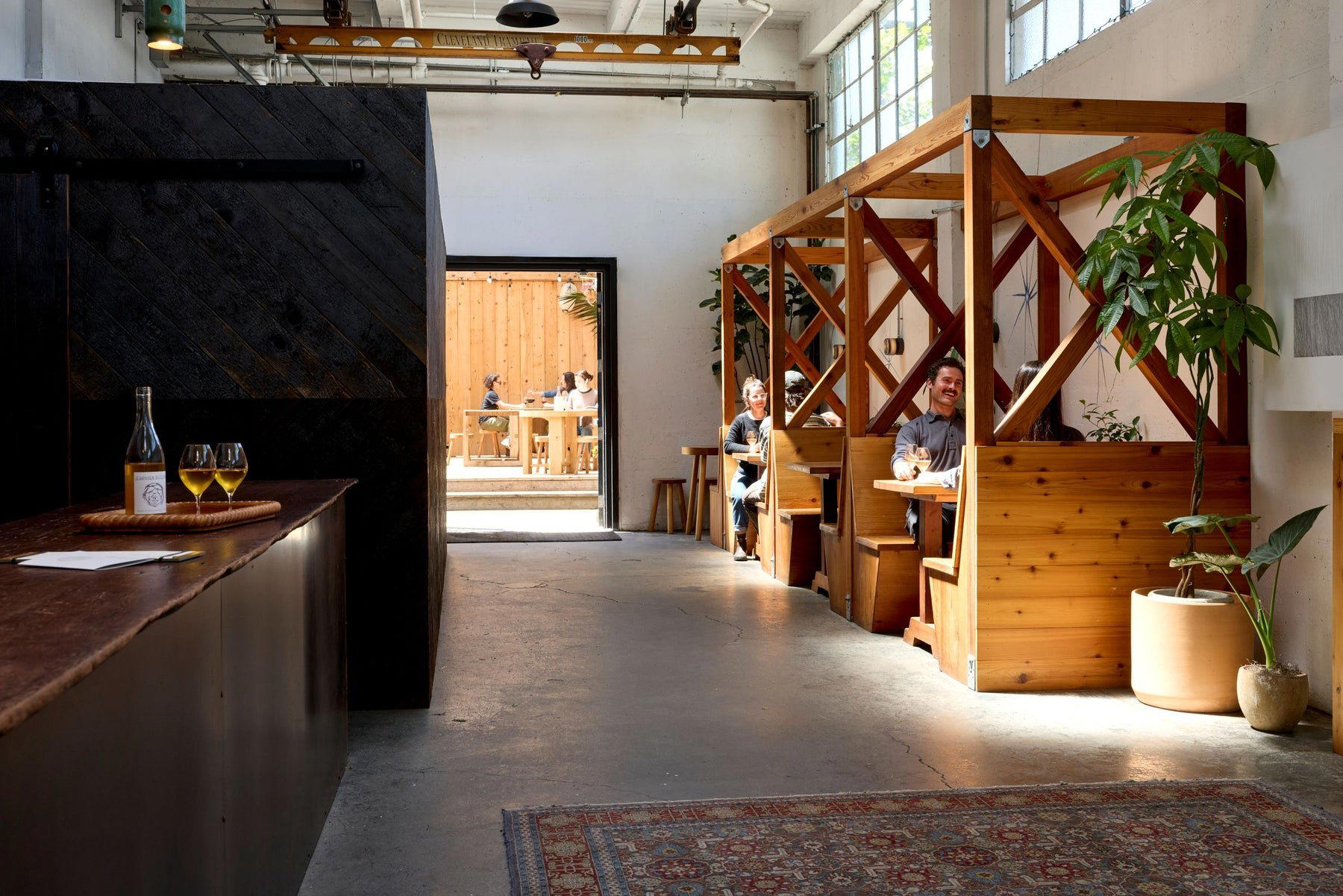
Casual and relaxed neighborhood atmosphere with a nice outdoor patio area.