East Ocean Seafood Restaurant
Our verdict
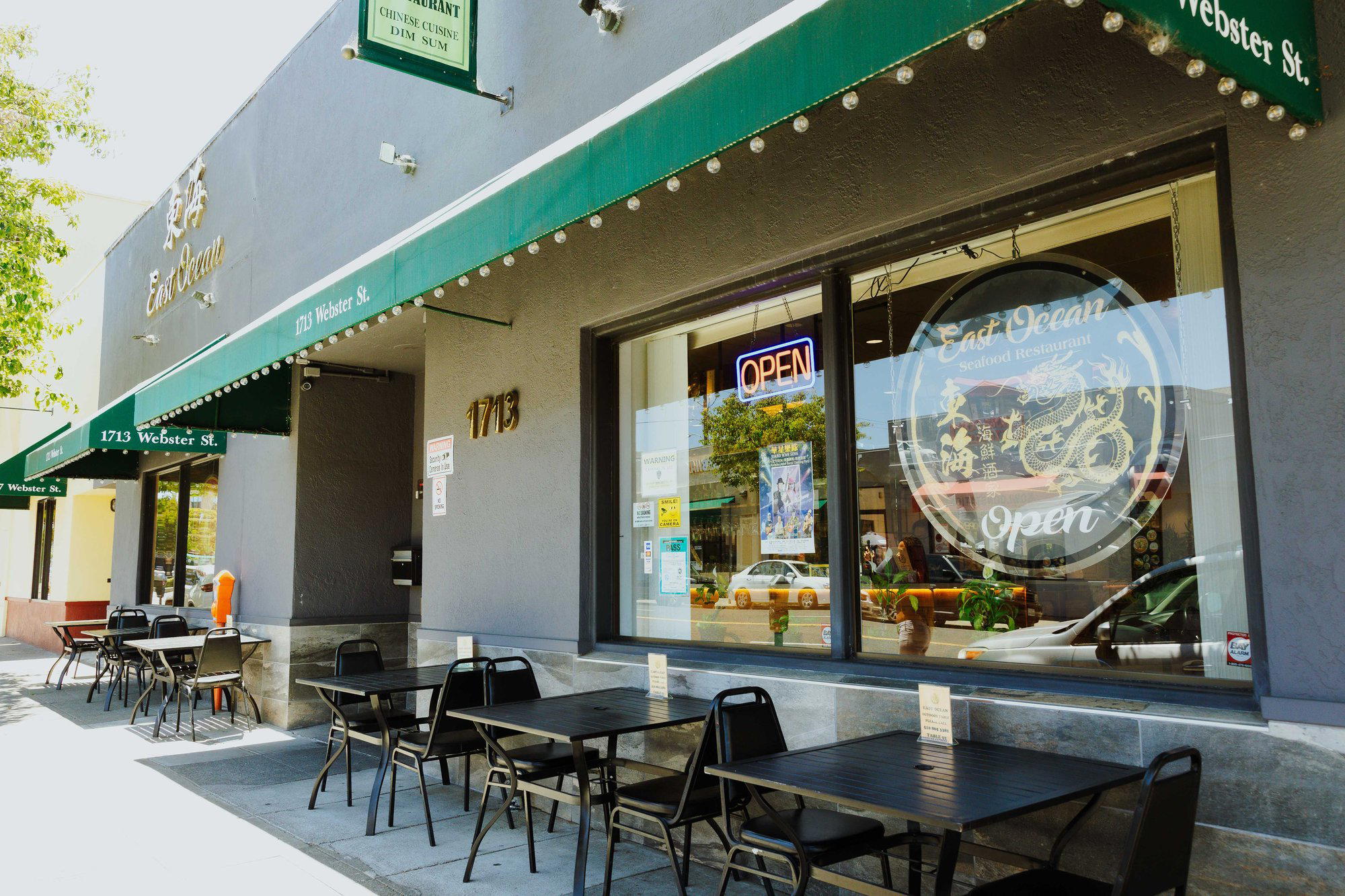
East Ocean Seafood Restaurant on Webster Street has anchored Alameda's Chinese dining scene for years, drawing diners from across the East Bay for Cantonese-style seafood and dim sum. The format follows a classic Hong Kong banquet-house tradition: broad menus, large-format dishes, and a dining room built for groups. It sits in a category where the menu itself tells the story.

Pearl is the En Primeur Club membership app, where members save venues, book tables and use the concierge.
The menu
What to order
- Steamed Pork & Shrimp Sui Mai Dumpling
- Steamed Shrimp Har Gow Dumpling
- Baked BBQ Pork Buns
- Ham Sui Gok
The Banquet-House Tradition on Webster Street
Alameda's dining corridor along Webster Street draws from a Bay Area tradition that predates the current wave of chef-driven small plates and hyper-seasonal tasting menus. East Ocean Seafood Restaurant, at 1713 Webster St, operates in the older idiom: the Cantonese banquet house, a format that prizes abundance, technique applied at volume, and a menu broad enough to function as a social contract between kitchen and table. Where restaurants like Lazy Bear in San Francisco or Smyth in Chicago compress their menus into fixed sequences, the Cantonese banquet house does the opposite: it expands outward, offering the table a range of decisions that become, collectively, the meal.
This format is worth understanding before you arrive. The menu at a restaurant like East Ocean is not meant to be read linearly or ordered from in the way a bistro menu is. It is structured around categories, live seafood, roasted meats, clay-pot dishes, dim sum service, whole-fish preparations, and the expectation is that a table assembles a meal across those categories rather than defaulting to individual plates. That architecture reflects the Cantonese philosophy of shared eating: no single dish is the protagonist; the sequence and balance of the table's order is.
Menu Architecture and What It Signals
The structure of a Cantonese seafood menu communicates information about the kitchen's priorities and range. At the top of the hierarchy, live tanks are a statement of commitment: they require capital, maintenance, and the technical skill to prepare the contents correctly. Whole fish steamed with ginger and scallion, live crab prepared to order, lobster in a variety of preparations, these are not accent items. They are, in the Cantonese tradition, the measure of the kitchen. Restaurants that hold live tanks and turn them consistently are operating at a different level of logistical discipline than those working solely from refrigerated stock.
Below that, roasted meats, Peking duck, roast pork, soy-sauce chicken, occupy a middle register. These require long preparation windows and technical consistency that most casual kitchens do not sustain. Their presence on a menu at quality is one of the cleaner signals that a kitchen is serious about classical Cantonese output. Clay-pot dishes, congee, and noodle preparations round out the lower tiers: comfort food in the Chinese culinary sense, technically unglamorous but deeply revealing of kitchen care when executed well.
Dim sum service adds another dimension. In Hong Kong-style houses, dim sum operates as a separate kitchen discipline from the dinner menu, often running only through midday service. The quality of har gow (shrimp dumplings) and siu mai (pork and shrimp dumplings), specifically the wrapper-to-filling ratio, the texture of the wrapper, and the seasoning of the filling, is the standard test applied by anyone who eats dim sum seriously. These two items tell you more about a dim sum kitchen than any other dish on the cart.
East Ocean sits within the East Bay's Chinese dining ecosystem, which runs from budget noodle houses like Chong Qing Noodles House through to full banquet-format operations. Alameda itself supports a dining scene that includes international formats such as Burma Superstar and casual American-inflected spots like Fikscue and Hang Ten Boiler. Within that context, a Cantonese banquet house occupies a distinct niche: it is the format that requires the largest group investment to experience fully, and the one that rewards return visits most clearly, because the menu is broad enough that regular diners navigate it differently than first-timers.
Cantonese Seafood in the Bay Area Context
The Bay Area's Cantonese restaurant tradition runs deep, extending from San Francisco's Chinatown through the East Bay and down the Peninsula. This is a market that has sustained serious Chinese cooking for more than a century, and the regional standard for Cantonese seafood is accordingly high.
Within that community, reputation is built slowly and through specific markers: consistent wok technique, live tank quality, the texture of roasted meats, and reliability across years rather than months. These are not the metrics tracked by mainstream food media, which tends to apply Western tasting-menu frameworks to Chinese cooking. But they are the metrics that matter to the regulars who fill banquet houses on weekend mornings for dim sum and weekend evenings for family dinners. That dual service pattern, morning dim sum and evening banquet, is itself a logistical achievement that smaller, concept-driven restaurants cannot replicate.
For a fuller picture of what Alameda's dining scene offers across categories, our full Alameda restaurants guide maps the range from spots like Ceron Kitchen through to the broader options along Webster and Park Street. The contrast is instructive: Alameda supports a surprisingly broad range of formats for an island city of its size, and East Ocean represents the anchor end of the Chinese dining spectrum, the format built for occasion dining and large-table gatherings.
Planning Your Visit
East Ocean Seafood Restaurant is located at 1713 Webster St in Alameda, accessible from Oakland via the Webster Street tube. The banquet-house format is most coherent with groups of four or more, as the menu's category structure requires enough people to order across registers without over-ordering any single section. Weekend dim sum service draws consistent demand, and arriving early in the service window, before 11 a.m. tends to improve both table availability and the quality of carts coming out of the kitchen. Evening banquet service runs into later hours and is the format to choose if you are ordering from the live tanks or the roasted meat section. Reservations for large groups are the practical approach for weekend evenings.
Frequently asked questions
Where is East Ocean Seafood Restaurant located?
East Ocean Seafood Restaurant is located at 1713 Webster St, Alameda, CA 94501, Alameda.
Is East Ocean Seafood Restaurant in Alameda suitable for large group dining and celebrations?
The banquet-house format at 1713 Webster St is structured around group dining: round tables, shared dishes, and multi-course sequencing make it a practical choice for family gatherings and milestone celebrations in the Alameda and East Bay area. Cantonese seafood banquet houses in this corridor have served this function for the Bay Area community across generations. check the venue's official channels to confirm private dining arrangements and capacity for larger parties.
What should I order at East Ocean Seafood Restaurant?
In a Cantonese seafood house operating in the Webster Street corridor, live-tank selections typically anchor the menu and represent the kitchen's clearest statement of range. Whole fish, lobster, and crab preparations cooked to order from live tanks are the standard measure of a kitchen like this. Supplement with roasted meats and vegetable dishes built around the banquet-house structure for a representative spread.
How far ahead should I plan for East Ocean Seafood Restaurant?
Banquet-format Cantonese seafood houses in the Bay Area fill quickly on weekends, particularly for larger tables and family-style group dining. Calling ahead is advisable for parties of six or more, especially on Friday and Saturday evenings. Weekday lunches, which often include dim sum service at venues in this category, typically allow for more flexibility.
What's the defining dish or idea at East Ocean Seafood Restaurant?
The defining logic of a Cantonese seafood house is the live tank: the quality and variety of what's swimming on arrival signals the kitchen's ambition more than any printed menu description could. At East Ocean on Webster Street in Alameda, the banquet-house format places whole seafood preparations at the top of the menu hierarchy, cooked simply to let the ingredient carry the dish. That restraint is the point.
Reputation Context
Comparable venues nearby, for context on price, style, and recognition.
| Venue | Cuisine | Price | Notes |
|---|---|---|---|
| East Ocean Seafood RestaurantThis venue (the venue you are viewing) | Hong Kong-Style Cantonese Dim Sum & Seafood | $20–30 | Not listed |
| Sidestreet Pho | Authentic Vietnamese Pho & Noodles | $20–30 | Encinal |
| Wild Ginger | Xi'an Street Food Noodles | $10–20 | Downtown Alameda |
| Ceron Kitchen | New American | $50–100 | West End |
| pho anh dao | Vietnamese Pho & Noodle Soups | $10–20 | West End |
| Shirasoni | Japanese Teppanyaki and Sushi | Not listed | Not listed |
Continue exploring
More in Alameda
Restaurants in Alameda
All restaurants in Alameda →
Bars in Alameda
All bars in Alameda →



Details
- Lively
- Classic
- Family
- Group Dining
- Casual Hangout
- Open Kitchen
- Sake Program
- A La Carte
- Small Plates
- Vegetarian Friendly
- Gluten Free Options
Current opening hours
- Monday
- 11 AM–2:30 PM, 5–8 PM
- Tuesday
- 11 AM–2:30 PM, 5–8 PM
- Wednesday
- 11 AM–2:30 PM, 5–8 PM
- Thursday
- 11 AM–2:30 PM, 5–8 PM
- Friday
- 11 AM–2:30 PM, 5–9 PM
- Saturday
- 10 AM–2:30 PM, 5–9 PM
- Sunday
- 10 AM–2:30 PM, 5–8 PM
Hours can change for holidays and private events. Hours as of .
Cozy oriental decor accents in a spacious venue seating 450, bustling with families and groups during dim sum service.