Chong Qing Noodles House
Our verdict
On Park Street, Alameda's main commercial corridor, Chong Qing Noodles House represents the kind of neighbourhood-rooted Chinese noodle shop that has anchored Bay Area working communities for decades. Against Alameda's broader dining mix, which spans Burmese, Korean-American barbecue, and California-casual, it occupies the specific niche of Chongqing-style noodle cookery, a tradition defined by numbing spice, layered broth, and speed.

Pearl is the En Primeur Club membership app, where members save venues, book tables and use the concierge.
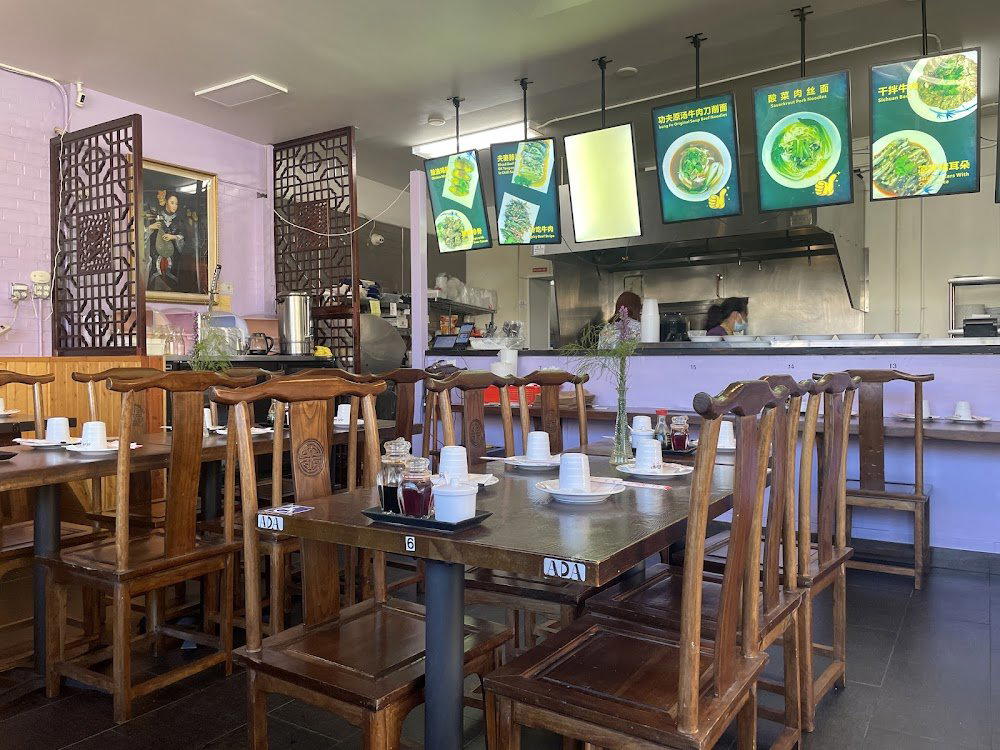
The menu
What to order
- Kung Fu Original Beef Noodle Soup
- Cheng Du Zhong Dumplings
Park Street's Place in Alameda's Dining Character
Park Street runs the length of Alameda's commercial heart, and the restaurants along it tell a fairly honest story about how the city eats: with range, with a strong immigrant-food foundation, and without much pretension. The strip accommodates Burma Superstar, whose Oakland flagship made Burmese food legible to a Bay Area audience that hadn't encountered it before, alongside Ceron Kitchen and Fikscue, each working a different register of the city's appetite. Chong Qing Noodles House at 1635 Park Street fits into that mix as a straightforwardly functional address: a noodle house drawing on a specific Chinese regional tradition rather than a generalised pan-Chinese menu.
Alameda sits across the estuary from Oakland, connected by a pair of tubes and a bridge, and that slight remove from the East Bay's denser dining corridors has historically shaped what survives on the island. Restaurants here tend to succeed by serving a local population consistently rather than by chasing weekend destination traffic from San Francisco or the peninsula. That context matters for understanding what Chong Qing Noodles House is and isn't trying to do.
The Chongqing Noodle Tradition and Where It Sits in the Bay Area
Chongqing noodles, xiaomian in their most recognisable form, represent one of the more specific and demanding regional noodle traditions in Chinese cooking. The broth or sauce base typically combines chilli oil, Sichuan peppercorn (the source of the numbing mala quality that distinguishes the tradition from generic spicy noodles), fermented black beans, and preserved vegetables, with alkaline wheat noodles that hold their texture under heat. The result is a dish that rewards familiarity: first encounters are often dominated by the Sichuan peppercorn's anaesthetic effect on the tongue, while repeat visitors begin to read the layered savoury and fermented notes underneath.
In the Bay Area, the geography of regional Chinese noodle houses has shifted considerably over the past two decades. The Richmond and Sunset districts in San Francisco, and the Sunset's neighbour Irving Street, have long held concentrations of regional Chinese cooking. The East Bay's growth in Chinese regional dining has tracked demographic change in cities like Fremont, Dublin, and parts of Oakland. Alameda sits at a slight distance from those corridors, which means a Chongqing-focused address on Park Street serves a demand that might otherwise require a trip to Oakland's Chinatown or across the bay entirely.
For context on how Bay Area Chinese cooking fits into California's broader restaurant conversation, the state's fine-dining headlines are dominated by places like The French Laundry in Napa and Providence in Los Angeles, and destination-format operators like Single Thread Farm in Healdsburg. Regional noodle houses occupy an entirely different tier and competitive logic: they are assessed by consistency, value per bowl, and fidelity to a regional tradition rather than by tasting-menu innovation or wine program depth. That distinction is not a hierarchy, it is simply a different set of criteria, and one worth naming clearly before evaluating a place like Chong Qing Noodles House on its own terms.
What the Neighbourhood Signals About the Experience
Arriving at 1635 Park Street, the surrounding block gives an immediate read on what the restaurant is. This is a neighbourhood-commercial stretch rather than a destination dining corridor, and the format of a noodle house fits accordingly: counter or table service, quick turnover, a menu organised around noodle preparations rather than a multi-course structure. The Bay Area's casual Chinese noodle category generally runs from around eight to fifteen dollars a bowl, positioning these restaurants as accessible daily-use addresses rather than occasion dining. Alameda's cost structure tends to be slightly softer than Oakland or San Francisco proper, which typically reinforces value in this tier.
The broader Park Street dining scene is worth understanding as context. East Ocean Seafood Restaurant represents the more formal end of Alameda's Chinese dining, a banquet-oriented address anchored by dim sum service, and Hang Ten Boiler brings a different register of Asian-American cooking to the strip. Chong Qing Noodles House slots in as the specific regional Chinese noodle address, a narrower specialisation than a full seafood house but one that serves a distinct and consistent use case.
That specificity is worth noting in a broader dining context. Nationally, the restaurants earning the most critical attention, Atomix in New York City, Smyth in Chicago, Lazy Bear in San Francisco, are defined by elaborate tasting formats and significant investment in both kitchen labor and hospitality infrastructure. Regional noodle houses operate on an entirely different model: the specialisation is in the recipe, the sourcing of specific aromatics and noodle types, and the speed and consistency of execution rather than in course-by-course choreography. Both models can achieve genuine quality; they simply answer different questions about what a restaurant is for.
Planning Your Visit
Chong Qing Noodles House is located at 1635 Park Street in Alameda, accessible from Oakland via the Webster Street Tube or the Park Street Bridge. Park Street has street parking along most of its length, and the address is walkable from Alameda's residential neighbourhoods to the east and west of the commercial corridor. For visitors coming from San Francisco, the route typically runs through the Bay Bridge to Oakland and then across to Alameda, a journey that places the restaurant roughly thirty to forty minutes from the city centre depending on traffic and transit choice.
For additional context on Alameda's restaurant scene and how to structure a visit around multiple addresses on the island, see our full Alameda restaurants guide. Diners interested in comparing the noodle house format with other Bay Area regional cooking should also consider the broader California dining picture covered through venues like Addison in San Diego and, further afield, Le Bernardin in New York City or Blue Hill at Stone Barns in Tarrytown, all of which represent the destination-dining tier against which neighbourhood noodle houses are emphatically not competing, and shouldn't be assessed as if they were.
Frequently asked questions
Where is Chong Qing Noodles House located?
Chong Qing Noodles House is located at 1635 Park St, Alameda, CA 94501, Alameda.
Is Chong Qing Noodles House a good option for people new to Chongqing-style cooking?
Chongqing xiaomian is one of China's more assertive regional noodle styles, the heat comes from layered chili oil and the numbing effect of Sichuan peppercorn, not just raw spice. For first-timers at 1635 Park Street in Alameda, it is worth asking staff about heat levels before ordering, as the base preparation in this tradition is calibrated for the flavour profile rather than moderated for general audiences. That directness is the point of the cuisine.
What do regulars order at Chong Qing Noodles House?
The draw at a Chongqing-style noodle house is the xiaomian, thin wheat noodles dressed with chili oil, Sichuan peppercorn, sesame paste, and preserved vegetables. At 1635 Park Street, that regional format is the core of the menu rather than a side category. Regulars tend to anchor their order around the noodle bowls rather than supplementary dishes.
Should I book Chong Qing Noodles House in advance?
Chong Qing Noodles House operates on Park Street in Alameda, a neighbourhood-commercial strip where most spots run on a walk-in basis. No reservation system is documented for this address. Arriving at off-peak hours, mid-afternoon or early evening on weekdays, is the practical way to avoid a wait.
What's Chong Qing Noodles House best at?
The kitchen's focus is Chongqing-style noodles, a regional Chinese tradition that demands precise spice layering rather than generalised heat. That specificity, xiaomian built on chili oil, numbing peppercorn, and fermented aromatics, is what separates it from the broader Chinese-American category common elsewhere on the East Bay dining circuit. The address at 1635 Park Street places it as one of the few spots in Alameda working this particular tradition.
How does Chong Qing Noodles House handle allergies?
No documented allergen policy is available for Chong Qing Noodles House. Chongqing noodle preparations typically involve sesame paste, soy-based condiments, and wheat noodles, so guests with sesame, gluten, or soy sensitivities should raise the question directly with staff at 1635 Park Street before ordering.
Should I splurge on Chong Qing Noodles House?
Chong Qing Noodles House sits in the value end of the Alameda dining market, a Park Street neighbourhood spot rather than a destination tasting-menu room. The case for going is regional specificity, not occasion spending.
The Minimal Set
| Venue | Cuisine | Price | Awards | Notes |
|---|---|---|---|---|
| Chong Qing Noodles HouseThis venue (the venue you are viewing) | Authentic Chongqing Chinese Noodles | $10–20 | Not listed | Not listed |
| Spinning Bones | California Rotisserie | $30–50 | Michelin Bib Gourmand | Californian |
| Utzutzu | Premium Japanese Omakase | $100–150 | Michelin Plate | Japanese |
| Fikscue | Indo-Tex Halal BBQ | Not listed | James Beard Award Semi Finalist | Not listed |
| Burma Superstar | Burmese | $20–30 | Not listed | Not listed |
Continue exploring
More in Alameda
Restaurants in Alameda
All restaurants in Alameda →
Bars in Alameda
All bars in Alameda →


Details
- Cozy
- Casual Hangout
- Family
- A La Carte
Current opening hours
- Monday
- Closed
- Tuesday
- 11 AM–9 PM
- Wednesday
- 11 AM–9 PM
- Thursday
- 11 AM–9 PM
- Friday
- 11 AM–9 PM
- Saturday
- 11 AM–9 PM
- Sunday
- 11 AM–9 PM
Hours can change for holidays and private events. Hours as of .
Casual and cozy atmosphere in a small, no-frills setting.