
Tokyo Gyoza Ro Sangenjaya ten is a casual dumpling address in Setagaya with Tabelog 100 Dumplings selections in 2019, 2021, and 2024. The draw is value at a compact Tokyo table: counter seating, take-out, children welcome, and a format that fits lunch, late dinner, or a low-ceremony stop around Sangenjaya.
Pearl is the En Primeur Club membership app — saves, bookings, and concierge access live there. Same editors, same standards.
- Address
- Japan, 〒154-0004 Tokyo, Setagaya City, Taishido, 4 Chome−4−2 ラウスパレス三軒茶屋
- Phone
- +81 3-5433-2451
- Website
- puzzle-fs.co.jp
 Saves & bookings on Pearl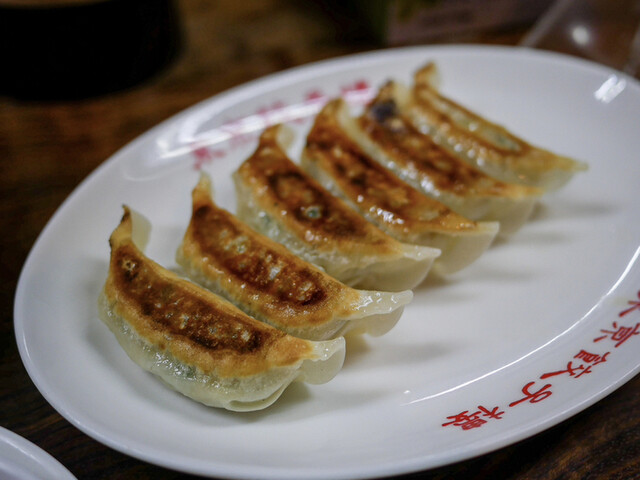
Sangenjaya does not announce itself with Ginza polish or Aoyama gloss. It works at street level: station exits, Setagaya Line trams, small counters, bakery queues, izakaya regulars, and quick meals that must justify themselves without ceremony. Here, dumplings make sense: inexpensive enough for repetition, specific enough for judgment, and social enough for a counter seat or table with friends.
Tokyo Gyoza Ro Sangenjaya ten belongs to this practical side of Tokyo dining, where value is measured less by luxury signals than by how cleanly a narrow format performs. Its Tabelog 100 Dumplings selections in 2019, 2021, and 2024 matter because this is not a category built around tasting menus or wine pairings. Recognition points to consistency in a crowded everyday field: gyoza shops, ramen-adjacent counters, casual Chinese-Japanese kitchens, and neighborhood specialists competing on speed, repeatability, and price discipline.
Gyoza as a value test in a city that rewards specialization
Tokyo’s casual dining strength sits in specialization. A shop can build an audience around curry, yakitori, onigiri, tonkatsu, soba, or dumplings, then live or die on a few decisions: wrapper, filling, heat, turnover, and whether the bill feels fair for a weekday meal. That pressure differs from the prestige economy of omakase sushi or kappo. It is less theatrical, more democratic, and often less forgiving.
The Sangenjaya branch’s value proposition is clear: a focused dumpling category with infrastructure for different dining modes. The room includes counter and table seating, take-out is part of the service model, and children are welcome. In Tokyo, where many small restaurants are functionally adult-only even without a rule, those details matter. The format suits solo diners, pairs, and low-pressure groups rather than destination dinners requiring a full evening.
Within Sangenjaya, that places it between quick snack culture and sit-down neighborhood dining. Komugi to Kobo Hamada Ya Sangenjaya honten and Imagawayaki Kashiwaya sit at the lower-spend end of the area’s casual food circuit, while CAFE Mame-Hico Sangenjaya honten occupies a slower café lane. Yakitori Tokoshima operates in a higher dinner bracket, and Akaoni points toward the area’s drinking culture. Dumplings occupy a useful middle: more meal-like than a sweet, less expensive and less time-bound than yakitori or sake-led dining.
That is why the Tabelog 100 Dumplings recognition carries practical weight. It does not turn a gyoza counter into a luxury restaurant, and should not be read that way. It signals that a category with many anonymous contenders has been narrowed to a named selection, useful for travelers who want Tokyo specificity without committing every meal to reservation dining.
The Sangenjaya advantage: casual, connected, and easy to fold into a day
Sangenjaya is strong for travelers who want Tokyo without constant verticality. It has transport convenience, but its appeal is lateral: side streets, local drinking rooms, cafés, bakeries, and small restaurants tied to daily life rather than hotel itineraries. A dumpling meal fits that rhythm. It can follow a late afternoon in Shimokitazawa, precede drinks near the station, or replace a formal dinner when the day is already long.
The physical format supports that flexibility. Forty seats split between counter and tables give the restaurant more elasticity than a tiny specialist counter, while the non-smoking policy and family-friendly positioning make it easier across travel styles. Payment flexibility also suits visitors moving between cash and cards in Japan. None of this is glamorous, but these operational details decide whether a casual stop becomes useful or inconvenient.
For a Tokyo itinerary, the smarter comparison is not luxury dining. It is other compact, single-purpose meals that add texture between larger reservations. A day might put curry at 3 Chome no Curry Ya San, yakitori at 124. KAGURAZAKA (Yakitori), or casual seafood at . 鮪と炭火焼き うお炭 秋葉原店 into play. Against those, gyoza offers a lower-commitment slot: fast, filling, and easy to combine with another stop.
There is useful restraint in the absence of chef mythology. Many Tokyo meals come wrapped in lineage, counter etiquette, and anxiety over correct behavior. Dumplings are different. The craft is in repetition rather than narration, and the guest’s decision is simple: does this format deliver enough satisfaction for the spend and time? At Tokyo Gyoza Ro Sangenjaya ten, the answer is strongest for travelers who value neighborhood specificity over ceremony.
How to use it in a Tokyo food itinerary
This is a meal to place strategically, not ceremonially. It works when the schedule needs a grounded Tokyo stop in Setagaya, when a group includes children, or when the day calls for a casual table rather than another counter with fixed pacing. Treat it as part of a broader eating map: Sangenjaya for daily-life dining, Shinjuku for density, Kagurazaka for composed small-restaurant culture, and Akihabara for specialist casual rooms.
For a full trip, the surrounding planning rails matter too: Our full Tokyo hotels guide, Our full Tokyo bars guide, Our full Tokyo wineries guide, and Our full Tokyo experiences guide.
For readers extending the same casual-specialist logic beyond Tokyo, useful comparisons include -Grilled beef Sukiyaki- KAMAKURA TANUKIAN 鎌倉 たぬき庵 in Kamakura.cafe in Osaka.know in Kumamoto, (Shoku) Vietnam in Kawasaki, [Curry Senmon Ten] Maruyama Kyoju. in Sapporo, [ki:] in Kyoto, Jōdo Saké Bar in Los Angeles, and Onigiri Time in Pasadena. The common thread is not cuisine, but usefulness: focused formats that make sense when a trip needs precision rather than spectacle.
The editorial case is simple. In a city where travelers often over-index on scarce reservations, a recognized dumpling shop in Sangenjaya offers a different kind of intelligence: Tokyo’s repeatable, everyday specialization, with enough structure to be traveler-friendly and enough local context to feel anchored in the neighborhood.
Cost and Credentials
Side-by-side context: comparable cuisine and price.
| Venue | Cuisine | Price | Notes |
|---|---|---|---|
| Tokyo Gyoza Ro Sangenjaya tenThis venue — the venue you are viewing | Setagaya, Casual Gyoza & Izakaya Dishes | $ | Not listed |
| Chuka Ginza Tei | Not listed | $ | Chūō, Showa-era Chinese counter (ramen, gyoza & fried rice) |
| 虎ノ門PAIRON | Toranomon, Taiwanese Gyoza Izakaya | $$ | Not listed |
| Chii Sha | Meguro, Casual Chinese & Ramen | $ | Not listed |
| Tokyo Doujiang Seikatsu | Not listed | $ | Shinagawa, Traditional Taiwanese Breakfast & Fresh Soy Milk |
| Gyoza Bo Butahakkai | Suginami, Gyoza & Chinese hot pot | $$ | Not listed |
Recognition history
Dated appearances from independent guides and award organizations, with the underlying list record or original source where available.
Tabelog 100 #80 · No. 80
Tabelog · Tabelog 100 - Dumplings - 2024













At a Glance
- Lively
- Cozy
- Energetic
- Casual Hangout
- After Work
- Group Dining
- Solo
- Late Night
- Family
- Standalone
- Beer Program
Current opening hours
- Monday
- 11:30 AM–11 PM
- Tuesday
- 11:30 AM–11 PM
- Wednesday
- 11:30 AM–11 PM
- Thursday
- 11:30 AM–11 PM
- Friday
- 11:30 AM–11 PM
- Saturday
- 11:30 AM–11 PM
- Sunday
- 11:30 AM–11 PM
Hours can change for holidays and private events. Last verified .
A modest, no-frills gyoza joint with tightly packed counter and table seating, bright but simple interiors, and a bustling, energetic izakaya atmosphere where people drop in for quick plates of dumplings and drinks.