
Tokyo Dominica sits in Shinjuku’s compact soup-curry lane rather than the city’s luxury dining circuit, which is precisely the point. The draw is a customizable Hokkaido-rooted curry format, Tabelog Curry TOKYO 100 recognition in 2023 and 2024, and a lunch-to-evening rhythm that shifts from quick-value meal to low-key dinner stop without changing its core identity.
Pearl is the En Primeur Club membership app — saves, bookings, and concierge access live there. Same editors, same standards.
- Address
- 東京都新宿区新宿3-31-1 第2大伸ビルB1F
- Phone
- +81363804644
- Website
- yellowspice.jp
 Saves & bookings on Pearl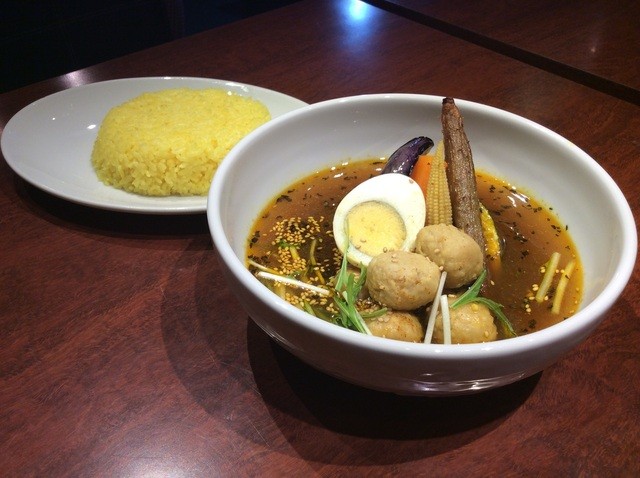
The approach is pure Shinjuku: station exits, basement stairs, narrow frontage, Tokyo dining compressed into a room built for turnover rather than ceremony. Soup curry follows a different grammar from Japanese curry rice: looser, more modular, more dependent on broth character, spice calibration, and ingredient choice than the thick roux-and-rice comfort format many visitors associate with Tokyo curry counters.
That distinction matters because Shinjuku’s curry scene is not one category. It spans office-worker lunch rooms, late-evening counters, specialist spice kitchens, and department-store-adjacent snack stops. Tokyo Dominica sits on the specialist soup-curry side: five soup bases, heat adjustable from -10 to +10, and protein or vegetable choices that make the format feel closer to composition than a fixed curry set. Its selection for Tabelog Curry TOKYO 100 in 2023 and 2024 places it in a curated citywide curry conversation, not just the Shinjuku lunch circuit.
Soup curry changes the lunch equation in Shinjuku
Tokyo lunch rewards speed, price discipline, and clarity. Soup curry adds customization: broth direction, heat level, and main ingredient. That slows the counter decision but makes repeat visits logical. In a district where lunch often means ramen, tonkatsu, soba, or curry rice, soup curry offers a less common rhythm: spoon, rice, broth, spice, and texture moving separately rather than collapsing into one plate.
The daytime appeal is value-led. This is not kaiseki, sushi omakase, or wagyu theater; it is a tightly priced curry specialist in a neighbourhood where a serious meal can be sharply affordable or rapidly expensive. Compared with Shinjuku peers such as CAFE AALIYA, Oiwake Dango Honpo Shinjuku honten, Premium Mario Gelateria Shinjuku isetan ten, and 新宿割烹 中嶋, the useful comparison is role, not cuisine. Each fills a different district slot: café, sweets, department-store-adjacent pause, kappo meal, or curry counter. Soup curry sits between lunch utility and specialist detour.
The five-soup structure gives the kitchen its identity. Yellow, red, black, white, and deep yellow are not garnish-level variations; they define the meal before the heat scale. Moving from negative heat to aggressive spice suits Tokyo curry culture, where personal calibration is part of the pleasure. The system matters more than a long menu: regulars can return without repeating the same order, and first-timers get a clear map of the house style.
Evening shifts the room from quick meal to casual specialist stop
Dinner in Shinjuku has different pressure. The area pulls office workers, shoppers, bar-hoppers, department-store diners, and visitors moving between east-side neon and quieter side streets. A 20-seat curry room with counter seating does not compete with long-form dining rooms on ceremony. It competes on decisiveness: a focused category, compact room, and format that works before or after a broader evening plan.
Here soup curry’s flexibility pays off. At lunch, it reads as practical; at night, the same structure becomes a low-commitment dinner with enough variation to avoid fallback status. Wine and cocktails nudge the room beyond the canteen register without turning it into a bar. Take-out and delivery show how Tokyo curry specialists now work across multiple dining modes, serving seated diners while acknowledging the city’s appetite for efficient solo meals and at-home orders.
The Shinjuku comparison set underlines the point. Imaiya Honten represents yakitori as a more deliberate evening category; 12/10 Shinjuku ten points to another Shinjuku dining lane; 3 Chome no Curry Ya San gives curry another local reference point. Tokyo Dominica is not trying to be the grand dinner of the night. Its strength is the middle slot: too considered to dismiss as convenience food, too casual to demand a full evening.
Tokyo’s wider restaurant map makes that middle slot valuable. The city’s prestige conversation often gravitates toward reservation-only counters, chef-led tasting menus, and coded seasonal formats. Curry sits outside that hierarchy yet remains one of the city’s most revealing everyday cuisines. For readers mapping categories, the contrast helps: browse Our full Tokyo restaurants guide for the dining spread, then set this curry room against Our full Tokyo hotels guide, Our full Tokyo bars guide, Our full Tokyo wineries guide, and Our full Tokyo experiences guide to see how a district meal can anchor a larger day.
How it fits into a sharper Tokyo food itinerary
Read Tokyo curry by subcategory. Soup curry, curry rice, spice curry, and specialist curry shops do not deliver the same experience. Hokkaido-style soup curry, the lineage behind this format, privileges broth and modular ordering; Tokyo curry rice sits closer to roux, rice, and topping logic; newer spice-curry rooms often foreground aromatics and regional influence. This belongs in an itinerary not as novelty but as a category marker.
For travellers building around stations and neighbourhoods, Shinjuku Sanchome is the practical hinge. It puts lunch near retail corridors, coffee stops, bars, and transport, while dinner works before a second venue. Internal Tokyo links sharpen the route:. 鮪と炭火焼き うお炭 秋葉原店 pulls the itinerary toward Akihabara, 124. KAGURAZAKA (Yakitori) shifts it to Kagurazaka’s skewered-chicken tradition, and 2D Cafe shows a more visual café register. For Shinjuku itself, 12/10 Shinjuku ten and 3 Chome no Curry Ya San make useful nearby reference points.
The national comparison is just as instructive. Curry specialists across Japan are not interchangeable: [Curry Senmon Ten] Maruyama Kyoju. in Sapporo points toward the northern curry conversation; [ki:] in Kyoto.cafe in Osaka.know in Kumamoto, (Shoku) Vietnam in Kawasaki, and -Grilled beef Sukiyaki- KAMAKURA TANUKIAN 鎌倉 たぬき庵 in Kamakura show how regional context changes a casual meal. Farther afield, Jōdo Saké Bar in Los Angeles and Onigiri Time in Pasadena underline how Japanese formats travel and simplify abroad.
The takeaway is simple: a compact Shinjuku soup-curry address with enough structure to reward choice, enough recognition to justify a detour, and enough affordability to stay everyday. Lunch gives the clearer value case; dinner fits around a wider Shinjuku night. Either way, the point is not spectacle. It is Tokyo’s talent for turning a narrow category into a disciplined meal.
Recognition Snapshot
Comparable venues side-by-side for orientation.
| Venue | Cuisine | Price | Notes |
|---|---|---|---|
| Tokyo DominicaThis venue — the venue you are viewing | Sapporo-style Japanese soup curry | $$ | Not listed |
| Tonkatsu Maruichi (とんかつ丸一) | Tonkatsu Specialist | $$ | Fukagawa |
| Ginza Kagari (銀座 篝) | Chicken Paitan Ramen | $$ | Ginza |
| Tsunahashi Shinjuku | Traditional Japanese Tempura | $$ | Shinjuku |
| 白寧 | Internationally prominent Sushi | Not listed | Minato |
| Agezuki | Tonkatsu (Japanese Pork Cutlet) | $$ | Shinjuku |
Recognition history
Dated appearances from independent guides and award organizations, with the underlying list record or original source where available.
Tabelog 100 #4 · No. 4
Tabelog · Tabelog 100 - Curry - TOKYO - 2024











At a Glance
- Cozy
- Lively
- Solo
- Casual Hangout
- After Work
- Standalone
- Local Sourcing
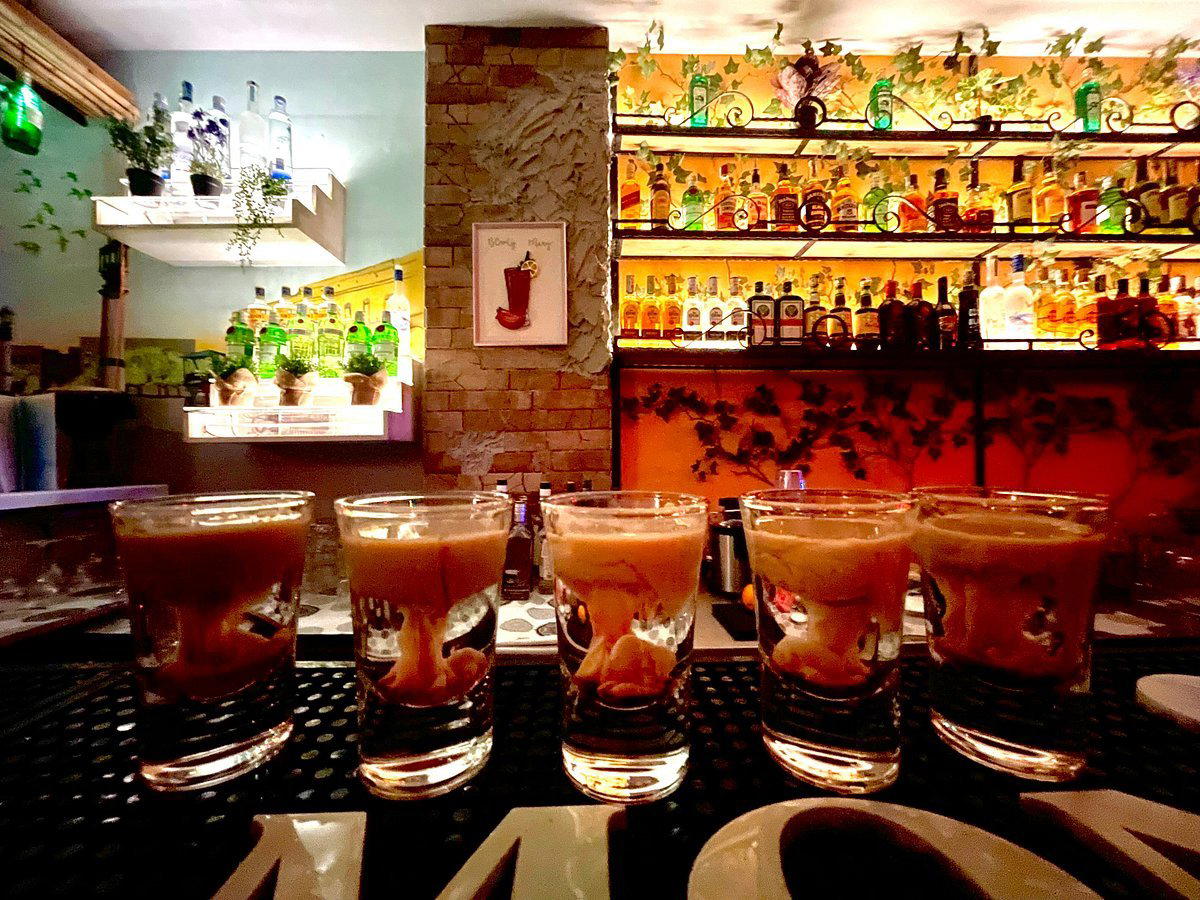
A compact, warm neighborhood spot with counter and small table seating, casual service, and the focus on aromatic soup curry rather than decor.