
Agezuki places Kagurazaka tonkatsu in a precise, old-Tokyo frame: small room, specialist frying, and a level of public recognition that keeps it in serious company. Its Tabelog Tonkatsu 100 selections from 2017 through 2026, 3.70 score, and compact 26-seat format make it a useful reference point for pork-cutlet dining beyond the usual luxury tasting-menu circuit.
Pearl is the En Primeur Club membership app — saves, bookings, and concierge access live there. Same editors, same standards.
- Address
- Japan, 〒162-0825 Tokyo, Shinjuku City, Kagurazaka, 3 Chome−2 Yamanouchi Bld, B1
- Phone
- +81 3-6265-0029
- Website
- ageduki.foodre.jp
 Saves & bookings on Pearl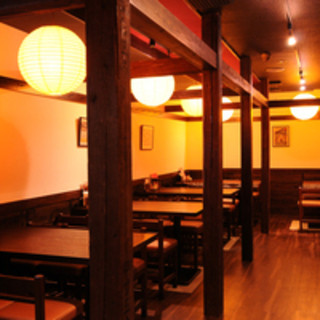
Kagurazaka changes tone quickly: polished side streets, low-rise buildings, and basement addresses that feel closer to neighbourhood Tokyo than the city’s headline dining corridors. Tonkatsu fits that setting better than many grander formats. It is a cuisine of repetition, heat control, and restraint, where the craft is measured less by theatrical plating than by how consistently a kitchen can handle pork, crumb, oil, rice, cabbage, and sauce without turning lunch or dinner into ceremony.
Agezuki sits inside that specialist tradition rather than the luxury counter economy that dominates much of Tokyo’s international restaurant conversation. Its inclusion in Tabelog Tonkatsu 100 in 2017, 2018, 2019, 2021, 2022, 2024, and 2026 matters because tonkatsu is a crowded category in Japan: the list rewards focused shops that compete on a narrow set of variables, not broad tasting-menu ambition. A 3.70 Tabelog score also places it in a tier where local scrutiny is meaningful, particularly for a genre with high everyday familiarity.
Kagurazaka tonkatsu, judged by patience rather than spectacle
Tokyo’s tonkatsu culture rewards kitchens that treat frying as a timing problem. The format looks simple from the dining room, but the difference between ordinary and serious tonkatsu often comes down to oil temperature, resting time, crumb texture, and how the cutlet holds moisture without heaviness. Agezuki’s own notice that its tonkatsu is fried carefully over a long period is a useful signal: the kitchen is not built around speed, even when the room is not full.
That point also explains why tonkatsu belongs in a broader conversation about responsible dining without forcing a sustainability label onto it. The category is protein-led, but it is also disciplined: a limited core product, a compact menu logic, and a set-meal structure that generally leaves little room for decorative excess. In Tokyo, where high-end dining can drift toward luxury ingredients and long-form abundance, a specialist pork-cutlet counter or table room asks a cleaner question: how much craft can be extracted from a familiar dish before price, ceremony, and scarcity take over?
Agezuki answers from the middle of the market rather than from its extremes. It is not competing with the rarefied spend of a place such as Sushi Kagura, the higher-ticket meat focus of Nose to Tail, or the kaiseki register of Kohaku. The more useful comparison is structural: Tokyo contains many serious dining rooms, but tonkatsu specialists prove that technical credibility does not always require a tasting-menu frame.
A compact room for a cuisine that resists overstatement
The room’s scale reinforces the point. With 26 seats, including counter seating and tables, the experience stays closer to a neighbourhood meal than a performance. That matters in Kagurazaka, where the dining scene can move from yakitori and soba to French-influenced rooms within a few blocks. Nearby addresses such as 124. KAGURAZAKA (Yakitori) show the area’s appetite for compact specialist formats, while more casual entries like 3 Chome no Curry Ya San underline how much of the neighbourhood’s appeal comes from focused cooking rather than grand dining architecture.
The drinks list points to a similarly pragmatic reading of the meal. Sake, shochu, and wine are all part of the offer, which places tonkatsu in a wider Japanese dining rhythm instead of treating it as a quick solo plate. That breadth is not unusual in Tokyo, but it is relevant here because fried pork can handle several drinking styles: sake for rice-and-cutlet cadence, shochu for a cleaner finish, wine for diners who prefer acidity against fat. The menu does not need to declare an environmental position for the format to feel measured; the restraint is in the restaurant type itself.
Family friendliness is another useful clue. Tonkatsu sits at the intersection of everyday food and specialist craft, and a restaurant that welcomes babies, preschoolers, school-age children, and strollers is operating in that civic Japanese space where quality does not automatically imply formality. Non-smoking service, take-out, and counter seating widen the audience further. For travelers used to reading Tokyo through omakase scarcity, this is the category correction: serious does not have to mean hushed, expensive, or inaccessible to families.
How to read Agezuki inside a wider Tokyo itinerary
The smarter way to place Agezuki in a Tokyo plan is by contrast. Pairing it with sushi, kaiseki, cocktail bars, or hotel dining shows how the city’s value proposition changes by format. A pork-cutlet specialist in Kagurazaka can deliver a tightly defined lesson in heat and texture, while an evening elsewhere is built around raw fish, charcoal, or formal Japanese courses. For broader planning, Our full Tokyo restaurants guide is the better frame, with side routes through Our full Tokyo hotels guide, Our full Tokyo bars guide, Our full Tokyo wineries guide, and Our full Tokyo experiences guide.
Within Shinjuku and the wider city, the same logic helps separate meals by purpose. 12/10 Shinjuku ten, 2D Cafe, and. 鮪と炭火焼き うお炭 秋葉原店 belong to different everyday-use patterns, while Agezuki is the more instructive stop for understanding why tonkatsu has its own evaluative culture. The repeat Tabelog Tonkatsu 100 selections are not decorative; they show sustained relevance in a narrow field where diners know exactly what they are judging.
For readers building a Japan-heavy food itinerary beyond Tokyo, the same specialist lens travels well. Compare focused formats in Kamakura, Osaka, Kumamoto, Kawasaki, Sapporo, and Kyoto through -Grilled beef Sukiyaki- KAMAKURA TANUKIAN 鎌倉 たぬき庵 in Kamakura.cafe in Osaka.know in Kumamoto, (Shoku) Vietnam in Kawasaki, [Curry Senmon Ten] Maruyama Kyoju. in Sapporo, and [ki:] in Kyoto. Even outside Japan, the same attention to compact formats appears in places such as Jōdo Saké Bar in Los Angeles and Onigiri Time in Pasadena. Agezuki’s appeal is that it keeps the argument modest: a small room, a demanding frying discipline, and a category that proves Tokyo’s serious eating is not confined to luxury rituals.
Same-City Peers
Comparable venues by cuisine and price in the same metro.
| Venue | Cuisine | Price | Notes |
|---|---|---|---|
| AgezukiThis venue — the venue you are viewing | Tonkatsu (Japanese Pork Cutlet) | $$ | Not listed |
| Toyama Shiroebitei (富山白えび亭) | Toyama White Shrimp Tempura Bowls | $$ | Marunouchi |
| Amanoya | Traditional Japanese sweets café & okonomiyaki | $$ | Chiyoda |
| Shinsuke | Traditional Japanese Izakaya | $$ | Bunkyō |
| Nemurian | Traditional Soba & Sake Izakaya | $$ | Chiyoda |
| DAIJU | Yakiniku & Morioka cold noodles | $$ | Toshima |
Recognition history
Dated appearances from independent guides and award organizations, with the underlying list record or original source where available.
Tabelog 100 #21 · No. 21
Tabelog · Tabelog 100 - Tonkatsu - 2026







At a Glance
- Cozy
- Classic
- Intimate
- Solo
- Casual Hangout
- Group Dining
- Chefs Counter
- Open Kitchen
- Standalone
- Sake Program
- Local Sourcing
Current opening hours
- Monday
- 11:30 AM–2:30 PM, 5:30–9 PM
- Tuesday
- Closed
- Wednesday
- 11:30 AM–2:30 PM, 5:30–9 PM
- Thursday
- 11:30 AM–2:30 PM, 5:30–9 PM
- Friday
- 11:30 AM–2:30 PM, 5:30–9 PM
- Saturday
- 11:30 AM–2:30 PM, 5:30–9 PM
- Sunday
- 11:30 AM–2:30 PM, 5:30–8:30 PM
Hours can change for holidays and private events. Last verified .
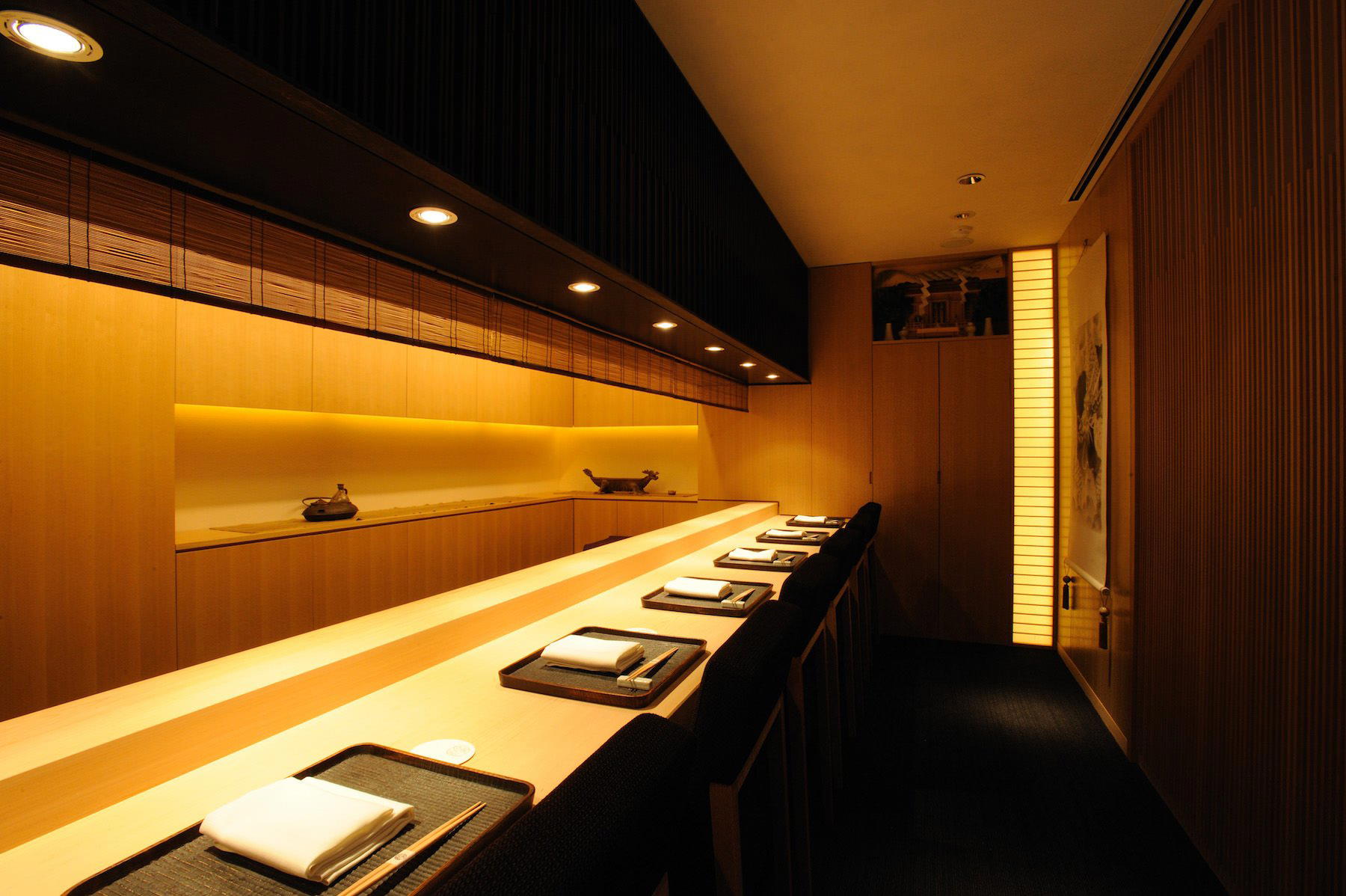
Relaxed and subdued with an Edo-style, stylish interior; the counter seating creates an intimate, chef-forward atmosphere.