On Calle de Segovia in Madrid's Centro district, The Vegan Roll occupies a corner of the city's growing plant-based dining conversation. The format centres on rolled preparations made entirely without animal products, placing it in a niche but expanding tier of specialist vegan venues that have emerged across Spanish cities over the past decade.
Pearl is the En Primeur Club membership app — saves, bookings, and concierge access live there. Same editors, same standards.
- Address
- C. de Segovia, 15, Centro, 28005 Madrid, Spain
- Phone
- +34825853761
- Website
- theveganroll.com
- Directions
- Get directions
 Saves & bookings on Pearl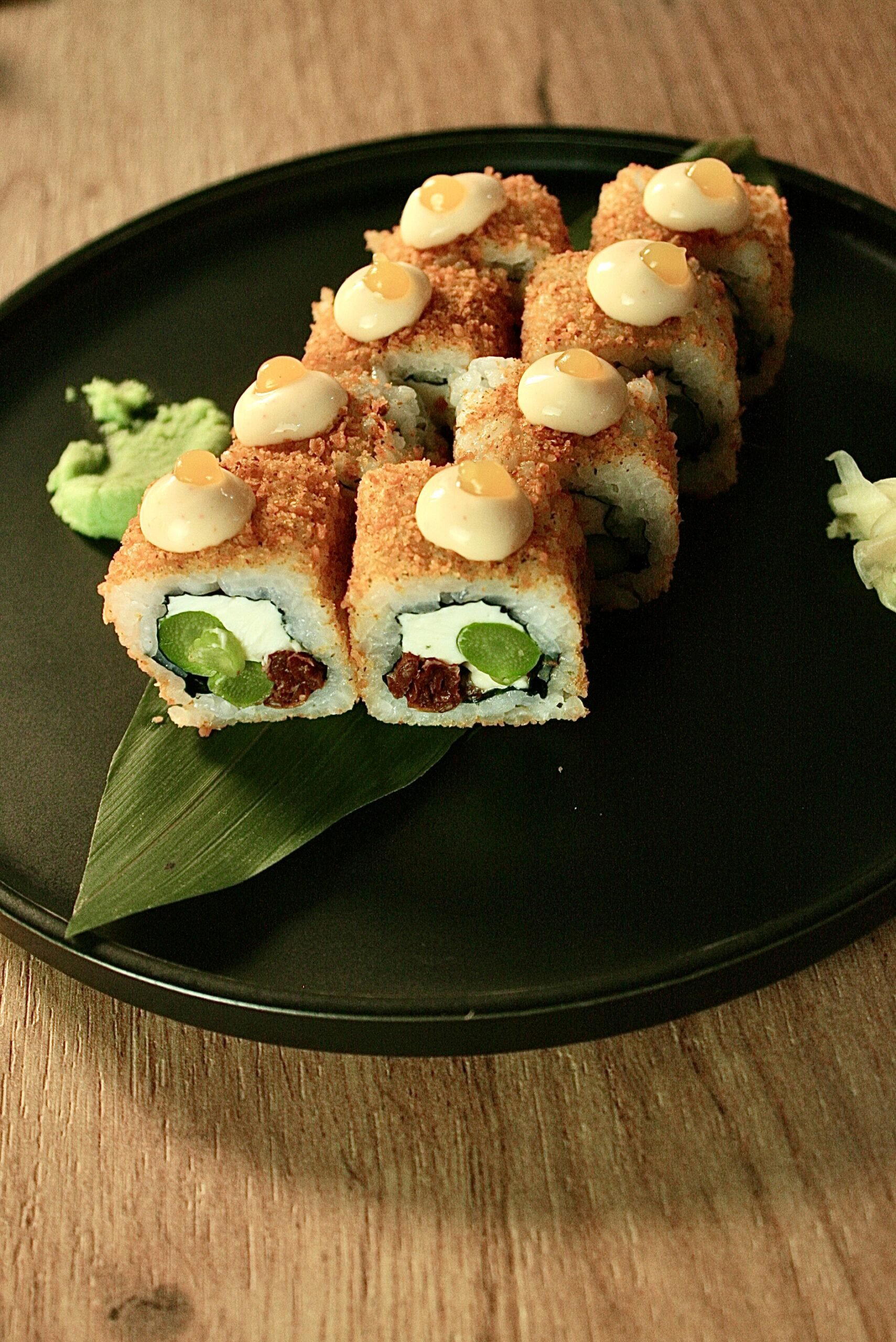
Plant-Based Dining in Madrid's Centro: Where The Vegan Roll Fits
Madrid's relationship with vegan dining has shifted considerably over the past fifteen years. The city that once defined itself almost entirely through jamón ibérico and cocido madrileño has seen a quiet but persistent counter-movement: small, specialist venues built around plant-based formats that treat vegetable matter as a primary discipline rather than an afterthought. The Vegan Roll, on Calle de Segovia in the Centro district, sits inside this movement. The address places it in a neighbourhood that connects the historic La Latina quarter to the banks of the Manzanares, an area more associated with traditional tabernas and weekend mercados than with contemporary vegan dining. That adjacency is part of what makes the format here interesting: it operates in a zone where the dominant dining ritual is still deeply carnivorous.
For context on just how meat-forward Madrid's top tier remains, consider that several of the city's most recognised restaurants, including DiverXO (Progressive - Asian, Creative), Coque (Spanish, Creative), Deessa (Modern Spanish, Creative), DSTAgE (Modern Spanish, Creative), and Paco Roncero (Creative), operate in the €€€€ bracket with menus built around proteins at every course. The Vegan Roll operates from a different premise entirely, targeting a diner who is not simply looking for a protein substitution but who has chosen a format organised around plant-based rolled preparations as a structural principle.
The Dining Ritual: Pacing a Meal Around the Roll
In many specialist formats, the discipline of the menu reveals itself in pacing. When a kitchen commits to a single structural motif, as roll-based restaurants do, the sequence of the meal takes on a different rhythm than an à la carte spread. There is no broad sweep of categories to choose from; instead, decisions narrow around variations within a theme, which places more weight on how those variations are distinguished from one another. At venues built around this kind of constraint, the kitchen's skill shows not in range but in resolution: how much differentiation can be achieved within a defined form?
This is a tradition that has migrated across food cultures. The Japanese maki and temaki formats have been adopted and reinterpreted across Europe, often stripped of their original context and rebuilt around local ingredients or dietary frameworks. The restaurant format, as it appears in cities like Madrid, Barcelona, and Valencia, tends to borrow the structural logic of the roll while replacing seafood and animal proteins with vegetables, legumes, fermented elements, and occasionally fruit. The result is a meal that reads differently from a traditional Spanish dining experience, in pacing, portion logic, and the relationship between individual bites.
For diners arriving from the broader Spanish fine dining circuit, which includes destinations like El Celler de Can Roca in Girona, Mugaritz in Errenteria, or Martin Berasategui in Lasarte-Oria, the shift to a compact, roll-centred format requires a recalibration of expectations. The restaurant is a casual specialist rather than a destination restaurant.
Centro as a Dining District: Reading the Neighbourhood
Calle de Segovia runs through one of Madrid's most historically dense zones. The street itself runs roughly parallel to the Viaducto de Segovia and looks out toward the Palacio Real on the far bank of the valley. The surrounding blocks are a mix of residential buildings, traditional bars, and a growing number of small independent food operations that have opened in the past five years as rental dynamics in La Latina pushed operators slightly west. This part of Centro is not yet a recognised dining cluster in the way that Chueca or the Salamanca district are, which means foot traffic patterns differ: diners here tend to be more intentional, arriving with a specific destination in mind rather than browsing.
That dynamic suits a specialist format. Roll-based vegan venues do not typically rely on spontaneous passing trade; their customer base self-selects through dietary preference and format interest. The Calle de Segovia address functions as a neighbourhood anchor for plant-based diners in a part of the city that has historically had few dedicated options.
Spain's broader vegan dining scene has expanded substantially since around 2015, tracking shifts in younger urban demographics particularly in Madrid and Barcelona. Venues like Cocina Hermanos Torres in Barcelona and plant-forward approaches at restaurants including Ricard Camarena in València and Quique Dacosta in Dénia have shown that Spanish kitchens can work seriously with vegetable matter at every price point. The restaurant operates well below that tier but within the same general cultural momentum.
Planning a Visit: What to Know Before You Go
The restaurant is located at C. de Segovia, 15, in the Centro district, postcode 28005. Getting there is direct from central Madrid: the nearest metro stations on the Línea 5 corridor, particularly La Latina, place the address within a short walk. The surrounding streets are pedestrian-friendly and the neighbourhood sees consistent activity across lunch and early evening hours, which are the primary dining windows in this part of the city.
For those extending into Spain's wider premium dining circuit, reference points include Aponiente in El Puerto de Santa María, Arzak in San Sebastián, Azurmendi in Larrabetzu, and Atrio in Cáceres. For international comparison on how specialist formats operate at the premium end, Le Bernardin in New York City and Atomix in New York City illustrate how commitment to a defined format at high discipline levels translates into sustained recognition.
Nearby-ish Comparables
Comparable venues nearby, for context on price, style, and recognition.
| Venue | Cuisine | Price | Notes |
|---|---|---|---|
| The Vegan RollThis venue — the venue you are viewing | Vegan Sushi | $$ | Not listed |
| HEMU SUSHI BUFFET LIBRE | Japanese Sushi Buffet | $$ | Chueca |
| Ginza | Japanese-Asian Fusion Buffet | $$ | Cortes |
| KIPPU | Modern Japanese with Chinese Influences | $$ | Lista |
| Chuka Ramen Bar | Modern Japanese Ramen Fusion | $$ | Barrio de las Letras |
| 47 Ronin | Creative Japanese Fusion | $$$ | Recoletos |
Continue exploring
More in Madrid
Restaurants in Madrid
Browse all →
Bars in Madrid
Browse all →
Hotels in Madrid
Browse all →



At a Glance
- Modern
- Trendy
- Date Night
- Casual Hangout
- Open Kitchen
- Sustainable
Current opening hours
- Monday
- 7:30–11 PM
- Tuesday
- 7:30–11 PM
- Wednesday
- 7:30–11 PM
- Thursday
- 7:30–11 PM
- Friday
- 1–4 PM, 7:30–11 PM
- Saturday
- 1–4 PM, 7:30–11 PM
- Sunday
- 1–4 PM, 7:30–11 PM
Hours can change for holidays and private events. Last verified .
Fresh and creative atmosphere celebrating vegan Japanese cuisine with a focus on ethical and sustainable dining.