The Madras Diaries
Among Utrecht's more distinctive South Indian addresses, The Madras Diaries at Brusselplein 11 sits apart from the city's French-leaning fine dining tier occupied by venues like Maeve and Karel 5. The kitchen draws on the culinary traditions of Tamil Nadu, where spice sequencing and rice-based courses shape a meal's arc in ways that differ fundamentally from European tasting formats. For visitors looking beyond the canal-side staples, it represents a deliberate detour.
Pearl is the En Primeur Club membership app — saves, bookings, and concierge access live there. Same editors, same standards.
- Address
- Brusselplein 11, 3541 CH Utrecht, Netherlands
- Phone
- +31647796933
- Website
- themadrasdiaries.nl
- Directions
- Get directions
 Saves & bookings on Pearl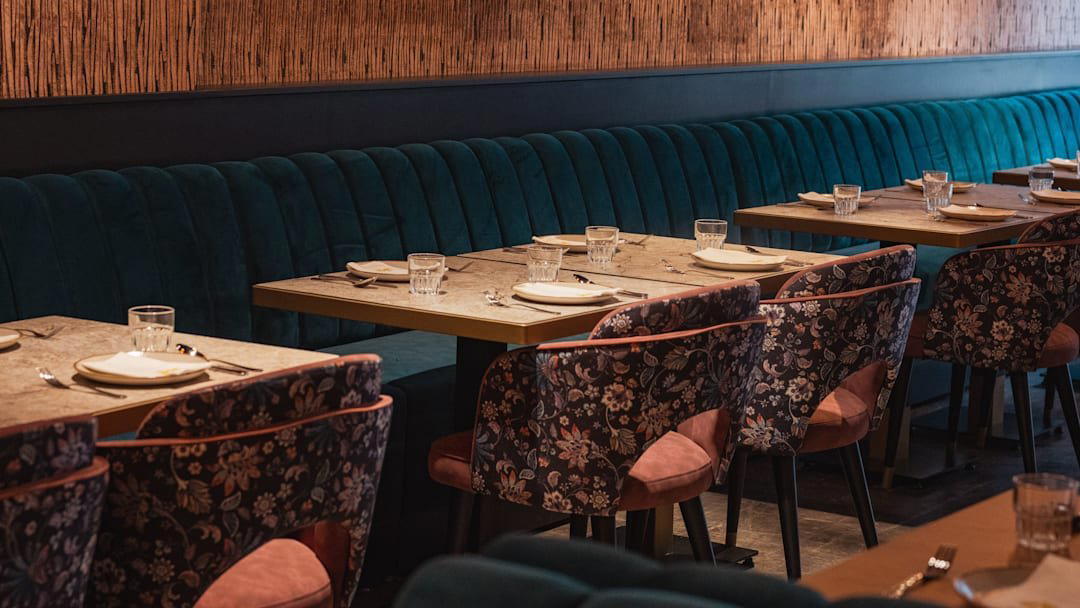
Where Brusselplein Meets the Bay of Bengal
The Madras Diaries is a casual South Indian restaurant at Brusselplein 11 in Utrecht.
Brusselplein sits in Utrecht's Lombok and Kanaleneiland fringe, a district with more demographic texture than the tourist-facing canal centre. The approach to the address feels deliberately removed from the groomed terrace culture of the Oudegracht. That distance is part of the point: South Indian food in Europe has historically found its footing in neighbourhoods where ingredient sourcing, community clientele, and operational economics align, rather than in prime tourist real estate.
The Architecture of a South Indian Meal
To understand what The Madras Diaries offers, it helps to understand how a Tamil Nadu meal is sequenced, because the structure differs meaningfully from the European tasting format that dominates the city's fine dining rooms. A traditional South Indian progression does not build from light to heavy in the Western sense. Instead, it works through a logic of complementary textures and heat registers: cooling yoghurt-based preparations appear alongside spiced lentil dishes, tamarind-sharp rasam follows where a European menu might place a palate-cleansing sorbet, and the meal often closes with a rice and curd combination that functions as deliberate digestive punctuation.
This sequencing matters because it changes how a diner should approach the table. Ordering a single dish in isolation misses the internal logic. The more instructive approach is to order across categories: a dry preparation alongside a wet curry, a bread or crepe element to carry the sauces, something fermented or pickled for acidity, and rice at the end rather than as a base from the start. In Dutch dining culture, where the meal arc is typically built around a main with supporting elements, this requires a small reorientation.
At its more accomplished South Indian addresses, the Netherlands has developed a particular strength in dosa formats and rice-based meal sets. The dosa itself, a fermented rice and lentil crepe, is one of the more technically demanding preparations in the category: the batter requires correct fermentation time, the griddle temperature determines texture across the full surface area, and the accompanying chutneys and sambar need to be made fresh to hold their brightness. When these elements align, a dosa meal competes on technical grounds with any European bistro plate. When they don't, the dish collapses into something starchy and muted.
Reading the Menu as a Progression
South Indian menus in Europe tend to cluster around a few recognisable anchors, and the Madras Diaries format appears to work within that tradition. A useful ordering strategy for first-time visitors: begin with smaller, dried or fried elements that establish spice register early, move through a lentil-based preparation or a dosa course that introduces the kitchen's core technical discipline, and use rice-based dishes to close. This arc mirrors the internal logic of the food itself rather than imposing a European structure onto it.
The rasam, a thin, tamarind-and-tomato soup with black pepper, functions as a kind of barometer for kitchen quality in the South Indian context, in the same way that a consommé signals technical control in classical French cooking. If the rasam is properly sharp and aromatic, with pepper heat that builds rather than spikes, the rest of the meal tends to follow. Comparably, the dal preparations, whether sambar or a drier lentil dish, indicate how carefully the kitchen is managing its base flavours.
For context on what accomplished Indian-register cooking looks like at the fine dining end of the spectrum, venues like Atomix in New York City demonstrate how Asian culinary traditions can be handled with full technical seriousness in a tasting format, while Le Bernardin in New York City shows what focus on a single culinary tradition, applied rigorously, produces over time. The restaurant operates at a different scale, but the editorial principle holds: coherence of tradition matters more than range.
Utrecht's Broader Dining Context
Within the Netherlands, the conversation around serious dining tends to concentrate on a handful of Michelin-tracked addresses spread across multiple cities. De Librije in Zwolle and Ciel Bleu in Amsterdam anchor the upper tier of Dutch fine dining, while venues like De Nieuwe Winkel in Nijmegen and Brut172 in Reijmerstok represent the country's appetite for ingredient-led, regionally rooted cooking. Aan de Poel in Amstelveen, De Bokkedoorns in Overveen, De Groene Lantaarn in Staphorst, De Lindehof in Nuenen, De Lindenhof in Giethoorn, and 't Nonnetje in Harderwijk round out a national scene that has real depth outside Amsterdam.
Within Utrecht specifically, the South Indian tier has not received the same critical attention as the city's French-influenced rooms. That gap is partly a function of critical infrastructure, South Indian food has historically been reviewed by food media with limited framework for evaluating it on its own technical terms, and partly a function of where these restaurants choose to operate. The restaurant, positioned at Brusselplein rather than along the Oudegracht, fits the pattern of a restaurant that serves a community first and draws in curious diners from the broader city. For a contrasting Utrecht experience in the casual register, Bar Bet represents a different neighbourhood pull altogether.
For those building a broader Utrecht visit, our full Utrecht restaurants guide maps the city's dining by neighbourhood and price tier.
Planning Your Visit
The restaurant is located at Brusselplein 11, 3541 CH Utrecht. The address sits outside the historic centre, accessible by tram or bicycle from Utrecht Centraal in under fifteen minutes. Reservations are recommended, and the restaurant is open Monday and Saturday through Sunday from 11:30 AM to 9:30 PM, with Tuesday through Friday lunch service from 11:30 AM to 2:30 PM and dinner from 5 PM to 9:30 PM.
The Short List
Comparable venues nearby, for context on price, style, and recognition.
| Venue | Cuisine | Price | Notes |
|---|---|---|---|
| The Madras DiariesThis venue — the venue you are viewing | Leidsche Rijn, Authentic South Indian | $$ | Not listed |
| The Malt Vault | Not listed | $$ | Binnenstad, Whisky Bar with Food Pairings |
| Meneer Smakers | Oudegracht, Gourmet American Burgers | $$ | Not listed |
| Tai Soen | Not listed | $$ | Godebaldkwartier, Authentic Cantonese Dim Sum |
| Sarban - Utrecht | Binnenstad, Traditional Afghan | $$ | Not listed |
| Pand 33 | Binnenstad, Modern French Fine Dining | $$$ | Not listed |
Continue exploring
More in Utrecht
Restaurants in Utrecht
Browse all →
Bars in Utrecht
Browse all →
Hotels in Utrecht
Browse all →
Wineries in Utrecht
Browse all →
At a Glance
- Cozy
- Warm
- Family
- Casual Hangout
- Date Night
- Open Kitchen
Current opening hours
- Monday
- 11:30 AM–9:30 PM
- Tuesday
- 11:30 AM–2:30 PM, 5–9:30 PM
- Wednesday
- 11:30 AM–2:30 PM, 5–9:30 PM
- Thursday
- 11:30 AM–2:30 PM, 5–9:30 PM
- Friday
- 11:30 AM–2:30 PM, 5–9:30 PM
- Saturday
- 11:30 AM–9:30 PM
- Sunday
- 11:30 AM–9:30 PM
Hours can change for holidays and private events. Last verified .
Warm and cozy atmosphere with friendly, attentive service.