Wils



1 Michelin Star · We're Smart World 4 Radishes
Our verdict
Wils occupies the third floor of architect Jan Wils's Stadionplein building, directly opposite the Olympic Stadium it helped inspire. With a Michelin star, a chef roster that spans Joris Bijdendijk and Thomas Val, and a menu built around fire, plant-forward thinking, and the flavours of Amsterdam's broader cultural mix, it sits at the more accessible end of the city's serious dining tier without sacrificing ambition.

Pearl is the En Primeur Club membership app, where members save venues, book tables and use the concierge.
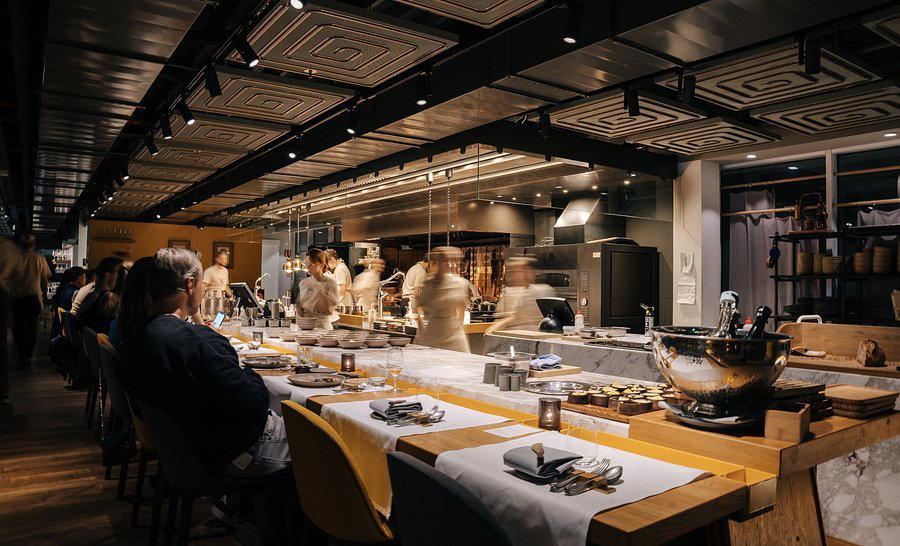
Fire, Plants, and the Shadow of the Olympic Stadium
The approach to Stadionplein 26 sets up the meal before you reach the lift. The Olympic Stadium sits directly across the road, its 1928 expressionist brickwork still carrying the authority Jan Wils, the architect responsible for this building too, brought to both commissions. The restaurant that bears his name now occupies the third floor, and the building's American-style brasserie bones are visible the moment you enter: tall ceilings, open sightlines, a cocktail bar that draws from the room rather than hiding in a corner. What regulars notice first, though, is the kitchen. The counter arrangement puts the full brigade in view, and the charcoal grills and traditional ovens that anchor the cooking produce a visible heat and smoke that make the open format feel purposeful rather than decorative.
Amsterdam's mid-to-upper dining tier has expanded considerably over the past decade. At the leading, houses like Ciel Bleu, Flore, Spectrum, and Vinkeles operate at the €€€€ price point with full tasting formats. Wils sits one tier below in price but within the same conversation in terms of recognition: a Michelin star held since 2024, a ranking of 612 in the Opinionated About Dining European list for 2025, and a review record that places it well above Amsterdam's more casual world-cuisine addresses. That positioning, serious cooking at a price point that allows more frequent visits, is precisely what keeps regulars returning on a weekly rather than quarterly basis.
What the Kitchen Is Actually Doing
Fire cooking in the Netherlands has its own trajectory. The open-hearth revival that reshaped Nordic and Basque restaurants over the past fifteen years arrived in Amsterdam more gradually, but a cohort of chefs has now made wood and charcoal their primary tools rather than a finishing flourish. At Wils, that commitment shapes the entire menu logic. The charcoal grill and traditional ovens are not props; they determine texture, timing, and the flavour depth that allows relatively few components per dish to carry the plate.
The menu operates along two tracks that intersect more than they diverge. One track is plant-based and fully committed: dairy replaced with plant-based alternatives, dishes built around colour and simplicity with what the Michelin inspectors described as "100% pure plant-based" execution. The other track draws on Amsterdam's demographic and culinary breadth, bara, the fried Surinamese-Hindustani snack, appearing alongside veal sweetbreads with yuzu vinaigrette and raw green tomatillo, herbs pulled from the restaurant's own garden adding freshness rather than garnish. The kitchen's Dutch-Caribbean-Asian range is not a fusion gesture; it reflects the city's actual food culture, and the regulars who grew up eating in Amsterdam recognise it as such.
Sustainability runs as a practical operational principle rather than a marketing position. The parfait glacé made from stale bread sourced from the restaurant's own bakery is the example cited most often, a dessert that solves a waste problem and produces something genuinely worth ordering. For the returning guest, that kind of thinking reads in the menu over time: the same rigour that produces the bread-based dessert informs where the proteins and produce come from.
The Regulars and What They Know
The clientele that returns to Wils with the most frequency tends to fit a specific Amsterdam type: locally rooted, aware of what the city's serious kitchens are doing, and uninterested in the purely celebratory format that dominates tasting-menu-only rooms. The brasserie structure here matters for that group. Lunch service runs Friday and Saturday from noon, with dinner Tuesday through Saturday until 9:30 PM, a schedule that allows mid-week dinners and weekend lunches without the advance planning that a single tasting-format restaurant demands. Regular guests know the kitchen, know the seasonal arc of the menu, and return when something new is likely to have appeared rather than booking for special occasions only.
The open kitchen counter is where the most engaged diners gravitate. Watching Thomas Val and the brigade work the grills and ovens from close range is part of what the Michelin inspectors meant by "experiencing the entire kitchen operation from the front row", and it changes the rhythm of the meal. Dishes arrive at a pace set by fire rather than by course structure, and that looseness suits the brasserie format well. The cocktail bar, described in the Michelin notes as "delightfully trendy," functions as both a pre-dinner and a standalone destination, which means the room operates at different intensities across the evening.
Where Wils Sits in the Broader Dutch Scene
Amsterdam is a dense city for serious dining, but the concentration of Michelin-recognised restaurants extends well beyond the city's boundaries. The Dutch kitchen at the highest level includes houses like De Librije in Zwolle, Aan de Poel in Amstelveen, De Bokkedoorns in Overveen, De Groene Lantaarn in Staphorst, De Lindehof in Nuenen, and De Lindenhof in Giethoorn. Within Amsterdam itself, the world-cuisine tier also includes Bistro de la Mer at the same price point. What distinguishes Wils inside that peer group is the specific combination of fire technique, plant-forward discipline, and cultural pluralism, an approach that makes more sense in Amsterdam than it would in most other Dutch cities, and that aligns Joris Bijdendijk's wider philosophy (his name functions as the creative brief here rather than as a tableside presence) with the restaurant's actual neighbourhood and clientele.
For comparison within the world-cuisine category at the €€€ price point, Scherp in Middelburg and The Bishop in Leiden represent the format in other Dutch cities, each shaped by local context in ways that make direct comparison difficult. The Michelin star Wils holds places it at the verified leading of that category nationally.
Know Before You Go
| Address | Stadionplein 26, 1076 CM Amsterdam |
|---|---|
| Hours | Tuesday – Thursday: 6 PM – 9:30 PM | Friday – Saturday: 12 PM – 2:30 PM and 6 PM – 9:30 PM | Sunday – Monday: closed |
| Price | €€€ (world cuisine; mid-to-upper Amsterdam tier) |
| Awards | Michelin 1 Star (2024); Opinionated About Dining Europe #612 (2025) |
| Chef | Joris Bijdendijk (creative direction); Thomas Val (kitchen lead) |
| Booking | Advance reservation recommended; lunch slots Friday and Saturday fill quickly |
For broader planning in the city, see our full Amsterdam restaurants guide, our full Amsterdam hotels guide, our full Amsterdam bars guide, our full Amsterdam wineries guide, and our full Amsterdam experiences guide.
Frequently asked questions
What price level is Wils?
Pricing at Wils is listed as €€€.
How do I find Wils?
Wils is located at Stadionplein 26, 1076 CM Amsterdam, Netherlands, Amsterdam.
Who is the chef connected to Wils?
The chef associated with Wils is Joris Bijdendijk.
Comparable Options
A short peer table to compare basics side-by-side.
| Venue | Cuisine | Price | Awards | Notes |
|---|---|---|---|---|
| WilsThis venue (the venue you are viewing) | Michelin-Starred Fire-Cooked Modern European | $100–150 | 1 Michelin Star · We're Smart World 4 Radishes | Not listed |
| Ciel Bleu | Modern French Fine Dining | $200–300 | 2 Michelin Stars · La Liste Top Restaurants | Creative |
| Bolenius | Modern Dutch Farm-to-Table | $100–150 | 1 Michelin Star · We're Smart World Top 100 #18 | Modern Dutch, Creative |
| De Kas | Seasonal Farm-to-Table Fine Dining | $50–100 | 1 Michelin Star · Star Wine List | Organic |
| Gebr. Hartering | Modern Fusion Bistro | $50–100 | Michelin Plate · Star Wine List | French |
| Lastage | Dutch-French Fine Dining | $100–150 | Michelin Plate · Star Wine List | Creative |
Recognition history
Dated appearances from independent guides and award organizations, with the underlying list record or original source where available.
Michelin 1 Star
Michelin
Opinionated About Dining Top Restaurants in Europe Recommended
Opinionated About Dining
We're Smart World 4 Radishes
We're Smart World
Full recognition history (5 entries)
Opinionated About Dining Top Restaurants in Europe Ranked #612
Opinionated About Dining
Michelin 1 Star
Michelin
Continue exploring
More in Amsterdam
More from Chef Joris Bijdendijk
Browse all →
Restaurants in Amsterdam
All restaurants in Amsterdam →
Bars in Amsterdam
All bars in Amsterdam →
Hotels in Amsterdam
All hotels in Amsterdam →
Wineries in Amsterdam
All wineries in Amsterdam →
Details
- Sophisticated
- Modern
- Elegant
- Scenic
- Special Occasion
- Date Night
- Celebration
- Business Dinner
- Group Dining
- Open Kitchen
- Chefs Counter
- Private Dining
- Design Destination
- Standalone
- Sommelier Led
- Extensive Wine List
- Farm To Table
- Local Sourcing
- Street Scene
- Tasting Menu
- A La Carte
- Counter Dining
- Wine Pairings
- Wines By The Glass
- Kombucha
Current opening hours
- Monday
- Closed
- Tuesday
- 6–9:30 p.m.
- Wednesday
- 6–9:30 p.m.
- Thursday
- 6–9:30 p.m.
- Friday
- 12–2:30 p.m., 6–9:30 p.m.
- Saturday
- 12–2:30 p.m., 6–9:30 p.m.
- Sunday
- Closed
Hours can change for holidays and private events. Hours as of .
Relaxed fine dining with an open-kitchen fire spectacle, kitchen-bar seating, refined service, and views connected to the Olympic Stadium setting.