Meneer Smakers
On a narrow canal-side street in Utrecht's Twijnstraat quarter, Meneer Smakers occupies a position in the city's mid-range dining conversation that rewards those who pay attention to neighbourhood texture over headline restaurants. Utrecht's dining scene has expanded quietly beyond its historic centre, and addresses like this one reflect that shift toward informal, character-driven rooms over formal dining rooms.
Pearl is the En Primeur Club membership app — saves, bookings, and concierge access live there. Same editors, same standards.
- Address
- Twijnstraat 62, 3511 ZM Utrecht, Netherlands
- Website
- meneersmakers.nl
- Directions
- Get directions
 Saves & bookings on Pearl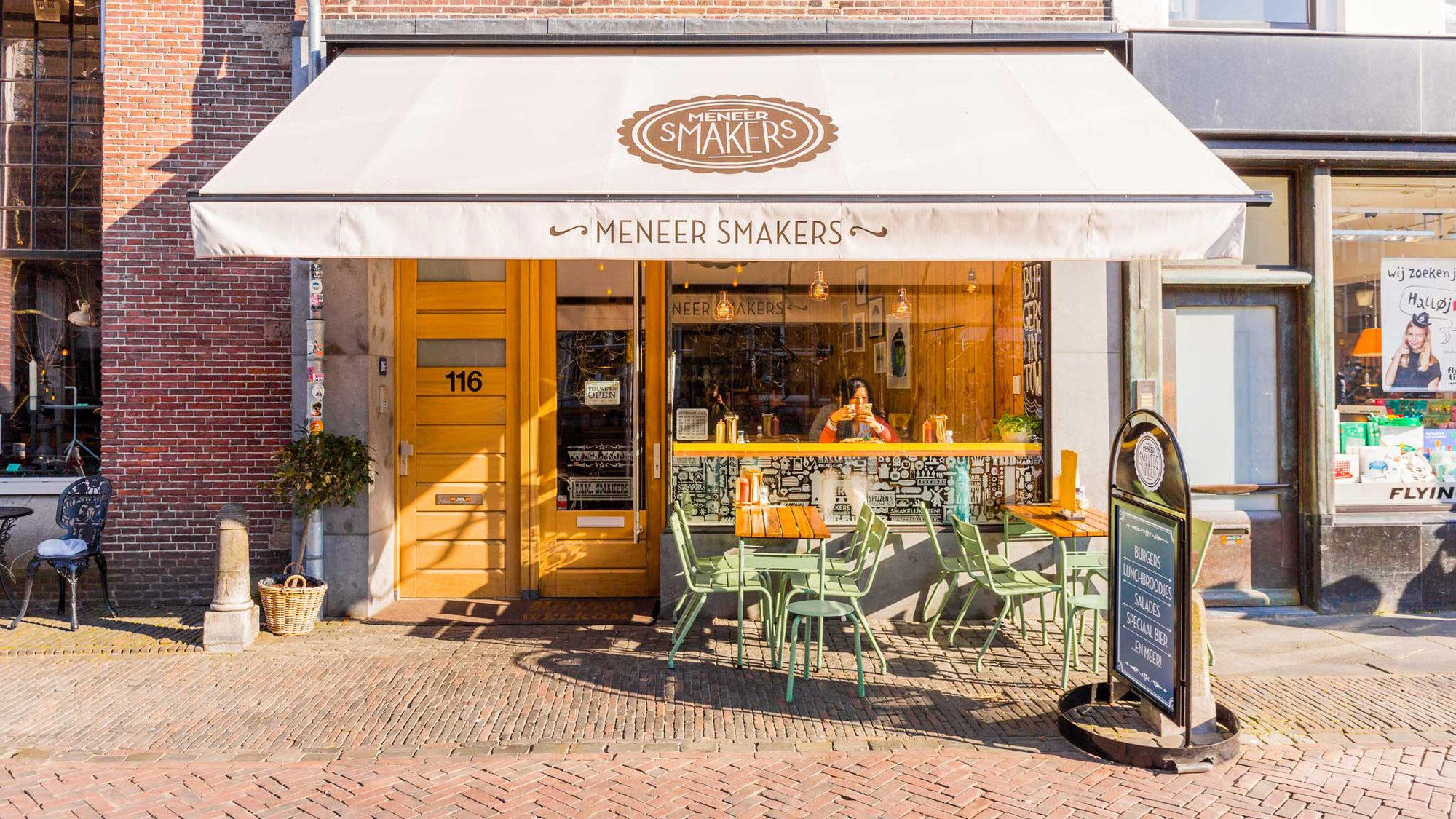
A Street That Tells You Something About Utrecht
Twijnstraat has the particular quality of streets that locals know but visitors rarely find without direction. It runs through a part of Utrecht where canal-side architecture gives way to a denser, more domestic rhythm of shopfronts and small restaurants, the kind of block where the choice of where to eat is made by what you see through the window rather than what you read in a guide. Meneer Smakers, at number 62, sits inside that logic. The address alone positions it within a specific tier of Utrecht dining: neighbourhood-facing, accessible in register, and at a remove from the more formal rooms around the Dom Tower or the Oudegracht.
Utrecht's dining scene has expanded in two directions simultaneously. At the leading end, rooms like Karel 5 (€€€€ · Creative) and Maeve (€€€ · Creative French) have pushed the city's ambitions toward a more international comparable set. At the other end, casual all-day addresses such as Bakkerswinkel Utrecht and neighbourhood bars like Bar Bet have filled in the informal register. Meneer Smakers reads as part of that middle tier: a room where the experience is shaped more by the physical setting and the mood of the street outside than by tasting-menu ambition.
The Atmosphere a Canal-Side Address Creates
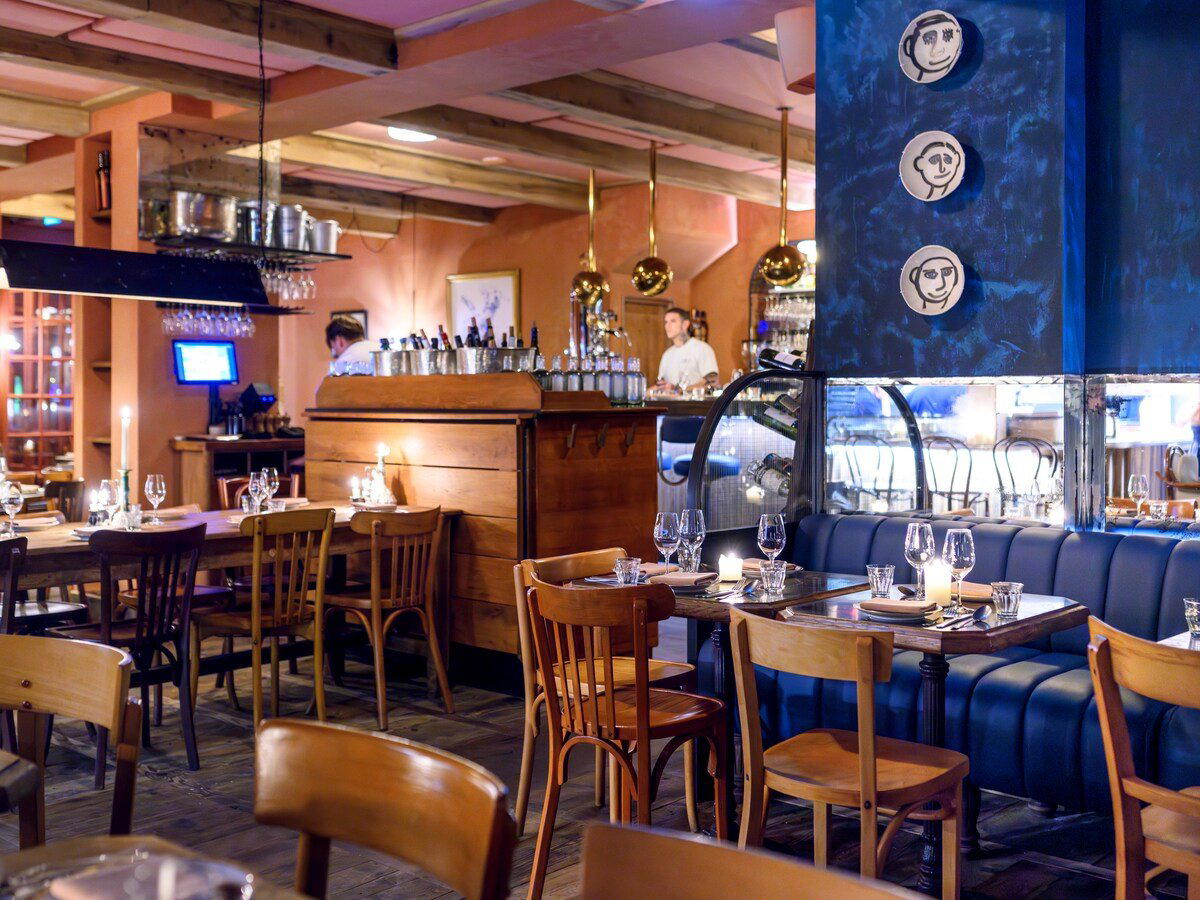
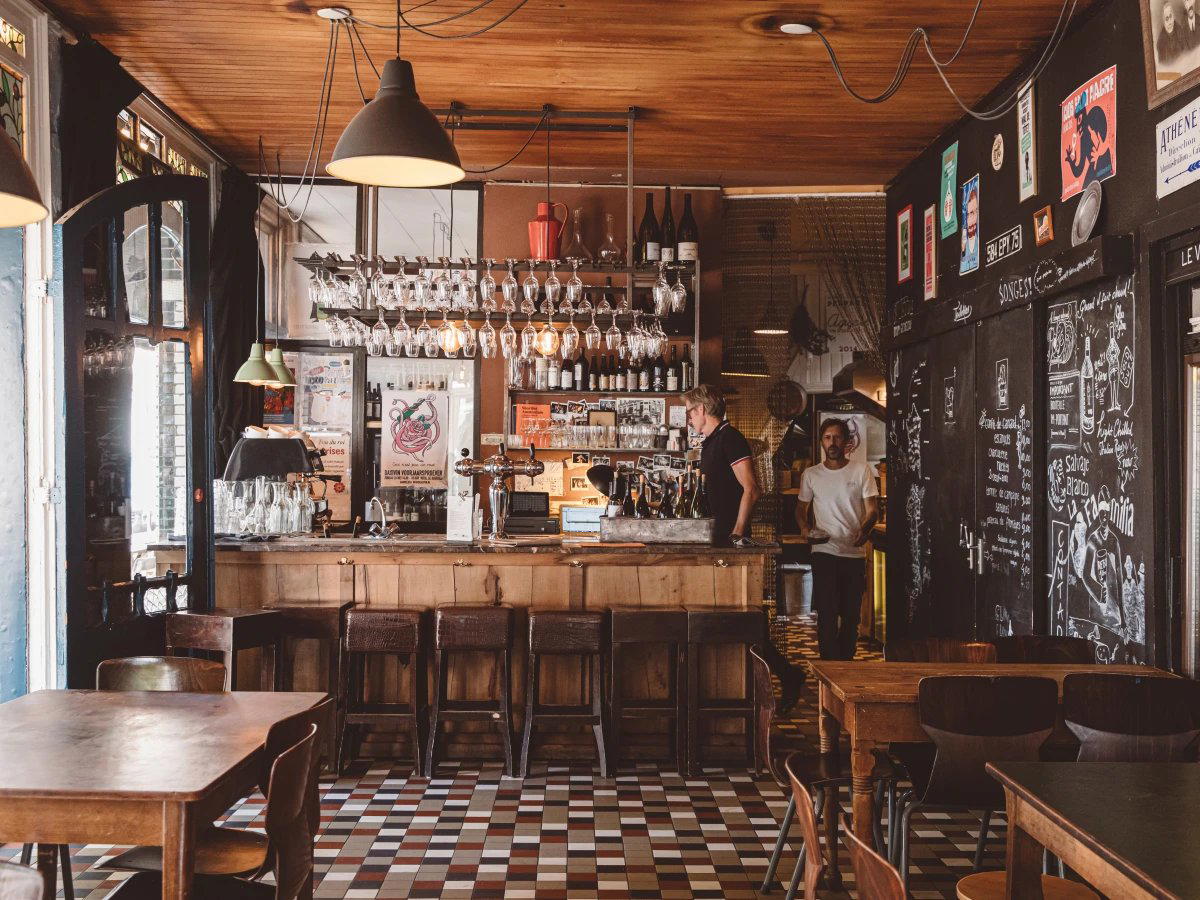
The sensory character of eating in this part of Utrecht is worth understanding on its own terms. Streets like Twijnstraat have a low ambient noise level compared to the main Oudegracht terraces, which means conversation carries differently, and the sense of enclosure is stronger. Natural light arrives at angles that change through the day, and the architecture along this stretch creates the kind of uneven, slightly compressed space that older Dutch city blocks do particularly well. A room on this street is not going to feel like a hotel dining room or a purpose-built restaurant space. It will feel like something that occupies a building that was built for something else and adapted over time, which gives it a different texture entirely from addresses that have been designed from the ground up as restaurants.
That quality, common to the leading neighbourhood rooms in mid-sized Dutch cities, is harder to engineer than a well-briefed front-of-house team or a coherent wine list. It depends on the street behaving in a certain way, on the building carrying its age with some grace, and on the room inside not trying to override either of those things. Badhuis operates in a different part of Utrecht with a similar logic: the physical history of the space does a significant portion of the atmospheric work.
Where Meneer Smakers Sits in the Utrecht Dining Conversation
Utrecht is not a city that has been slow to develop its restaurant culture. The presence of a large student population and a well-travelled professional class has created demand across a wide range of price points and registers, and the city's dining map has responded accordingly. The competition for the mid-range, neighbourhood-facing tier is real: there are enough addresses in that bracket that a room needs to hold its own on atmosphere, consistency, and the specific quality of its cooking before it earns repeat visits.
The broader Dutch dining scene provides useful context. At the high end, restaurants like De Librije in Zwolle and Ciel Bleu in Amsterdam define what Dutch fine dining looks like at its most ambitious. Addresses such as Aan de Poel in Amstelveen, De Bokkedoorns in Overveen, and De Nieuwe Winkel in Nijmegen occupy a recognised tier just below that. Further afield, Brut172 in Reijmerstok, De Groene Lantaarn in Staphorst, and De Lindehof in Nuenen show how Dutch gastronomy has dispersed beyond the major cities. Even internationally, comparisons to tightly focused chef-driven rooms like Le Bernardin in New York City or Atomix in New York City illustrate how much a room's identity can be carried by a clear point of view rather than scale. 't Nonnetje in Harderwijk and De Lindenhof in Giethoorn round out the range of what thoughtful Dutch restaurant culture looks like outside the capital. The restaurant, sitting at Twijnstraat 62, operates several registers below that formal tier, which is precisely the point: its relevance is local, seasonal, and contingent on whether the neighbourhood is the right fit for what you want from a meal.
Practical Notes for Planning a Visit
Same-City Peers
Comparable venues nearby, for context on price, style, and recognition.
| Venue | Cuisine | Price | Notes |
|---|---|---|---|
| Meneer SmakersThis venue — the venue you are viewing | Gourmet American Burgers | $$ | Not listed |
| The Malt Vault | Whisky Bar with Food Pairings | $$ | Binnenstad |
| Farina | Italian Comfort Food | $$ | Utrecht |
| Saar | Natural Wine & Seasonal Small Plates | $$$ | Catharijnesingel |
| De Zwarte Vosch | Authentic Spanish Tapas & Pintxos | $$ | Oudegracht |
| Jus en Pepper | Thai-French Fusion | $$$ | centrum |
Continue exploring
More in Utrecht
Restaurants in Utrecht
Browse all →
Bars in Utrecht
Browse all →
Hotels in Utrecht
Browse all →
Wineries in Utrecht
Browse all →
At a Glance
- Trendy
- Lively
- Modern
- Casual Hangout
- Group Dining
- Open Kitchen
- Local Sourcing
- Street Scene
Current opening hours
- Monday
- 4–9 PM
- Tuesday
- 4–9 PM
- Wednesday
- 4–9 PM
- Thursday
- 12–10 PM
- Friday
- 12–10 PM
- Saturday
- 12–10 PM
- Sunday
- 12–9 PM
Hours can change for holidays and private events. Last verified .
Colorful and trendy interior with good music, creating a casual and energetic atmosphere.