Our verdict
The Kitchen sits at the intersection of international cooking and Chinese regional tradition, with a menu that draws from both Nanjing's local pantry and broader global technique. It occupies a middle space in the city's dining scene: neither a strict Huaiyang specialist nor a purely Western table, but a kitchen that treats both traditions as live references. For travellers already exploring Nanjing's wider restaurant circuit, it functions as a useful contrast point.

Pearl is the En Primeur Club membership app, where members save venues, book tables and use the concierge.
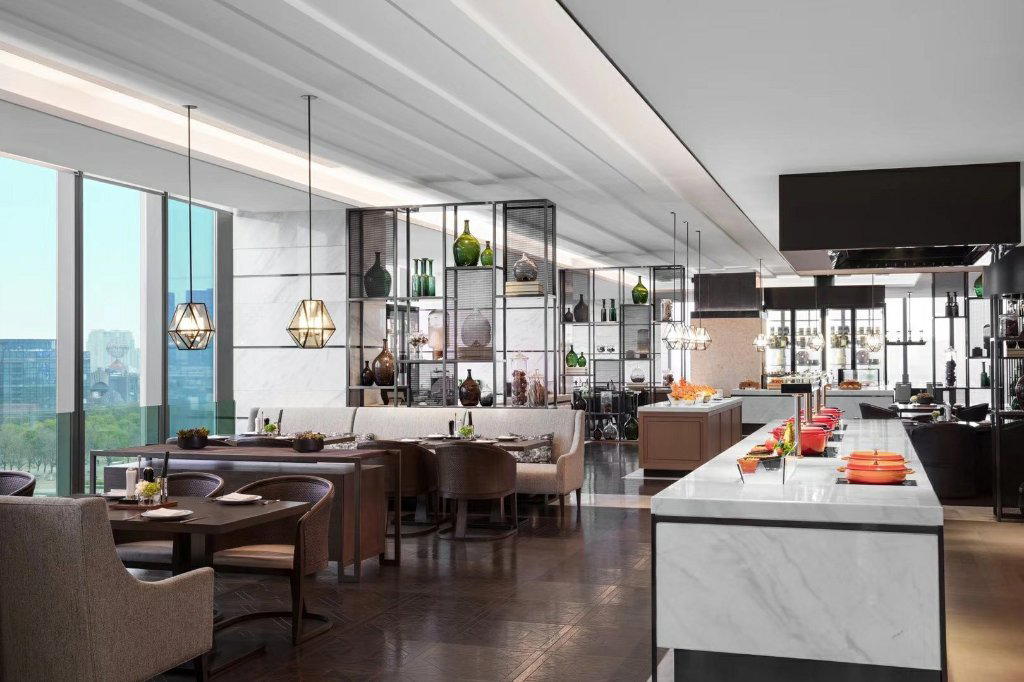
Where Two Traditions Share a Flame
Nanjing's restaurant scene has consolidated around two distinct poles over the past decade: the deep-rooted Huaiyang and Jiangzhe houses that treat local produce and classical technique as near-sacred, and a newer generation of hybrid venues that treat Chinese cooking as one tool among many. The Kitchen sits in that second category, a restaurant where international method and Chinese regional identity are in active conversation rather than segregated into separate courses or separate menus.
This format has become more common in China's second-tier gateway cities, where an internationally travelled dining public expects fluency in both directions. The kitchen brigade at such venues tends to move between wok and Western range without treating the shift as conceptually significant, and the best of them carry the discipline of Chinese high-heat technique into everything they touch, including dishes that have no obvious Chinese lineage at all.
The Wok as Reference Point
Chinese professional cooking is built around speed and thermal precision in ways that differ structurally from French-derived Western technique. A wok station operating at full temperature reaches conditions that no conventional European range can replicate, and the chemical reaction that produces wok hei, that faintly smoky, breath-of-flame quality in a properly executed stir-fry, depends on both the equipment and a cook's ability to work in ten-second windows. Restaurants that genuinely deliver wok hei at the table are doing something technically demanding; restaurants that advertise it but serve listless, oil-pooled dishes have failed at the technical premise.
In Nanjing, the city's classical dining houses tend to emphasise a gentler register: Huaiyang cooking prizes subtle sweetness, careful braising, and knife work over fire intensity. That tradition is well represented at venues like Jiangnan Wok · Yun at the ¥¥¥¥ tier and Chi Man at a more accessible price point. A restaurant that integrates international cuisine alongside Chinese dishes is operating in a different register, one where the wok's capabilities function as a baseline of technical competence rather than the sole expressive instrument.
International and Local on the Same Menu
Multi-cuisine menus carry an inherent editorial risk: they can read as unfocused, or worse, as a hedge against uncertain customer preference. The restaurants that make this format work in Chinese cities tend to share a common discipline: local specialties anchor the menu structurally, while international dishes are held to a comparably high technical standard rather than treated as easy additions. The failure mode is a table where the Chinese dishes are careful and the Western dishes are perfunctory. The better outcome is one where technique transfers across sections.
Nanjing's own larder gives a kitchen significant material to work with. Jinling salted duck is the city's most-referenced product, a cured preparation with a flavour profile quite different from Peking duck's lacquered sweetness or Cantonese roasting traditions. The city's proximity to the Yangtze and its historic lakes also puts freshwater fish at the centre of the regional pantry, with preparations that reward precise heat control. A kitchen drawing on local specialties in Nanjing has access to ingredients with clear character, which tends to produce better results than generic sourcing.
For a broader picture of where The Kitchen sits within Nanjing's dining geography, the full Nanjing restaurants guide maps the city's key venues by cuisine and price tier. Elsewhere in the region, Ru Yuan in Hangzhou and Shang Palace in Yangzhou represent how Jiangnan-tradition restaurants carry classical format into contemporary service.
Comparative Context: Nanjing's Dining Tiers
Nanjing's fine dining circuit is smaller than Beijing's or Shanghai's, but more layered than its reputation outside China suggests. The Cantonese-registered venues, including Dai Yuet Heen at the ¥¥¥ tier, bring a southern Chinese technical framework into the city. Jiangzhe specialists like Du Shi Li De Xiang Cun work closer to the local grain. Casual-end options like Fang Po focus on small eats and street-register flavour. A restaurant that spans international cuisine and Chinese dishes occupies a distinct niche within this set, positioned neither as a specialist nor as a casual catch-all, but as a venue where range is itself the proposition.
Nationally, the model of serious Chinese technique applied within a broader menu has produced strong outcomes at venues like Xin Rong Ji in Beijing and Xin Rong Ji in Chengdu, where kitchen discipline and sourcing rigour anchor menus that could easily drift. At a different angle, Fu He Hui in Shanghai demonstrates how a conceptually clear framework can make a multi-register menu feel coherent. The comparison is instructive even where the formats differ.
Internationally, venues that have found stable footing between Western and Asian culinary traditions often do so by choosing one technical grammar as primary and letting the other inflect it. Chef Tam's Seasons in Macau and Imperial Treasure Fine Chinese Cuisine in Guangzhou each take a position; the ambiguity of an international-plus-Chinese brief is harder to resolve without one.
Planning Your Visit
Visitors should verify details directly through the venue or current local search before travelling. Given Nanjing's status as a city with a developed business travel and domestic tourism circuit, restaurants at this intersection of international and Chinese cuisine tend to be accessible without advance reservation during weekday service, though weekend evenings in the city's commercial dining clusters can require planning ahead. For visitors building a multi-venue itinerary, anchoring around Xinjiekou or the Hexi districts, which hold most of the city's hotel-adjacent dining, provides the most efficient routing.
Travellers who want to cross-reference the format against similarly positioned venues in other Chinese cities can look at Fleurs Et Festin in Xiamen, Wenru No.9 in Fuzhou, or Pingjiangsong in Suzhou for a sense of how regional Chinese cities handle the hybrid-menu challenge across different culinary traditions. For purely Western reference, Le Bernardin in New York City and Lazy Bear in San Francisco represent the technical discipline that the leading international-cuisine restaurants hold themselves to.
Frequently asked questions
Is The Kitchen a family-friendly restaurant?
A menu that spans international cuisine, Chinese dishes, and local Nanjing specialties gives mixed groups practical options across different palates and age ranges. That kind of breadth tends to reduce friction for families, since there is rarely a single fixed format or a narrow tasting menu structure to work around.
What's the vibe at The Kitchen?
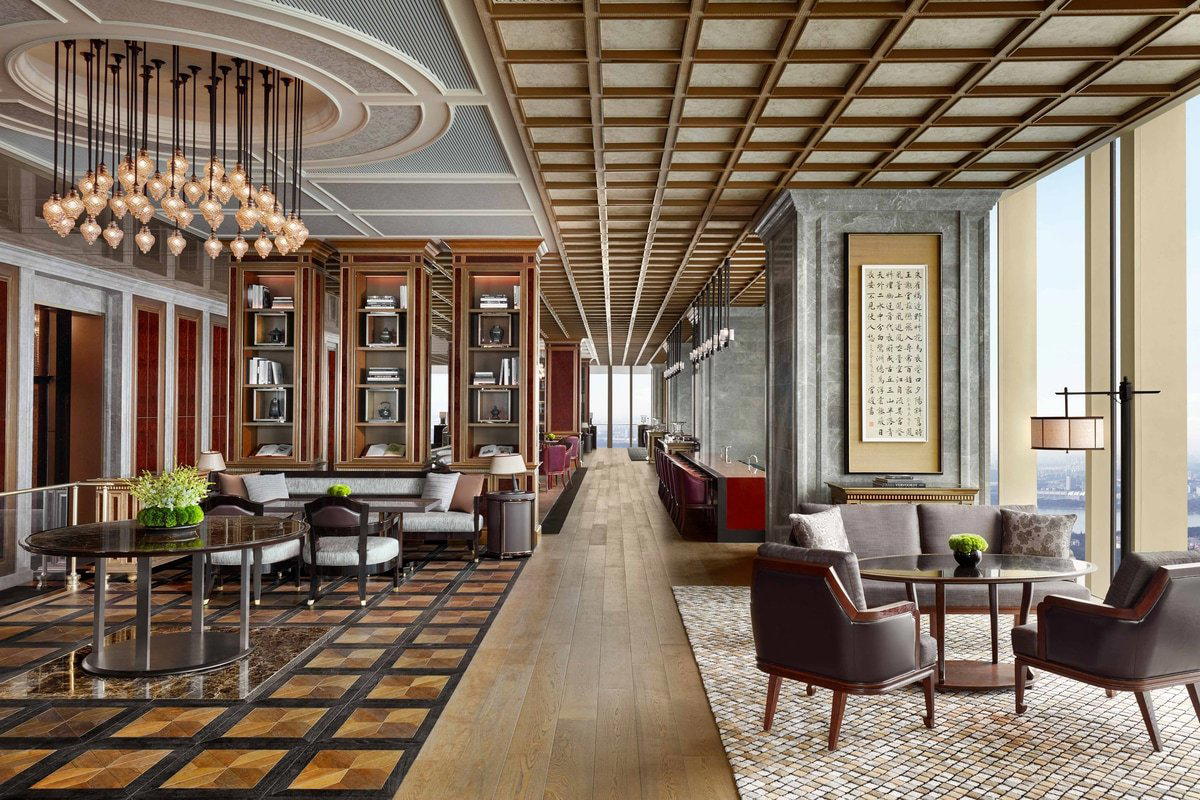
The Kitchen's menu positioning, international cuisine running alongside Chinese dishes and local Nanjing specialties, suggests a room designed for range rather than ceremony. In Nanjing's dining circuit, that profile tends to attract business travellers, mixed-nationality groups, and locals who want familiar regional food alongside something less place-specific. Without a confirmed price tier or awards on record, the precise register is harder to pin down, so the experience on the ground may vary from what the menu breadth implies.
Does The Kitchen in Nanjing combine Chinese regional cooking with Western techniques on the same menu?
The Kitchen's listed cuisine types, international cuisine, Chinese dishes, and local Nanjing specialties, indicate a menu that draws from both Chinese regional traditions and broader international cookery rather than committing to one lane. In Nanjing, that cross-cultural format is relatively uncommon among restaurants that take local specialties seriously, since most venues in the city's dining circuit anchor firmly in one tradition. Whether the kitchen integrates techniques across the two or keeps them editorially separate is best confirmed by checking the current menu directly with the venue.
What's the signature dish at The Kitchen?
A kitchen working across international cuisine, Chinese dishes, and local Nanjing specialties is likely rotating emphasis across multiple culinary traditions rather than anchoring on a single hero plate. Nanjing's local repertoire, which includes dishes rooted in the Huaiyang and Jiangzhe traditions, would be the most regionally grounded starting point when ordering.
A Quick Peer Check
| Venue | Cuisine | Price | Awards | Notes |
|---|---|---|---|---|
| The KitchenThis venue (the venue you are viewing) | International Buffet with Huaiyang and Cantonese Influences | $30–50 | Not listed | Not listed |
| Dai Yuet Heen | Modern Cantonese Fine Dining | $100–150 | 1 Michelin Star | Cantonese |
| Jiangnan Wok · Yun | Contemporary Huaiyang | Not listed | 1 Michelin Star | Huaiyang |
| Man Ho | Modern Huaiyang & Cantonese | $50–100 | Michelin Plate | Huaiyang |
| Wan Guo Chun Chinese Restaurant | Traditional Huaiyang Cuisine | $30–50 | Michelin Plate · Relais Chateaux Award | Chinese |
| Chi Man | Jiangzhe | Not listed | Michelin Bib Gourmand | Not listed |

Continue exploring
More in Nanjing

Details
- Modern
- Lively
- Family
- Group Dining
- Business Dinner
- Open Kitchen
- Hotel Restaurant
- Buffet
- A La Carte
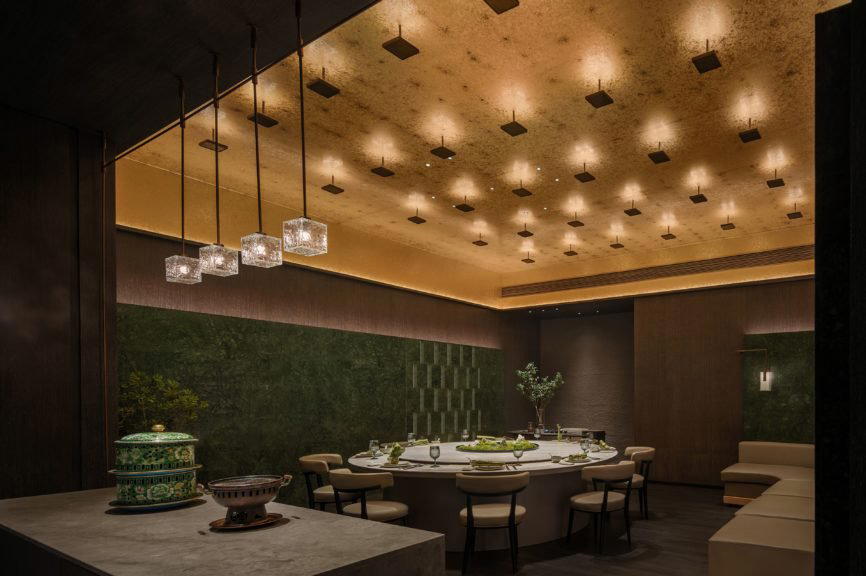
Sophisticated and welcoming with exciting live cooking stations.