
1 Michelin Star
Our verdict
Meng Du Hui brings Hui cuisine, the culinary tradition of Anhui province, to Nanjing's Jianye District, earning a Michelin Plate in 2025. At the ¥¥¥ price tier, it occupies a distinct niche among the city's regional Chinese offerings, where Huaiyang and Jiangzhe traditions typically dominate. For anyone tracing the broader Yangtze Delta food corridor, this is a deliberate stop.

Pearl is the En Primeur Club membership app, where members save venues, book tables and use the concierge.
The menu
What to order
- Fermented mandarin fish
- Roast duck
- Stinky mandarin fish
Where Anhui's Kitchen Surfaces in a Jiangsu City
Nanjing's dining reputation is built largely on Jiangzhe and Huaiyang foundations, the delicate braised pork, the seasonal river fish, the centuries-old imperial court lineage. Against that backdrop, Hui cuisine arrives as something of a corrective: earthier, more assertive with preserved ingredients and mountain produce, shaped by a province whose topography and trade routes produced a fundamentally different relationship with food. Meng Du Hui, situated on Yanshan Road in the Jianye District, is among the few addresses in the city making that culinary case at a considered price point.
Hui cuisine, the cooking of Anhui province, not to be confused with the broader Chinese Muslim Hui tradition, is one of China's eight recognised regional cuisines, yet it remains significantly less exported than Cantonese, Sichuan, or even Huaiyang cooking. Its defining characteristics include a preference for slowly braised and stewed preparations, heavy use of cured and preserved ingredients born of necessity in landlocked mountain communities, and an emphasis on wild foraged produce from the Huangshan region. Where Huaiyang cuisine at a restaurant like Jiangnan Wok · Yun leans toward refinement and visual precision, Hui cooking prizes depth and slow-developed flavour over decorative presentation.
The Sustainability Logic Embedded in the Tradition
There is an argument, and a serious one, that Hui cuisine was practising what contemporary restaurants now consciously brand as sustainable cooking long before the term entered the lexicon. The tradition evolved in a landlocked province where Anhui merchants, the so-called Huishang, spent months away from home on trade routes. Food had to keep. Techniques centred on fermentation, salting, air-drying, and long braises developed not as aesthetic choices but as practical responses to environment and logistics. Stinky mandarin fish (chòu guìyú), arguably the single most discussed dish in the canon, is the product of controlled fermentation: a preservation method that doubles as a flavour-development technique.
This has real resonance in a moment when premium Chinese dining rooms across the country are increasingly asked to account for sourcing and waste. The category of restaurants that genuinely reduces waste as a structural consequence of its culinary tradition, rather than retrofitting sustainability onto an existing format, is narrow. Hui cuisine sits squarely within it. Preserved vegetables, offcuts worked into braises, seasonal wild greens that would be ignored by more produce-selective kitchens: these are not additions to the menu in response to trend, they are the menu.
For context, both Meng Du Hui in Beijing and Shui Mo Hui in Hangzhou represent the same category effort to give Hui cuisine a formal urban dining frame, Hangzhou in particular is geographically close to the Huizhou heartland, which gives those operations a natural sourcing advantage. Nanjing's version operates with similar intent but within a city whose dining identity is more firmly Jiangzhe-coded, making the positioning here slightly more deliberate.
Reading the Michelin Plate Signal
The 2025 Michelin Plate recognition at Meng Du Hui tells a specific story about where the restaurant sits in the broader Nanjing dining tier. A Michelin Plate, in the guide's current terminology, designates restaurants serving food that is good cooking, a quality acknowledgement without the star-level elevation. In Nanjing's context, this places Meng Du Hui in a peer bracket that includes Dai Yuet Heen and Chi Man, restaurants similarly recognised for solid, category-specific execution rather than experimental ambition. The Michelin Plate functions as a reliable signal for the type of traveller who wants assured quality without the booking complexity that star-level venues require.
At the ¥¥¥ price tier, Meng Du Hui occupies the mid-upper bracket in Nanjing, priced above accessible options like Du Shi Li De Xiang Cun and Fang Po, and below the ¥¥¥¥ positioning of Jiangnan Wok · Yun. This is a considered spend for regional Chinese cuisine, appropriate for a table where the goal is understanding a less-familiar culinary tradition at a level of kitchen craft that justifies the price.
Within the wider East China dining network, the Hui cuisine category has attracted Michelin attention at multiple points. 102 House in Shanghai and Ru Yuan in Hangzhou both operate in the premium regional Chinese space, and restaurants like Xin Rong Ji in Beijing and Xin Rong Ji in Chengdu demonstrate that serious regional Chinese cooking can travel successfully when the sourcing commitment and kitchen discipline hold. Chef Tam's Seasons in Macau and Imperial Treasure Fine Chinese Cuisine in Guangzhou sit further out on the fine-dining axis, where formal service architecture and wine programming enter the equation more aggressively.
Planning a Visit: Jianye District and Practical Notes
The Jianye District sits to the southwest of Nanjing's historic core, separated from the old city wall perimeter by a short transit distance. It is a less-visited district for international travellers who tend to cluster around Xuanwu Lake, the Confucius Temple area, and the Presidential Palace quarter, which means Meng Du Hui draws a primarily local and domestic-traveller clientele, a fact that tends to keep the environment grounded rather than calibrated for foreign tourist expectations.
Nanjing is well-connected by high-speed rail to Shanghai (roughly 70 minutes on the G-train network), Hangzhou, and Beijing, making it viable as a day extension or two-night addition to a Yangtze Delta itinerary. For the full picture of where Meng Du Hui fits within the city's options across every category, the full Nanjing restaurants guide is the most direct reference point. Complementary coverage is available across hotels, bars, wineries, and experiences in Nanjing.
Seasonal timing matters for Hui cuisine more than for most regional Chinese traditions, given the reliance on preserved and foraged ingredients that peak at different points in the year. Autumn and winter are historically the strongest seasons for Hui cooking: the preserved ingredient pantry is at its richest, braised preparations are at their most appropriate, and the cold-weather proteins that anchor the canonical dishes are in supply. Spring brings wild mountain greens and bamboo shoots into the picture, adding a lighter register. Booking ahead is advisable for weekends and national holiday periods, the Michelin recognition will have increased demand, and Hui cuisine specialists of this price tier are not abundant in the city.
Frequently asked questions
What's the pricing like at Meng Du Hui?
Pricing at Meng Du Hui is listed as ¥¥¥.
Where do I go for Meng Du Hui?
Meng Du Hui is located at 2P5F+X8F, Yanshan Rd, Jianye District, Nanjing, Jiangsu, China, 210019, Nanjing.
What kind of recognition has Meng Du Hui received?
Meng Du Hui has received recognition including: Michelin Plate (2025).
What's the signature dish at Meng Du Hui?
Hui cuisine's defining preparations historically centre on mountain-preserved proteins, slow-braised river fish, and fermented or dried ingredients, techniques the tradition has used for centuries before they became a restaurant trend. The 2025 Michelin Plate recognition suggests the kitchen executes these fundamentals at a level the guide considers worth flagging to visitors.
Should I book Meng Du Hui in advance?
Advance booking is advisable. Meng Du Hui holds a 2025 Michelin Plate, a signal that puts it on the itinerary of Nanjing visitors specifically seeking regional Chinese cooking beyond the city's dominant Huaiyang and Jiangzhe traditions.
Similar Picks
Comparable venues nearby, for context on price, style, and recognition.
| Venue | Cuisine | Price | Awards | Notes |
|---|---|---|---|---|
| Meng Du HuiThis venue (the venue you are viewing) | Traditional Anhui (Hui) Cuisine | $50–100 | 1 Michelin Star | Not listed |
| Yu Chuan | Modern Sichuan | Not listed | Michelin Plate | Xuanwu |
| Xi Bei Qiao Tou La Mian Da Wang | Halal Beef and Lamb Noodles | Not listed | Michelin Plate | Gulou |
| 香格里拉大酒店江南灶中餐厅 Jiang Nan Wok - Shangri La | Authentic Huaiyang Cuisine | $50–100 | La Liste Top Restaurants | Gulou District |
| Chi Man | Jiangzhe | Not listed | Michelin Bib Gourmand | Xuanwu |
| Purple Mountain Garden | Traditional Huaiyang Chinese Fine Dining | $50–100 | Michelin Plate | Xuanwu District |
Recognition history
Dated appearances from independent guides and award organizations, with the underlying list record or original source where available.
Michelin 1 Star
Michelin
Full recognition history (2 entries)
Michelin Plate
Michelin
Continue exploring
More in Nanjing
Details
- Elegant
- Intimate
- Sophisticated
- Classic
- Special Occasion
- Business Dinner
- Group Dining
- Celebration
- Garden
- Local Sourcing
- Garden
- A La Carte
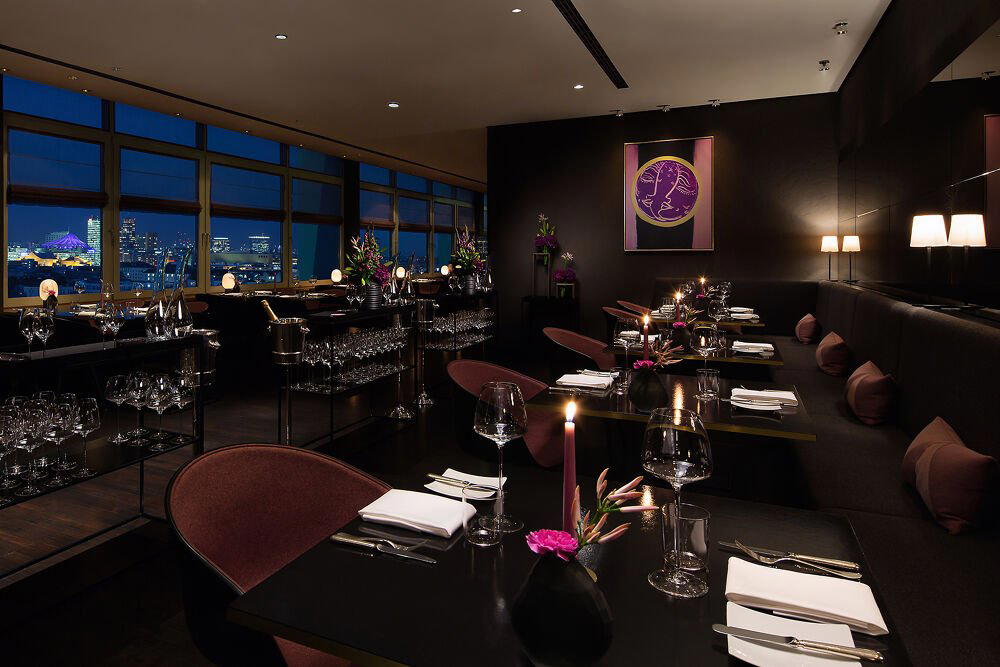
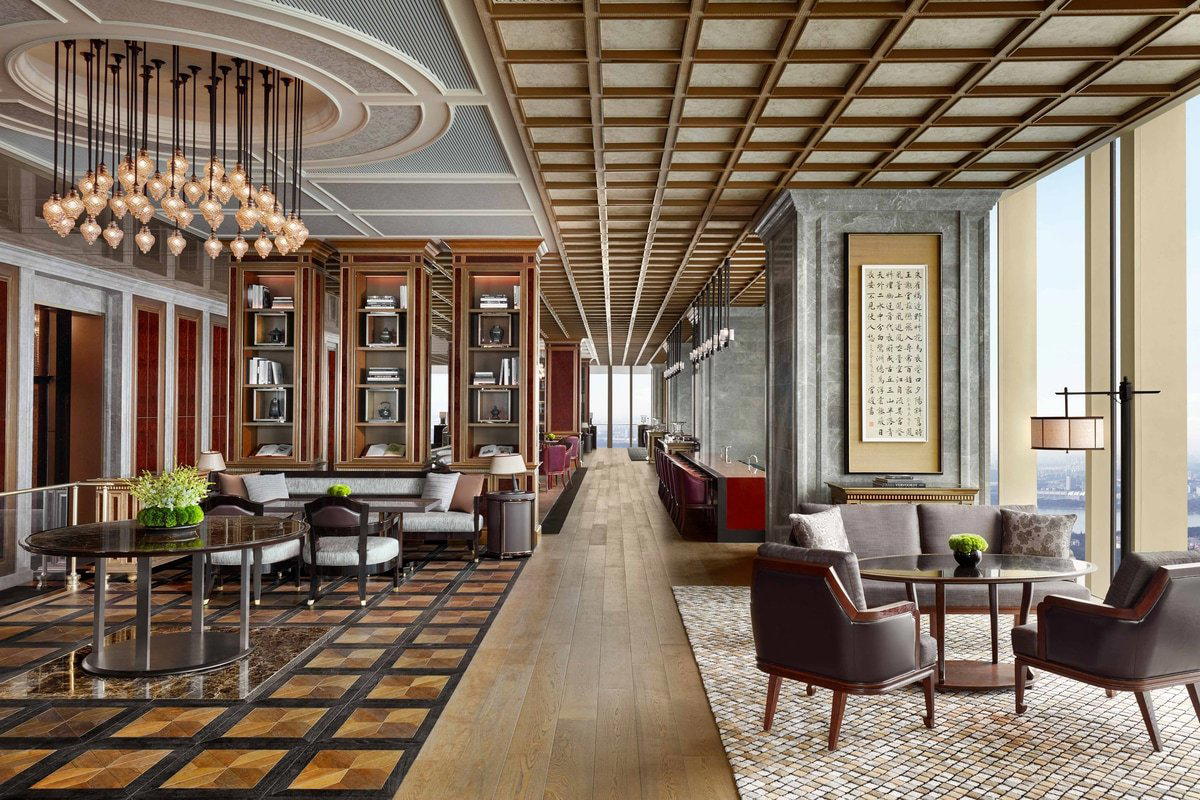
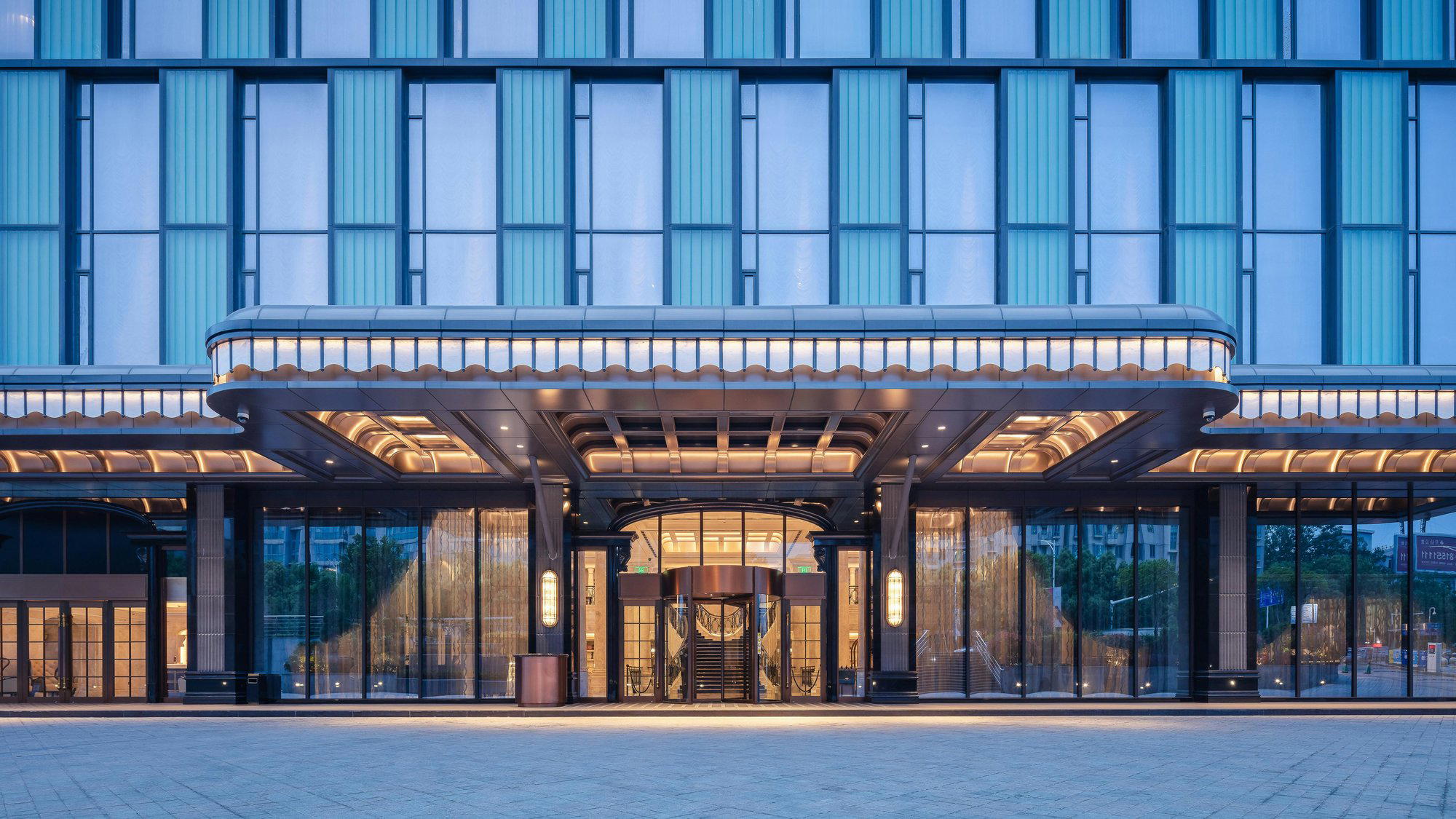
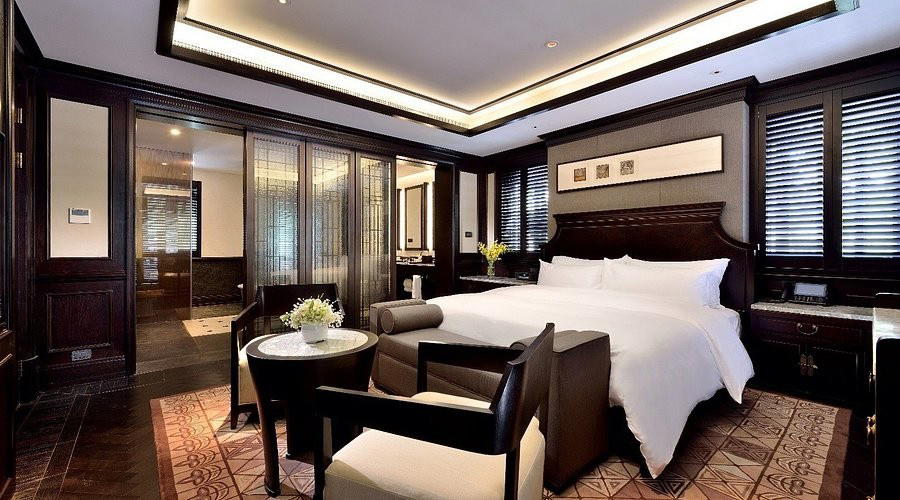
Hushed elegance with Baroque-style furnishings, shimmering mirrors, lacquered woods, marble, and soft candlelight creating a stately yet intimate atmosphere.