
One of a small number of restaurants in Berlin where modern Japanese cooking and izakaya-style hospitality converge, The Catch in Charlottenburg positions itself at the intersection of European seafood culture and Japanese technique. Berlin's fish-forward dining scene is thin, and The Catch occupies a meaningful space within it, drawing attention as a venue where the product and the format do the talking.
Pearl is the En Primeur Club membership app — saves, bookings, and concierge access live there. Same editors, same standards.
- Address
- Bleibtreustraße 41, 10623 Berlin, Germany
- Phone
- +49 175 2220095
- Website
- thecatch.berlin
- Directions
- Get directions
 Saves & bookings on Pearl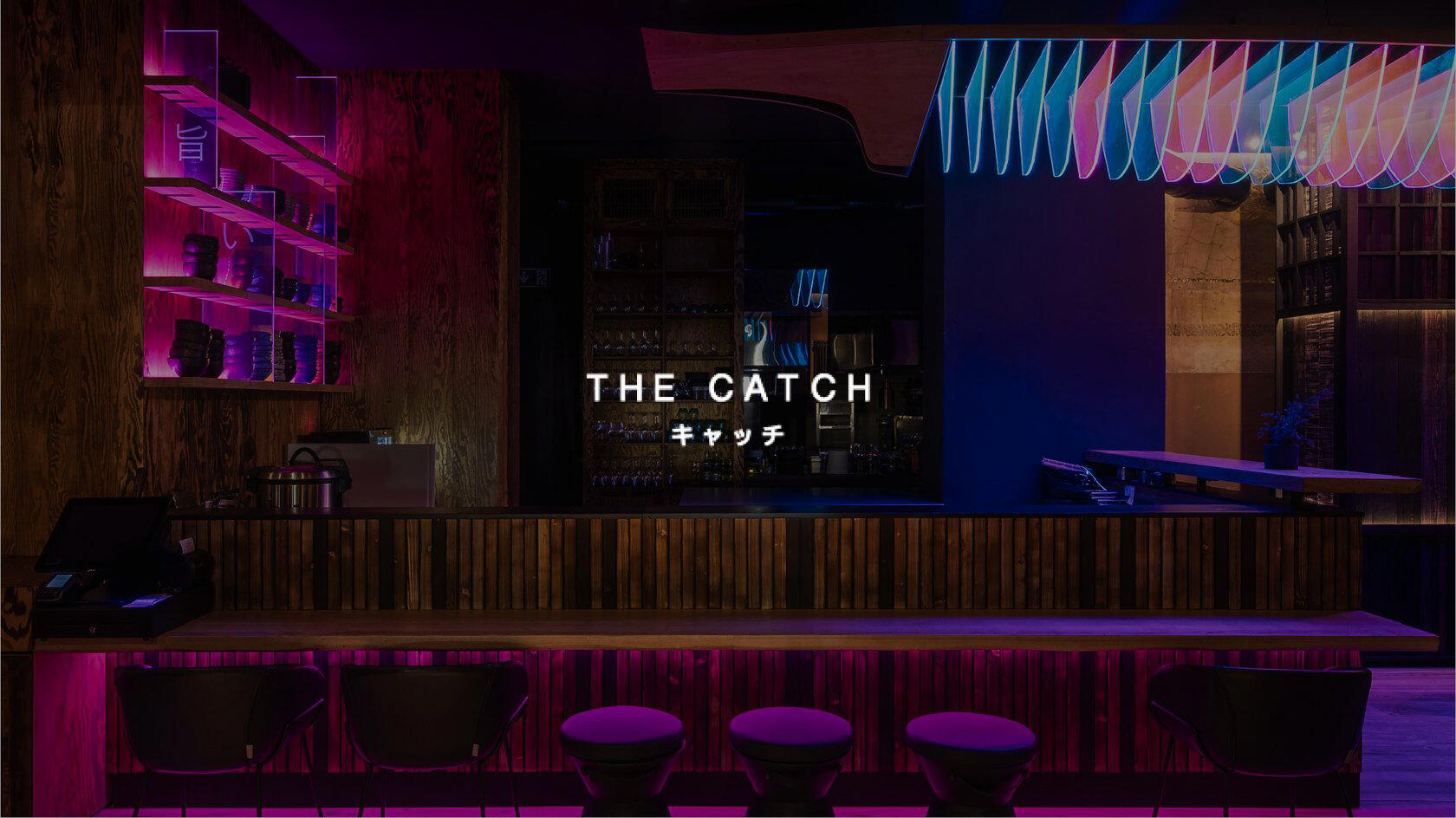
Where Charlottenburg Meets the Izakaya Tradition
Bleibtreustraße is one of Charlottenburg's quieter commercial streets, a few blocks west of the Kurfürstendamm's main axis, where the neighbourhood settles into a rhythm of independent restaurants and wine-focused bars rather than flagship retail. Arriving at The Catch, the register shifts immediately: the izakaya format, with its counter-and-communal logic, sits somewhat apart from the white-tablecloth conventions that define much of western Berlin's premium dining. That contrast is deliberate. Izakaya dining originated in Japan as a mode of casual, drink-driven hospitality built around small plates and a long evening, the Japanese equivalent of a Spanish tapas bar but with a more explicitly social framework around sake and spirits. Transplanted to Berlin, it makes particular sense in a city whose restaurant culture has always favoured the unpretentious and the collaborative over the formally orchestrated.
The Seafood Gap in Berlin's Restaurant Scene
Berlin is a landlocked city, and its relationship with serious fish cookery has historically reflected that geography. The German capital has produced extraordinary restaurant ambition in categories ranging from modern European tasting menus, places like Rutz and FACIL, to boundary-pushing creative formats such as CODA Dessert Dining and the hyper-local sourcing discipline of Nobelhart & Schmutzig. Yet a dedicated modern fish restaurant, particularly one drawing on Japanese technique where the handling and precision of seafood is understood as a craft in itself, has remained scarce. That scarcity matters. In cities with stronger fish-dining traditions, think Le Bernardin in New York, where the entire menu is built around the argument that fish deserves the same serious treatment as meat, the category is well-mapped. Berlin's version is still forming, and The Catch is among the handful of restaurants doing that mapping work.
The modern Japanese framing sharpens the proposition further. Japanese fish cuisine operates on a logic of restraint, temperature control, and textural precision that is fundamentally different from the butter-cream register of classical European fish cooking. When a restaurant operates in that mode in a European city, it is implicitly making a comparative argument about how seafood can and should be handled. Berlin diners arriving from the broader city circuit, accustomed to the vegetable-forward rigour of Nobelhart & Schmutzig or the Chinese-influenced intensity of Restaurant Tim Raue, will find The Catch operating in a different register altogether, one defined by product temperature, fish aging, and the calibration of soy and citrus against raw protein.
The Izakaya Format as a Team Sport
The editorial angle on izakaya dining worth understanding is structural: more than almost any other format, the izakaya depends on the interplay between the kitchen, the drinks program, and the front-of-house as a unified system. The format's entire logic rests on the idea that food and drink are not sequential (menu, then wine list) but simultaneous and mutually shaping. A well-run izakaya requires that whoever is steering the drinks, whether sake, shochu, Japanese whisky, or natural wine, which many Berlin izakaya-leaning restaurants now incorporate, operates in active conversation with what is leaving the kitchen. The front-of-house role is not purely logistical but curatorial: guiding guests through a format that is less linear than a conventional tasting menu but more structured than a casual bar.
This team dynamic distinguishes the format from the solo-chef-led narrative that dominates much high-end restaurant coverage. At venues operating in the German fine dining orbit, places like Aqua in Wolfsburg, JAN in Munich, or Schwarzwaldstube in Baiersbronn, the chef's vision tends to organise everything around a central aesthetic argument. The izakaya model distributes that authority differently, placing the drinks and hospitality staff in positions that carry genuine creative weight. When it works, the result is a restaurant that feels less like a performance and more like a conversation.
Internationally, that collaborative model has produced particularly interesting fish-forward restaurants of the past decade. Germany's own track record with fish cookery at the premium level includes strong advocates, Restaurant Haerlin in Hamburg, a port city with a more natural relationship with marine produce, offers a contrast in how geography shapes a restaurant's confidence with seafood. Berlin has to import that confidence through technique and format rather than proximity to the source, which makes the izakaya framework a logical solution: its Japanese origins assume the discipline of handling fish with care regardless of local fishing tradition.
Charlottenburg's Position in Berlin's Dining Distribution
Understanding where The Catch sits geographically also places it within Berlin's broader dining distribution. The city's restaurant energy over the past decade has concentrated heavily in Mitte, Prenzlauer Berg, and Kreuzberg, with Charlottenburg carrying a reputation as Berlin's more established, higher-spending western district. That has made it a natural home for restaurants that operate with a degree of refinement without the experimental-or-die pressure of the Kreuzberg scene. For a modern Japanese fish restaurant, the Charlottenburg address reads as a considered choice: the neighbourhood's demographic skews toward guests who bring wine literacy, a comfort with longer evenings, and fewer reservations about spending on a drinks pairing. Those are precisely the conditions in which an izakaya format performs at its ceiling.
For diners building a Berlin itinerary around serious eating and drinking, the full picture extends well beyond the restaurant scene. Internationally, the benchmark conversation around fish-focused restaurants at the premium end involves venues operating at the level of Vendôme in Bergisch Gladbach or ES:SENZ in Grassau, where classical European technique meets contemporary restraint. The restaurant's Japanese frame puts it in a different competitive conversation, one shaped less by European fine dining hierarchies and more by the logic of how Japanese hospitality culture travels.
Planning Your Visit
The restaurant is located at Bleibtreustraße 41, 10623 Berlin, in the Charlottenburg district, reachable from Savignyplatz S-Bahn station in a short walk. As a specialist fish and modern Japanese restaurant in a city where that combination remains rare, tables fill ahead of weekends; contacting the restaurant directly to confirm availability before planning a larger evening around it is advisable. The izakaya format rewards a long, unrushed evening, so arriving with time to work through the drinks program alongside the food, rather than treating it as a quick dinner, aligns with what the format is designed to deliver.
Cuisine and Awards Snapshot
Comparable venues nearby, for context on price, style, and recognition.
| Venue | Cuisine | Price | Notes |
|---|---|---|---|
| The CatchThis venue — the venue you are viewing | Contemporary Japanese Izakaya | $$$ | Not listed |
| MIYO Sushi Experience | Modern Japanese Sushi | $$$ | Charlottenburg |
| mrhai Kabuki | Creative Running Sushi Fusion | $$$ | Charlottenburg |
| Niko Izakaya | Authentic Japanese Izakaya | $$$ | Gesundbrunnen |
| Sasaya | Traditional Japanese Sushi | $$ | Prenzlauer Berg |
| Sachiko Sushi | Creative Japanese Sushi | $$$ | Charlottenburg |
Recognition history
Dated appearances from independent guides and award organizations, with the underlying list record or original source where available.
Star Wine List
Star Wine List
Continue exploring
More in Berlin
Restaurants in Berlin
Browse all →
Bars in Berlin
Browse all →
Hotels in Berlin
Browse all →

At a Glance
- Trendy
- Modern
- Elegant
- Sophisticated
- Cozy
- Date Night
- Group Dining
- Late Night
- Open Kitchen
- Craft Cocktails
- Street Scene
Current opening hours
- Monday
- 6–11:30 PM
- Tuesday
- 6–11:30 PM
- Wednesday
- 6–11:30 PM
- Thursday
- 6–11:30 PM
- Friday
- 6–11:30 PM
- Saturday
- 6–11:30 PM
- Sunday
- Closed
Hours can change for holidays and private events. Last verified .
Sophisticated yet relaxed with modern minimalism, dim lighting, wooden accents, open kitchen views, and a stylish mix of Asian motifs and neoclassical elements.