
Michelin Guide Bib Gourmand · Michelin Bib Gourmand
Our verdict
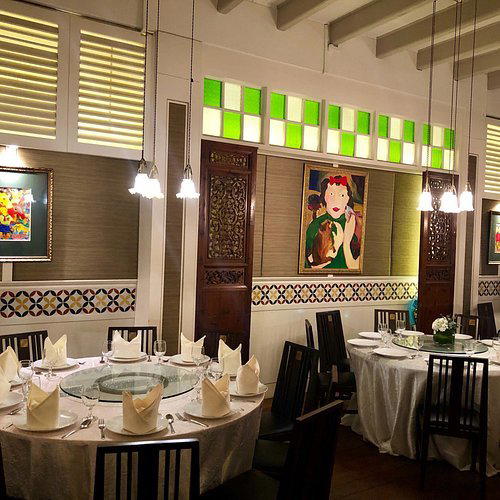
The narrow shophouse, spread across three floors and hung with work by local artists, draws regulars back for Ngo Heong and Chendol at prices that match the neighbourhood's mid-range character. For milestone meals in Singapore's Chinatown fringe, it occupies a distinct position in the Peranakan dining tier.

Pearl is the En Primeur Club membership app, where members save venues, book tables and use the concierge.
The menu
What to order
- Ayam Buah Keluak
- Kueh Pie Tee
- Otak Otak
- Beef Rendang
- Ngo Heong
- Chendol
$$ price point, The Blue Ginger occupies the same general tier as Summer Pavilion (Cantonese, also $$) but within a very different culinary tradition, one defined by Straits Chinese heritage rather than Cantonese refinement.The Occasion Case: Celebrating in a Shophouse
Singapore's Peranakan restaurants divide into roughly three formats: the high-end tasting-menu operations, the hawker stalls preserving single dishes, and the mid-range shophouse restaurants where families have marked occasions for generations. The Blue Ginger sits in that third tier, and the shophouse format is the reason it works for milestone dining. The narrow three-floor building creates natural separation between dining groups, tables on the upper floors carry a degree of privacy that open-plan restaurants rarely offer at this price point.
The walls carry art by local artists, which means the room has a settled, considered character rather than the bare utility of purely functional dining. These are not decorative gestures intended to photograph well; they are the kind of accumulation that happens when a restaurant has been in the same space for over twenty years and has developed relationships with the neighbourhood. For birthday dinners, farewell meals, or the kind of family gathering where the food needs to be genuinely good without requiring anyone to study a tasting menu format, that atmosphere matters.
Peranakan food is also inherently suited to group occasions. The cuisine's logic is built around sharing, multiple dishes arriving at the table, each with a distinct flavour profile, combining across the meal. Dishes are designed for the centre of the table, not plated for individual presentation. That structure makes Peranakan restaurants a more natural choice for groups than formats built around single courses.
The Food: Aromatics, Technique, and the Ngo Heong Question
Peranakan cuisine developed from the blending of Southern Chinese cooking techniques with Malay spices and ingredients, a process that happened across the Straits Settlements over several centuries. The result is a cuisine that does not belong cleanly to either parent tradition: the spicing is more complex and aromatic than most Chinese regional cooking, while the structural use of pork, lard, and fermented sauces separates it from Malay and Indonesian halal cooking. That complexity makes it difficult to cook well at volume, which is why the Michelin Bib Gourmand's recognition of consistent quality is meaningful here.
The Ngo Heong mentioned in Michelin's own citation represents that complexity well. The dish, a spiced pork roll fried in beancurd skin, requires careful seasoning and reliable frying temperature to deliver the aromatic balance that distinguishes a considered version from a mediocre one. That it appears as a reference point in the award citation signals what inspectors were responding to: the subtle, layered flavour that comes from technique applied consistently over time, rather than the punchy simplicity that photographs well.
Chendol, the dessert of coconut milk, shaved ice, pandan-flavoured rice flour jelly, and palm sugar, is one of those dishes that reveals how well a kitchen understands its own tradition. In Singapore's Peranakan context it is both a standard closing note and a point of differentiation, because the balance of sweetness, the texture of the jelly, and the quality of the coconut milk all vary significantly between kitchens.
For comparison within Singapore's Peranakan tier, Candlenut operates at a higher price point with a Michelin Star and a more composed tasting format. Pangium takes a heritage-focused approach at a similar level of formality. Chilli Padi in Joo Chiat and Indocafé offer different neighbourhood contexts.
Peranakan Dining Beyond Singapore
For readers tracking Peranakan cooking across the region, George Town in Penang is the other major concentration of serious Nyonya restaurants. The tradition there developed its own distinct character, often spicier and with stronger northern Malay influences than Singapore's Straits Chinese variant. EP Club covers several George Town options in detail: Auntie Gaik Lean's Old School Eatery, Richard Rivalee, Bibik's Kitchen, Ceki, Flower Mulan, Ivy's Nyonya Cuisine, Jawi House, and Kebaya Dining Room. Eating across both cities produces a much clearer picture of how the cuisine evolved differently under different colonial and trade influences. The $$ pricing and the sharing-plate format make it one of the more accessible mid-range options in the neighbourhood, with portions described in the Michelin citation as generous relative to price.
The three-floor format means the restaurant holds more capacity than the narrow facade suggests, but given more than two decades of popularity the Michelin Guide describes as generating a consistent following, booking ahead for weekend evenings or group occasions is advisable rather than optional. For a broader sense of where to eat, drink, and stay in Singapore, see our full Singapore restaurants guide, our full Singapore hotels guide, our full Singapore bars guide, our full Singapore wineries guide, and our full Singapore experiences guide. If you are building a broader Chinatown-area itinerary, 328 Katong Laksa covers a very different register of Singapore cooking and makes a natural complement to a Peranakan dinner.
Michelin Guide's Bib Gourmand citation singles out Ngo Heong, a spiced pork roll fried in beancurd skin, as a reference point for the kitchen's approach to Peranakan aromatics. The citation also references Chendol as a notable dessert. These two dishes appear consistently in accounts of what the restaurant does well, which places them at the centre of any first visit. Beyond those, the sharing-plate format of Peranakan cuisine means the table benefits from ordering across categories: proteins, vegetables, and the sambal and curry preparations that define the cuisine's Straits Chinese character.
A compact comparison to help you place this venue among nearby peers.
| Venue | Cuisine | Price | Awards | Notes |
|---|---|---|---|---|
| The Blue Ginger (Tanjong Pagar)This venue (the venue you are viewing) | Peranakan (Nyonya) | $30–50 | Michelin Guide Bib Gourmand · Michelin Bib Gourmand | Not listed |
| Zén | Yakitori & Japanese Izakaya | $50–100 | Tabelog 100 #92 | European Contemporary |
| Jaan by Kirk Westaway | Modern British Fine Dining | $200–300 | 2 Michelin Stars · Michelin Guide 2 Stars | British Contemporary |
| Burnt Ends | Modern Australian Barbecue | $100–150 | 1 Michelin Star · Michelin Guide 1 Star | Australian Barbecue, Barbecue |
| Summer Pavilion | Michelin-Starred Cantonese | $100–150 | 1 Michelin Star · Michelin Guide 1 Star | Cantonese |
| Born | Contemporary Fusion Fine Dining | $200–300 | 1 Michelin Star · Michelin Guide 1 Star | Creative Cuisine, Innovative |
Recognition history
Dated appearances from independent guides and award organizations, with the underlying list record or original source where available.
Michelin Guide Bib Gourmand
Michelin Guide
Michelin Bib Gourmand
Michelin
Full recognition history (3 entries)
Michelin Bib Gourmand
Michelin
Continue exploring
More in Singapore
Restaurants in Singapore
All restaurants in Singapore →
Bars in Singapore
All bars in Singapore →
Details
- Cozy
- Classic
- Intimate
- Family
- Group Dining
- Business Dinner
- Casual Hangout
- Celebration
- Private Dining
- Historic Building
- A La Carte
- Family Style
- Beer
- Vegetarian Friendly
- Vegan Options
Current opening hours
- Monday
- 12–3 PM, 6–10:30 PM
- Tuesday
- 12–3 PM, 6–10:30 PM
- Wednesday
- 12–3 PM, 6–10:30 PM
- Thursday
- 12–3 PM, 6–10:30 PM
- Friday
- 12–3 PM, 6–10:30 PM
- Saturday
- 12–3 PM, 6–10:30 PM
- Sunday
- 12–3 PM, 6–10:30 PM
Hours can change for holidays and private events. Hours as of .
Casual yet intimate atmosphere with Peranakan-styled decor and modern touches; ground floor is lively and open while upper floors offer more intimate ambience; warm lighting and ample spacing between tables.