Flower Mulan

Michelin Plate
Our verdict
A Michelin Plate café perched above a florist on Jalan Burma, Flower Mulan serves a compact Peranakan menu in dimly lit rooms layered with red lanterns, sculpture, and maximalist Chinese decoration. Sambal tumis ikan pari and assam prawn anchor a short list that rewards attention.

Pearl is the En Primeur Club membership app, where members save venues, book tables and use the concierge.
Above the Flowers, Inside the Food
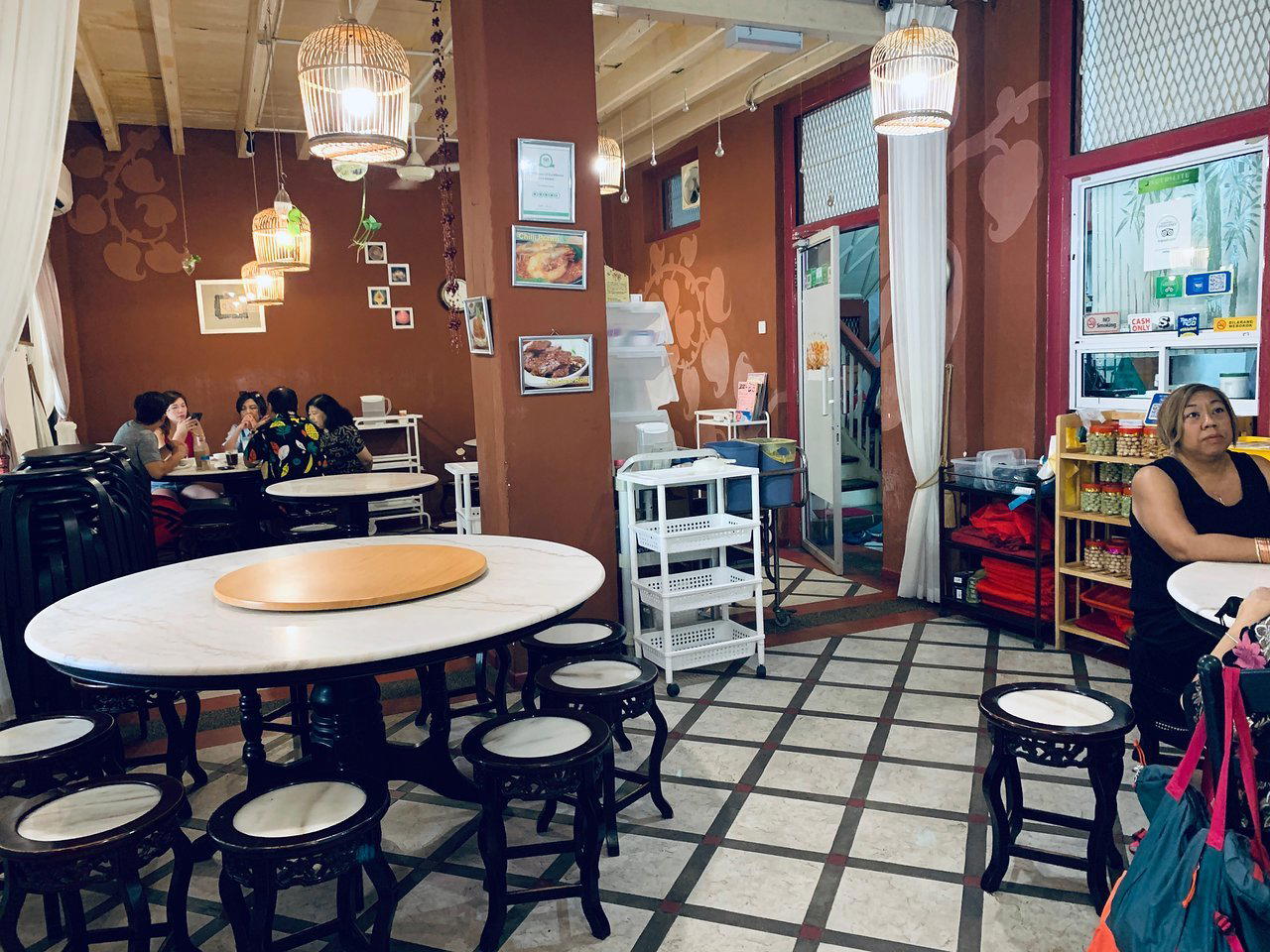
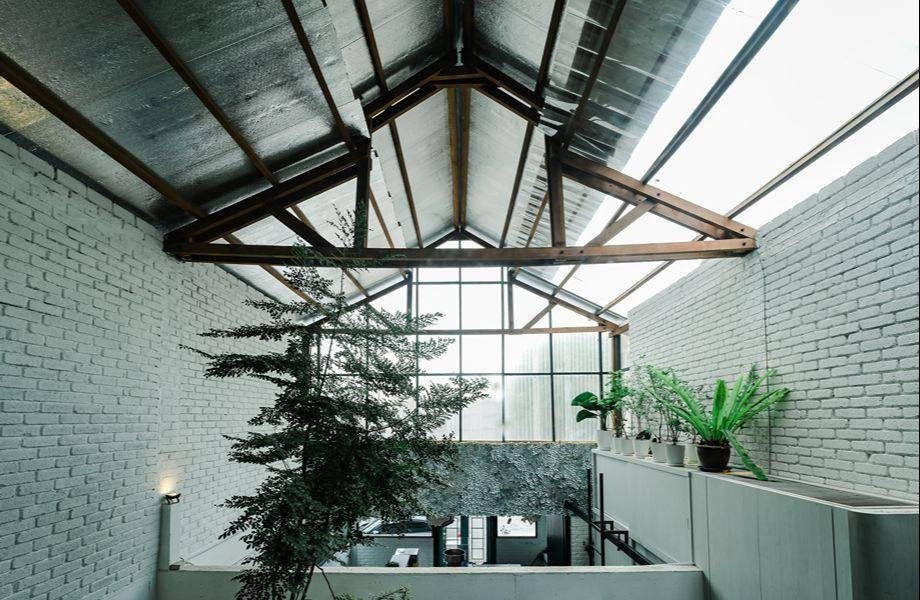
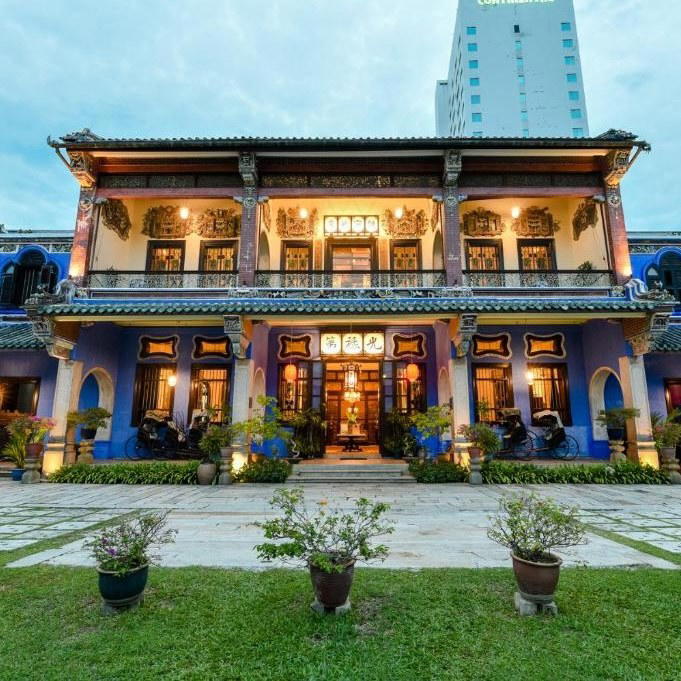
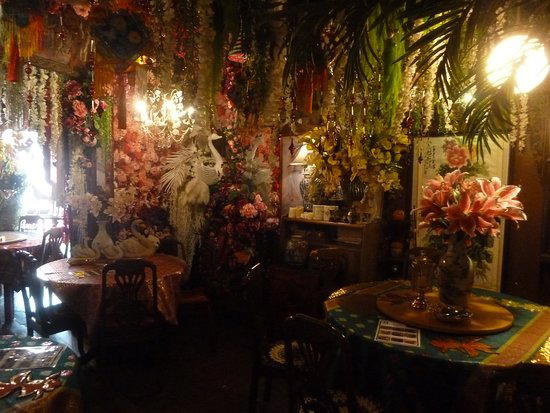
The entrance on Jalan Burma gives little away. Street-level, a florist occupies the shopfront in the way that dozens of George Town ground floors still do: narrow, fragrant, unhurried. Climb the stairs and the register shifts entirely. Dimly lit rooms accumulate detail the way Peranakan interiors always have, not through restraint but through accumulation. Red lanterns overhead, ceramic sculptures on shelves, painted patterns across walls and furniture, cut flowers carried up from the shop below. The effect is closer to a curated private home than a restaurant, which is exactly the tradition it sits within.
George Town's Peranakan dining scene has always operated across registers. At one end, large heritage shophouses seat crowds through multiple sittings and serve encyclopaedic menus that function as catalogues of Nyonya cooking. At the other, smaller operations run tighter menus from family recipes with little interest in volume. Flower Mulan belongs firmly to the second category. The Michelin Plate recognition it received in 2024 signals that the guide's inspectors read it the same way: a place worth knowing about, operating in a register that doesn't shout.
What the Menu Reveals
Peranakan cooking is structurally layered in a way that rewards attention to sequence and combination. The cuisine sits at the historical intersection of Hokkien Chinese settlement and Malay culinary tradition across the Straits, which means its flavours move between fermented shrimp paste, tamarind, galangal, candlenut, and dried chillies in proportions that vary by family, by town, and by generation. A short menu like the one at Flower Mulan therefore says something specific: these are the dishes the kitchen chooses to be judged by.
Sambal tumis ikan pari, stingray cooked in a sambal of dried chillies, belacan, and aromatics, appears on the menu here as a dense, aromatic preparation. In Peranakan cooking, the tumis stage (the frying-down of the sambal paste) determines the depth of the dish; a rushed tumis produces a thin, sharp result, while a properly reduced paste carries smoke, sweetness, and fermented complexity. The kitchen's version is described as rich and aromatic, which in this context means the paste has been worked properly.
Assam prawn operates on opposite principles. Where sambal tumis builds through reduction and fat, assam dishes resolve through sourness: tamarind pulling against natural prawn sweetness, with heat calibrated to keep neither element dominant. Getting that balance right is harder than it sounds. The versions that work sit on a knife edge; those that don't tip either sweet or sour and lose the tension that makes the dish interesting. The description of Flower Mulan's version, striking a balance between sweet and sour, suggests the kitchen understands where the line is.
Two dishes on a menu this small is not a limitation. It is an editorial position. Restaurants that run forty-item menus of Nyonya cooking are making a different argument about what they are. Flower Mulan's short list places it alongside houses like Auntie Gaik Lean's Old School Eatery (one Michelin star) and Bibik's Kitchen in terms of focus, though at a lower price tier, and it shares with Richard Rivalee and Ceki the instinct to do fewer things with more attention. Within George Town's Peranakan offer, that positioning is deliberate and readable.
The Peranakan Table in George Town and Beyond
George Town's claim on Peranakan cooking is grounded in history. The Baba-Nyonya community established itself across the Straits Settlements, Penang, Malacca, Singapore, and each city developed its own regional inflections. Penang Nyonya cooking tends sharper and more sour than its Singaporean counterpart, with tamarind and assam gelugor appearing more frequently and coconut milk used with greater restraint. That regional identity shows up in what George Town's Peranakan kitchens choose to cook and how.
In Singapore, the category has been subject to sustained critical attention. Candlenut holds a Michelin star and operates as a fine-dining Peranakan house. Pangium works within a research-led framework. 328 Katong Laksa and Chilli Padi in Joo Chiat represent the neighbourhood-institution end of the spectrum, while Indocafé occupies a distinct colonial-heritage register. The conversation in George Town is less formalised and more varied in format, which is partly what makes places like Flower Mulan possible: the category hasn't been consolidated into a single dominant mode.
Elsewhere in Malaysia, the broader dining picture includes places like Dewakan in Kuala Lumpur, working at the modernist end of Malaysian cuisine, and Bee See Heong in Seberang Perai, which sits just across the channel from George Town. Further afield, The Planters at The Danna in Langkawi represents a different strand of Malaysian hospitality. Flower Mulan fits none of those registers: it is specific to the informal, owner-run shophouse model that George Town has preserved more successfully than most cities in the region.
Service and Setting
The intimacy of the space is reinforced by how the room is run. That is a distinct quality in a city where Peranakan restaurants sometimes lean into heritage theatre: preserved furniture, period photographs, costumed staff. Here the atmosphere is less curated and more lived-in, which suits the register of the food.
The George Town Peranakan table to explore alongside Flower Mulan includes Ivy's Nyonya Cuisine, which operates at a similar informal pitch across a broader menu. For anyone building a deeper itinerary around the city's food, drink, and accommodation offer, our full George Town restaurants guide maps the scene across categories and price points, and our hotels guide, bars guide, and experiences guide cover the rest of the city. A wineries guide is also available for completeness.
Planning Your Visit
Flower Mulan sits at 48 Jalan Burma, 10050 George Town, in the stretch of the road that runs through a predominantly residential and shophouse district north of the historic core. The address places it within reach of the main heritage zone on foot or by short taxi ride. Pricing sits at the $$ tier, which in George Town's Peranakan market means mid-range: above hawker-stall pricing but well below fine-dining. Hours and booking method are not published centrally; given the small size of the operation and the owner-run format, arriving without a reservation carries some risk during peak periods.
What Should I Eat at Flower Mulan?
The sambal tumis ikan pari (sambal stingray) and assam prawn are the dishes the kitchen is recognised for, and the 2024 Michelin Plate citation points to the menu as a whole rather than to the breadth of choice. Given the short format, ordering both and treating them as anchors of the meal is the sensible approach. Sambal tumis ikan pari delivers the deep, fermented-paste richness that defines Penang Nyonya cooking at its most serious; assam prawn provides contrast through sourness and sweetness. Between the two dishes, you get a reasonable cross-section of what Penang Peranakan cooking does differently from its Singaporean and Malaccan counterparts.
Frequently asked questions
What style of cooking does Flower Mulan do?
Is Flower Mulan expensive?
Pricing at Flower Mulan is listed as $$.
Is Flower Mulan Michelin-listed?
Flower Mulan has received recognition including: The café sits atop the florist of the same name and serves a small menu of Paranakan food. Sambal tumis ikan pari, or sambal fish curry, is rich and aromatic, whereas assam prawn strikes the perfect balance between sweet and sour. Dimly-lit….
What should I eat at Flower Mulan?
The sambal tumis ikan pari (sambal stingray) and assam prawn are the two dishes the kitchen is most recognised for, the former rich and aromatic, the latter built around a sharp interplay of sweet and sour. Both are cited directly in the 2024 Michelin Plate recognition. The menu is small, which makes ordering straightforward: work around these two dishes and fill in from what the owner recommends on the day.
What's the address for Flower Mulan?
Flower Mulan is located at 48, Jalan Burma, 10050 George Town, Pulau Pinang, Malaysia, George Town.
Cuisine Context
A quick peer check to anchor this venue’s price and recognition.
| Venue | Cuisine | Price | Awards | Notes |
|---|---|---|---|---|
| Flower MulanThis venue (the venue you are viewing) | Nyonya Peranakan | $10–20 | Michelin Plate | Not listed |
| Au Jardin | Modern European with Local Accents | $200–300 | 1 Michelin Star · World's 50 Best #39 | European Contemporary |
| Auntie Gaik Lean's Old School Eatery | Peranakan (Nyonya) | $10–20 | 1 Michelin Star | Peranakan |
| Ah Boy Koay Teow Th'ng | Teochew Koay Teow Th'ng | $1–10 | Michelin Bib Gourmand | Street Food |
| Aria | Modern American | Not listed | Not listed | Not listed |
| Communal Table by Gēn | Modern Malaysian Fusion | $30–50 | Michelin Bib Gourmand · Star Wine List | Malaysian |
Recognition history
Dated appearances from independent guides and award organizations, with the underlying list record or original source where available.
Michelin Plate
Michelin
Full recognition history (2 entries)
Michelin Plate
Michelin