
Our verdict
Ranked #10 in Opinionated About Dining's Casual Asia list for 2024 and holding consistent top-20 positions since 2023, 328 Katong Laksa is a benchmark address for Peranakan laksa on East Coast Road. Open daily from 9:30am, the shophouse counter draws a cross-section of locals and informed visitors to one of Singapore's most argued-over bowls.

Pearl is the En Primeur Club membership app, where members save venues, book tables and use the concierge.
East Coast Road and the Laksa Argument
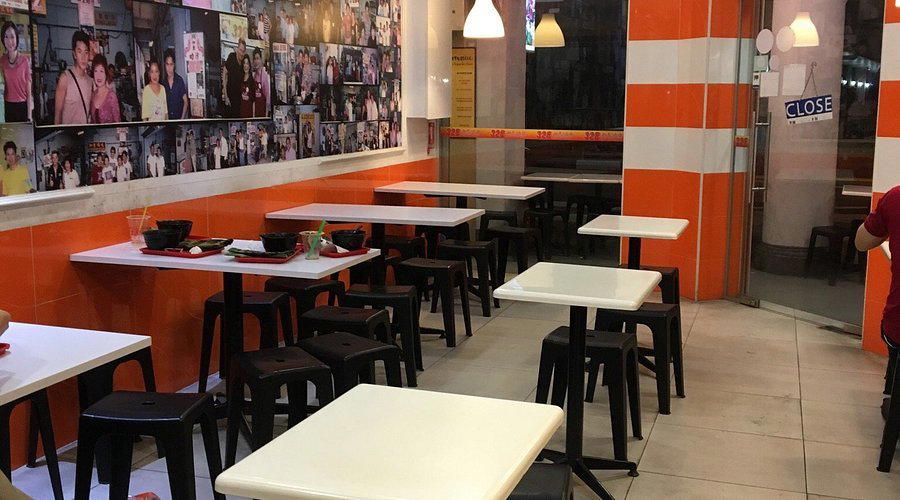
Singapore's laksa debate is not settled, and it was never meant to be. The Katong stretch of East Coast Road has been ground zero for that argument for decades, with competing shophouse stalls occupying the same few hundred metres and each claiming some version of historical authority. What distinguishes the better addresses in this cluster is not atmosphere in any designed sense, the plastic stools, the overhead fans, the laminated menus, but the consistency of a broth that takes hours to assemble from coconut milk, dried shrimp, and a rempah paste ground from ingredients that vary by source and season. 328 Katong Laksa, at 51 East Coast Road, is one of the addresses that has drawn sustained external scrutiny, appearing in Opinionated About Dining's Casual Asia rankings at #16 in 2023, #10 in 2024, and #13 in 2025.
What Peranakan Laksa Actually Requires
The editorial angle for understanding 328 Katong Laksa is not the stall itself but what Peranakan laksa demands as a dish. This is a coconut-based laksa, distinct from the asam laksa of Penang, which uses a tamarind-and-mackerel broth, and its identity is almost entirely dependent on the rempah, the spice paste that forms its aromatic foundation. A standard rempah for Katong-style laksa incorporates dried shrimp (hae bee), candlenuts, galangal, lemongrass, belacan, and dried chillies, each of which needs sourcing with some care. The dried shrimp should carry funk without bitterness; the candlenuts should be fresh enough to bind the paste without going rancid; the belacan should have depth rather than sharp salt. These are not abstract concerns, they are what separates a broth that flattens after three minutes from one that keeps evolving in the bowl.
The Peranakan cooking tradition that produced this dish sits at the intersection of Hokkien Chinese and Malay culinary practice, and its stronghold in Singapore has historically been in districts like Joo Chiat and Katong, neighbourhoods with concentrated Straits Chinese populations from the early twentieth century. East Coast Road is not incidentally where laksa culture took root; the geography reflects a community that built its food identity in these shophouses. For the broader Peranakan dining context in Singapore, addresses like Candlenut, Pangium, Chilli Padi (Joo Chiat), Indocafé, and Straits Chinese (Cecil Street) represent different registers of the same tradition, from tasting-menu refinement to heritage casual. 328 Katong Laksa occupies the hawker-adjacent end of that spectrum, where the measure of quality is the bowl rather than the room.
The Katong Laksa Format
One characteristic specific to Katong-style laksa is that the noodles arrive pre-cut. This is not an affectation, it reflects a practical adaptation attributed to the area's stall culture, where eating laksa with chopsticks rather than spoon and fork became the standard, and shorter noodle lengths made the spoon the only utensil needed. The result is a format that collapses the hierarchy of the bowl: every spoonful carries noodle, cockle, fishcake, and prawn together with broth, rather than the components being managed separately. For visitors accustomed to other laksa formats, including the richer curry laksa of Kuala Lumpur or the sour clarity of Penang's asam version, the Katong bowl is a precise regional expression rather than a general category.
The concentration of laksa stalls on this particular stretch creates an informal competitive pressure that has probably kept standards higher than they would be in isolation. When three or four addresses are operating within walking distance of each other and drawing the same pool of regulars and critics, the room for complacency narrows. 328's OAD rankings across three years suggest it is holding its position in this environment rather than coasting on a single moment of recognition.
Within the Opinionated About Dining Casual Asia list, consistent top-20 placement across three consecutive years is a signal worth reading carefully. The list covers the full breadth of casual dining across Asia, hawker stalls, noodle shops, dim sum houses, and placement at #10 in 2024 means the bowl is being measured against serious regional competition, not just Katong neighbours. This is a different tier from the Michelin-starred Peranakan dining that Candlenut represents, or the research-led approach at Pangium. It is also a different tradition from the Peranakan houses operating in George Town, where addresses like Auntie Gaik Lean's Old School Eatery, Richard Rivalee, Bibik's Kitchen, Ceki, Flower Mulan, Ivy's Nyonya Cuisine, Jawi House, and Kebaya Dining Room work within the Penang Nyonya register. The Singapore and Penang Peranakan traditions share lineage but diverge in flavour profile, spice vocabulary, and dish format in ways that matter once you have eaten both with some attention.
Ryan Koh is named as the chef attached to 328 Katong Laksa, which places a named operator at a stall format more commonly discussed in anonymous or institutional terms.
Planning a Visit
328 Katong Laksa operates daily from 9:30am to 9:30pm, which covers breakfast laksa, a legitimate local practice, through to a late casual dinner. The East Coast Road address at number 51 sits in the heart of the Katong stall cluster, accessible from the city by taxi or ride-share in roughly fifteen minutes from the CBD depending on traffic. Morning visits before noon tend to mean shorter waits at popular laksa stalls in this corridor; weekend afternoons draw the larger crowds. For a broader orientation to what Singapore's dining, drinking, and hospitality scene offers across formats and price points, the EP Club guides to Singapore restaurants, Singapore hotels, Singapore bars, Singapore wineries, and Singapore experiences provide category-level coverage.
Frequently asked questions
Who is the chef at 328 Katong Laksa?
The chef associated with 328 Katong Laksa is Ryan Koh.
What's 328 Katong Laksa best at?
Holding its ground in one of Singapore's most contested single-dish categories. The Katong corridor on East Coast Road has multiple laksa operations within close proximity, and 328 has placed in the Opinionated About Dining Casual Asia top 20 in 2023, 2024, and 2025, ranking as high as #10. That consistency across three independent survey cycles is a more reliable signal than any single-year placement.
Cost and Credentials
| Venue | Cuisine | Price | Awards | Notes |
|---|---|---|---|---|
| 328 Katong LaksaThis venue (the venue you are viewing) | Katong Laksa | $10–20 | Not listed | Not listed |
| Zén | Yakitori & Japanese Izakaya | $50–100 | Tabelog 100 #92 | European Contemporary |
| Jaan by Kirk Westaway | Modern British Fine Dining | $200–300 | 2 Michelin Stars · Michelin Guide 2 Stars | British Contemporary |
| Burnt Ends | Modern Australian Barbecue | $100–150 | 1 Michelin Star · Michelin Guide 1 Star | Australian Barbecue, Barbecue |
| Summer Pavilion | Michelin-Starred Cantonese | $100–150 | 1 Michelin Star · Michelin Guide 1 Star | Cantonese |
| Born | Contemporary Fusion Fine Dining | $200–300 | 1 Michelin Star · Michelin Guide 1 Star | Creative Cuisine, Innovative |
Recognition history
Dated appearances from independent guides and award organizations, with the underlying list record or original source where available.
Opinionated About Dining Casual in Asia Ranked #25
Opinionated About Dining
Full recognition history (4 entries)
Opinionated About Dining Casual in Asia Ranked #13
Opinionated About Dining
Opinionated About Dining Casual in Asia Ranked #10
Opinionated About Dining
Opinionated About Dining Casual in Asia Ranked #16
Opinionated About Dining
Continue exploring
More in Singapore
Restaurants in Singapore
All restaurants in Singapore →
Bars in Singapore
All bars in Singapore →
Details
- Cozy
- Casual Hangout
- Family
- Standalone
- A La Carte
Current opening hours
- Monday
- 9:30 AM–9:30 PM
- Tuesday
- 9:30 AM–9:30 PM
- Wednesday
- 9:30 AM–9:30 PM
- Thursday
- 9:30 AM–9:30 PM
- Friday
- 9:30 AM–9:30 PM
- Saturday
- 9:30 AM–9:30 PM
- Sunday
- 9:30 AM–9:30 PM
Hours can change for holidays and private events. Hours as of .
Casual, no-frills hawker-style eatery with simple indoor and outdoor seating, clean and cozy atmosphere, walls adorned with celebrity photos and awards.