Thaise Snackbar Bird
On Zeedijk, Amsterdam's historic Chinatown strip, Thaise Snackbar Bird has long occupied the affordable, no-ceremony end of the Thai dining spectrum in a city where that register is genuinely hard to find. The format is counter-casual, the portions generous, and the prices accessible enough to make it a credible everyday option in a neighbourhood otherwise tilted toward tourist traps and mid-range pan-Asian chains.
Pearl is the En Primeur Club membership app — saves, bookings, and concierge access live there. Same editors, same standards.
- Address
- Zeedijk 77, 1012 AS Amsterdam, Netherlands
- Phone
- +31 20 420 6289
- Website
- thaibird.nl
- Directions
- Get directions
 Saves & bookings on Pearl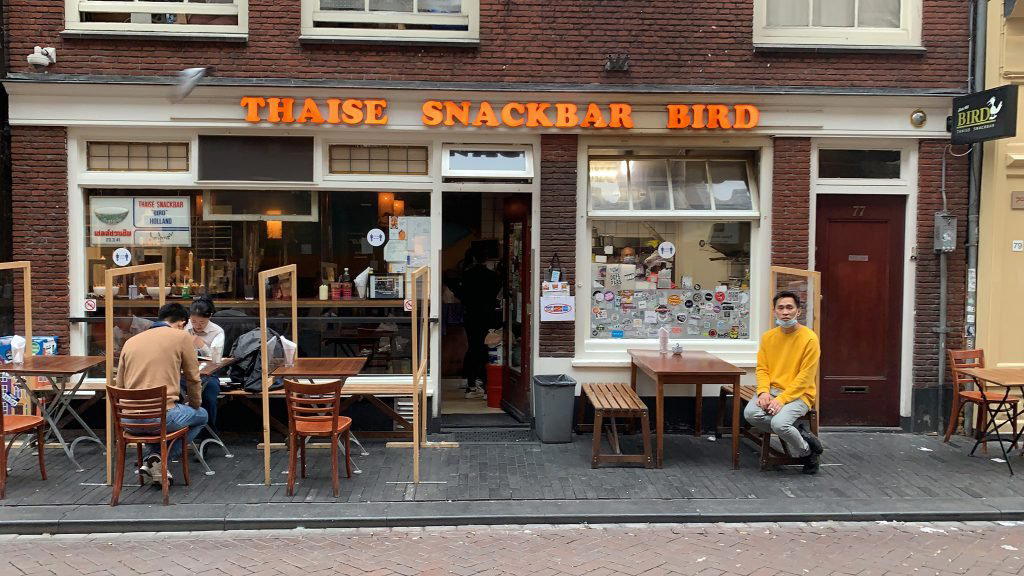
Zeedijk and the Case for Casual Thai in Amsterdam
Amsterdam's Zeedijk runs from Central Station toward Nieuwmarkt, and the stretch has functioned as the city's Chinatown corridor for decades. The street's dining character is defined by contrast: tourist-facing Chinese restaurants on one side of the ledger, a handful of genuinely local-serving spots on the other. Thaise Snackbar Bird sits firmly in the latter camp. In a city where the mid-range Thai scene has consolidated around generic pad thai menus designed for broad appeal, Bird operates in a different register, casual, direct, and built around the kind of snackbar format that Amsterdam's neighbourhood culture understands instinctively.
The snackbar model is worth contextualising. In Dutch food culture, the snackbar is not a diminished category. It is a specific civic institution: counter service, fast turnaround, accessible pricing, and food that earns loyalty through consistency rather than spectacle. Applying that format to Thai food is less a compromise than a deliberate positioning choice, and on Zeedijk it reads as coherent rather than accidental.
The Room and the Register
The physical environment at Bird matches its category positioning. This is not a room designed to signal occasion dining in the white-tablecloth sense. The approach is low-key and functional, with the kind of no-frills interior that focuses attention on the food and the transaction rather than the surroundings. In Amsterdam's dining economy, where €€€€ tasting menus at addresses like Ciel Bleu, Flore, Spectrum, and Vinkeles occupy the premium tier, Bird operates at a price point that makes it genuinely accessible for multiple visits, with an average spend of about $15 per person.
That accessibility is part of what defines the occasion at Bird. The celebrations worth marking here are the smaller, more frequent rituals. They are the smaller, more frequent rituals: a weekday lunch that actually delivers, a post-work meal that doesn't require planning, an impromptu dinner that rewards the decision to turn up rather than research. Amsterdam's tourist-heavy centre makes that kind of reliable casual option harder to find than it should be, which is precisely what gives Bird its standing among people who know the street.
Thai Food in Amsterdam: The Broader Pattern
Thai cuisine in the Netherlands has followed a familiar European pattern. The first wave of restaurants arrived in the 1980s and 1990s, adapting to local palates and settling into a comfort zone of approachable curries, satay, and noodle dishes pitched at broad appeal. A smaller second wave, often run by cooks with more direct connections to regional Thai cooking, arrived later, introducing more assertive flavours and less edited heat levels. Bird belongs to the tradition of Thai restaurants on Zeedijk that predate the current wave of more polished, upmarket Thai dining elsewhere in the city.
By contrast, Amsterdam's fine dining benchmark has moved firmly toward Dutch creative and contemporary European formats. The addresses drawing sustained critical attention, and those worth crossing the country for, in the way that De Librije in Zwolle or Aan de Poel in Amstelveen draw diners from Amsterdam, are operating in a different category entirely. Bird's relevance is orthogonal to that tier. It earns its place in the city's eating map not by competing with formal dining rooms but by doing something those rooms cannot: feed you quickly, affordably, and without ceremony, on a street that needs more of that.
Occasion Framing: When Bird Is the Right Call
The editorial angle worth applying to Bird is not celebration in the milestone sense. It is the question of which occasions the casual Thai snackbar format actually serves well, and whether Bird answers that question on Zeedijk. For a visitor arriving at Central Station and wanting to eat something with more character than the chain options within fifty metres of the exit, Bird represents a short walk and a calibrated choice. For a local who knows the street, the calculation is simpler: it is the kind of place you return to because it does not require much planning, only to show up.
That reliability, across a casual format in a heavily trafficked neighbourhood, is harder to sustain than it looks. Streets like Zeedijk attract high footfall and relatively undiscriminating spending, which creates economic pressure toward the lowest-effort tourist-facing model. The spots that resist that pressure tend to retain a specific kind of regular clientele, people who live or work nearby and have tested the option over time rather than on a single visit.
Positioning Against Amsterdam's Broader Dining Map
For context on where Bird sits relative to Amsterdam's full spectrum, the city's reviewed dining scene ranges from Bistro de la Mer at the €€€ classic cuisine tier through to the four-price-bracket creative restaurants listed above. The Thai snackbar format occupies a tier below those benchmarks and competes instead within the city's casual Asian dining segment, where the comparable set includes Vietnamese pho counters, Indonesian rijsttafel houses, and Chinese dim sum operations that have operated in the Zeedijk vicinity for decades.
Internationally, the discipline of serious casual Thai, the kind that prioritises flavour integrity over setting and presentation, has its own well-documented precedents. Addresses like Le Bernardin in New York City and Atomix in New York City define what rigorous, format-specific cooking looks like at the high end; the snackbar tradition is the structural inverse of that model, placing identical emphasis on consistency but expressing it through volume, speed, and price discipline rather than through tasting menus and tableside service.
Elsewhere in the Netherlands, serious cooking at the Michelin tier, Brut172 in Reijmerstok, De Bokkedoorns in Overveen, De Groene Lantaarn in Staphorst, De Lindehof in Nuenen, De Lindenhof in Giethoorn, De Nieuwe Winkel in Nijmegen, De Treeswijkhoeve in Waalre, and 't Nonnetje in Harderwijk, operates in a category that shares no direct competitive space with Bird. Mapping both ends of that spectrum is useful, because it clarifies what Amsterdam's full dining picture actually contains and where a Zeedijk snackbar fits within it.
Know Before You Go
Address: Zeedijk 77, 1012 AS Amsterdam, Netherlands
Neighbourhood: Zeedijk / Chinatown, within walking distance of Central Station
Format: Casual snackbar counter service
Price tier: $$; about $15 per person
Booking: Walk-in friendly
Hours: Mon to Sun, 12 to 9 PM
A Minimal comparable set
Comparable venues nearby, for context on price, style, and recognition.
| Venue | Cuisine | Price | Notes |
|---|---|---|---|
| Thaise Snackbar BirdThis venue — the venue you are viewing | Kop Zeedijk, Authentic Thai Snackbar | $$ | Not listed |
| Sukhothai Thanee | Van Loonbuurt, Authentic Thai | $$ | Not listed |
| Cook Kai | Not listed | $ | Bloemgrachtbuurt, Authentic Thai Takeaway & Snackbar |
| Cultureel Eetcafé 'Skek | Kop Zeedijk, Dutch Vegetarian Gastropub | $$ | Not listed |
| Restaurant LaSantaMaria International Dinner | Not listed | $$ | Kop Zeedijk, International Steakhouse & Grill |
| Singel 101 | Not listed | $$ | Langestraat e.o., Contemporary French-European Fine Dining |
Continue exploring
More in Amsterdam
Restaurants in Amsterdam
Browse all →
Bars in Amsterdam
Browse all →
Hotels in Amsterdam
Browse all →
Wineries in Amsterdam
Browse all →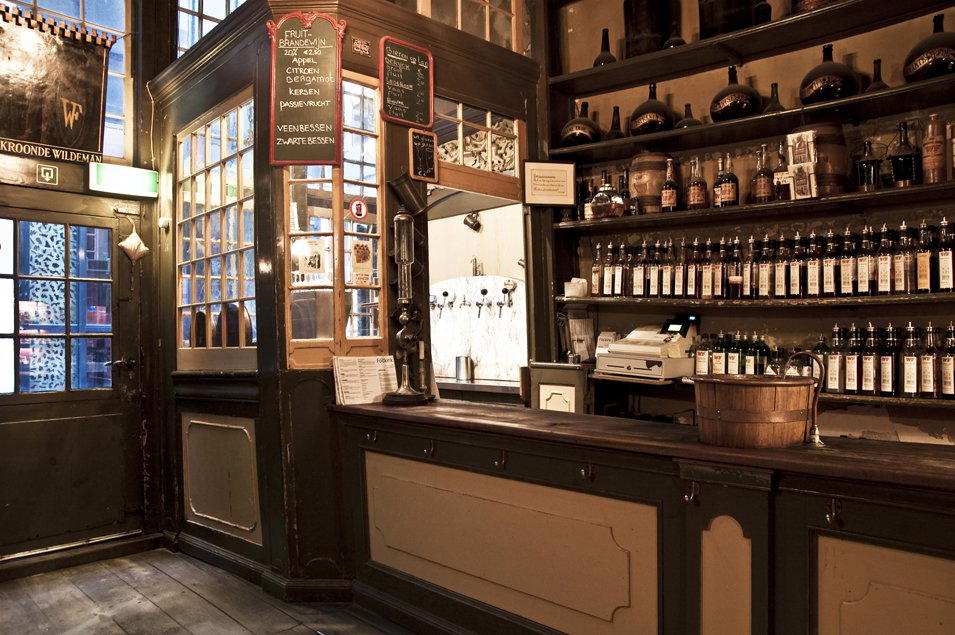
At a Glance
- Casual
- Cozy
- Trendy
- Casual Hangout
- Late Night
- Standalone
- Street Scene
Current opening hours
- Monday
- 12–9 PM
- Tuesday
- 12–9 PM
- Wednesday
- 12–9 PM
- Thursday
- 12–9 PM
- Friday
- 12–9 PM
- Saturday
- 12–9 PM
- Sunday
- 12–9 PM
Hours can change for holidays and private events. Last verified .
Colorful casual surrounds in a tiny no-frills snack bar atmosphere well-suited for informal quick bites.