
Tokyo’s gyoza conversation is not confined to central dining districts. Tezukuri Gyoza no Mise Yoshiharu places Chofu’s Kokuryo area in the serious dumpling tier, with a 10-counter-seat format, take-out service, sake and shochu, and selection for Tabelog 100 Dumplings 2024 giving it a clear credential beyond neighborhood appetite.
Pearl is the En Primeur Club membership app — saves, bookings, and concierge access live there. Same editors, same standards.
- Address
- 8 Chome-1-14 Kokuryocho, Chofu, Tokyo 182-0022, Japan
- Phone
- +81 42-426-8153
- Website
- sites.google.com
 Saves & bookings on Pearl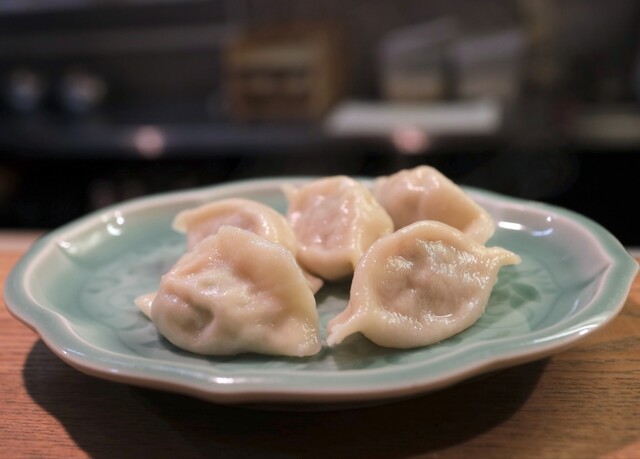
Approach the Kokuryo side of Chofu and Tokyo’s dining scale changes. Grand restaurant rituals recede; the room shrinks, the counter matters more, and the work is measured in repetition rather than theatre. Here, gyoza is not a side order to ramen or beer. It is the whole argument: dough, filling, heat, timing, and the rhythm between the cook and diners within arm’s reach.
Tezukuri Gyoza no Mise Yoshiharu belongs to this disciplined end of Tokyo’s casual dining culture. Its selection for Tabelog 100 Dumplings 2024 matters because dumpling shops in Japan compete across a wide field, from old drinking-room specialists to Chinese-leaning kitchens and modern counter formats. Recognition signals a room judged against other gyoza-focused addresses, not generic neighborhood comfort food.
A counter format that turns gyoza into the main event
Tokyo’s compact counters often reveal more about a cuisine than larger dining rooms. At a 10-seat counter, service has little room for drift: pacing, drinks, take-out orders, and cooking sequence must stay aligned. The team dynamic becomes visible. The kitchen sets the tempo; counter service reads the room; the drinks list, anchored in sake and shochu rather than a broad international cellar, keeps the meal in a Japanese casual-drinking register.
This distinction helps travellers who know Tokyo through sushi counters, yakitori rooms, or ramen queues. Gyoza culture is less ceremonial, but not less exacting. The form is modest, the margins narrow. A dumpling specialist has fewer places to hide than a larger izakaya menu: wrappers, filling, cooking method, and turnover carry the meal. Yoshiharu puts that craft in direct view without inflating it into fine dining.
The price tier also defines the audience. This is neither entry-level dumpling snacking nor luxury tasting-menu territory. It sits nearer Tokyo’s serious casual specialists, where narrow focus, counter seating, and drink compatibility justify a higher dinner spend than a quick plate before a train. In the same city, Don Bravo occupies a different Italian conversation, Itto sits in the ramen lane, and Tio Danjo shares a comparable dinner bracket while speaking another culinary language. The comparison shows how Tokyo rewards places with sharply defined purpose.
Why Chofu changes the reading
Location matters. Kokuryo sits outside the visitor’s usual Ginza, Aoyama, Shinjuku, and Ebisu circuit, shifting expectations. In central Tokyo, demand is often amplified by hotel concierges, international lists, and transit convenience. In Chofu, a specialist address must make sense to repeat local diners as much as destination eaters. The room feels less like trophy dining and more like a test of whether the format holds after novelty fades.
For an editorial map of Tokyo, that is the point. Serious eating is distributed, and not every worthwhile meal announces itself through luxury cues. A dumpling counter in Kokuryo can say as much about contemporary Tokyo dining as a polished restaurant in Marunouchi, because both respond to the same pressure: diners want specificity, one thing done with conviction, not a long menu for every mood.
Yoshiharu’s Tabelog score of 3.68 and Tabelog 100 Dumplings 2024 selection provide public markers, but the stronger signal is structural. Counter seating, take-out, no private rooms, and a gyoza-and-Chinese category point to a narrow operation rather than a general-purpose restaurant. It is solo-dining friendly, fitting a counter culture built for people who eat with focus, not only groups chasing a night out.
That puts it in a useful lane for readers planning beyond the obvious. A day in Chofu need not imitate a central Tokyo itinerary. Pairing a focused dumpling counter with neighborhood wandering makes more sense than forcing it into a cross-city crawl. For broader planning, Our full Tokyo restaurants guide gives the citywide frame, while Our full Tokyo hotels guide, Our full Tokyo bars guide, Our full Tokyo wineries guide, and Our full Tokyo experiences guide help decide whether this west-side detour belongs in a larger trip.
How it fits Tokyo's specialist-dining map
The relevant comparison is a pattern, not a single peer. Tokyo is fluent in micro-specialization: curry counters, yakitori rooms, ramen shops, small bars, and category-specific restaurants with narrow promises. A traveler might read that pattern through 124. KAGURAZAKA (Yakitori), 3 Chome no Curry Ya San, 12/10 Shinjuku ten, or. 鮪と炭火焼き うお炭 秋葉原店; each points to a city where tight concepts often carry more authority than broad menus.
Yoshiharu sits in that ecosystem with humbler vocabulary. Dumplings do not need ceremony to be serious. They need consistency, and in a counter room the collaboration between kitchen and floor is part of the product: when to serve, clear, pour, and let the pan work. Sake and shochu keep the drinking frame local, while take-out extends the shop beyond the seats without changing the meal’s identity.
For readers building a Japan-wide eating map, the lesson extends beyond Tokyo. Specialist formats appear across the country, from [ki:] in Kyoto and.cafe in Osaka to.know in Kumamoto and [Curry Senmon Ten] Maruyama Kyoju. in Sapporo. Even outside Japan, Japanese casual forms travel differently, as seen at Jōdo Saké Bar in Los Angeles and Onigiri Time in Pasadena. The point is not equivalence; it is how small formats carry cultural weight when treated seriously.
Yoshiharu is best read as a specialist address for people who care about category depth. It will make less sense for diners seeking a long, varied menu or a central-Tokyo night built around spectacle. It makes more sense for those tracing how everyday foods become destination meals when the room, cooking, and service rhythm are all built around one narrow craft.
Nearby and regional alternatives broaden that reading rather than replace it: 2D Cafe shows Tokyo’s visual café culture, (Shoku) Vietnam in Kawasaki moves toward Vietnamese cooking in the greater metro area, and -Grilled beef Sukiyaki- KAMAKURA TANUKIAN 鎌倉 たぬき庵 in Kamakura belongs to a different day-trip dining register. Against that spread, a Chofu gyoza counter has a clear role: concise, category-led, and grounded in the parts of Tokyo dining that reward attention over display.
Compact Comparison
Comparable venues by cuisine and price in the same metro.
| Venue | Cuisine | Price | Notes |
|---|---|---|---|
| Tezukuri Gyoza no Mise YoshiharuThis venue — the venue you are viewing | Not listed | $$ | Not listed |
| 陳麻婆豆腐 麺飯館 | Not listed | $$ | Shinjuku, Authentic Sichuan Mapo Tofu and Noodles |
| Okei (おけ以) | Iidabashi, Traditional Chinese Gyoza | $$ | Not listed |
| Nanxiang Steamed Bun Restaurant (南翔饅頭店) | Roppongi, Shanghai Xiaolongbao | $$ | Not listed |
| chuukaryouri tokutake | Sumida, Modern Chinese & Ramen | $$ | Not listed |
| Midoricho Ikoma | Sumida, Creative Chinese | $$ | Not listed |
Recognition history
Dated appearances from independent guides and award organizations, with the underlying list record or original source where available.
Tabelog 100 #20 · No. 20
Tabelog · Tabelog 100 - Dumplings - 2024
Continue exploring
More in Tokyo
Restaurants in Tokyo
Browse all →



Bars in Tokyo
Browse all →



Hotels in Tokyo
Browse all →


Wineries in Tokyo
Browse all →
At a Glance
- Intimate
- Cozy
- Date Night
- Casual Hangout
- After Work
- Solo
- Standalone
- Chefs Counter
- Sake Program
- Beer Program
- Local Sourcing
Current opening hours
- Monday
- 5–10 PM
- Tuesday
- Closed
- Wednesday
- 5–10 PM
- Thursday
- 5–10 PM
- Friday
- 5–10 PM
- Saturday
- 5–10 PM
- Sunday
- 5–10 PM
Hours can change for holidays and private events. Last verified .
A small, counter-only space with a relaxed, intimate feel where the focus is on freshly made dumplings; atmosphere is warm and low-key rather than formal, more like a dedicated neighborhood gyoza bar than a full-scale Chinese restaurant.