Taste 222
Our verdict
Taste 222 occupies a Canal Street address in Chicago's West Loop corridor, a district where dining ambitions have steadily risen over the past decade. The restaurant positions itself within a competitive tier of contemporary American dining, drawing on coordinated kitchen and front-of-house teamwork as its operational signature. For visitors already tracking Chicago's serious dining scene, it warrants attention alongside the city's better-documented names.

Pearl is the En Primeur Club membership app, where members save venues, book tables and use the concierge.

The menu
What to order
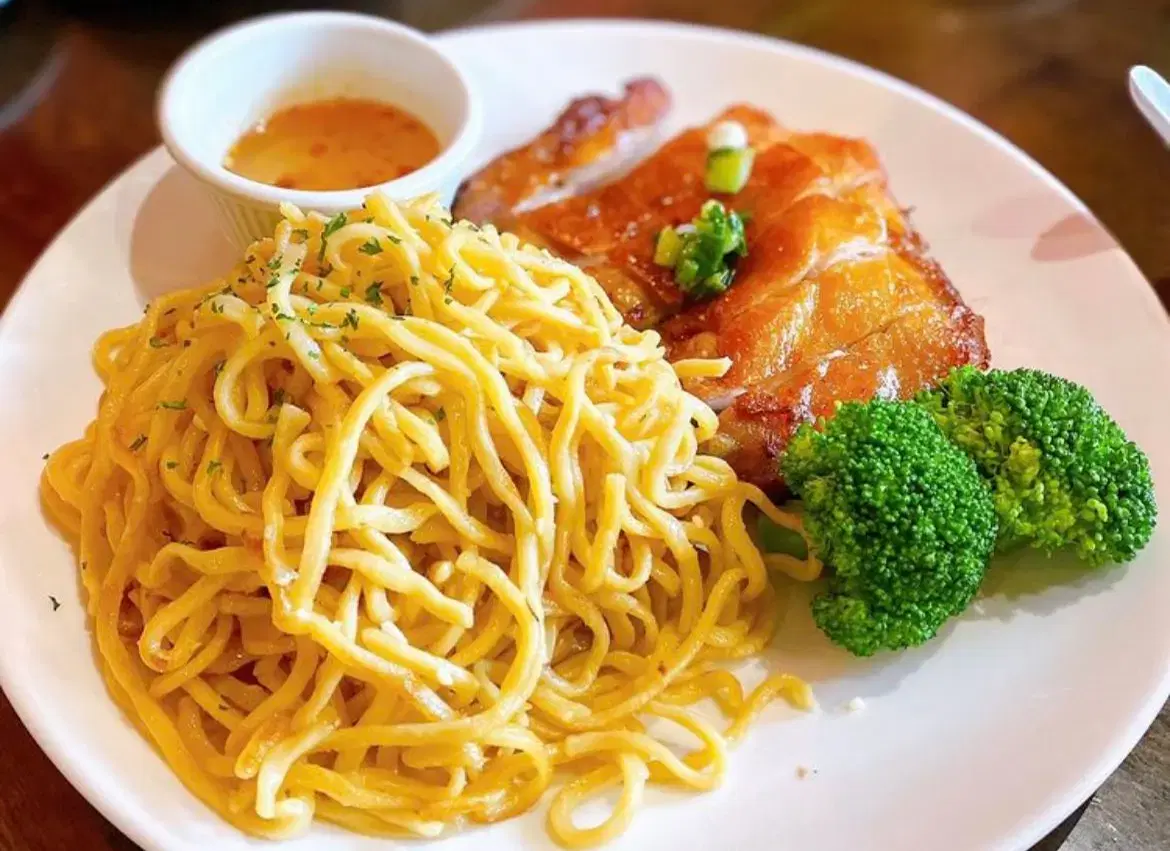
- Shrimp and Grits
- Chicken & Waffles
- Steak Frites
Canal Street, West Loop, and the Pressure of a Good Address
The stretch of North Canal Street running through Chicago's West Loop sits close to one of the city's most contested dining corridors. Fulton Market is a few blocks east; the financial district anchors the southeast. This particular address at 222 N Canal puts Taste 222 in a zone where lunch crowds from the Merchandise Mart and after-work traffic from the Loop converge, a dual pressure that shapes what any restaurant here has to be: readable enough to pull in weekday professionals, considered enough to hold the attention of diners who also book at Smyth or Oriole on weekends.
That geographic tension is worth naming because it defines the competitive register. Chicago's highest-profile contemporary American dining now clusters around the Fulton Market strip, where Alinea and Next Restaurant have drawn international attention to the city's technical ambitions. Taste 222 operates in a different key: close to that energy but not inside it, which historically creates either an overlooked niche or a deliberate positioning play.
How the Room Works
In Chicago's serious dining tier, the interplay between kitchen, floor, and wine service has become a differentiating factor as much as any single dish. The restaurants that sustain attention, whether at the price point of Kasama's Filipino tasting counter or the more austere register of Smyth's ingredient-led menu, tend to share one characteristic: the front-of-house and kitchen read as a coherent unit rather than parallel operations.
At the level where Taste 222 positions itself, that team dynamic becomes visible in pacing. A well-coordinated dining room holds courses at the right intervals without the guest noticing the mechanism. Sommelier recommendations land before the ask, not after a long silence. These are craft signals, and they matter particularly in a business-district address where time pressure is real and the difference between a functional lunch and a memorable one is often operational rather than culinary.
The broader American dining scene has increasingly framed this coordination as a deliberate editorial stance. Venues like Le Bernardin in New York City have built decade-long reputations partly on floor precision that matches kitchen output. Single Thread Farm in Healdsburg treats the service program as an explicit co-author of the experience. In Chicago specifically, the dining public has grown more literate about this: after years of exposure to the Alinea Group's theatrical service models and Boka Restaurant Group's professionalized floor teams, guests notice when coordination is absent.
Chicago's Contemporary American Tier
Understanding where Taste 222 sits requires a brief map of the category. Chicago's contemporary American dining has fragmented into distinct sub-tiers over the past several years. At the leading, Alinea's three Michelin stars and Smyth's two place them in a global reference class, the kind of restaurants that draw itinerant diners from other continents. A rung below, venues like Oriole and Kasama hold Michelin recognition while maintaining a more local character. Then there is a broader middle tier, where serious kitchens operate without star recognition but with clear culinary intention.
That middle tier is where most of Chicago's actual dining life happens, and it is where the city's food identity is most actively negotiated. Nationally, the equivalent conversation plays out at venues like Lazy Bear in San Francisco, Providence in Los Angeles, or Bacchanalia in Atlanta: restaurants with clear points of view and professional operations that don't require award validation to function as reference points for their cities.
The West Loop and Canal Street corridor has seen enough restaurant turnover to make longevity itself a signal. Addresses in this zone carry high fixed costs and demanding clientele. Any restaurant sustaining operations here is already filtering for a degree of operational competence.
The Canal Street Address in Context
222 N Canal sits at a specific intersection of Chicago geography worth noting for visiting diners. It is within reach of the Union Station transit hub, making it accessible for diners arriving by train from the suburbs or by Amtrak. The West Loop's walkable density means Taste 222 shares its immediate neighborhood with a range of other operations, from fast-casual to event dining, which broadens the likely guest mix beyond any single demographic.
For diners cross-referencing Chicago against other American cities, the Canal Street positioning has a partial analog in the business-district dining zones of cities like Washington (where The Inn at Little Washington operates at a different scale but demonstrates how proximity to power and money shapes dining ambition) or New York (where Atomix has shown that a technically demanding program can coexist with a buttoned-up professional clientele). The pattern holds across cities: addresses near financial and transit infrastructure demand a certain kind of restaurant, one that respects its guests' time while giving them a reason to return.
For those building a broader Chicago itinerary, our full Chicago restaurants guide maps the city's dining tiers across neighborhoods, from River North to Wicker Park, and places venues like Taste 222 in their competitive context alongside more heavily documented names.
Planning a Visit
The West Loop is accessible by CTA on the Green and Pink lines, with Morgan and Clinton stations serving the broader corridor. For diners arriving by car, Canal Street's proximity to the expressway interchange makes it a practical stop, though parking in the immediate area requires planning, particularly during weekday lunch service when the financial district generates significant traffic.
The address at 222 N Canal St, Chicago, IL 60606 is verified. For diners comparing options in this category, Smyth and Oriole both maintain online booking through their own sites and represent the upper reference point for what Chicago's serious American dining looks like at full commitment.
Visitors with broader American dining itineraries may also want to benchmark against Blue Hill at Stone Barns in Tarrytown, The French Laundry in Napa, Addison in San Diego, Emeril's in New Orleans, or 8 1/2 Otto e Mezzo Bombana in Hong Kong to understand how Chicago's middle-tier contemporary American dining positions globally.
Quick reference: 222 N Canal St, Chicago, IL 60606. Confirm hours, pricing, and booking directly with the venue.
Frequently asked questions
Where is Taste 222 in Chicago?
Taste 222 is located at 222 N Canal St, Chicago, IL 60606, Chicago.
Is Taste 222 a good option for dinner before or after an event at a Chicago venue near Union Station?
The address at 222 N Canal St puts Taste 222 within practical distance of Union Station, making it a logical choice for diners arriving by Metra or Amtrak or heading to events in the West Loop. The broader Canal Street corridor also connects easily to CTA Green and Pink line stops at Clinton and Morgan. Confirm current hours directly with the restaurant to align timing with your schedule.
What's the must-try dish at Taste 222?
For the most accurate picture of what the kitchen is running, check the venue's official channels or check their current menu before visiting.
How hard is it to get a table at Taste 222?
Taste 222 sits on North Canal Street in Chicago's West Loop, a corridor where demand for seats has climbed steadily as Fulton Market's profile has grown. Booking in advance is advisable, particularly for weekend evenings, though confirmed reservation windows are best verified directly with the venue.
What is Taste 222 known for?
Taste 222 occupies a specific position within Chicago's contemporary American dining tier, operating from 222 N Canal St in the West Loop near the Union Station transit hub. The address places it at a crossroads between the Fulton Market corridor and the city's central business district, giving it a draw from both office and destination dining crowds.
Is Taste 222 allergy-friendly?
Diners with specific dietary requirements should call ahead or reach out before booking, as kitchen flexibility varies considerably across Chicago's contemporary American tier.
In Context: Similar Options
Comparable venues nearby, for context on price, style, and recognition.
| Venue | Cuisine | Price | Notes |
|---|---|---|---|
| Taste 222This venue (the venue you are viewing) | Modern American | $30–50 | Not listed |
| Kindling | Wood-Fired American Cookout & Cocktails | $50–100 | Downtown Chicago |
| The Bristol | Contemporary American Gastropub | Not listed | Bucktown |
| Wood | American Fusion | $50–100 | Northalsted |
| The Evie | Modern American Steakhouse with Sushi | $50–100 | Magnificent Mile |
| Eden | New American Seasonal | $50–100 | Avondale |