The Langham, Chicago

.png?width=120&quality=80)




2 Michelin Keys · La Liste Top Hotels · Forbes 5-Star
Occupying the lower floors of Ludwig Mies van der Rohe's landmark IBM Plaza on the Chicago River, The Langham delivers 316 rooms with floor-to-ceiling views, a 67-foot indoor pool, Chuan Spa treatments rooted in Traditional Chinese Medicine, and a Club Lounge that functions as one of downtown's more complete business amenities packages. La Liste awarded the property 98 points in 2026; Michelin awarded it 2 Keys in 2024.

Pearl is the En Primeur Club membership app, where members save venues, book tables and use the concierge.
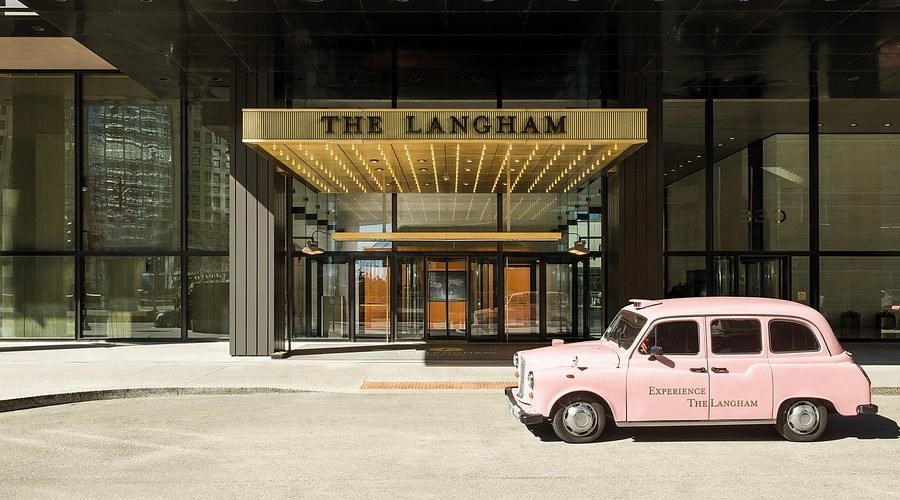
A Modernist Shell, a Contemporary Interior
The building at 330 North Wabash is one of those Chicago facts that rewards knowing. Ludwig Mies van der Rohe completed it in 1971 as the IBM Plaza, his last major commission, and it was added to the National Register of Historic Places in 2010. The Langham occupies the first twelve floors, which means the architecture outside and the hotel inside operate in productive tension: the austere Miesian grid gives way, once you're through the lobby, to a warmer palette of marble, bronze details, and aubergine or olive upholstery that leans more toward the group's London and Hong Kong roots than toward anything mid-century. For travellers who want architectural significance and physical comfort in the same building, the address delivers both without requiring a compromise. Chicago's premium hotel tier has deepened considerably in recent years, with properties like Pendry Chicago, Waldorf Astoria Chicago, and The Peninsula Chicago all competing at the upper end; the Langham sits inside that cohort as the property most explicitly tied to a specific piece of architectural history.
How Daytime and Evening Divide at the Langham
The gap between what the Langham offers during the day and what it offers after dark is wider than at most comparable downtown hotels, and understanding that split is the most useful frame for deciding how to spend time here.
Daytime: Afternoon Tea and the Pavilion Ritual
Langham group traces its afternoon tea tradition to its London flagship in 1865, a claim it repeats across all properties, and the Chicago iteration takes the format seriously. The Pavilion lounge on the second floor hosts tea service on Fridays from noon to 3:00 p.m. and on Saturdays and Sundays from 11:00 a.m. to 4:00 p.m. The format is the group's standard: proprietary teas, a selection of sweet and savoury bites, a room designed to hold the occasion with some ceremony. For visitors arriving mid-week, the Club Lounge runs its own food and beverage programme from 6:30 a.m. to 9:00 p.m. daily, with distinct service windows for breakfast, light snacks, afternoon tea, and evening cocktails with canapés. The Club Lounge day pass is listed on OpenTable at USD 160 per person for non-Club guests, which positions it as a premium standalone amenity rather than a casual drop-in. The 12th-floor lounge comes with butler service and views that account for most of the Chicago River's downtown curve.
Evening: Travelle and the Glass Kitchen
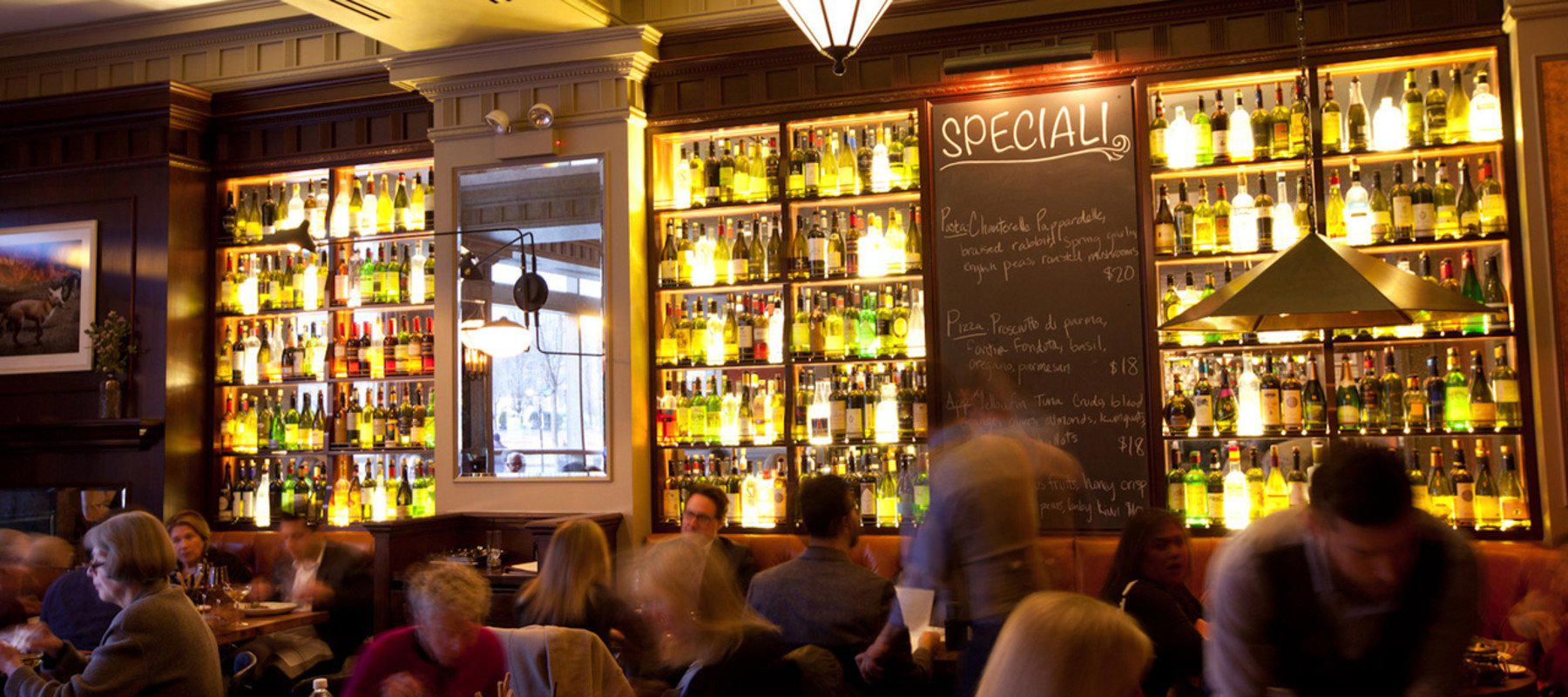
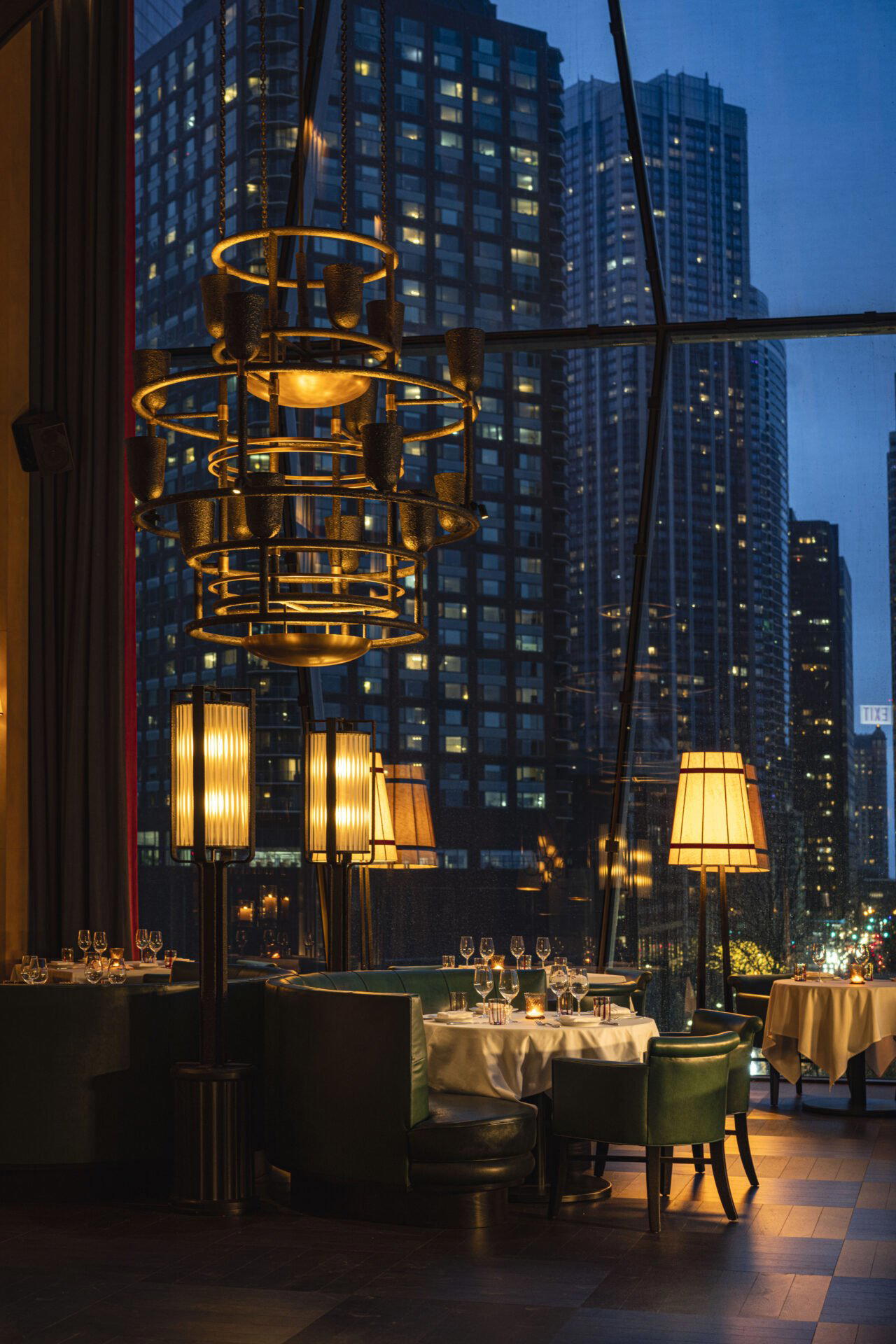
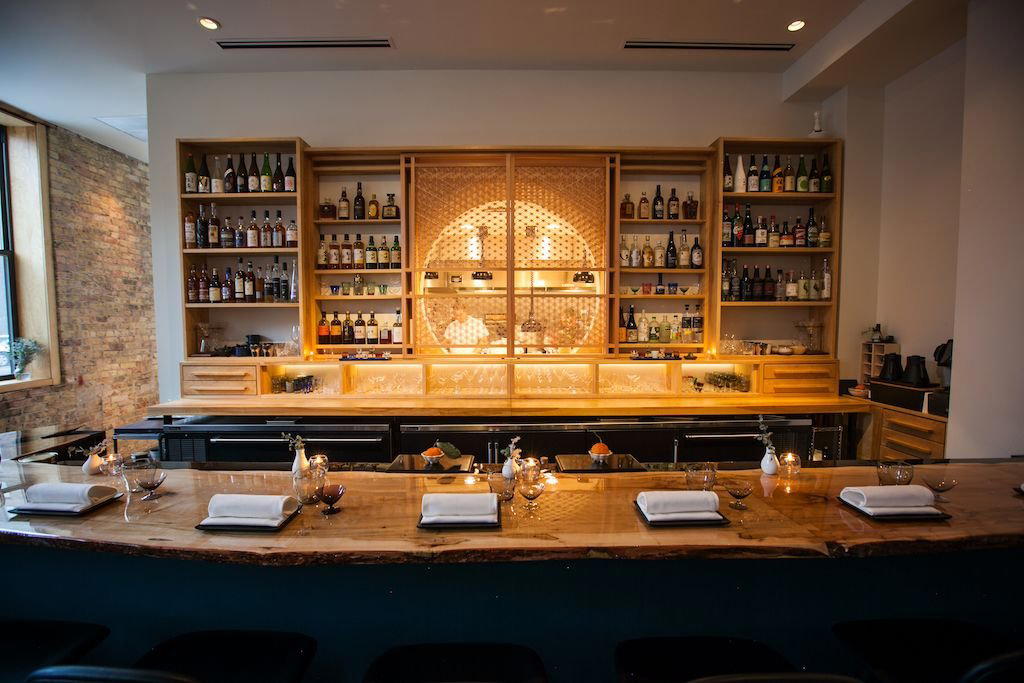
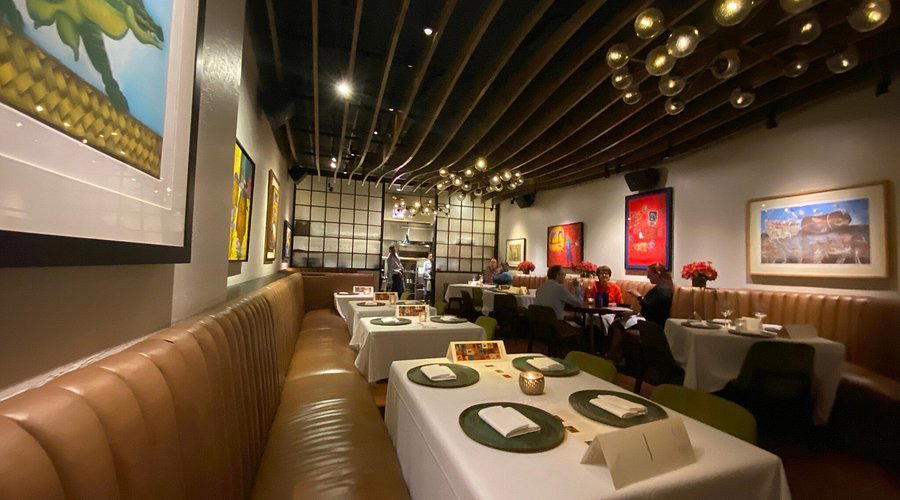
After dark, the focal point shifts to Travelle, the hotel's main restaurant and bar. The programme is seasonal American, drawing from farms, ranches, and orchards across the country, which places it in the broader category of regionally sourced fine casual dining that has dominated upper-tier hotel restaurants for the past decade. The physical space is worth noting as a design object: a glass-enclosed show kitchen, two wine walls holding 300 bottles each, and a large digital art installation visible from Wabash below. The bar and lounge open Monday through Friday at 3:00 p.m. and on weekends from noon, running until 11:00 p.m. both days. The kitchen closes at 11:00 p.m. For guests who prefer to stay in, the Private Kitchen handles in-room dining through most of the day and into the evening.
The evening mood at Travelle is distinct from the daytime quietude of the Pavilion. Where afternoon tea operates on a scheduled, almost ceremonial rhythm, the bar and lounge run as a conventional urban gathering point, busier on weekends and drawing a local professional crowd alongside hotel guests. That dual audience is a useful indicator: hotel restaurants that pull non-guests reliably tend to hold a different standard than those operating purely as captive-audience amenities.
The Rooms and What the Views Require
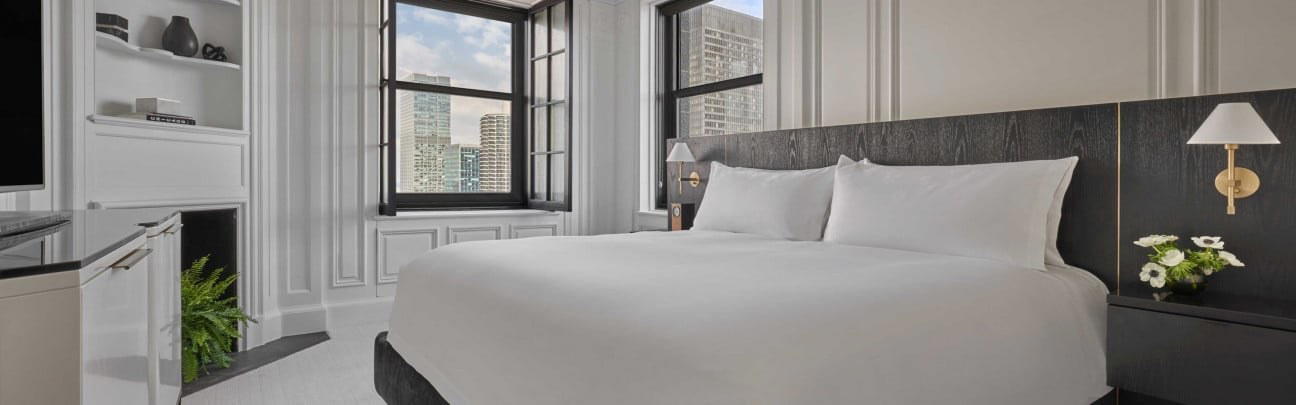
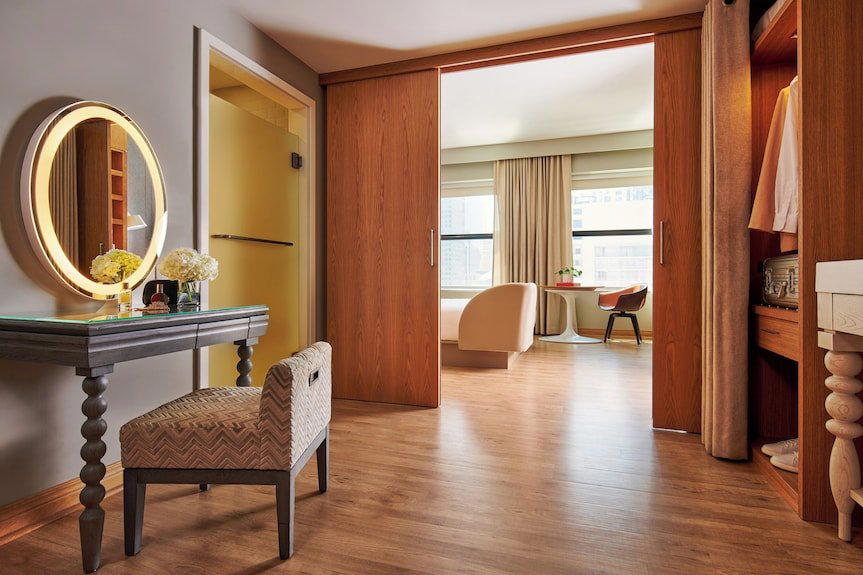
The 316 rooms across 268 standard configurations and 48 suites start at just over 500 square feet, with floor-to-ceiling windows as the defining architectural feature. The building's position at the bend of the Chicago River means that orientation matters considerably. Southeast corner rooms produce the widest sightlines, taking in the river, Lake Michigan to the east, and the Loop to the south simultaneously. The colour schemes run to cream paired with either aubergine or olive, the bathrooms are clad in marble, granite, and travertine, and each room includes a 55-inch television, a writing desk, and a minibar that several published reviews have singled out as more complete than the category average. Separate dressing areas with vanity tables are standard across the room tier.
Room rates begin around USD 783, which places the property at the upper end of Chicago's downtown market but below the absolute ceiling set by some comparable properties in peer cities. For context, comparably positioned luxury hotels in New York, such as Aman New York or The Fifth Avenue Hotel, typically open at a meaningfully higher base rate, which makes the Langham's Chicago pricing relatively accessible within the international luxury tier.
Chuan Spa and the Wellness Floor
The Chuan Spa on level 4 operates daily from 8:00 a.m. to 8:00 p.m. and draws its treatment philosophy from Traditional Chinese Medicine, a format the Langham group uses consistently across its global properties rather than adapting to local wellness traditions at each location. The Chicago spa runs seven treatment rooms plus a manicure and pedicure room, and the lounge includes heated stone loungers for pre- and post-treatment use. The 67-foot indoor pool, hydrotherapy hot tub, Himalayan salt saunas, and oriental steam room are part of the same wellness complex rather than segregated amenities. The fitness centre sits adjacent and includes Peloton bikes alongside standard cardio and strength equipment. Hotels in other categories that prioritise nature-led wellness, such as Canyon Ranch Tucson or Post Ranch Inn in Big Sur, operate on a different model entirely; the Chuan Spa is explicitly an urban spa, sized and programmed for a downtown hotel rather than a resort context.
Location and What It Unlocks
The riverfront position at 330 North Wabash puts the hotel within walking distance of the Loop, Grant Park, Millennium Park, the Magnificent Mile, and Navy Pier. For a hotel operating at this price tier, proximity to the city's primary cultural and commercial nodes is a meaningful part of the value calculation. Chicago's dining scene, accessible from this address within minutes, is covered more fully in our full Chicago restaurants guide. Other downtown properties with strong location credentials include the Chicago Athletic Association, which occupies a landmarked Michigan Avenue building, and Nobu Hotel Chicago in River North, both of which draw on neighbourhood context rather than architectural singularity as their primary hook. Properties like Viceroy Chicago and The Gwen occupy the Gold Coast and Magnificent Mile corridor respectively, a different neighbourhood register from the Langham's River Loop position. Aloft Chicago Downtown River North covers a lower price tier in the same general area for travellers calibrating against budget.
Awards and Peer Positioning
La Liste rated the property at 98 points in its 2026 rankings, with the first award dating to 2022. Michelin awarded 2 Keys in 2024. Both signals place the Langham inside the top tier of Chicago hotel accommodation, though neither award is specific to a single amenity. The La Liste rating reflects overall hotel quality across service, food and beverage, and physical plant; the Michelin Keys programme, launched in its current form relatively recently, evaluates the complete guest experience rather than the restaurant alone. For comparison, properties awarded at similar levels in other American cities, such as Hotel Bel-Air in Los Angeles, Raffles Boston, or Four Seasons at The Surf Club in Surfside, tend to occupy a similar bracket of pricing, service depth, and amenity completeness.
Planning Your Stay
The Club Lounge access, priced at USD 160 per person as a day pass for non-Club guests, is worth factoring into the room-selection decision. Club rooms and suites include access as part of the rate; for guests in standard rooms who expect to use the lounge as a workspace, the day-pass arithmetic may make a Club room upgrade worth calculating. Afternoon tea in the Pavilion runs on a weekend-heavy schedule (Friday through Sunday only), so travellers with a specific interest in that format should plan arrival accordingly. The spa opens at 8:00 a.m. daily, which suits guests who want wellness integrated into an early schedule rather than saved for the afternoon. For booking the Travelle bar on weekend evenings, the noon opening time on Saturdays and Sundays means the space is accessible through the lunch window, which partially closes the lunch-versus-dinner divide at the bar level even if the kitchen schedule differs.
Similar Picks
Comparable venues nearby, for context on price, style, and recognition.
| Venue | Cuisine | Price | Awards | Notes |
|---|---|---|---|---|
| The Langham, ChicagoThis venue (the venue you are viewing) | Sophisticated luxury high-rise with riverfront location and resort-style wellness facilities | $300–500 | 2 Michelin Keys · La Liste Top Hotels | Not listed |
| Pendry Chicago | Art Deco heritage luxury boutique | Not listed | 1 Michelin Key · La Liste Top Hotels | Loop |
| The Peninsula Chicago | Luxury urban palace blending contemporary design with traditional Asian service principles; positioned as a sophisticated downtown retreat near Michigan Avenue and Chicago Riverwalk. | $300–500 | 2 Michelin Keys · La Liste Top Hotels | Downtown Chicago / Michigan Avenue |
| Waldorf Astoria Chicago | Modern luxury tower with intimate boutique feel | $300–500 | 1 Michelin Key · La Liste Top Hotels | Gold Coast |
| Viceroy Chicago | Contemporary luxury reimagining of a historic Art Deco landmark with modernist glass tower and bold interior design. | $300–500 | 1 Michelin Key · Forbes Recommended | Gold Coast |
| Chicago Athletic Association | Historic athletic club revived as modern urban playground | $300–500 | 1 Michelin Key · La Liste Top Hotels | The Loop |
Recognition history
Dated appearances from independent guides and award organizations, with the underlying list record or original source where available.
Michelin 2 Keys
Michelin
La Liste Top Hotels
La Liste
Fodor's Most Incredible Hotels in the World
Fodor's
Forbes 5-Star
Forbes
Virtuoso Luxury Hotel Partner
Virtuoso
Full recognition history (9 entries)
AAA 5 Diamond
AAA
Forbes 5-Star
Forbes
Michelin 2 Keys
Michelin
Michelin 2 Keys
Michelin
Continue exploring
More in Chicago
Hotels in Chicago
All hotels in Chicago →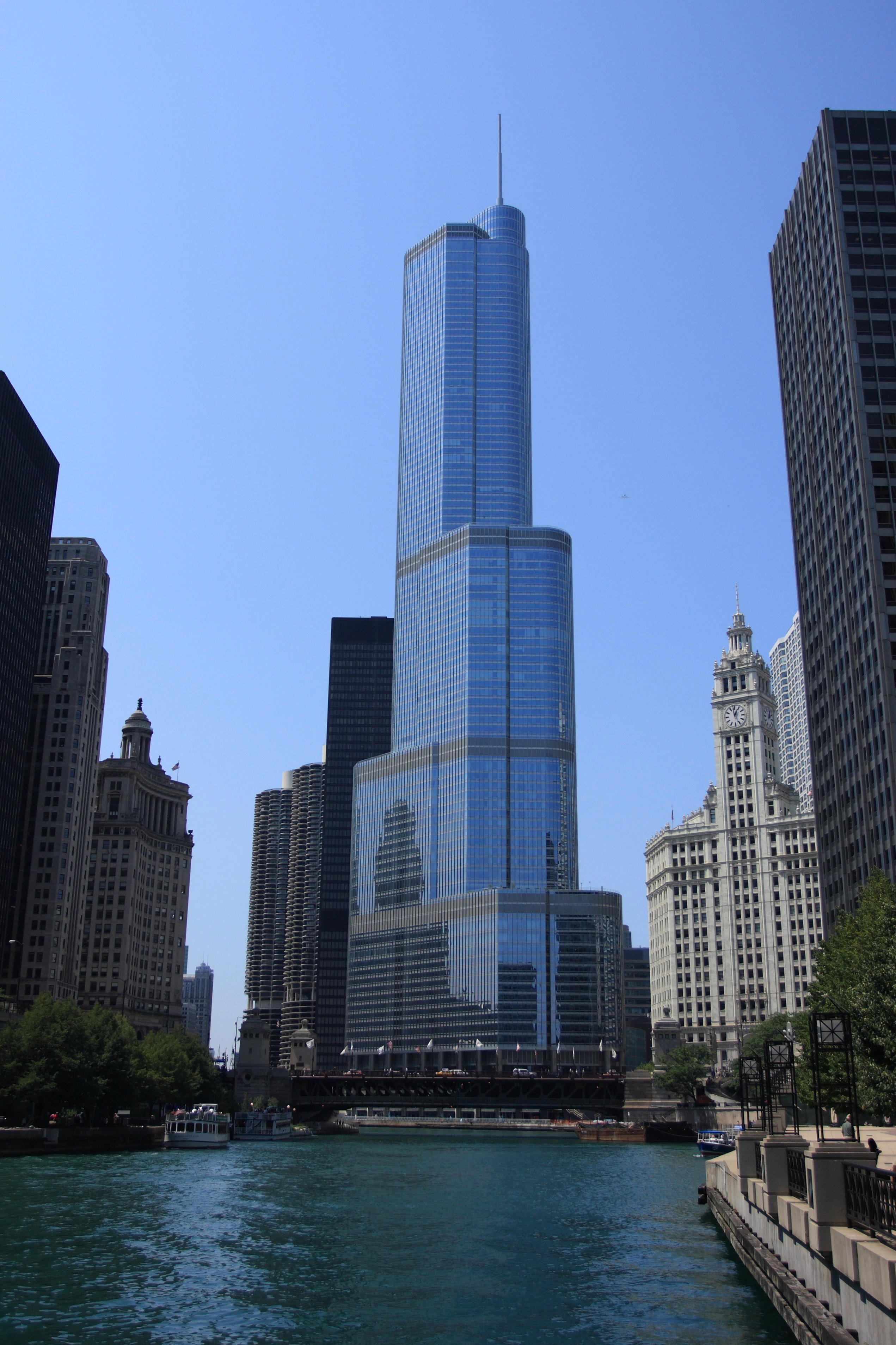

Details
- Elegant
- Sophisticated
- Ornate
- Romantic Getaway
- Business Trip
- Anniversary
- Rooftop Pool
- Historic Building
- Panoramic View
- Wi Fi
- Pool
- Spa
- Fitness Center
- Room Service
- Concierge
- Business Center
- Valet Parking
- Skyline
- Wheelchair Accessible
- Elevator
- Step Free Entrance
- Accessible Parking
Serene and elegant with natural light from floor-to-ceiling windows, midcentury modern furnishings, and relaxing classical music touches creating a polished European retreat.