Indienne






1 Michelin Star · Star Wine List · James Beard Award Semi Finalist
Our verdict
Indienne brings a tasting-menu-only approach to progressive Indian cuisine in Chicago's River North, earning a Michelin star in 2024 and an Opinionated About Dining ranking of #469 in North America (2025). Chef Sujan Sarkar draws on French technique alongside the breadth of the Indian subcontinent, with parallel vegan, vegetarian, and non-vegetarian menus served in a room that mixes warehouse bones with white tablecloths and rose-pink booths.

Pearl is the En Primeur Club membership app — saves, bookings, and concierge access live there. Same editors, same standards.
- Address
- 217 W Huron St, Chicago, IL 60654
- Phone
- (312) 291-9427
- Hours
- Mon–Thu 5–9 PMFri–Sat 5–9:30 PMSun Closed
- Website
- indiennechicago.com
- Directions
- Get directions
- Booking
- Book on OpenTable
River North's Quiet Case for a Different Kind of Fine Dining
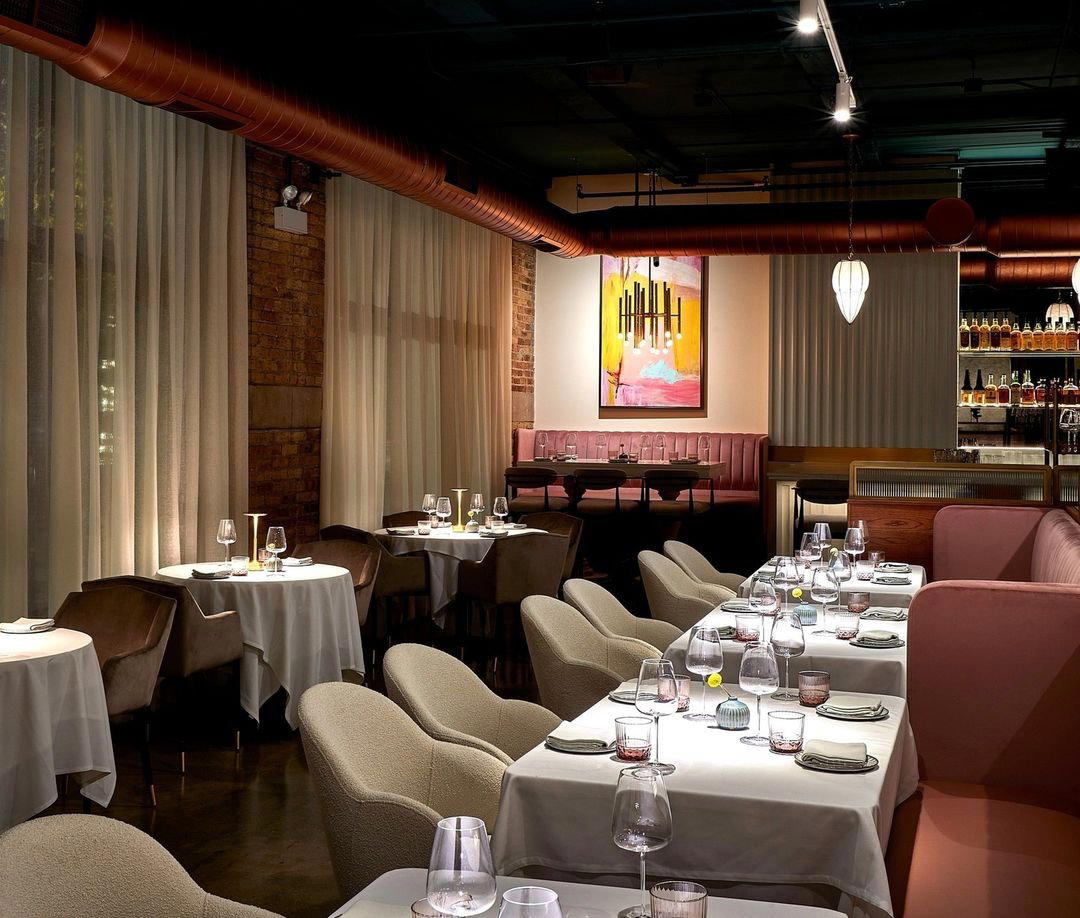
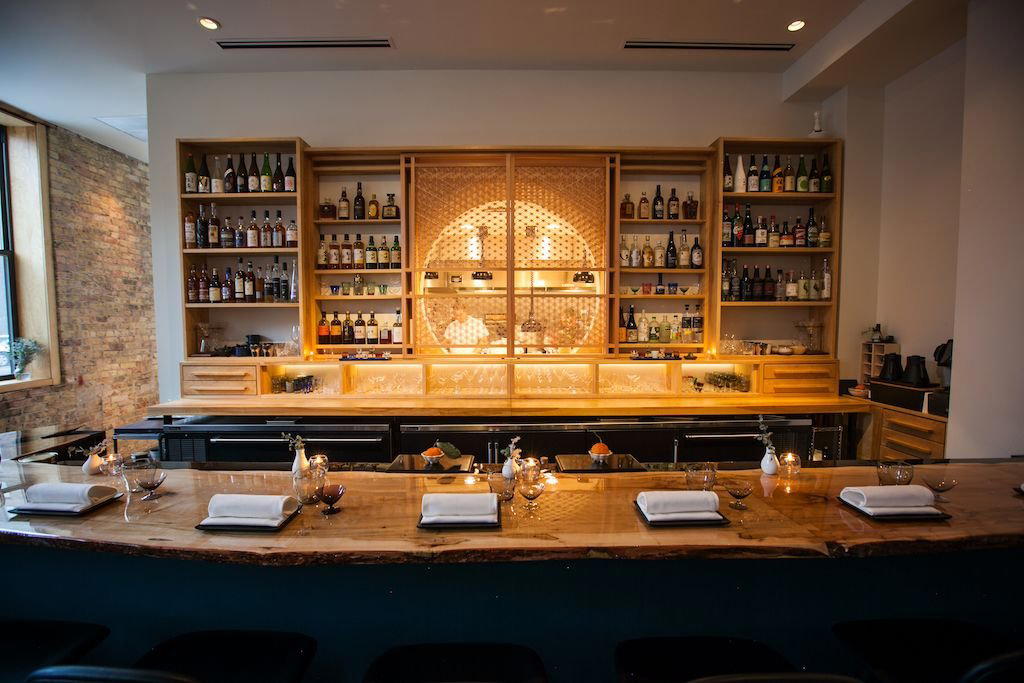
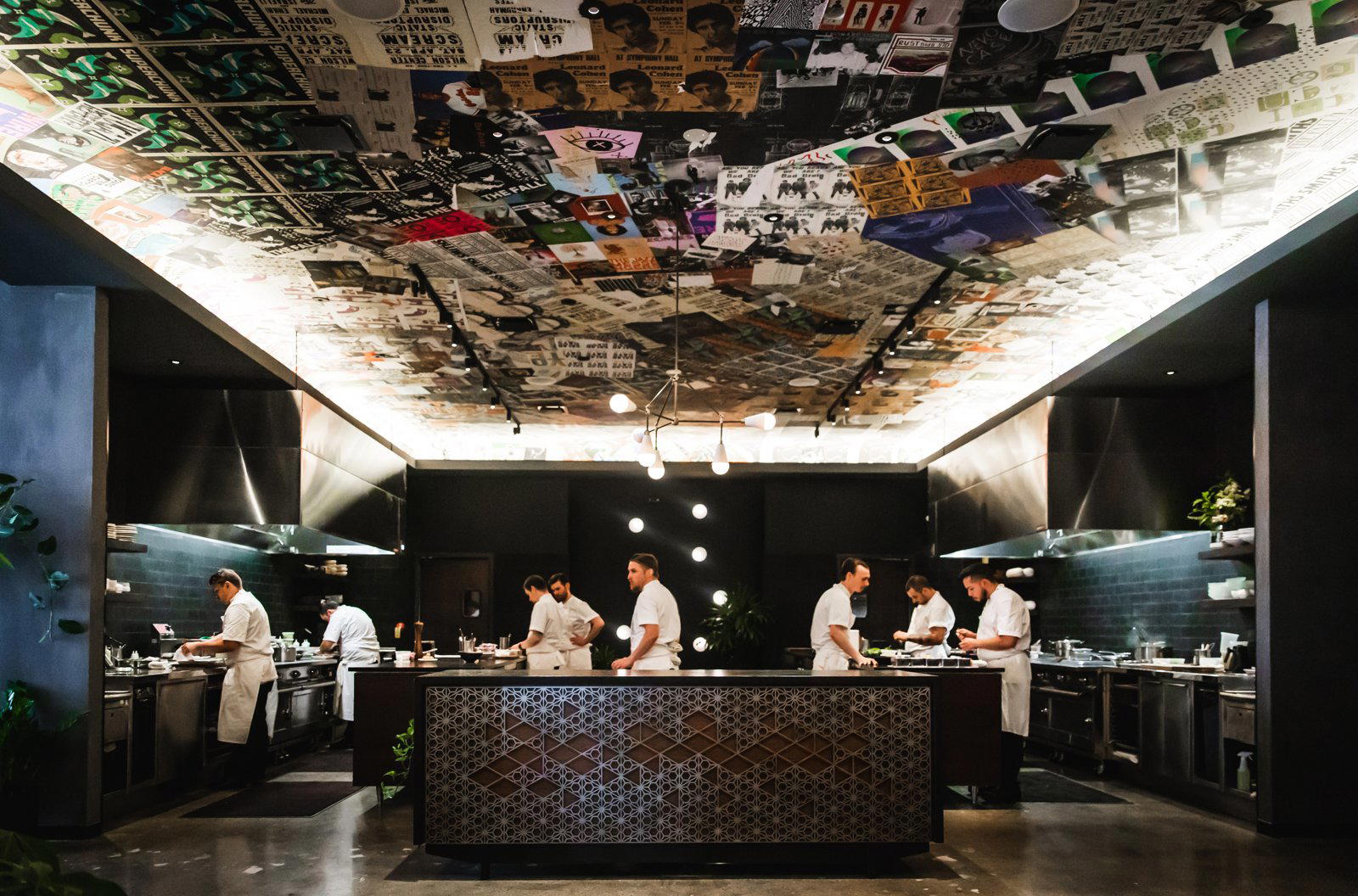
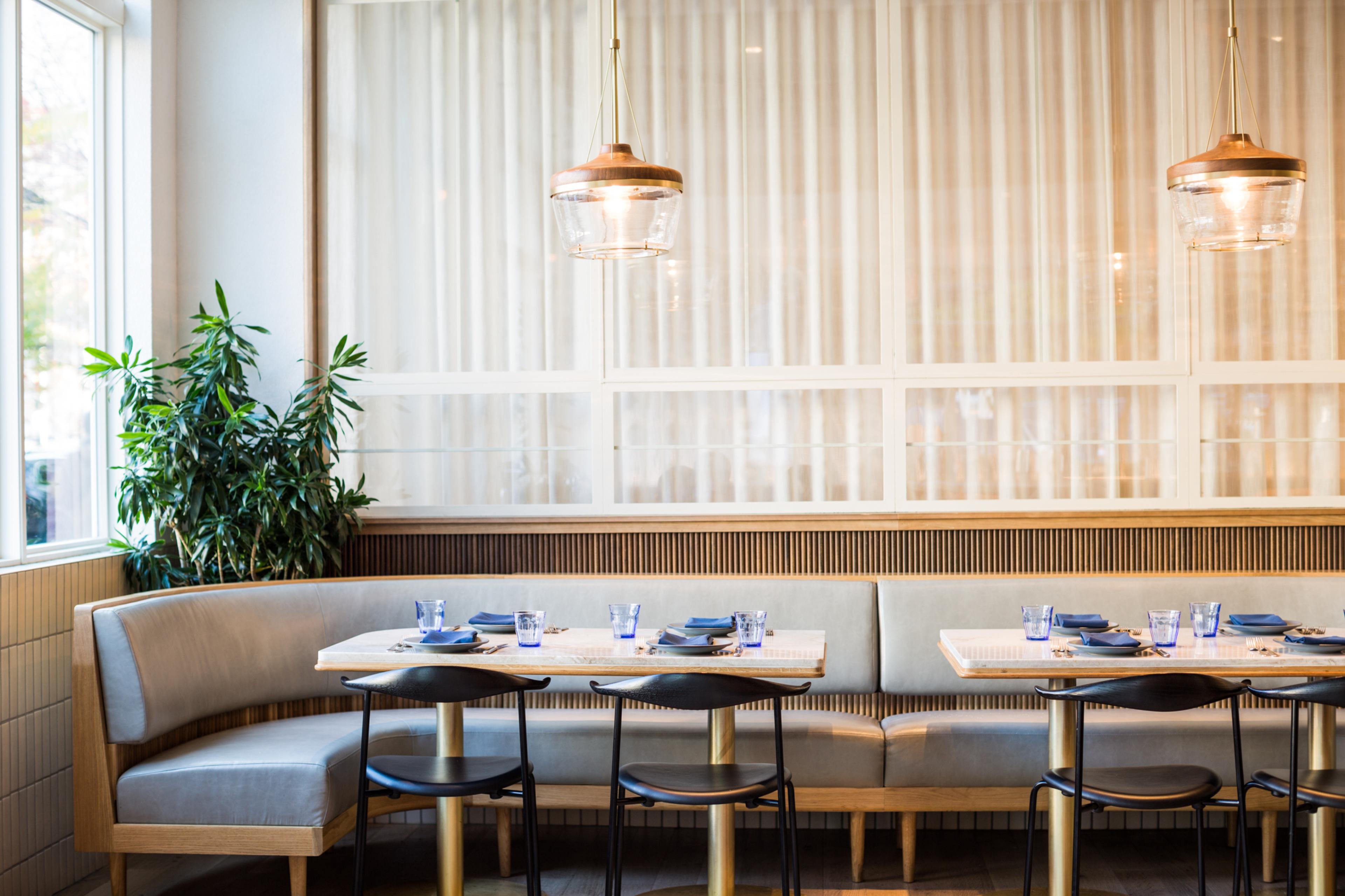
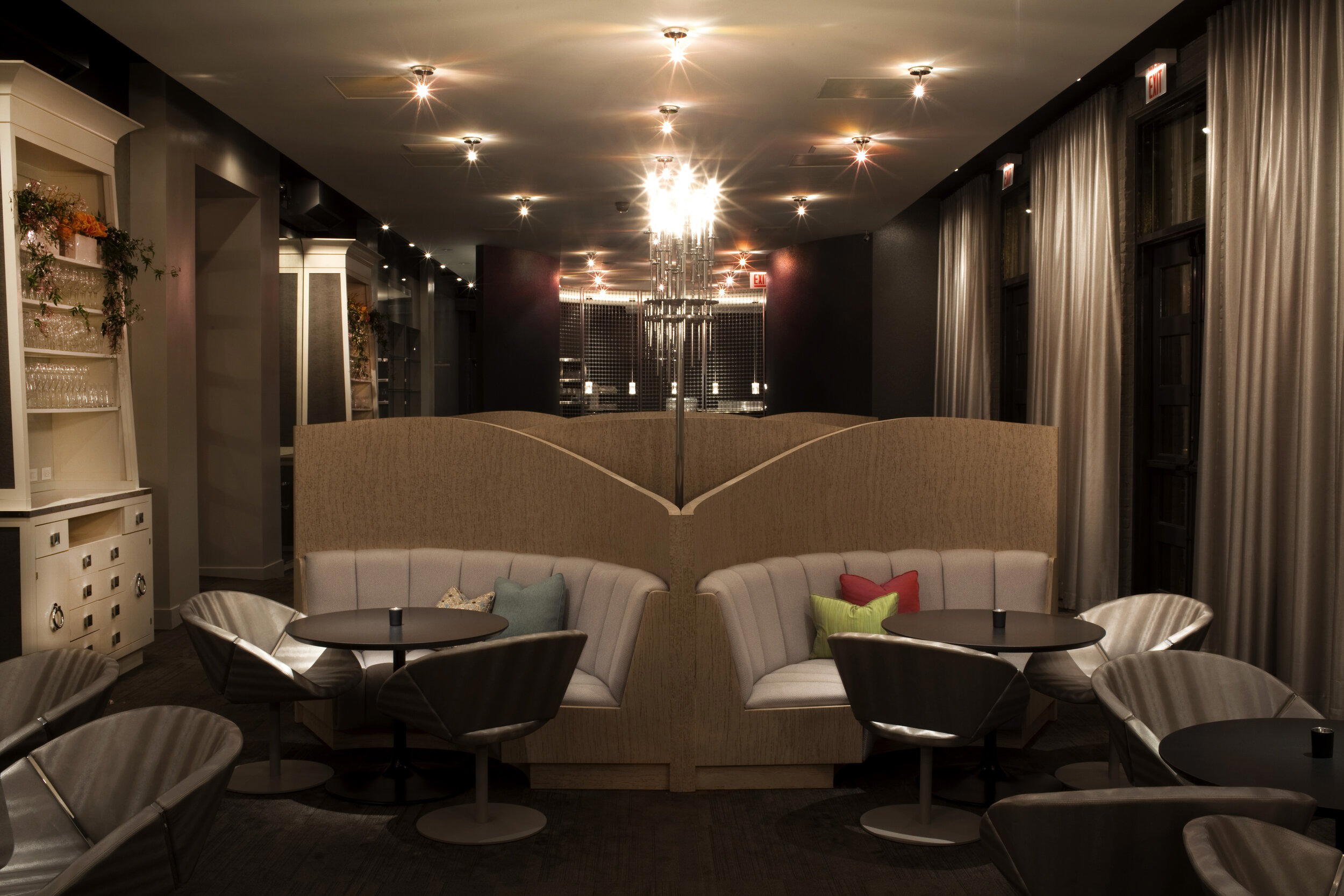
The stretch of West Huron Street where Indienne sits is quieter than the louder corridors of River North, and that measured calm is the first signal that this is not a restaurant built on noise. The room inside carries it further: warehouse-scale ceilings, smooth concrete floors, and heavy wooden beams form the structural frame, but the finish is closer to mid-century dining club than loft conversion. White tablecloths and rose-pink booths absorb the volume, and the effect is a space that feels considered rather than decorated. It reads as a deliberate choice — a room that won't compete with the food.
That restraint matters more in the context of what Indienne is actually doing. Progressive Indian fine dining in the United States has historically been an underrepresented category at the top tier, where the dominant tasting-menu formats have been French-inflected American, Japanese, or some hybrid of the two. The Michelin star Indienne earned in 2024, alongside its 2025 Opinionated About Dining ranking of #469 in North America, places it in the same conversation as Chicago's most closely watched kitchens — a short list that includes Alinea, Smyth, Oriole, and Ever, but it arrives from a distinct culinary tradition.
Three Menus, One Kitchen, No Shortcuts
The tasting-menu-only format is now common enough at this price point in Chicago that it needs no explanation. What Indienne does with that format is less standard. Chef Sujan Sarkar runs three parallel menus simultaneously: non-vegetarian, vegetarian, and vegan. This is not a case of removing proteins from a base menu and calling it plant-based, the vegetarian and vegan progressions are constructed with the same structural attention as the meat-forward version. In a category where plant-based accommodation is often treated as an afterthought, that parity carries editorial weight.
The food draws on pani puri, chaat, and curry frameworks, formats with deep regional specificity across India, and applies a precision of presentation and spice calibration more associated with French kitchen discipline. The French sensibility is not incidental: it operates as a technical layer rather than a flavour one, which keeps the food recognizable in its Indian register while pushing the execution into fine-dining territory. At a peer level, this kind of cross-traditional technical approach appears at Kasama, where Filipino cuisine is refracted through pastry training and French technique, and at places like Atomix in New York, where Korean cuisine operates inside a tasting-menu architecture borrowed from Western fine dining.
Sourcing, Structure, and the Ethics of a Tasting-Menu Kitchen
Editorial angle here is worth addressing directly. The sustainability conversation in fine dining has shifted over the past decade from broad statements about farm relationships to more granular questions: how does a kitchen that runs tasting menus manage waste across three parallel menu tracks? What does ethical sourcing look like when you are working with spices sourced from the Indian subcontinent and proteins from the American Midwest?
Indienne's format offers one structural answer. Tasting-menu kitchens that run fixed progressions, rather than à la carte service, have a built-in efficiency advantage: mise en place is tighter, over-ordering is reduced, and the kitchen can plan yields with more precision. Running three tracks simultaneously (non-vegetarian, vegetarian, vegan) actually extends that logic: a kitchen that treats plant-based menus as first-tier outputs rather than modifications tends to reduce the proportion of high-impact proteins in its overall throughput. That is not a claim about Indienne's specific sourcing practices, but it is a structural observation about how format choices shape a kitchen's environmental footprint.
The wine program adds another dimension to this. With 700 bottles in inventory, 210 selections, and a list led by Wine Director Tia Polite with sommelier support from Isabella Tenorio, Luc Robinson, and Francisco Joseph, the cellar is notably strong for a restaurant of this format. The list skews toward California and France, regions where conversation about vineyard sustainability has moved from marketing language to certification and measurable practice. At a $$ wine pricing tier (based on markup and price-point range), the program sits within reach for guests who treat wine as part of the meal rather than an escalating supplement. Corkage is set at $35 for those who bring their own bottles.
Where Indienne Sits in Chicago's Fine-Dining Map
Chicago's upper tier of tasting-menu restaurants has historically been weighted toward American and European culinary traditions. The three-Michelin-star operators, Alinea and Smyth among them, define the ceiling. Oriole, Ever, and Kasama each occupy a one-star tier with distinct editorial identities. What Indienne contributes is the first sustained, high-visibility argument that Indian cuisine belongs in that conversation without apology or qualification.
Nationally, the comparison that travels leading is Atomix in New York: a restaurant that took a non-European culinary tradition and rebuilt it inside a tasting-menu architecture rigorous enough to earn multiple Michelin stars. The question Indienne poses, can Indian cuisine sustain and expand a fine-dining format the way Korean cuisine has? is one the broader American dining scene is only beginning to answer. The 2024 Michelin star and the Opinionated About Dining recognition suggest the answer is moving in a particular direction.
For wider context across American fine dining, Le Bernardin in New York City, The French Laundry in Napa, Lazy Bear in San Francisco, Single Thread Farm in Healdsburg, Providence in Los Angeles, Emeril's in New Orleans, and 8½ Otto e Mezzo Bombana in Hong Kong each represent how tasting-menu formats perform across different cultural and geographic contexts. Indienne belongs in that comparative frame, not as an outlier, but as a venue making a case for a tradition that has been underrepresented at the highest levels of the format.
Planning Your Visit
Indienne is at 217 W Huron St in River North, open Tuesday through Thursday from 5 to 10 PM, Friday and Saturday from 5 to 11 PM, and Monday from 5 to 10 PM. The restaurant is closed on Sundays. The cuisine pricing sits at the $$$ tier for a typical two-course equivalent, though the tasting-menu format means the full experience will land at the $$$$ restaurant price tier. The wine list is deep enough to anchor the meal, but the $35 corkage fee makes bringing your own bottle a reasonable option for guests with specific bottles in mind. Given the Michelin recognition and the relatively intimate format of the room, booking ahead is advisable, the tasting-menu structure and fixed service windows make walk-in availability limited on most evenings.
For a broader look at what Chicago has to offer across categories, our full Chicago restaurants guide covers the full range of the city's dining scene. For where to stay, the Chicago hotels guide maps the city's accommodation options by neighbourhood and tier. The Chicago bars guide, Chicago wineries guide, and Chicago experiences guide round out the picture for anyone building a longer itinerary around the city.
Frequently asked questions
What do regulars order at Indienne?
Because Indienne runs a tasting-menu-only format, there is no à la carte selection, every guest at the table progresses through the full menu, choosing between the non-vegetarian, vegetarian, or vegan track at the time of booking or arrival. The kitchen's reputation, confirmed by its Michelin-starred peer recognition and Opinionated About Dining ranking, centres on dishes rooted in pani puri, chaat, and curry traditions, executed with French-trained precision and a calibration of spice that reads as refined rather than muted. For returning guests, the vegan and vegetarian menus have drawn particular attention as genuinely constructed progressions rather than modifications of the main menu, a distinction that matters at this price point and one that reflects the Kasama-era shift in how Chicago's one-star kitchens approach dietary inclusivity at the tasting-menu level.
Reputation First
| Venue | Cuisine | Price | Awards | Notes |
|---|---|---|---|---|
| IndienneThis venue — the venue you are viewing | Modern Indian Fine Dining | $150–200 | 1 Michelin Star · Star Wine List | Not listed |
| Alinea | Avant-Garde Molecular Gastronomy | $300–500 | 2 Michelin Stars · World's 50 Best #37 | Progressive American, Creative |
| Smyth | Modern American Tasting Menu | $200–300 | 3 Michelin Stars · World's 50 Best #1 | Progressive American, Contemporary |
| Kasama | Modern Filipino | $30–50 | 2 Michelin Stars · World's 50 Best #31 | Filipino |
| Next Restaurant | Avant-Garde Themed Tasting Menus | Not listed | 1 Michelin Star · We're Smart World 2 Radishes | American Cuisine |
| Boka | Modern American Seasonal Fine Dining | $150–200 | 1 Michelin Star · La Liste Top Restaurants | New American, Contemporary |
Recognition history
Dated appearances from independent guides and award organizations, with the underlying list record or original source where available.
Michelin 1 Star
Michelin
Star Wine List
Star Wine List
James Beard Award Semi Finalist
James Beard Award
Opinionated About Dining Top Restaurants in North America Recommended
Opinionated About Dining
Wine Spectator Award of Excellence
Wine Spectator
Full recognition history (8 entries)
Opinionated About Dining Top Restaurants in North America Ranked #469
Opinionated About Dining
Michelin 1 Star
Michelin
Esquire Best New Restaurants #36
Esquire


Details
- Elegant
- Sophisticated
- Modern
- Intimate
- Special Occasion
- Date Night
- Business Dinner
- Open Kitchen
- Craft Cocktails
- Extensive Wine List
- Tasting Menu
- A La Carte
- Vegetarian Friendly
Current opening hours
- Monday
- 5–9 PM
- Tuesday
- 5–9 PM
- Wednesday
- 5–9 PM
- Thursday
- 5–9 PM
- Friday
- 5–9:30 PM
- Saturday
- 5–9:30 PM
- Sunday
- Closed
Hours can change for holidays and private events. Last verified .
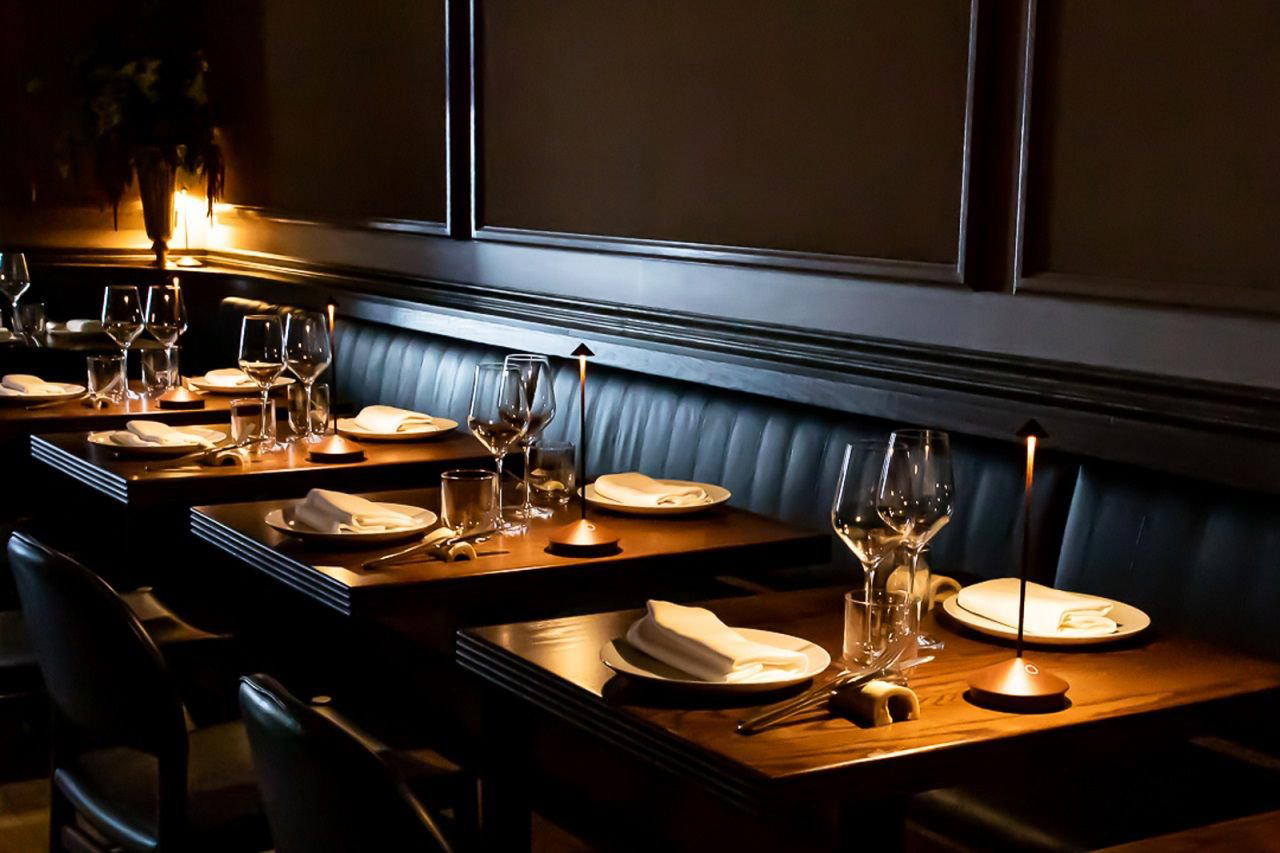
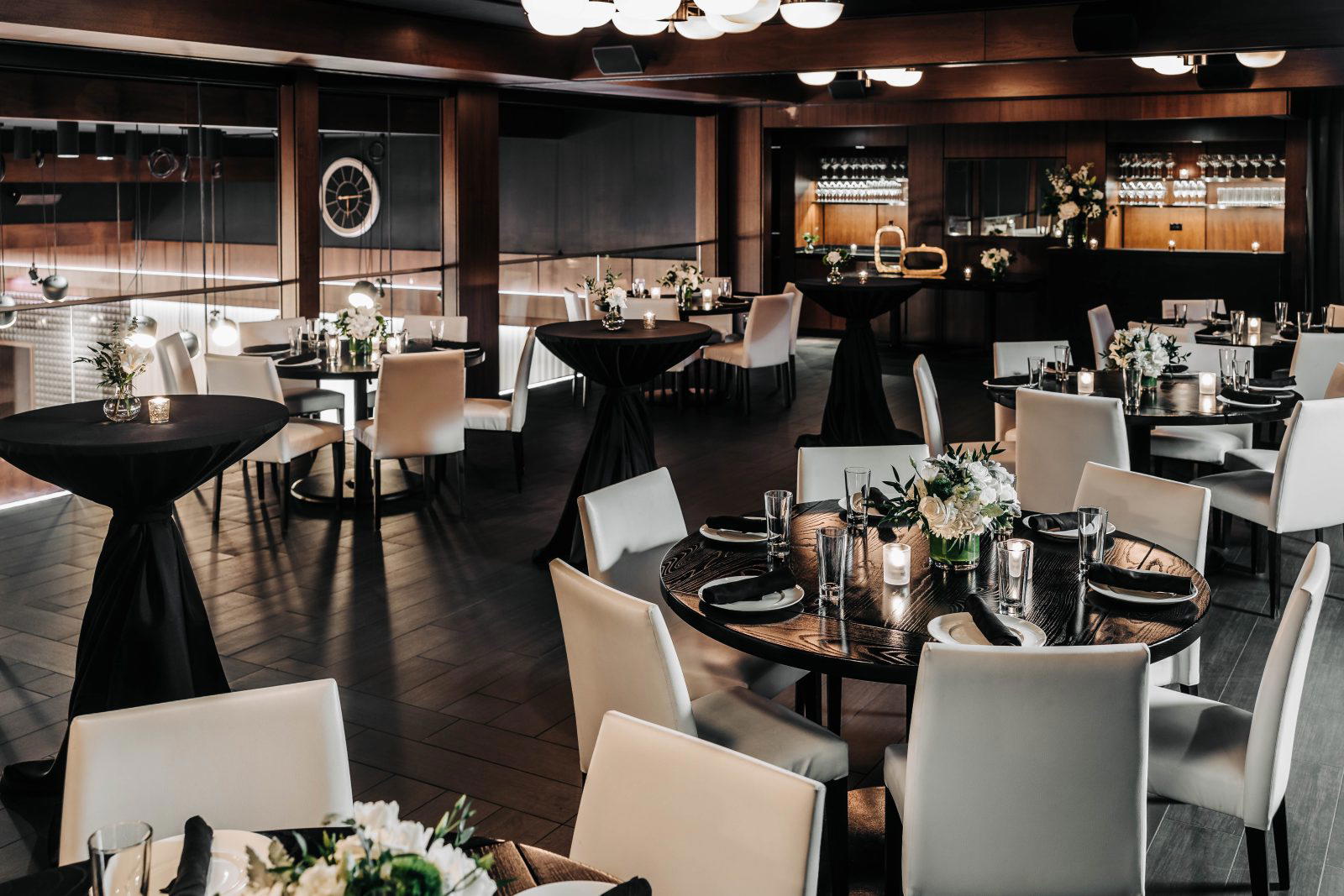
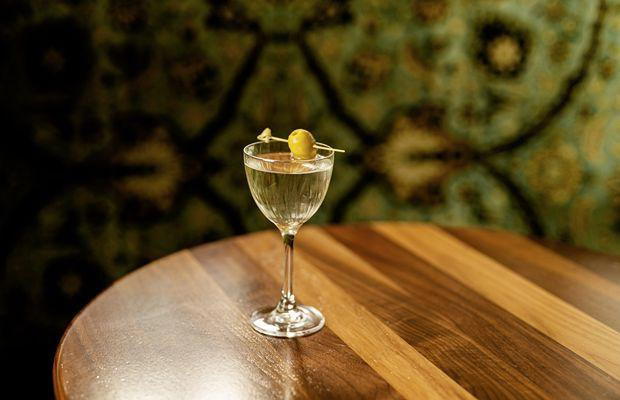
Elegant yet unstuffy space with upholstered chairs, white tablecloths, hanging pendant lights, book-lined shelves, smooth warehouse floors, and exposed ceilings creating a refined, energetic atmosphere.