Tanigawa Beikokuten

Tabelog 100 #73
Our verdict
Tanigawa Beikokuten sits in Manno, a quiet agricultural town in Kagawa's Nakatado District, where rice cultivation has shaped the local food culture for generations. The address alone, Kawahigashi, at the edge of cultivated lowland, signals a kitchen oriented around the land rather than urban prestige circuits. For travellers already exploring Shikoku's quieter interior, it offers a counterpoint to the island's better-known coastal dining stops.

Pearl is the En Primeur Club membership app, where members save venues, book tables and use the concierge.
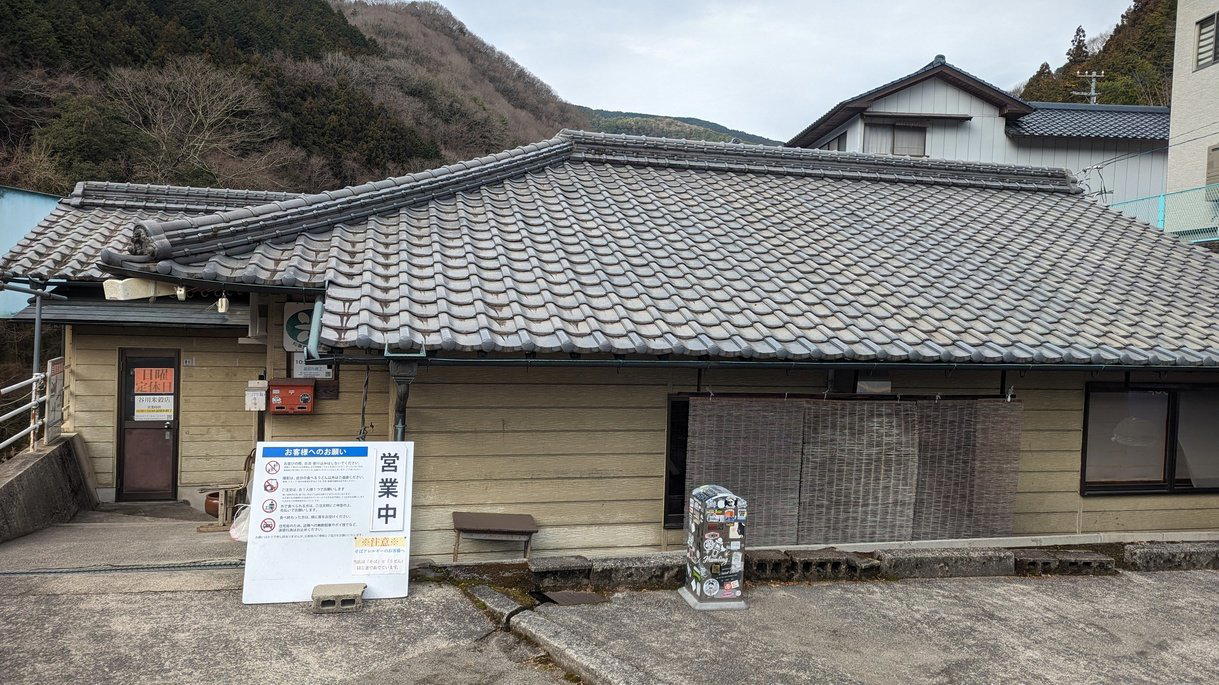
Where Rice Country Meets the Table
Kagawa Prefecture earns its reputation through udon, the dense, wheat-flour noodles that define the island's food identity in the popular imagination. But the agricultural inland of Nakatado District tells a parallel story, one built around rice. The flatlands around Manno Town, fed by the Manno Pond irrigation system (the largest earth-fill dam pond in Japan, constructed in the eighth century and rebuilt under the engineer-monk Kukai), have supported rice cultivation for over a millennium. Restaurants rooted in this territory operate within that agricultural logic: the grain is not a side dish but a foundation.
Tanigawa Beikokuten, the name itself contains the kanji for rice grain (beikoku), sits at 1490 Kawahigashi in Manno, an address that places it squarely within this lowland rice-producing zone. The surrounding landscape is flat and cultivated, with the kind of unhurried rural quiet that Shikoku's interior towns carry as a matter of course. Arriving here from Takamatsu, roughly 40 kilometres to the northeast, requires intention: this is not a stop you make by accident.
The Agricultural Logic of a Rice-Focused Dining Address
Across Japan, a growing cohort of small producers and specialist food businesses has organised around a single, carefully sourced ingredient rather than a broad menu format. The model has precedent in sake breweries that double as dining destinations and in the specialist rice merchants (komeya) that have operated throughout Japanese towns for centuries. Tanigawa Beikokuten's name positions it within this tradition of ingredient specificity. In a region where the soil, water source, and cultivation method directly shape the character of the rice on the table, a business named for rice grain is making a statement about where its priorities lie.
This matters for the traveller choosing between Kagawa's dining options. The prefecture's better-known restaurant circuit concentrates in Takamatsu, where coastal fish, soy-based broths, and the olive-fed beef from Shodoshima Island appear on menus aimed at a wider audience. Inland Nakatado sits outside that circuit, and businesses here tend to serve a local constituency first. That orientation often produces cooking closer to the actual source: shorter supply chains, fewer concessions to tourist expectation, and a directness of ingredient that urban-facing kitchens sometimes trade away for range.
For a broader picture of how this fits within Shikoku dining and the wider Setouchi region, our full Nakatado District restaurants guide maps the options across price points and cooking styles.
Shikoku's Interior Against Japan's Broader Dining Map
Japan's premium restaurant conversation is concentrated in three cities. Osaka's HAJIME and Tokyo's Harutaka represent the upper tier of their respective categories, innovative French and high-end sushi, while Kyoto's Gion Sasaki anchors the kaiseki tradition that Shikoku's own cooking has historically fed into through shared ingredient networks and seasonal logic. Nara's akordu and Fukuoka's Goh extend that conversation into Japan's secondary cities.
Nakatado District sits entirely outside this awards-circuit geography. That is not a criticism of the food; it is an accurate description of how the evaluation infrastructure is distributed. Michelin has covered Kagawa, but its focus falls on Takamatsu. Smaller, rural-inland businesses in towns like Manno operate without that external validation framework, which means the traveller assessing them must rely on other signals: address, name etymology, the local agricultural context, and, where available, direct community reputation. Venues such as Nanao's specialist kitchens or Sapporo's ingredient-led counters face similar evaluation challenges in their respective non-metropolitan settings.
What the Address Tells You Before You Arrive
The Kawahigashi neighbourhood of Manno sits in agricultural lowland. This is not a dining-district address; it is a working-town address, which tells you something about the intended audience and, by extension, the likely format and pricing logic. Rural Kagawa businesses serving a local base typically operate within a modest price register, without the tasting-menu architecture or advance-booking systems that accompany urban prestige dining. Comparable rural-specialist formats across Japan, from the rice-focused teishoku houses of Niigata to the farm-adjacent restaurants of Yamagata, share this structural characteristic.
Travellers crossing Shikoku from the Setouchi Triennale ferry routes (Naoshima is approximately 30 kilometres by water from the Kagawa coast) often treat inland Kagawa as transitional terrain. That framing undersells what the interior offers. The Naoshima dining scene serves an art-tourism audience; Manno and the surrounding Nakatado towns serve residents, and that difference shapes everything from portion logic to opening hours. The more useful analogies come from inland agricultural Japan rather than island art-destination Japan.
For reference on how other regional specialists across western Japan position themselves, the work at Takashima and Nishikawa Machi offers useful comparison points, as does the more urban-facing model at Denko Sekka in Hiroshima.
Planning a Visit
Travellers building a broader western Japan itinerary around ingredient-driven dining might pair a Nakatado visit with stops in Kochi Prefecture to the south, which has its own strong producer-kitchen tradition, or extend northeast to the Setouchi coast. Those seeking comparable dedication to sourcing at a higher formality tier, with verifiable award records, will find it at bodai or at the international level through counters such as Le Bernardin and Atomix in New York, where sourcing transparency has become part of the formal dining proposition.
Frequently asked questions
Is Tanigawa Beikokuten a family-friendly restaurant?
The Kawahigashi address in Manno points toward a working-town, producer-adjacent operation rather than a family dining venue designed around children.
What should I expect atmosphere-wise at Tanigawa Beikokuten?
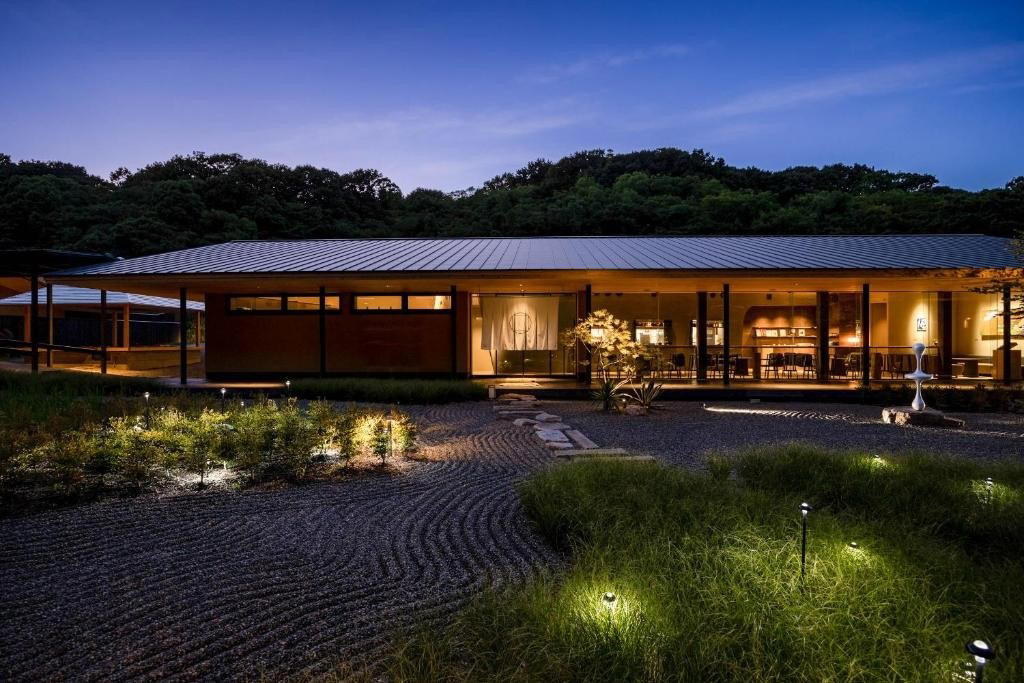
The address, 1490 Kawahigashi, Manno, is agricultural lowland, not a dining district. Expect a working-town setting oriented around the product rather than the room, which is consistent with specialist food businesses in Shikoku's interior that organise around sourcing rather than scene.
Why is Tanigawa Beikokuten located in Manno rather than Kagawa's main food centres?
Manno sits in the agricultural lowlands of Nakatado District, and a rice-specialist operation at this address follows the logic of proximity to production rather than proximity to restaurant traffic. This is a recurring pattern among serious single-ingredient producers in Shikoku's interior, where sourcing geography takes priority over urban footfall. The 1490 Kawahigashi address places the business inside working farmland, not a food quarter.
What's the signature dish at Tanigawa Beikokuten?
The business name, beikokuten translates broadly to rice merchant or rice specialist, signals that rice is the defining product here, situating Tanigawa within a cohort of Japanese single-ingredient producers rather than broad-menu restaurants. Specific dish information is not currently on record, so confirming the current offering directly with the venue before visiting is advisable.
What part of town is Tanigawa Beikokuten in?
Tanigawa Beikokuten is located at 1490 Kawahigashi, Manno, Nakatado District, Kagawa 766-0203, Japan, Nakatado District.
Do I need a reservation for Tanigawa Beikokuten?
Given the agricultural, non-dining-district location, walk-in access cannot be assumed, and planning ahead before making the drive from Takamatsu is sensible.
Comparable Venues
Comparable venues nearby, for context on price, style, and recognition.
| Venue | Cuisine | Price | Awards | Notes |
|---|---|---|---|---|
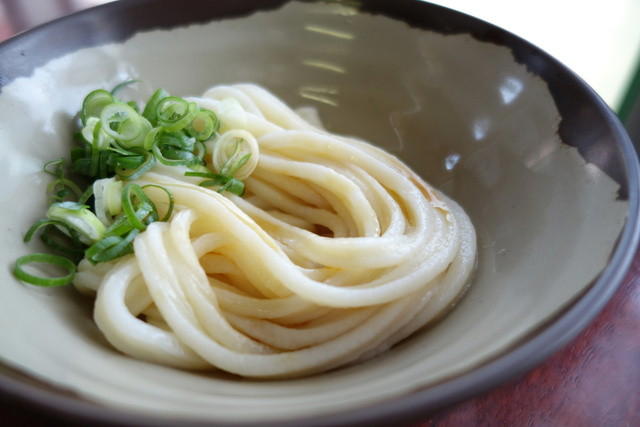
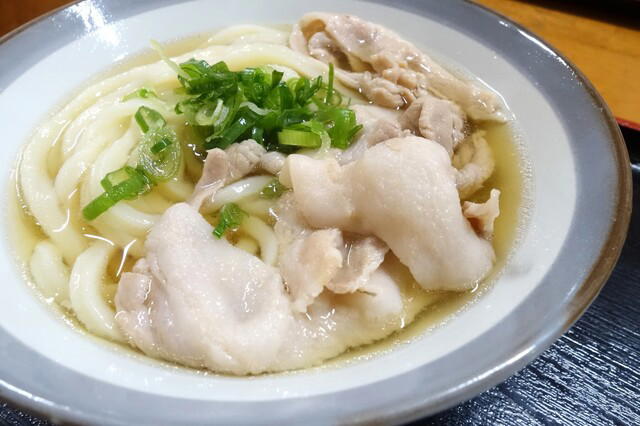
| Tanigawa BeikokutenThis venue (the venue you are viewing) | Sanuki Udon | $10–20 | Tabelog 100 #73 | Not listed |
| Koja Sobaya (古謝そば屋) | Authentic Miyako Soba | $1–10 | Not listed | Hirara, Miyakojima City |
| Ramen Nikkou | Japanese Ramen | $10–20 | Tabelog 100 #46 | Hikone City |
| Koja Sobaya | Authentic Miyako Soba | $1–10 | Not listed | Hirara |
| Urashima Ramen | Traditional Wakayama Ramen Shop | $1–10 | Tabelog 100 #75 | Uchita |
| Inamoku | Traditional Sanuki udon | $1–10 | Tabelog 100 #83 | . Ayagawa-cho, Ayauta-gun |
Recognition history
Dated appearances from independent guides and award organizations, with the underlying list record or original source where available.
Tabelog 100 #73 · No. 73
Tabelog · Tabelog 100 - Udon - KAGAWA - 2024
Continue exploring
More in Nakatado District
Restaurants in Nakatado District
All restaurants in Nakatado District →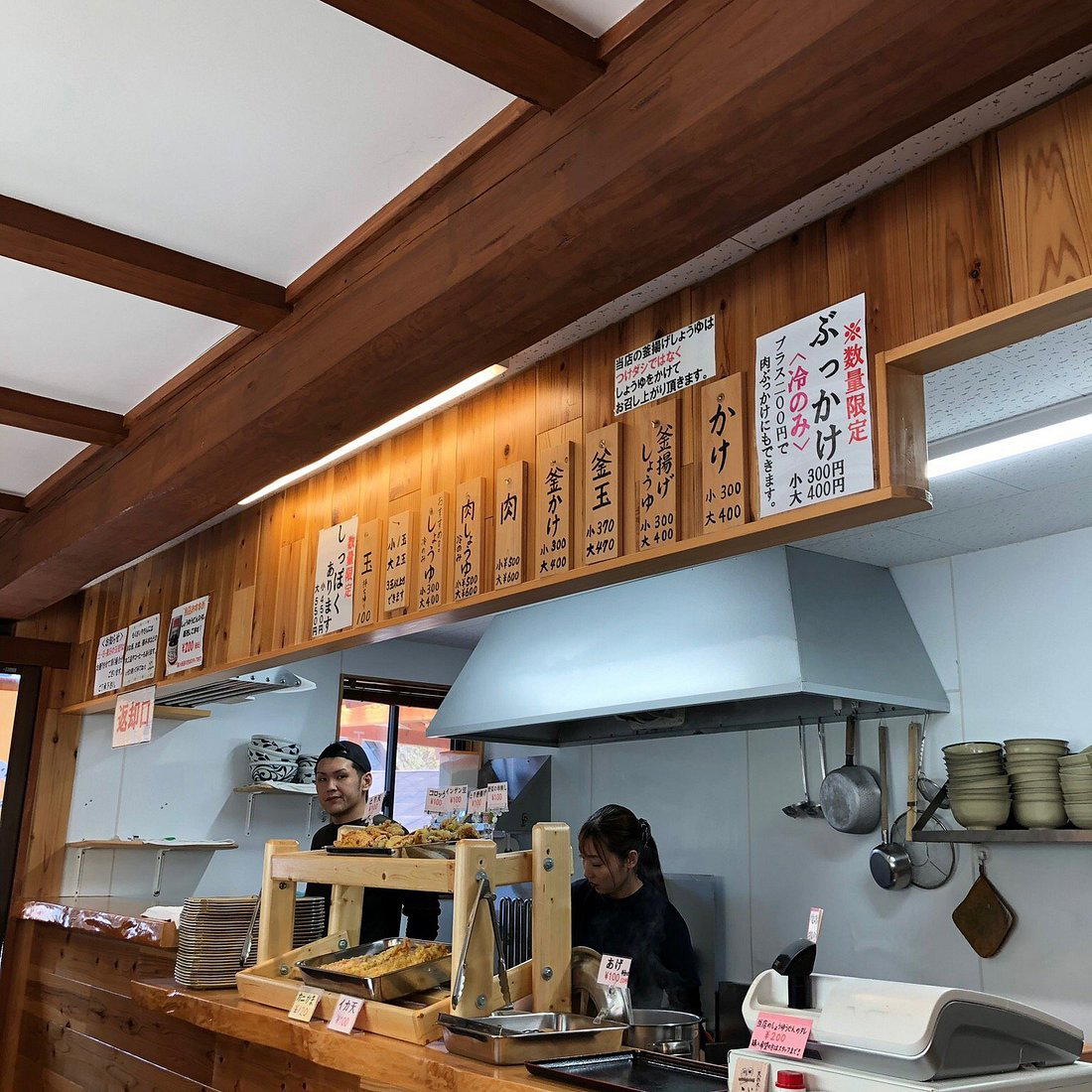
Bars in Nakatado District
Browse all →
Details
- Rustic
- Quiet
- Casual Hangout
- Solo
- Standalone
- A La Carte
- Counter Dining
Current opening hours
- Monday
- 10:30 AM–1:30 PM
- Tuesday
- 10:30 AM–1:30 PM
- Wednesday
- 10:30 AM–1:30 PM
- Thursday
- 10:30 AM–1:30 PM
- Friday
- 10:30 AM–1:30 PM
- Saturday
- 10:30 AM–1:30 PM
- Sunday
- Closed
Hours can change for holidays and private events. Hours as of .
Simple, authentic, and intimate with a local atmosphere; customers share seating wherever available in a casual, unpretentious setting.