TaKorean
TaKorean brings Korean-Mexican fusion to Washington, D.C.'s Union Market district, operating from a counter-service format in one of the capital's most food-forward neighborhoods. The address at 1309 5th St NE places it inside a corridor where industrial bones meet culinary ambition, and the menu's core proposition, Korean-inflected tacos built on bold fermented flavors, fits the casual-but-deliberate register the district has cultivated.
Pearl is the En Primeur Club membership app — saves, bookings, and concierge access live there. Same editors, same standards.
- Address
- 1309 5th St NE, Washington, DC 20002
- Phone
- +1 202 543 5659
- Website
- takorean.com
- Directions
- Get directions
 Saves & bookings on Pearl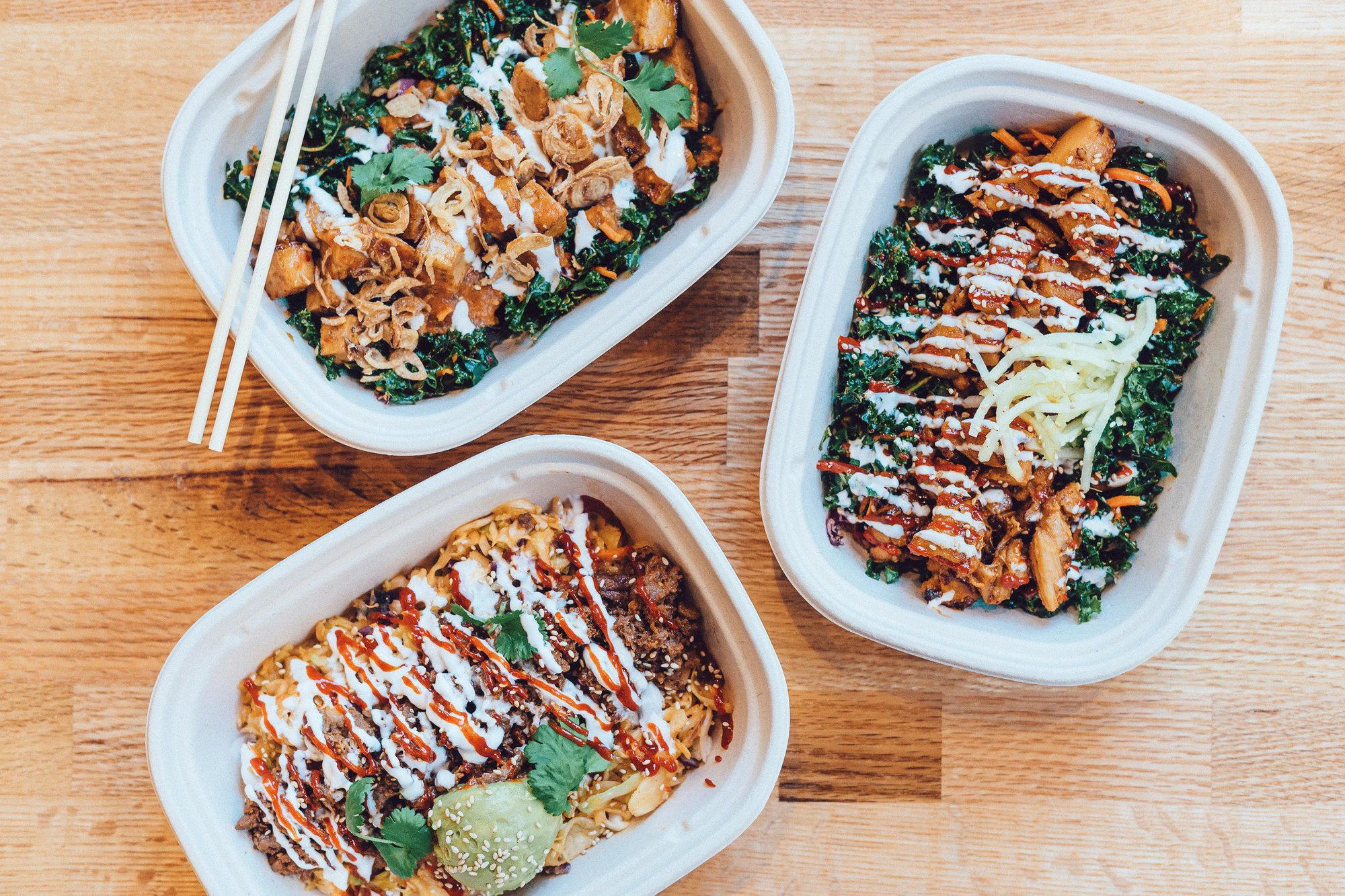
Counter Format in a City That Has Learned to Take Casual Seriously
TaKorean is a casual Korean-Mexican fusion taco restaurant in Washington, D.C. where dishes average about $12 per person. Jônt pushing contemporary French ambition, minibar sustaining molecular precision, and Albi establishing Middle Eastern cooking as a serious critical subject. But alongside that trajectory, the counter-service format has earned its own category of respect. TaKorean, at 1309 5th St NE in the Union Market corridor, belongs to that current.
The Union Market district frames TaKorean's physical space and positioning. The neighborhood's repurposed industrial architecture shapes what eating there feels like. Exposed infrastructure, wide-open sight lines, and a certain absence of decorative softening define the district's spatial character. Restaurants and food stalls that work within this environment tend to do so by accepting it rather than fighting it: the container is part of the proposition.
The Physical Space as Editorial Statement
Counter-service formats make a specific spatial argument. By removing the table-service apparatus, they compress the distance between kitchen and guest, and they shift the social dynamic of the meal. You are not seated and attended to; you are in motion, making choices, moving through the space on your own terms. In the Union Market corridor, where the surrounding architecture already resists conventional restaurant coziness, this format reads as coherent rather than bare.
TaKorean's address at 1309 5th St NE places it in a block where the physical environment communicates something before any food arrives. The industrial register of the district, the proximity to the broader Union Market food hall complex, and the counter-format proposition together produce a dining context that is deliberately unpretentious in its structure. This is not the tablecloth tier occupied by The Inn at Little Washington or the precision-driven format of Causa. The architecture of the experience is faster, more immediate, and designed for repeat visits rather than occasion dining.
That distinction matters when you consider how D.C.'s dining scene is organized by geography as much as by price or format. The Union Market district has developed a specific identity: food-forward without being formal, with a density of operators who treat the counter format as a serious vehicle for culinary ideas. TaKorean's presence in this corridor places it alongside a cohort that includes Oyster Oyster's commitment to sustainable sourcing and the kind of ingredient-driven thinking that the neighborhood has come to expect even from its most casual operators.
Korean-Mexican Fusion in a City That Has Expanded Its Reference Points
The Korean-Mexican taco format has a documented urban history, originating in Los Angeles food truck culture in the late 2000s and spreading through major American cities over the following decade. By the time it arrived in Washington with real traction, the city's palate had expanded considerably. The Korean community in and around D.C. particularly in the Virginia suburbs, had already established serious banchan houses and Korean barbecue formats. The Mexican cooking tradition in the city had deepened through operators working in neighborhoods outside the downtown core. The Korean-Mexican hybrid landed into a market that could read both source cuisines with some sophistication.
TaKorean's proposition, building tacos around Korean flavor logic, speaks directly to that expanded reference point. The fermentation register of Korean cooking, the brightness of gochujang-influenced heat, and the structural principles of the taco format create a combination that reads as more than novelty when the underlying ingredients are handled with care. It is worth noting that D.C.'s casual dining tier has increasingly demanded culinary intentionality from formats that once traded on concept alone. This is the same pressure that has shaped operators like Oyster Oyster.
For readers comparing D.C.'s casual-but-serious tier to equivalent formats in other cities, the Union Market district occupies a similar cultural role to what the Ferry Building does in San Francisco or what the Fulton Market corridor does in Chicago. The physical infrastructure of repurposed industrial space attracts operators who have something to prove at accessible price points. That is the competitive set TaKorean occupies, not the white-tablecloth rooms where Jônt or Albi operate.
Where TaKorean Sits in the D.C. Casual Register
Washington's casual dining tier has become more differentiated in recent years. The distinction between a counter-service operator with genuine culinary ambition and a fast-casual chain running on formula has become legible to a larger portion of the city's dining public. That legibility matters for how a place like TaKorean is received: it is evaluated not just against other Korean-Mexican operators, but against the broader expectation that casual formats in food-forward neighborhoods should deliver something more than convenience.
The city's tasting-menu circuit, which includes Causa's Peruvian precision and the sustained ambition of minibar, represents one pole of D.C. dining. TaKorean represents a different axis entirely, one where the measure of success is whether the format delivers on its culinary logic consistently, at a pace and price that supports daily or weekly visits rather than quarterly occasions.
Those interested in how Korean culinary tradition has been interpreted at the fine-dining end of the American spectrum should cross-reference Atomix in New York City, where the same source cuisine operates under an entirely different formal register and has attracted sustained critical recognition. The contrast between Atomix's tasting-menu structure and TaKorean's counter format illustrates how far Korean-influenced cooking has traveled across American dining categories.
Planning a Visit: Practical Notes
TaKorean operates at 1309 5th St NE, Washington, DC 20002, in the Union Market neighborhood, which is accessible via the NoMa-Gallaudet U Metro station on the Red Line. The counter-service format means no reservations are required, making this a drop-in destination suited to lunch, a quick dinner before or after a visit to Union Market, or a neighborhood stop on a broader D.C. eating day. TaKorean is open daily from 11 AM to 9 PM. Given the format, waits during peak weekend hours in the Union Market district can be expected across most operators in the corridor.
Cuisine-First Comparison
Comparable venues nearby, for context on price, style, and recognition.
| Venue | Cuisine | Price | Notes |
|---|---|---|---|
| TaKoreanThis venue — the venue you are viewing | Korean-Mexican Fusion Tacos | $ | Not listed |
| Singing Tiger | Modern Pan-Asian with Karaoke | $$ | Brentwood Railyard |
| Brisa | Coastal Latin with Tulum-inspired vibes | Not listed | Buzzard Point |
| Pink Tiger | Asian-American Fusion | $$$ | Southwest Waterfront |
| Fraiche | Upscale French-Cajun-Caribbean Fusion | $$$ | Columbia Heights |
| The Well Dressed Burrito | Southwestern Burritos | $ | Dupont Circle |
Continue exploring
More in Washington DC
Restaurants in Washington DC
Browse all →
Bars in Washington DC
Browse all →
Hotels in Washington DC
Browse all →

At a Glance
- Trendy
- Modern
- Lively
- Casual Hangout
- After Work
- Open Kitchen
- Beer Program
Current opening hours
- Monday
- 11 AM–9 PM
- Tuesday
- 11 AM–9 PM
- Wednesday
- 11 AM–9 PM
- Thursday
- 11 AM–9 PM
- Friday
- 11 AM–9 PM
- Saturday
- 11 AM–9 PM
- Sunday
- 11 AM–9 PM
Hours can change for holidays and private events. Last verified .
Bright, casual fast-casual spot with cafeteria-style seating and some outdoor options, focused on fresh, quick assembly-line service.