Providencia


Michelin Plate · Washingtonian 100 Very Best Restaurants #31
Our verdict
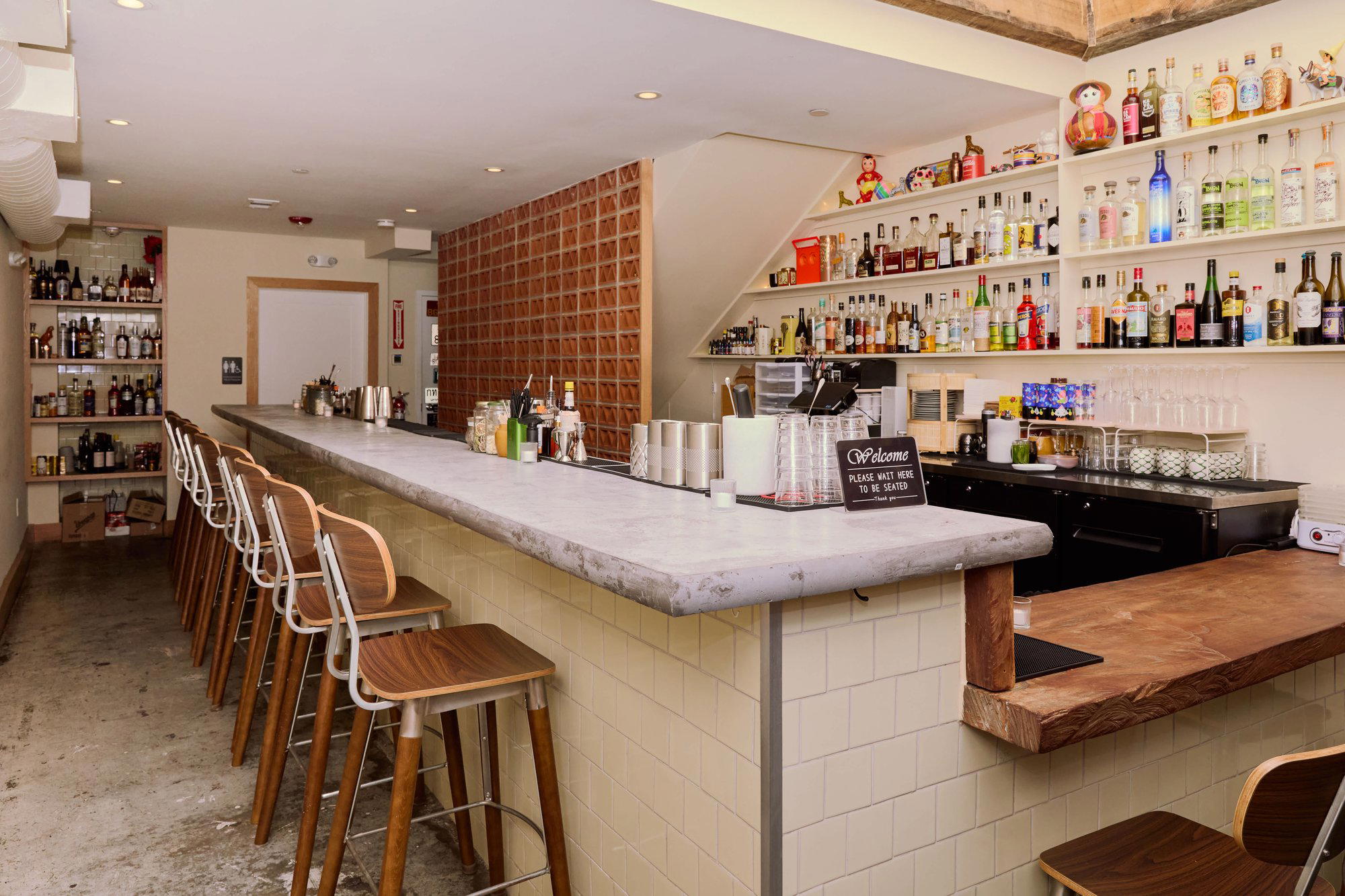
Providencia occupies a moody, compact space on Linden Court NE where the cocktail list would justify a visit on its own — until the food arrives. Co-chefs Erik Bruner-Yang and Paola Velez produce dishes that weave Asian, Caribbean, and Latin American traditions into combinations that feel both familiar and genuinely surprising, from papusa with salsa verde to a Japanese-inflected baked Alaska finished tableside with torched meringue.

Pearl is the En Primeur Club membership app — saves, bookings, and concierge access live there. Same editors, same standards.
- Address
- 1321 Linden Ct NE, Washington, DC 20002
- Hours
- Mon ClosedTue–Sat 5 PM–12 AMSun Closed
- Website
- barprovidenciadc.com
- Directions
- Get directions
- Booking
- Book on SevenRooms
The menu
What to order
- Roasted eggplant and Gruyère pupusa
- Baked Alaska Frio Frio
- Big chip and salsa
- Tomate com Tomate
- Confit duck leg
- Queso asado
A Bar That Refuses to Stay in Its Lane
Washington's dining scene has long rewarded restaurants that know exactly what they are. The capital's most decorated addresses — from the formal New American ambition of The Inn at Little Washington to the focused West African cooking at Elmina — tend to commit to a clear identity. Providencia, tucked into a small room on Linden Court NE, operates on a different premise entirely: it presents itself as a bar first, a serious restaurant second, and asks you to hold both ideas simultaneously without ranking one above the other.
That positioning is deliberate, and it shapes everything about how the space reads. The ambience skews moody, the kind of room where a well-made cocktail seems like the obvious opening move, and where the dining intent doesn't announce itself until plates start arriving. In a city where category clarity is the norm, Providencia's studied ambiguity is itself a statement.
The Menu as a Conceptual Argument
What co-chefs Erik Bruner-Yang and Paola Velez have built here is less a fusion menu in the tired, anything-goes sense and more a structured argument about which culinary traditions actually rhyme with each other. The proposition running through the menu is specific: Asian technique and pantry, Caribbean flavor logic, and Latin American form can be assembled into dishes where the seams are visible but the result still coheres. That is a harder brief than it sounds, and the menu earns its confidence.
The architecture of the menu rewards close reading. Consider the papusa with salsa verde, a form borrowed directly from Salvadoran street food, which is itself a tightly defined tradition, here repositioned with the kind of green acidity more common in Mexican cooking. The displacement is small enough to feel intuitive rather than academic. More ambitious is the pan de playa: shredded crab in Caesar dressing and tomato gochujang mayo, served inside toasted brioche. The gochujang brings Korean fermented heat to a dressing associated with Italian-American tableside theater, and the whole construction lands inside a bread format associated with coastal Latin America. Three distinct reference points, one coherent bite.
This kind of layering is what distinguishes a thoughtfully cross-cultural menu from mere eclecticism. Restaurants that collide global pantries without structural logic, and there are plenty in the American mid-casual tier, produce dishes where the foreign element reads as decoration. The better comparison set, including places like Atomix in New York City, demonstrates that cross-cultural cooking at its most convincing requires a clear point of view about which borrowings are load-bearing. At Providencia, the Asian and Latin American elements aren't garnish; they're doing structural work.
The Nostalgic Register
A consistent tone across the menu is what you might call productive nostalgia, dishes that invoke comfort-food memory while displacing enough of the familiar to keep the palate engaged. This is a current preoccupation in American cooking more broadly. Lazy Bear in San Francisco works a similar register, grounding technically complex cooking in the emotional grammar of communal American eating. Providencia operates on a smaller scale and with different cultural references, but the instinct is comparable: make something that feels both remembered and new.
Dessert makes this explicit. The closing course is a Japanese-inflected baked Alaska, torched meringue encasing kakigori-style shaved ice with guava and strawberry puree, finished with coconut lime sauce. Baked Alaska is American retro-kitsch at its most theatrical. Kakigori is a Japanese summer street-food tradition with its own nostalgic weight. Guava and coconut read Caribbean. The dish assembles three distinct comfort-food memories and asks them to occupy the same plate, and the fact that it works is partly a credit to the cooking and partly evidence that nostalgia, as a flavor principle, is more portable than its cultural origins suggest.
Where Providencia Sits in Washington's Wider Scene
Washington's restaurant scene has expanded its range of culinary references considerably over the past decade. Places like Karravaan and PhoXotic have contributed to a broader willingness in the city to treat non-European culinary traditions as primary rather than supplementary. Gerard's Place represents the older, French-anchored strand of the city's fine dining lineage. Providencia sits somewhere outside that spectrum entirely, it's neither the new wave of single-cuisine specialists nor the legacy French-rooted houses, but a project explicitly interested in what happens when multiple culinary traditions are treated as co-equals.
As a point of comparison within American cooking, the closest parallels are probably not in Washington at all. The kind of technically fluent, cross-cultural menu architecture that Providencia pursues is more often associated with New York or San Francisco addresses. That Providencia is producing it from a small, bar-forward room in DC, rather than from a purpose-built fine dining room, is part of what gives the project its particular character. The format refuses to perform seriousness through conventional signals, tablecloth, tasting menu, ceremony, and instead lets the food make the case on its own terms.
For broader context on the DC dining scene, our full Washington restaurants guide maps the city's current range. If you're planning a longer stay, our Washington hotels guide, bars guide, wineries guide, and experiences guide cover the full picture.
Planning Your Visit
Providencia is located at 1321 Linden Court NE, Washington, DC 20002. The space is small, the room communicates that immediately, so timing your arrival thoughtfully matters more here than at larger formats. Given the bar-forward identity, the venue likely absorbs walk-ins more readily on slower mid-week evenings than on weekends, though the kitchen's reputation means the room fills. Checking availability in advance is advisable. For comparable destination-level cooking experiences in other American cities, Le Bernardin in New York City, Emeril's in New Orleans, Alinea in Chicago, The French Laundry in Napa, Single Thread Farm in Healdsburg, and 8 1/2 Otto e Mezzo Bombana in Hong Kong provide useful reference points for the broader tier.
Frequently asked questions
Where do I go for Providencia?
Providencia is located at 1321 Linden Ct NE, Washington, DC 20002, Washington.
Does Providencia have a Michelin star or similar recognition?
Providencia has received recognition including: You could easily dismiss this small space as just a (really good) bar with its moody ambience and smashing cocktail list. That is, until you taste the food from co-chefs Erik Bruner-Yang and Paola Velez. Their cooking presents an enticing m….
What do people recommend at Providencia?
The papusa with salsa verde and the pan de playa draw consistent attention — the latter packs shredded crab in Caesar dressing with tomato gochujang mayo into toasted brioche. Dessert is worth ordering: co-chefs Erik Bruner-Yang and Paola Velez send out a Japanese-inflected baked Alaska built around kakigori-style shaved ice with guava and strawberry puree, all torched in meringue. The cocktail list holds its own alongside the food.
Can I walk in to Providencia?
The room at 1321 Linden Court NE is small, and the combination of a strong cocktail program and food from two chefs with serious followings means it fills quickly. Walking in is possible, but arriving early or on an off-peak night gives you the best chance of getting a seat without a wait.
What's the standout thing about Providencia?
The kitchen refuses to treat Asian, Caribbean, and Latin American reference points as interchangeable backdrops — the combinations are specific and deliberately constructed. Co-chefs Erik Bruner-Yang and Paola Velez treat the flavor logic behind each dish as the whole point, which is why papusa with salsa verde or a kakigori-style baked Alaska reads as coherent rather than arbitrary. The space looks and functions like a bar; the food argues otherwise.
Can Providencia handle vegetarian requests?
The documented menu leans toward seafood and meat — papusa with salsa verde is one vegetarian-friendly item cited, but the kitchen's full flexibility for dietary requests isn't publicly confirmed. Contacting Providencia directly before visiting is the clearest way to assess options, particularly given the small-format space where menu substitutions may be limited.
How does Providencia compare to other creative small-plates bars in Washington DC?
Providencia occupies a specific position: it has the footprint and atmosphere of a neighborhood bar, but the food operates at a register most bars in DC don't attempt. Co-chefs Erik Bruner-Yang and Paola Velez draw on Asian, Caribbean, and Latin American traditions simultaneously — not sequentially — which sets the menu apart from venues that rotate between single-cuisine influences. The Michelin inspectors have noted this combination of moody bar setting and genuinely ambitious cooking as the defining tension that makes it worth tracking.
Where the Accolades Land
Comparable venues nearby, for context on price, style, and recognition.
| Venue | Cuisine | Price | Awards | Notes |
|---|---|---|---|---|
| ProvidenciaThis venue — the venue you are viewing | Asian–Latin American fusion cocktail bar with desserts | $50–100 | Michelin Plate · Washingtonian 100 Very Best Restaurants #31 | Not listed |
| Eunoia | Seasonal Mexican–Bulgarian–Japanese Fusion | $50–100 | Washingtonian 100 Very Best Restaurants #72 | Union Market / NoMa |
| Kaliwa | Asian | Not listed | Not listed | Southwest Waterfront |
| Shilling Canning Company | American | Not listed | Michelin Plate | Near Southeast |
| Bantam King | Chicken Ramen | $20–30 | Not listed | Judiciary Square |
| Gerrard Street Kitchen | Global Fusion | $50–100 | Not listed | Logan Circle |
Recognition history
Dated appearances from independent guides and award organizations, with the underlying list record or original source where available.
Michelin Plate
Michelin
Washingtonian 100 Very Best Restaurants #31
Washingtonian
Continue exploring
More in Washington DC
Restaurants in Washington DC
Browse all →
Bars in Washington DC
Browse all →
Hotels in Washington DC
Browse all →

Details
- Whimsical
- Intimate
- Cozy
- Trendy
- Date Night
- Casual Hangout
- After Work
- Late Night
- Special Occasion
- Solo
- Standalone
- Design Destination
- Craft Cocktails
- Zero Proof
- Small Plates
- A La Carte
- Counter Dining
- Cocktails
- Zero Proof Cocktails
- Spirits
Current opening hours
- Monday
- Closed
- Tuesday
- 5 PM–12 AM
- Wednesday
- 5 PM–12 AM
- Thursday
- 5 PM–12 AM
- Friday
- 5 PM–12 AM
- Saturday
- 5 PM–12 AM
- Sunday
- Closed
Hours can change for holidays and private events. Last verified .
Low-lit, intimate, and playful, with a cozy bar feel that emphasizes cocktails, theatrical desserts, and a whimsical narrative about the immigrant experience in a tucked-away alley setting.