


1 Michelin Star · Michelin Guide 1 Star
Our verdict
Sushi Ichi brings its Tokyo flagship's Edomae discipline to Orchard Road, operating behind a 300-year-old cypress counter with seasonal seafood and rice vinegar sourced directly from Japan. The Singapore outpost holds a Michelin star and ranks among Opinionated About Dining's top restaurants in Japan, placing it in the upper tier of the city-state's omakase circuit. Chef Masakazu Ishibashi leads the counter on an omakase format, Tuesday through Sunday.

Pearl is the En Primeur Club membership app, where members save venues, book tables and use the concierge.
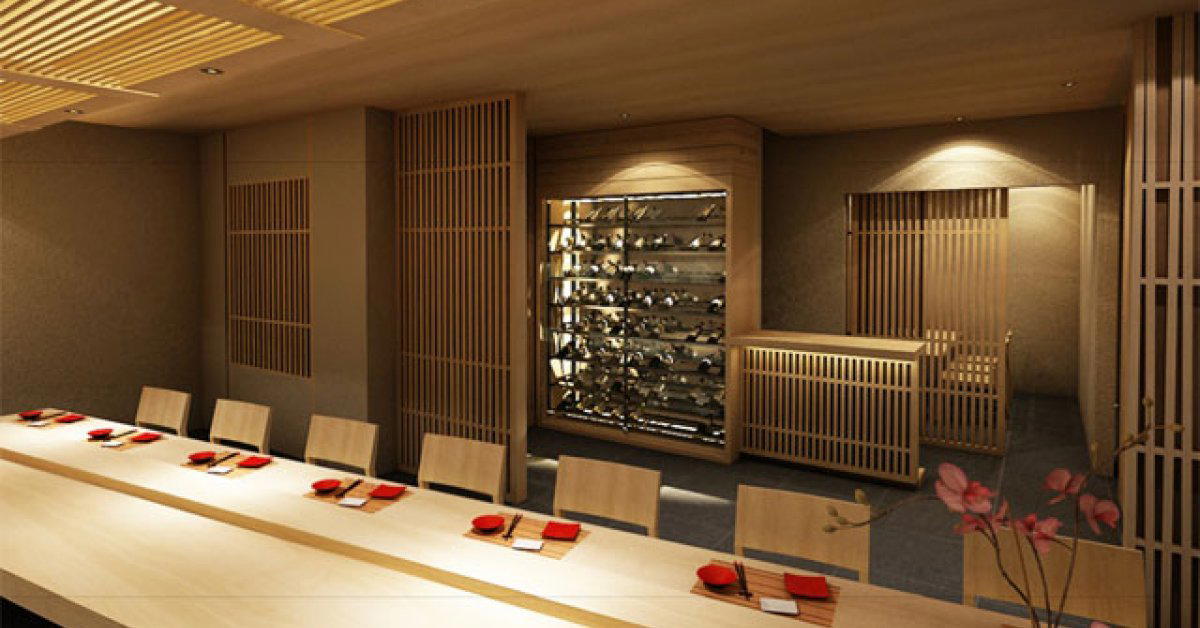
A Counter Built for Precision
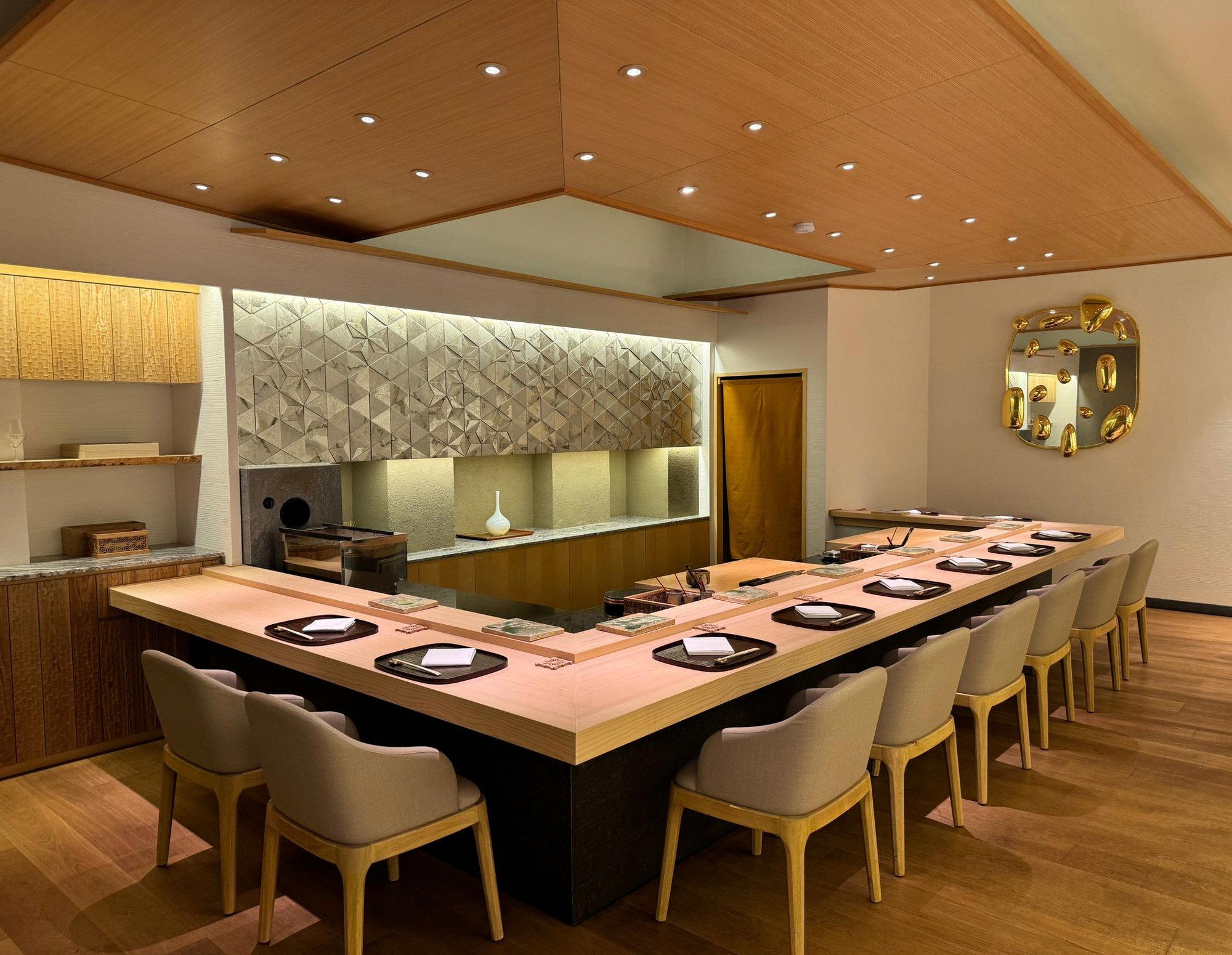
The physical environment at Sushi Ichi signals its intentions before a single piece of fish appears. The counter running the length of the room was fashioned from a single slab of 300-year-old cypress, a material choice that places the space in direct conversation with the centuries-old craft it serves. The wooden ornaments on the wall were handmade by a noted carpenter in Nara, giving the room the kind of material specificity that distinguishes serious Japanese dining environments from decorative approximations. In Singapore, where hotel-based Japanese restaurants often default to generic minimalism, that level of construction detail is a deliberate statement about what kind of omakase this is.
The address is the Singapore Marriott Tang Plaza Hotel on Orchard Road, but the room reads nothing like a hotel restaurant in the conventional sense. The counter format governs everything: the pacing, the sightlines, the relationship between diner and chef. Singapore's omakase circuit has expanded considerably over the past decade, with counters ranging from accessible mid-market formats to tightly controlled high-end experiences. Sushi Ichi, with its Michelin recognition and Opinionated About Dining placement, operates at the upper end of that range alongside counters like Shoukouwa, Hamamoto, and Sushi Hare.
How the Menu Is Structured, and What It Reveals
Menu architecture at Sushi Ichi is rooted in classical Edomae technique, a style that developed in Edo-period Tokyo around curing, marinating, and aging fish as preservation and flavour-development methods. What the format communicates immediately is a rejection of contemporary sushi eclecticism. There is no fusion inflection, no Western ingredient pivot, no seasonal specials designed to signal novelty. The omakase proceeds through seasonal seafood and vegetables sourced from Japan, with the sequence determined by what has arrived at its moment of readiness.
Rice is treated as a primary variable, not a substrate. The kitchen uses only rice marinated with red or white vinegar, a dual-vinegar approach that allows the team to calibrate acidity and texture against different fish preparations across the menu's arc. This kind of rice attention is one of the clearest signals of a serious Edomae operation: at counters where the fish gets all the attention, the rice is often an afterthought. Here, the structure is built around both. Sauces, meanwhile, are shipped from the flagship store in Japan, a logistical commitment that maintains consistency across the two locations rather than adapting to local sourcing.
That supply chain decision reveals something important about the restaurant's philosophy of authenticity. Rather than building a locally-adapted version of the Tokyo original, Sushi Ichi Singapore operates as a direct extension of it. The approach contrasts with many high-end Japanese restaurants in Southeast Asia, which inevitably localize some elements by necessity or intention. The discipline required to maintain Japanese-origin sauces, Japanese-sourced seafood, and Japanese-trained technique in a Singapore hotel environment places this counter in a specific and demanding category.
For context on how this approach compares to Edomae practice in Japan, counters like Sushi Kanesaka and Edomae Sushi Hanabusa in Tokyo operate within the same tradition. In Hong Kong, Sushi Shikon represents a comparable outpost of Japanese Edomae discipline outside Japan. The pattern of top-tier Japanese sushi houses extending beyond Tokyo is well established across Asia, and Sushi Ichi sits within that broader movement.
Credentials and Competitive Position
Sushi Ichi holds a Michelin star as of the 2024 guide, and its appearances in Opinionated About Dining's rankings are particularly telling. OAD rankings are compiled from votes by experienced diners and food professionals globally, and the Japan list draws from a demanding, well-traveled voter base. Ranking at #406 in 2024 and improving to #455 in the 2025 cycle, notably, these are rankings on the Japan list, not a Singapore list, positions the restaurant in a competitive frame that extends well beyond its immediate Orchard Road geography. It means the restaurant is being evaluated against counters like Harutaka and Sukiyabashi Jiro Roppongiten in Tokyo rather than just the local Singapore circuit.
Within Singapore, the comparison set for omakase at this price tier includes Sushi Sakuta and Sushi Ashino, both of which operate with similarly classical Japanese frameworks. At the broader fine dining level, Singapore's high-end restaurant scene is anchored by European and creative cuisine houses, Zén and Born both command the same $$$$ price tier, but the Japanese omakase category operates with its own internal logic, its own booking culture, and its own criteria for excellence. Sushi Ichi's dual recognition across both Michelin and OAD gives it a stronger combined credential than most counters in the city.
The results of that formation are auditable through the awards record rather than biographical narrative.
The Singapore Omakase Context
Singapore's position as a hub for high-end Japanese dining has been built over two decades of sustained investment in the category. The city's food-literate, internationally-traveled dining population, combined with direct flight access to Japan and strong demand from visiting business travelers, makes it a viable second market for Japanese restaurant operators. The hotel omakase format, where a serious counter operates inside a luxury hotel but functions independently from the hotel's broader F&B operation, is a pattern seen across Singapore, Hong Kong, and Shanghai, and tends to attract both hotel guests and independently-booking local regulars.
Sushi Ichi's Orchard Road position places it at the center of Singapore's premium retail and hotel corridor, accessible but not informal in its register. The Monday closure, standard operating hours across Tuesday to Saturday for both lunch and dinner services, and a slightly earlier close on Sunday suggest a structured, high-occupancy schedule rather than a casual walk-in proposition. Reservations are the functional expectation at this price point across the entire Singapore omakase tier.
For diners building a broader trip around Japanese sushi across Asia, it is worth noting that the tradition Sushi Ichi practices in Singapore connects to a wider regional network: HANE in Seoul, Sushi Harasho in Osaka, and Sushi Sho in New York City each represent the same tradition operating in different metropolitan contexts. The comparison illuminates what Sushi Ichi is doing: maintaining a Japanese standard at geographic and logistical distance from its source.
Planning Your Visit
Sushi Ichi is located at 320 Orchard Road, #01-04, Singapore Marriott Tang Plaza Hotel, Singapore 238865. Hours: Tuesday to Friday, 12 PM–2:30 PM and 6 PM–11 PM; Saturday, 12 PM–2:30 PM and 6 PM–11 PM; Sunday, 12 PM–2:30 PM and 6 PM–10 PM; Monday closed. Format: Omakase recommended. Price: $$$$ tier. Reservations:
For a wider view of where Sushi Ichi sits in the Singapore dining picture, see our full Singapore restaurants guide. For accommodation, nightlife, and other planning resources, see our Singapore hotels guide, our Singapore bars guide, our Singapore wineries guide, and our Singapore experiences guide.
Frequently asked questions
What are the operating hours at Sushi Ichi?
Hours at Sushi Ichi: Monday closed Tuesday 12 PM-2:30 PM 6 PM-11 PM Wednesday 12 PM-2:30 PM 6 PM-11 PM Thursday 12 PM-2:30 PM 6 PM-11 PM Friday 12 PM-2:30 PM 6 PM-11 PM Saturday 12 PM-2:30 PM 6 PM-11 PM Sunday 12 PM-2:30 PM 6 PM-10 PM.
What's Sushi Ichi's location?
Sushi Ichi is located at 320 Orchard Rd, #01-04 Singapore Marriott Tang Plaza Hotel, Singapore 238865, Singapore.
Recognition Snapshot
A short peer table to compare basics side-by-side.
| Venue | Cuisine | Price | Awards | Notes |
|---|---|---|---|---|
| Sushi IchiThis venue (the venue you are viewing) | Traditional Edomae Omakase | $200–300 | 1 Michelin Star · Michelin Guide 1 Star | Not listed |
| Zén | Yakitori & Japanese Izakaya | $50–100 | Tabelog 100 #92 | European Contemporary |
| Jaan by Kirk Westaway | Modern British Fine Dining | $200–300 | 2 Michelin Stars · Michelin Guide 2 Stars | British Contemporary |
| Burnt Ends | Modern Australian Barbecue | $100–150 | 1 Michelin Star · Michelin Guide 1 Star | Australian Barbecue, Barbecue |
| Summer Pavilion | Michelin-Starred Cantonese | $100–150 | 1 Michelin Star · Michelin Guide 1 Star | Cantonese |
| Born | Contemporary Fusion Fine Dining | $200–300 | 1 Michelin Star · Michelin Guide 1 Star | Creative Cuisine, Innovative |
Recognition history
Dated appearances from independent guides and award organizations, with the underlying list record or original source where available.
Michelin 1 Star
Michelin
Michelin Guide 1 Star
Michelin Guide
Opinionated About Dining Top Restaurants in Asia Recommended
Opinionated About Dining
Full recognition history (6 entries)
Opinionated About Dining Top Restaurants in Japan Ranked #455
Opinionated About Dining
Michelin 1 Star
Michelin
Opinionated About Dining Top Restaurants in Japan Ranked #406
Opinionated About Dining
Continue exploring
More in Singapore
Restaurants in Singapore
All restaurants in Singapore →
Bars in Singapore
All bars in Singapore →
Details
- Elegant
- Sophisticated
- Intimate
- Classic
- Special Occasion
- Business Dinner
- Chefs Counter
- Sake Program
- Sustainable Seafood
- Omakase
- Counter Dining
- Sake
Current opening hours
- Monday
- Closed
- Tuesday
- 12–2:30 PM, 6–10:30 PM
- Wednesday
- 12–2:30 PM, 6–10:30 PM
- Thursday
- 12–2:30 PM, 6–10:30 PM
- Friday
- 12–2:30 PM, 6–10:30 PM
- Saturday
- 12–2:30 PM, 6–10:30 PM
- Sunday
- 12–2:30 PM, 6–10 PM
Hours can change for holidays and private events. Hours as of .
Classically Japanese Zen atmosphere with pale wood finishings, unadorned walls, and focus on the chefs' artistry at the counter.