St. Bart occupies a corner of Graefestraße in Kreuzberg, a neighbourhood where the gap between serious cooking and unpretentious room design has long been smaller than in Berlin's more conspicuous dining districts. Against a Berlin scene that skews toward either destination fine dining or casual-natural, St. Bart holds a position somewhere in between, the kind of address regulars treat as their own before the rest of the city catches up.
Pearl is the En Primeur Club membership app — saves, bookings, and concierge access live there. Same editors, same standards.
- Address
- Graefestraße 71, 10967 Berlin, Germany
- Phone
- +493040751175
- Website
- stbartpub.com
- Directions
- Get directions
 Saves & bookings on Pearl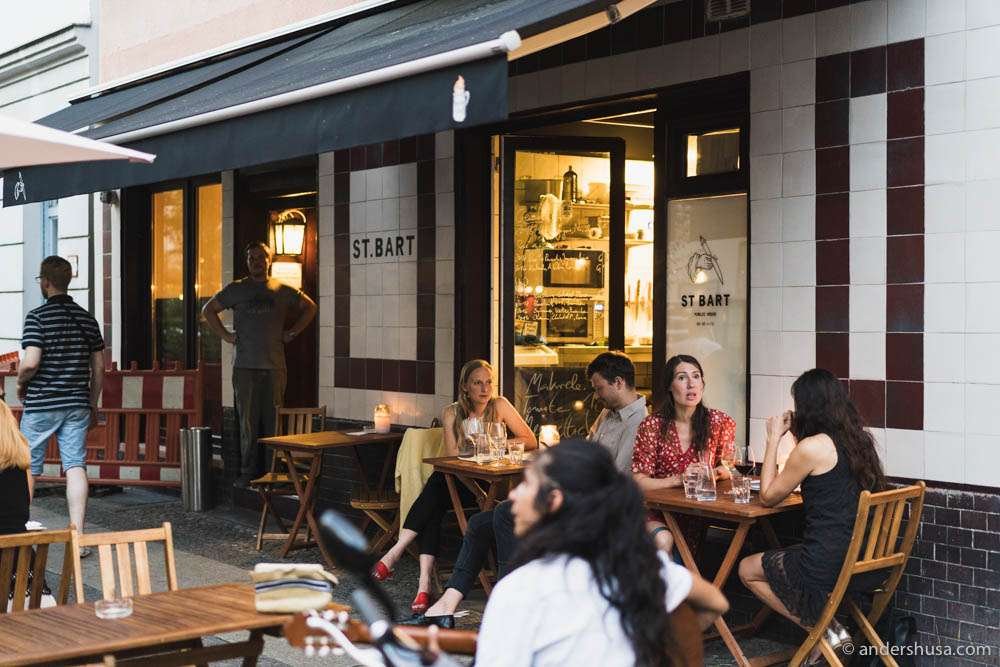
Kreuzberg's Gravitational Pull on Loyal Diners
Berlin's dining geography has a persistent logic: the city's most decorated rooms tend to cluster in Mitte and Tiergarten, while Kreuzberg and Neukölln absorb the restaurants that accumulate loyalty rather than headlines. Graefestraße, a tree-lined street in the quieter, residential southern pocket of Kreuzberg, belongs firmly to that second category. The buildings are pre-war, the clientele is neighbourhood-first, and the assumption running through the street is that the food matters more than the setting's legibility to an outsider. St. Bart sits at number 71, in a position that makes complete sense once you understand how this part of the city operates.
That dynamic, a room that rewards return visits more than first impressions, defines what separates the regulars' restaurants from the reservation-trophy tier. Berlin has both in abundance. At the upper end, Rutz and Nobelhart & Schmutzig operate with the kind of structured philosophy and public recognition that draws visitors from outside Germany. FACIL and Restaurant Tim Raue sit at a similar altitude with their own distinct registers. St. Bart occupies different territory: a place where the knowledge asymmetry runs in the regular's favour, where the staff knows what you drink before you've sat down, and where the menu's logic becomes clearer on the third visit than the first.
What Regulars Notice First
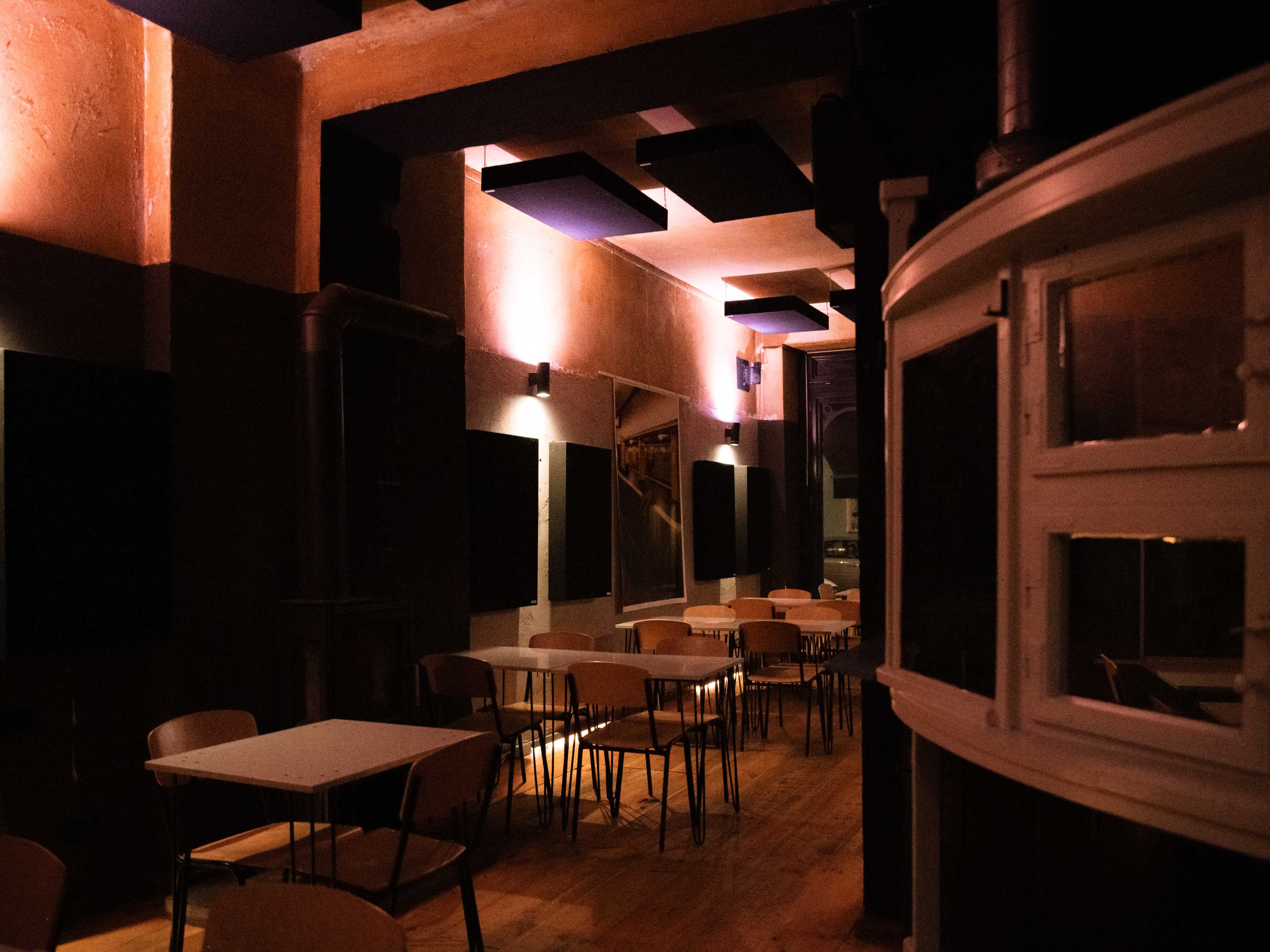
The distinction between a restaurant that regulars love and one that merely tolerates them is largely atmospheric. In Kreuzberg's neighbourhood restaurants, the physical environment tends to be stripped back by design rather than budget constraint, bare surfaces, modest lighting, the ambient sound of a room that fills without effort because the crowd already knows each other. St. Bart's address on Graefestraße places it inside that tradition. The street itself sets the register: residential scale, no hotel foot traffic, the kind of block where you walk past on a Tuesday evening and see the same faces you saw the previous week.
For the diner who returns regularly, the room's familiarity becomes an asset. There's an economy of conversation that develops between a kitchen and its loyal clientele, a shorthand that doesn't require explaining dietary preferences or asking what the kitchen does well. That kind of accumulated knowledge is what distinguishes the restaurant from the high-format destination rooms that Berlin also does well. Compare it to CODA Dessert Dining, where the conceptual framework is the point and the experience is designed to be encountered fresh each time. The restaurant operates on a different premise: the value compounds.
The Unwritten Menu
Every restaurant with a loyal clientele develops something beyond its printed menu: the dishes regulars know to ask about, the timing that avoids the peak crush, the table positioning that makes the room feel entirely different. Berlin's neighbourhood dining culture actively encourages this. Unlike the tasting-menu format that defines rooms like Aqua in Wolfsburg or Schwarzwaldstube in Baiersbronn, where the structure is fixed and the staff controls the sequence, a room built around regulars tends to be more elastic. The kitchen accommodates. The staff reads the table. The menu is a starting point rather than a contract.
Germany's broader fine dining circuit, including Vendôme in Bergisch Gladbach, Victor's Fine Dining by Christian Bau in Perl, and Waldhotel Sonnora in Dreis, operates within rigorous formats that produce consistent, award-track results. That circuit rewards technical mastery and replicability. What it doesn't always produce is the texture of a place that feels genuinely inhabited. The restaurant's position in Kreuzberg puts it at a remove from that circuit by geography and by temperament.
Kreuzberg in the Context of Berlin's Dining Scene
Berlin's restaurant scene has consolidated around two distinct poles over the past decade. One pole is the destination fine dining tier, which now includes multiple Michelin-starred addresses and competes internationally for covers. The other is the natural-wine and casual-sharing-plate format that dominates Neukölln and parts of Prenzlauer Berg. Between those poles sits a more varied middle ground: neighbourhood restaurants with serious kitchens, no particular interest in Michelin validation, and clientele built through word of mouth rather than press cycles.
Kreuzberg has historically belonged to that middle ground. It is dense enough to sustain a diverse restaurant population and residential enough that the leading rooms fill from within the neighbourhood before outside demand arrives. Graefestraße, specifically, runs through the Graefekiez, a sub-neighbourhood with its own social infrastructure, a high density of independent food and drink businesses, and a dining culture that prioritises the habitual over the occasional. That context shapes what the restaurant is and who it's for.
For comparison across Germany's dining geography: rooms like JAN in Munich, Restaurant Haerlin in Hamburg, Schanz in Piesport, ES:SENZ in Grassau, and Bagatelle in Trier all sit within structured fine dining or destination categories. The restaurant's proposition is different in kind, not just in degree. The comparison that tells you the is not between the restaurant and a Michelin-starred room in another German city, but between the restaurant and the other neighbourhood addresses in Kreuzberg that regulars cycle between on a weekly basis. That local competitive set is the relevant one.
Berlin's international peer restaurants, Le Bernardin in New York City and Atomix in New York City, operate in the destination tier where every cover matters to a public narrative. The restaurant's mode of operation is the inverse of that.
Planning Your Visit
The restaurant is located at Graefestraße 71, 10967 Berlin, in the Graefekiez section of Kreuzberg. Timing: Midweek evenings tend to reflect the neighbourhood's regular crowd most accurately; weekend covers shift toward a more mixed visitor profile. Booking: Reservations are recommended. Budget: Expect about €25 per person. Dress: Casual.
At a Glance
Comparable venues nearby, for context on price, style, and recognition.
| Venue | Cuisine | Price | Notes |
|---|---|---|---|
| St. BartThis venue — the venue you are viewing | Kreuzberg, British-German Gastropub | $$ | Not listed |
| Pound & Pence | Moabit, British Gastropub Burgers | $$ | Not listed |
| Tsu Tsu | Not listed | $$ | Kreuzberg, Japanese Karaage (Vegan Options) |
| Parma di Vinibenedetti | Kreuzberg, Organic Neapolitan Pizza | $$ | Not listed |
| AMON Restaurant | Mitte, Modern Italian | $$ | Not listed |
| Magic John's | Not listed | $$ | Mitte, New York-Style Pizza & Detroit Deep Dish |
Continue exploring
More in Berlin
Restaurants in Berlin
Browse all →
Bars in Berlin
Browse all →
Hotels in Berlin
Browse all →
Wineries in Berlin
Browse all →
At a Glance
- Cozy
- Lively
- Trendy
- Casual Hangout
- Group Dining
- Date Night
- After Work
- Standalone
- Extensive Wine List
- Natural Wine
- Beer Program
- Craft Cocktails
- Local Sourcing
- Organic
- Farm To Table
Current opening hours
- Monday
- 6–11:30 PM
- Tuesday
- Closed
- Wednesday
- 6–11:30 PM
- Thursday
- 6–11:30 PM
- Friday
- 5–11:30 PM
- Saturday
- 5–11:30 PM
- Sunday
- 1–9 PM
Hours can change for holidays and private events. Last verified .