On Wrangelstraße in Kreuzberg, Parma di Vinibenedetti occupies a corner of Berlin's Italian dining scene where neighbourhood ritual matters as much as what arrives on the plate. The address places it squarely in one of the city's most food-literate districts, where the expectation is substance over spectacle. Booking ahead is advisable for evening sittings.
Pearl is the En Primeur Club membership app — saves, bookings, and concierge access live there. Same editors, same standards.
- Address
- Wrangelstraße 90, 10997 Berlin, Germany
- Phone
- +491744667729
- Website
- parmaberlin.de
- Directions
- Get directions
 Saves & bookings on Pearl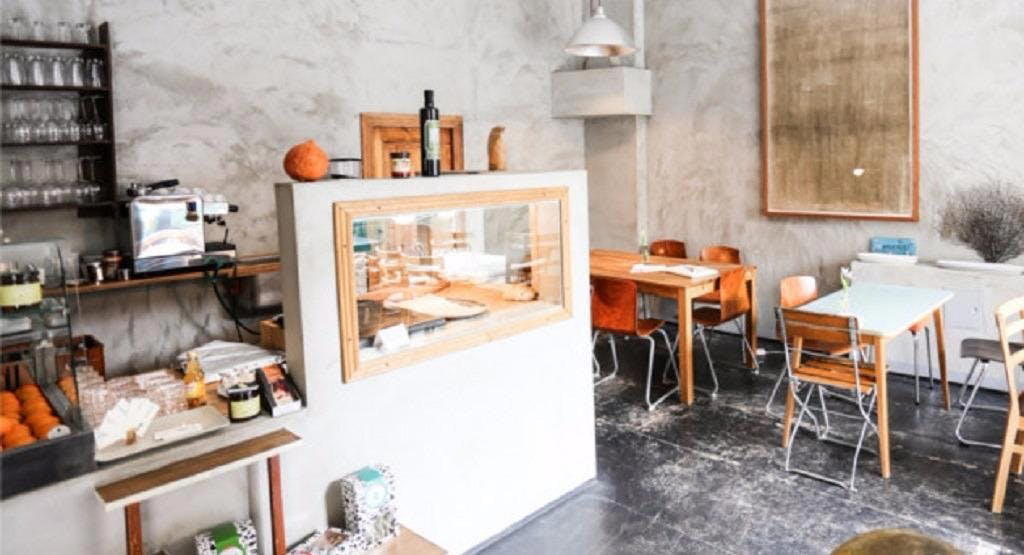
Kreuzberg and the Rhythm of the Italian Table
Wrangelstraße sits in the part of Kreuzberg where the dining culture is shaped by residents rather than tourism circuits. The street runs through SO36, a neighbourhood that has historically attracted a population with strong opinions about food and a low tolerance for performance without content. In this context, an Italian address carries specific expectations: the meal should unfold at its own pace, the wine list should reward attention, and the room should feel like a room rather than a stage set. These are the conditions under which Italian dining in Berlin either earns its place or quietly fades.
Italian restaurants in Berlin occupy a wider price and quality range than in almost any other northern European capital. At the leading end, you find kitchens that position against the city's broader fine-dining tier, a set that includes the likes of Rutz, Nobelhart & Schmutzig, and FACIL, all of which carry Michelin recognition and operate tasting-menu or chef-driven formats. Below that tier, the more interesting question for a neighbourhood address like Parma di Vinibenedetti is whether the kitchen is serious about ingredient quality and whether the service pacing respects the Italian convention of the meal as a sustained event rather than a transaction.
The Dining Ritual at an Italian Neighbourhood Table
The Italian dining ritual, as practised at its most considered, is structured around tempo. Antipasto arrives without urgency. Pasta is typically a course in its own right rather than a bridge to the main. If the kitchen has any claim to Emilian tradition, as the Parma reference in the name implies, then cured meats and egg-based pasta are likely to be reference points, not afterthoughts. This is a region of Italian gastronomy built on precision and patience: the production of Parmigiano-Reggiano, of Prosciutto di Parma, of hand-rolled egg pasta all demand long timelines and careful process. A restaurant that places Parma in its name is making an implicit claim about those standards, and the neighbourhood regulars who eat here are the ones who will hold it to account.
In German cities, the Italian trattoria format has often been adapted to suit faster local dining habits, compressing the meal into a single-course-plus-dessert rhythm. The more interesting operators resist this. They keep the multi-course progression, insist on proper resting time between plates, and train front-of-house staff to read the table rather than turn it. Where Parma di Vinibenedetti sits on this spectrum is something a first visit will confirm, but the Kreuzberg address is an encouraging signal: this is not a location that rewards lowest-common-denominator execution.
For comparison with how ritual and pacing play out at the higher end of Berlin's dining tier, CODA Dessert Dining operates an entirely different format, one built around a dessert-led tasting menu that deconstructs conventional course progression entirely. At the opposite extreme, Restaurant Tim Raue applies the intensity of fine-dining service to an Asian-influenced format. Neither maps directly to an Italian neighbourhood table, which is precisely why the category remains its own thing in Berlin's dining geography.
Where This Address Sits in the German Restaurant Context
Berlin's restaurant scene operates somewhat differently from Germany's other high-recognition dining destinations. The Michelin-starred kitchens that have attracted international attention are often found outside the capital: Aqua in Wolfsburg, Schwarzwaldstube in Baiersbronn, Vendôme in Bergisch Gladbach, and Victor's Fine Dining by Christian Bau in Perl represent a tier of German fine dining that is geographically dispersed and often destination-specific. Within Berlin itself, the strongest critical recognition has gone to places like Nobelhart & Schmutzig and Rutz, both of which have built programmes around regional German sourcing and tasting-menu discipline.
Neighbourhood Italian dining occupies a different category entirely. It does not compete with those benchmarks on the same terms. Instead, it competes on value, consistency, and the quality of the specific Italian tradition it claims. In this sense, Parma di Vinibenedetti is more usefully compared to other serious neighbourhood operators in Kreuzberg and Neukölln than to the city's Michelin-tier rooms. The relevant comparable set is smaller and more locally specific, and the criteria for excellence shift accordingly: is the pasta made in-house, are the cured meats sourced with care, does the wine list reflect regional Italian knowledge rather than a generic international selection?
For readers planning a broader German itinerary, the contrast with kitchens like JAN in Munich, Restaurant Haerlin in Hamburg, or ES:SENZ in Grassau is instructive: those are rooms where the kitchen's ambitions are formally declared and verifiably recognised. A neighbourhood Italian on Wrangelstraße makes a quieter case, but in a city where dining culture is as literate as Berlin's, quieter cases are often the ones worth investigating.
Planning Your Visit
The Wrangelstraße 90 address is in the heart of SO36 Kreuzberg, well-served by U-Bahn connections and within walking distance of the canal. Evening bookings in this neighbourhood tend to fill across the week, not just on weekends, so advance contact is advisable.
| Venue | Format | Price Tier | Booking Lead Time |
|---|---|---|---|
| The restaurant | Neighbourhood Italian, Kreuzberg | Not confirmed | Advisable; verify direct |
| CODA Dessert Dining | Dessert-led tasting menu | €€€€ | Several weeks ahead |
| Rutz | Modern European tasting menu | €€€€ | Several weeks ahead |
| Nobelhart & Schmutzig | Modern German, fixed menu | €€€€ | Several weeks ahead |
| FACIL | Contemporary European, creative | €€€€ | Several weeks ahead |
Closer in geography, Bagatelle in Trier and Schanz in Piesport represent the kind of regionally rooted fine dining that informs how particularly considered German operators, at any price point, think about sourcing and seasonal rhythm. Waldhotel Sonnora in Dreis rounds out the picture as one of the country's most consistently recognised kitchens outside the major cities.
A Quick Peer Check
Comparable venues nearby, for context on price, style, and recognition.
| Venue | Cuisine | Price | Notes |
|---|---|---|---|
| Parma di VinibenedettiThis venue — the venue you are viewing | Organic Neapolitan Pizza | $$ | Not listed |
| Weltwirtschaft | Italian-Inspired Global with Pizza | $$ | Moabit |
| Sironi | Italian Spelt Pizza | $$ | Schoneberg |
| Malafemmena | Neapolitan Pizza | $$ | Friedenau |
| Standard | Neapolitan Pizza | $$ | Prenzlauer Berg |
| Gazzo | Neapolitan Sourdough Pizza | $$ | Neukolln |
Continue exploring
More in Berlin
Restaurants in Berlin
Browse all →
Bars in Berlin
Browse all →
Hotels in Berlin
Browse all →
Wineries in Berlin
Browse all →
At a Glance
- Cozy
- Rustic
- Casual Hangout
- Group Dining
- Family
- Standalone
- Open Kitchen
- Beer Program
- Organic
- Local Sourcing
- Farm To Table
Current opening hours
- Monday
- 5–11 PM
- Tuesday
- 5–11 PM
- Wednesday
- 5–11 PM
- Thursday
- 5–11 PM
- Friday
- 5–11 PM
- Saturday
- 5–11 PM
- Sunday
- 5–11 PM
Hours can change for holidays and private events. Last verified .
Warm and welcoming neighborhood pizzeria with a homey atmosphere that makes guests feel at home, featuring authentic Italian charm and casual dining.