Our verdict
Pound & Pence sits on Arminiusstraße in Moabit, a district that Berlin's dining circuit has been slow to map. The address alone signals a different kind of ambition: not the polished performance of Mitte, nor the self-conscious cool of Neukölln, but something quieter and more deliberate. For readers tracking where Berlin's restaurant energy is actually moving, this is one address worth noting.
The menu
What to order
- 200g dry-aged beef burger
- Chicken tikka burger
- Lamb burger with tahini
Moabit, and What It Says About Where Berlin Eats Now
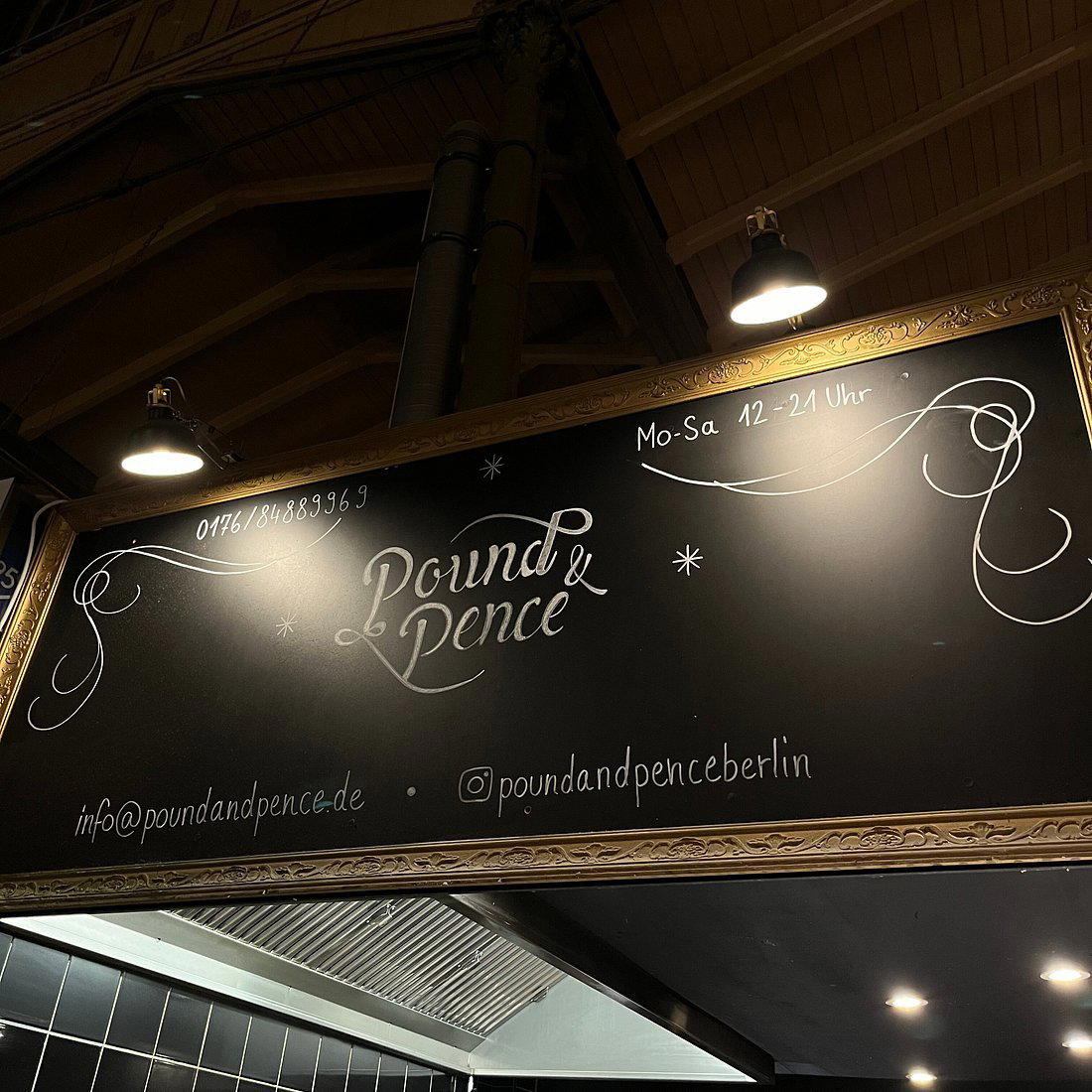
Berlin's dining geography has always been uneven. For two decades, serious restaurants clustered in Mitte and Prenzlauer Berg, with occasional outliers in Kreuzberg and Charlottenburg. Moabit, the working-class district west of the Hauptbahnhof, barely registered on that map. The neighbourhood's identity was defined by the Arminiusmarkthalle, a nineteenth-century market hall on Arminiusstraße that survived the war and the DDR and several rounds of gentrification pressure, and by a residential density that kept rents low and foot traffic local. That combination, low rents and a loyal neighbourhood clientele rather than tourist spillover, is precisely the condition that tends to produce more interesting restaurant decisions. Pound & Pence sits at Arminiusstraße 2-4, directly in that orbit.
The significance of the address is worth pausing on. Arminiusstraße runs alongside the Markthalle, which means the immediate context is one of food markets, daily commerce, and a certain unpretentious relationship with eating that contrasts sharply with the designed seriousness of, say, Nobelhart & Schmutzig on Friedrichstraße or FACIL inside the Mandala Hotel. Those venues operate within a framework of deliberate fine-dining signalling. A restaurant on Arminiusstraße operates without that scaffolding, which raises its own set of questions about format, tone, and who it is actually for.
The Moabit Context: A District Finding Its Footing
Moabit is not a dining destination in the way that Neukölln became one between 2012 and 2019, when a concentration of independent operators transformed streets like Weserstraße into a circuit worth planning around. What Moabit offers instead is a slower, more organic form of neighbourhood development. The Markthalle itself has drawn food vendors and small producers in recent years, building a community of regulars rather than a wave of first-timers. Restaurants that open in this environment tend to calibrate accordingly: they do not rely on destination traffic, so they must earn repeat visits from people who live nearby and have limited patience for restaurants that mistake effort for hospitality.
That dynamic shapes the competitive set differently from central Berlin. The comparison venues that matter most in Moabit are not Rutz or CODA Dessert Dining, both of which occupy the upper tier of Berlin's Michelin-recognised circuit. In that frame, the choice of Moabit reads as a statement about audience and intention, even before the menu is considered.
Berlin's Fine-Dining Circuit and Where Pound & Pence Sits Outside It
Berlin's Michelin-starred tier has grown steadily over the past decade. The city now holds multiple two- and three-star addresses, with Restaurant Tim Raue among the most internationally recognised. That circuit is geographically concentrated and stylistically coherent: long tasting menus, high price points, and a dining experience designed for occasion rather than regularity. Germany more broadly sustains this model well outside the capital, with addresses like Aqua in Wolfsburg, Vendôme in Bergisch Gladbach, and Victor's Fine Dining by Christian Bau in Perl operating at three-star level in non-metropolitan settings.
Pound & Pence does not appear in that tier, and that is not the point of the address. The name itself carries a certain register, currency denominations from two different systems, British and generic-European, that suggests either a pub-adjacent format or a deliberate play on value and transaction. What can be said is that the Moabit location, the Arminiusstraße address specifically, positions this as a neighbourhood-anchored operation rather than a destination restaurant in the conventional sense.
That positioning is increasingly common among Berlin openings that are worth paying attention to. The city's most interesting recent restaurants have often rejected the expectation that ambition requires a central postcode. The model that Nobelhart & Schmutzig established, rigorous sourcing, a fixed menu, a deliberate anti-spectacle ethos, demonstrated that Berlin diners will travel for conviction.
Reading the Room: What the Address Tells the Traveller
For visitors to Berlin who have already worked through the obvious circuit, a tasting menu at Rutz, a counter seat at CODA, an evening at FACIL, Moabit offers a different kind of Berlin evening. The Arminiusmarkthalle is a ten-minute walk from the Hauptbahnhof, which makes the district more accessible than its low profile suggests. The neighbourhood itself rewards the kind of slow arrival that destination restaurants in Mitte rarely allow: a walk along the canal, a stop at the Markthalle, the gradual shift from transit to local rhythm.
Readers planning a wider German dining trip might also note that Berlin functions well as a base for day trips to venues like JAN in Munich or use the capital as a contrast point against more rural addresses such as Schwarzwaldstube in Baiersbronn or Waldhotel Sonnora in Dreis. Within Berlin, the full picture of the city's dining range is mapped in our full Berlin restaurants guide, which covers everything from the Michelin-starred tier to neighbourhood independents. For international reference points at a similar level of operator seriousness, Le Bernardin in New York City and Atomix in New York City offer useful calibration on what committed neighbourhood-adjacent dining can look like at different price tiers. For Germany beyond Berlin, Restaurant Haerlin in Hamburg, Schanz in Piesport, Bagatelle in Trier, and ES:SENZ in Grassau represent the spread of serious dining outside the capital.
Planning a Visit
Address: Arminiusstraße 2-4, 10551 Berlin. Getting there: The S-Bahn and U-Bahn connections to Turmstraße (U9) and Hauptbahnhof place the address within easy reach of central Berlin without requiring a taxi. Reservations: Booking method not confirmed; check directly via the venue. Dress: Not specified; Moabit's neighbourhood character typically aligns with a relaxed-smart register rather than formal attire. Budget:
Frequently asked questions
Is Pound & Pence okay with children?
Given the address on Arminiusstraße in Moabit, a residential district with a neighbourhood character, it is worth contacting the venue directly before visiting with children to confirm arrangements and suitable timing.
Is Pound & Pence formal or casual?
Pound & Pence sits in Moabit, a district that has developed its dining identity independently of Berlin's Michelin-starred circuit in Mitte. That address context points toward a neighbourhood register rather than a formal tasting-menu format, though the specific dress expectations and service style are best confirmed with the venue ahead of a visit.
How does Pound & Pence fit into the broader Berlin dining scene outside the tourist circuit?
Pound & Pence is positioned in Moabit at Arminiusstraße 2-4, a neighbourhood that has not followed the same concentrated independent-operator transformation that reshaped Neukölln between 2012 and 2019. For visitors who have already covered Berlin's recognised addresses, it represents the kind of district-level dining that rewards research over reputation.
What do people recommend at Pound & Pence?
For visitors who have already covered the established Berlin counter seats and tasting menus, the draw here is the Moabit address itself, a part of the city where the dining conversation is still being written rather than curated.
Comparison Snapshot
| Venue | Cuisine | Price | Awards | Notes |
|---|---|---|---|---|
| Pound & PenceThis venue (the venue you are viewing) | British Gastropub Burgers | Not listed | Not listed | Not listed |
| CODA Dessert Dining | Dessert-Inspired Fine Dining | $200–300 | 2 Michelin Stars · World's 50 Best #82 | Creative |
| Rutz | Modern German Fine Dining | $200–300 | 3 Michelin Stars · La Liste Top Restaurants | Modern European, Modern Cuisine |
| Nobelhart & Schmutzig | Hyper-Local Modern German Fine Dining | $100–150 | 1 Michelin Star · World's 50 Best #76 | Modern German, Creative |
| FACIL | Modern Fusion Fine Dining | $200–300 | 2 Michelin Stars · La Liste Top Restaurants | Contemporary European, Creative |
| Horváth | Modern Austrian Vegetable Cuisine | $200–300 | 2 Michelin Stars · La Liste Top Restaurants | Modern Austrian, Creative |
Continue exploring
More in Berlin
Restaurants in Berlin
All restaurants in Berlin →
Bars in Berlin
All bars in Berlin →



Details
- Trendy
- Modern
- Casual Hangout
- Open Kitchen
- A La Carte
Casual market hall atmosphere with quick-service burger counter vibe.