

Michelin Bib Gourmand · Tabelog 100 #84
Our verdict
A Michelin Bib Gourmand soba specialist in Osaka's Tamatsukuri district, Sobakiri Imose operates at the accessible end of the city's serious dining spectrum. The ¥ price point.

Pearl is the En Primeur Club membership app, where members save venues, book tables and use the concierge.
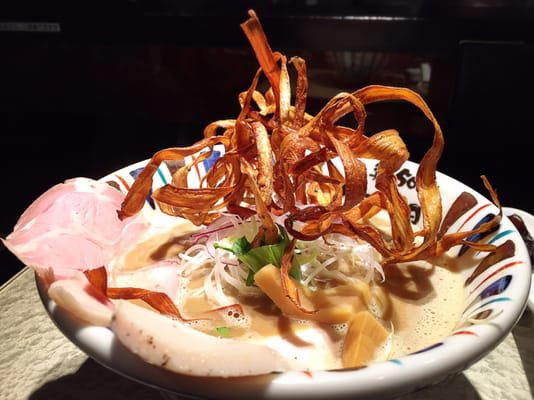
The menu
What to order
- Ginger Eggplant Soba
- Yuba Soba
- Imoyama Soba
- Kakinohazushi
Tamatsukuri's Quiet Credentials
Chuo Ward's Tamatsukuri neighbourhood sits a few stops east of Namba's commercial density, in the kind of residential-commercial mix that Osaka does particularly well: low-rise blocks, local grocery shops, the occasional small shrine tucked between buildings. Dining here skews functional and neighbourhood-first. Premium addresses in this part of Chuo tend to earn loyalty through consistency and accessibility rather than theatrics, and Sobakiri Imose fits squarely into that pattern. Its single-digit price range and Michelin Bib Gourmand recognition in 2024 identify it as the sort of place the Guide's inspectors seek out precisely because it punches above its cost, the Bib Gourmand category, by definition, marks good cooking at a price that doesn't require planning a special occasion.
The streets immediately around 2 Chome-9-2 Tamatsukuri have none of the foot traffic that funnels visitors toward Dotonbori or the Hozenji Yokocho lanes. That's part of the point. Restaurants that anchor themselves in quieter residential pockets of Osaka's central wards tend to exist on local terms: the regulars set the rhythm, the lunch trade is brisk, and out-of-town diners who make the effort feel less like tourists and more like temporary locals.
Soba in the Osaka Context
Osaka has historically been a city of udon. The wheat-based, thicker noodle runs deeper here than in most Japanese cities, supported by a dashi culture that favours konbu over the katsuobushi-forward broths of Tokyo. Against that backdrop, soba specialists occupy a smaller, more deliberate niche. The buckwheat noodle arrived in Osaka through the same diffusion that spread it across Japan's urban centres, but it never supplanted udon as the default lunch choice. A soba shop that earns sustained local recognition in this city is competing not just within its own category but against a deeply ingrained alternative.
Soba practice in Japan broadly divides between the more rustic, nutty juwari (100% buckwheat) and the more texturally refined nihachi (80% buckwheat, 20% wheat flour) styles, with regional preferences shaping which approach dominates in any given city. Tokyo's leading soba counters, places like Akasaka Sunaba and Azabukawakamian, represent a lineage that is deeply embedded in the capital's culinary identity. Osaka soba specialists have to earn their place in a different culinary hierarchy, which makes Bib Gourmand recognition here a signal worth noting.
The Neighbourhood Table: What the Address Tells You
The editorial angle on Sobakiri Imose is less about the kitchen and more about the social contract of eating in Tamatsukuri. Neighbourhood soba restaurants in Japanese cities function as community infrastructure: they provide a reliable, affordable meal delivered with craft and consistency, and they do it without the booking anxiety or pricing pressure that surrounds the kaiseki tier. Osaka's kaiseki and French dining upper bracket, a group that includes addresses like Ayamedo, as well as the ¥¥¥¥ operations of Hajime and La Cime and the kaiseki formalism of Taian and Kashiwaya Osaka Senriyama, charges a very different freight for the experience. Sobakiri Imose at ¥ pricing is structurally a different proposition, one built on volume, repeat custom, and the daily discipline of producing consistent soba rather than the occasional high-stakes tasting menu.
That distinction matters for how you plan a visit. This is a lunch or early dinner decision, integrated into a day moving through Chuo Ward, not a standalone evening reservation that anchors an itinerary. Visitors combining it with nearby cultural sites, the Tamatsukuri Inari Shrine is within easy walking range, will find the timing logic obvious. The Bib Gourmand award functions as external validation of what Tamatsukuri residents presumably already knew: there is serious noodle craft operating in their neighbourhood at a price that makes daily visits plausible.
What Bib Gourmand Recognition Actually Signals
The Michelin Bib Gourmand is a distinct instrument from the star system. Where stars reward ambition, complexity, and the sum of service, setting, and cooking, the Bib is specifically constructed to identify cooking quality at an accessible price point. The 2024 designation for Sobakiri Imose places it in a category that Michelin's Osaka inspectors have used to map the city's affordable craft dining, from ramen counters to traditional Japanese formats. It is a credential that speaks directly to value-for-quality rather than to prestige positioning.
In a category where the customer base skews local and repeat rather than tourist-driven, a steady 4.1 is a more reliable indicator than the same score at a heavily tourist-trafficked venue where review patterns are noisier. The audience that reviews it is largely the audience that eats there regularly.
Placing It in Kansai's Wider Dining Picture
For travellers moving across the Kansai region, Sobakiri Imose occupies a specific tier that has no direct equivalent in the more formal dining circuits of Kyoto or Nara. Gion Sasaki in Kyoto and akordu in Nara both operate at the higher end of their respective cities' dining propositions. Sobakiri Imose, by contrast, represents Osaka's capacity to deliver Michelin-recognised craft at the low end of the price spectrum, a combination that the city does more consistently than most Japanese cities its size.
Visitors arriving from Tokyo will find a contrast with how soba is positioned in the capital, where the leading counters tend to command higher prices and occupy more central, visible locations. The Osaka model embedded in Tamatsukuri is more understated in register, and that understatement is exactly the point. For wider Japan context, the full Osaka restaurants guide maps the city's dining across price tiers and cuisines; for planning the rest of a visit, the Osaka hotels guide, bars guide, and experiences guide complete the picture. Those with itineraries extending beyond Kansai can cross-reference the dining standard against places like Harutaka in Tokyo, Goh in Fukuoka, 1000 in Yokohama, or 6 in Okinawa.
Planning Your Visit
| Detail | Sobakiri Imose | Peer Reference |
|---|---|---|
| Price tier | ¥ (Bib Gourmand) | Soba peers: ¥–¥¥ typical range |
| Address | 2 Chome-9-2 Tamatsukuri, Chuo Ward | Central Osaka, east of Namba |
| Michelin recognition | Bib Gourmand 2024 | Few Osaka soba specialists recognised |
| Consistent local-audience score | ||
| Booking | Walk-in common at soba category | |
| Hours | Soba counters typically close early |
Frequently asked questions
Is Sobakiri Imose suitable for children?
At ¥ pricing in a neighbourhood soba format, this is one of the more family-appropriate addresses in Osaka's Michelin-recognised dining circuit.
Is Sobakiri Imose better for a quiet night or a lively one?
If the atmosphere you want is quiet and deliberate, this is the right choice: Tamatsukuri is a residential ward, the ¥ price tier does not attract the Dotonbori crowd, and the Bib Gourmand designation points to craft-focused, unfussy dining. If Osaka's louder, izakaya-driven energy is what you're after, the neighbourhood and format won't deliver it, head instead to the denser entertainment corridors of Namba or Shinsaibashi.
What's the signature dish at Sobakiri Imose?
Soba is the discipline here, as the name indicates, sobakiri refers specifically to hand-cut buckwheat noodles. Order from the soba menu with confidence that the Michelin inspectors found the core offering worth returning to.
Price and Recognition
Comparable venues nearby, for context on price, style, and recognition.
| Venue | Cuisine | Price | Awards | Notes |
|---|---|---|---|---|
| Sobakiri ImoseThis venue (the venue you are viewing) | Rustic Handmade Soba | $30–50 | Michelin Bib Gourmand · Tabelog 100 #84 | Not listed |
| Ogimachi Udonya Asuro | Handmade Udon Specialist | $10–20 | Michelin Bib Gourmand · Tabelog 100 #14 | Kita, Handmade Udon Specialist |
| Soba Takama | Traditional Soba Noodles | $20–30 | Michelin Bib Gourmand · Tabelog 100 #82 | Kita, Traditional Soba Noodles |
| Tempura Sakugetsu | Modern Tempura Omakase | $150–200 | Michelin Plate | Chūō, Modern Tempura Omakase |
| Tonkatsu Fujii | Modern Tonkatsu | $30–50 | Michelin Bib Gourmand · Tabelog Bronze #72 | Asahi, Modern Tonkatsu |
| The New World | Modern Japanese Izakaya | $50–100 | Michelin Bib Gourmand · Wine Spectator Award of Excellence | Chūō, Modern Japanese Izakaya |
Recognition history
Dated appearances from independent guides and award organizations, with the underlying list record or original source where available.
Michelin Bib Gourmand
Michelin
Tabelog 100 #84 · No. 84
Tabelog · Tabelog 100 - Soba - WEST - 2025
Continue exploring
More in Osaka
Restaurants in Osaka
All restaurants in Osaka →



Bars in Osaka
All bars in Osaka →

Hotels in Osaka
All hotels in Osaka →



Wineries in Osaka
Browse all →
Details
- Cozy
- Rustic
- Intimate
- Casual Hangout
- Sake Program
- A La Carte
Current opening hours
- Monday
- Closed
- Tuesday
- Closed
- Wednesday
- Closed
- Thursday
- 11:30 AM–2 PM
- Friday
- 11:30 AM–2 PM
- Saturday
- 11:30 AM–2 PM
- Sunday
- 11:30 AM–2 PM
Hours can change for holidays and private events. Hours as of .
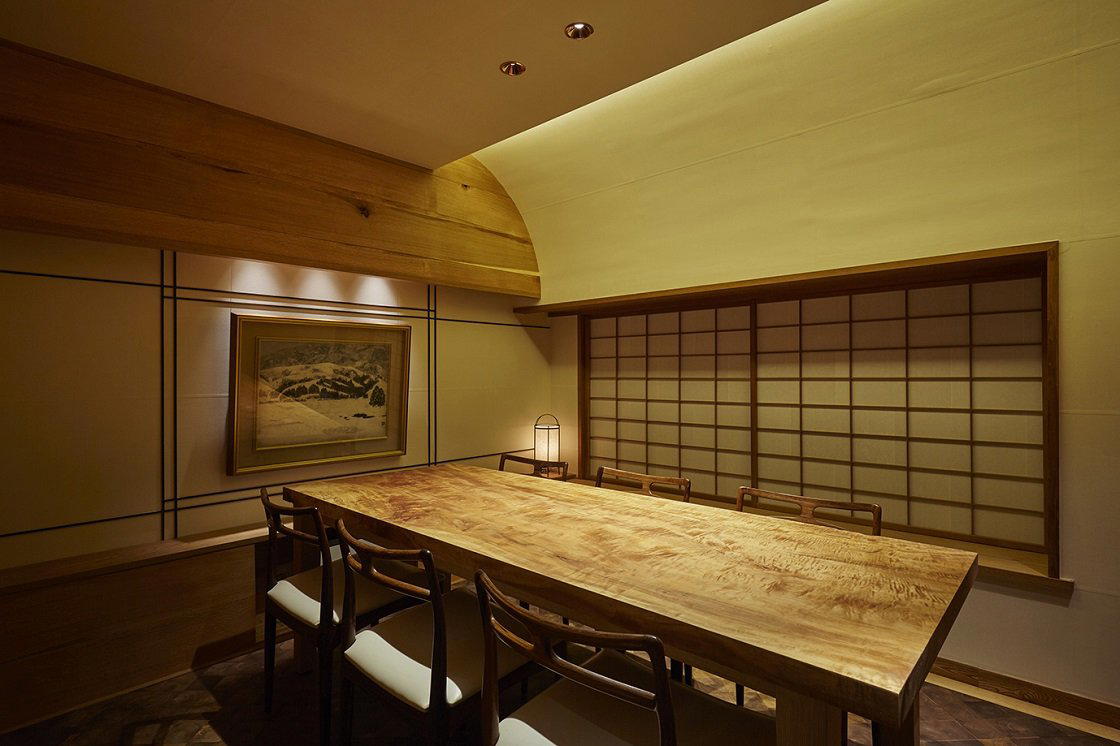
Warm, rustic interior with artful wooden tables, sunken hearth, mud walls, and countryside charm.